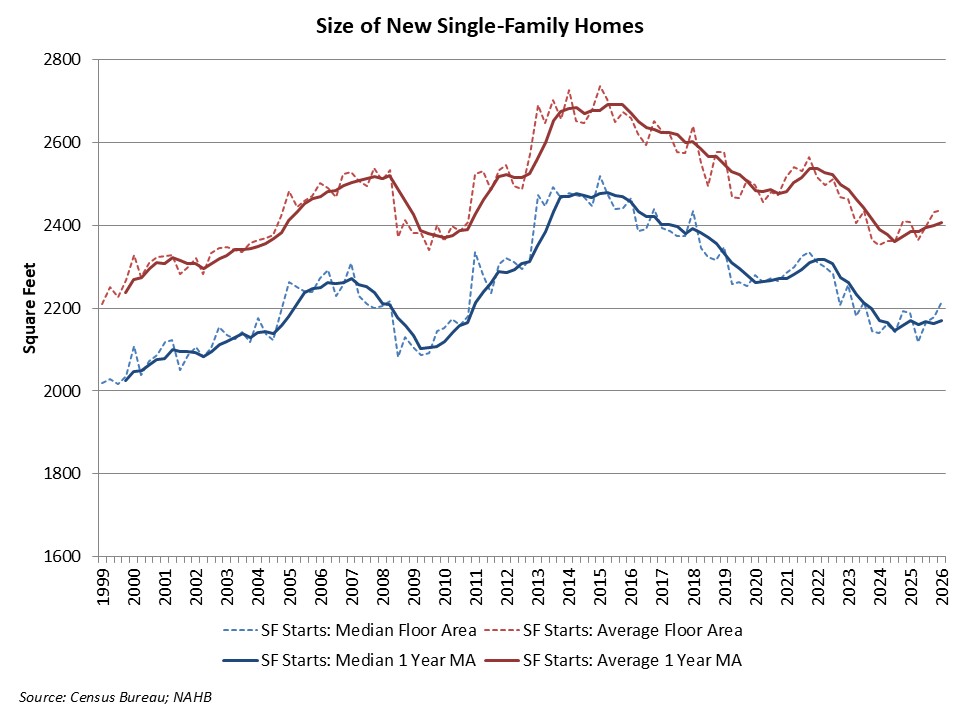
New single-family home size had been falling since 2015 in response to declining affordability conditions. An exception occurred in 2021, when new home size increased as interest rates reached historic lows. However, as mortgage interest rates increased in 2022 and 2023 and affordability worsened, demand shifted back toward smaller homes. More recent data suggest these trends have stabilized, although that reversal is likely due to weakness for the starter-home market.
According to first quarter 2026 data from the Census Quarterly Starts and Completions by Purpose and Design and NAHB analysis, median single-family square floor area was 2,211 square feet, effectively unchanged from the start of the year but up more than 3% over the past two years. Average (mean) square footage for new single-family homes registered at 2,436 square feet, a small increase year-over-year.
On a one-year moving average basis, the average size of a new single-family home was increased slightly to 2,408 square feet, while the median size increased to 2,169 square feet.
Home size trends in 2026 are likely to post continued small gains, driven by relative strength at the high end of the market but constrained by housing affordability challenges.
This article was originally published by a eyeonhousing.org . Read the Original article here. .