Tag

home

Browsing


Kandrac & Kole Interior Designs, Inc.Save Photo

The kitchen, casual eat-in area and family room are all open to one another. One major change was replacing three windows on the right with glass doors that lead to an existing screened-in porch. Having a casual eat-in area where the whole family can enjoy meals together was important to the homeowners.

Across the room, the color palette for the great room began with these drapes. “They were the jumping-off point for everything,” Kandrac says. “It’s kind of a chinoiserie pattern with lots of greens, and it also has camel tones that play off the stone fireplace and the floors.”

Because the three spaces form one open great room, the designers carefully considered how the light fixtures would work together. The family room’s vaulted ceiling required a large-scale chandelier, so they chose a two-tiered fixture that would not block the TV. For the dining area, they chose a 47-inch chandelier that’s proportionate to the 60-inch-diameter table below. The two chandeliers differ in style, but their black-and-gold finishes tie them together.


This article was originally published by a
www.houzz.com . Read the Original article here. .


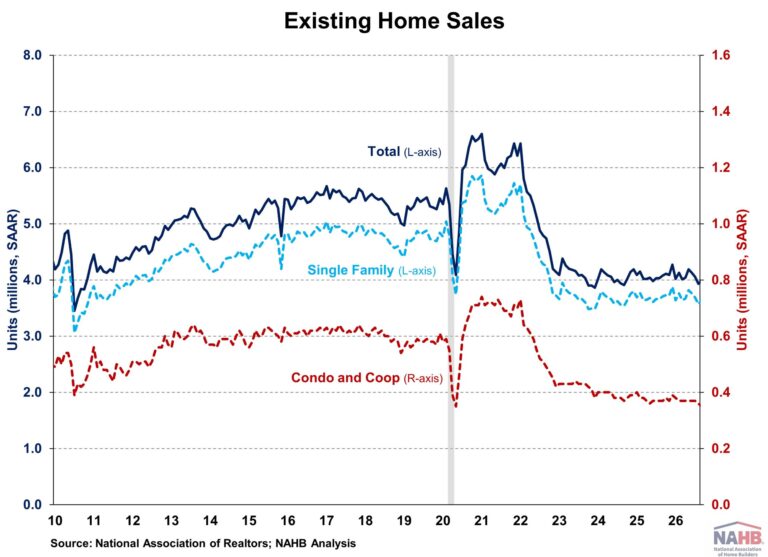
Existing home sales fell to a nine-month low in March as tight inventory, rising mortgage rates and growing concerns about the job market constrained sales activity. While inventory has improved in recent months, it remains below historical norms, continuing to push home prices higher as demand outpaces supply. Meanwhile, the Iran war has reversed the downward trend in mortgage rates, which jumped from 5.98% before the conflict to 6.37% last week. These headwinds will likely dampen home sales while tight inventory continues to drive home prices higher, further worsening housing affordability.

Total existing home sales, including single-family homes, townhomes, condominiums, and co-ops, fell 3.6% to a seasonally adjusted annual rate of 3.98 million in March, the lowest level since June 2025, according to the National Association of Realtors (NAR). On a year-over-year basis, sales were 1.0% lower than a year ago.

The existing home inventory level was 1.4 million units in March, up 3.0% from February and 2.3% from a year ago. At the current sales rate, March unsold inventory sits at a 4.1-months’ supply, up from 3.8-months in February and 4.0-months a year ago. Inventory between 4.5 to 6 months’ supply is generally considered a balanced market.

Homes stayed on the market for a median of 41 days in March, down from 47 days in the previous month and 36 days in March 2025.

The first-time buyer share was 32% in March, down from 34% in February and unchanged from a year ago.

The March all-cash sales share was 27% of transactions, down from 31% in February but up slightly from 26% a year ago. All-cash buyers are less affected by changes in interest rates.

The March median sales price of all existing homes was $408,800, up 1.4% from last year. This marks the 33rd consecutive month of year-over-year increases. The median condominium/co-op price in March was up 2.3% from a year ago at $371,500. Recent gains for home inventory will put downward pressure on resale home prices in most markets in 2026.

All four major regions saw sales declines in March, ranging from 1.3% in the West to 8.5% in the Northeast. On a year-over-year basis, sales rose in the West (+1.3%) and South (+2.2%), while sales in the Midwest and Northeast declined (-3.2% and 12.2% respectively).

The Pending Home Sales Index (PHSI) is a forward-looking indicator based on signed contracts. The PHSI rose from 70.8 to 72.1 in February due to improved affordability. On a year-over-year basis, pending sales were 0.8% lower than a year ago, according to the National Association of Realtors’ data. However, resurgence in mortgage rates driven by the Iran war could reverse the increase.


This article was originally published by a eyeonhousing.org . Read the Original article here. .


Kandrac & Kole Interior Designs, Inc.Save Photo

The kitchen, casual eat-in area and family room are all open to one another. One major change was replacing three windows on the right with glass doors that lead to an existing screened-in porch. Having a casual eat-in area where the whole family can enjoy meals together was important to the homeowners.

Across the room, the color palette for the great room began with these drapes. “They were the jumping-off point for everything,” Kandrac says. “It’s kind of a chinoiserie pattern with lots of greens, and it also has camel tones that play off the stone fireplace and the floors.”

Because the three spaces form one open great room, the designers carefully considered how the light fixtures would work together. The family room’s vaulted ceiling required a large-scale chandelier, so they chose a two-tiered fixture that would not block the TV. For the dining area, they chose a 47-inch chandelier that’s proportionate to the 60-inch-diameter table below. The two chandeliers differ in style, but their black-and-gold finishes tie them together.


This article was originally published by a
www.houzz.com . Read the Original article here. .


This Trending Now story features the most-saved home office photos uploaded to Houzz between Dec. 15, 2025, and March 15, 2026.

A well-designed home office supports remote work, creative projects and daily household management with ease. The most-saved new spaces on Houzz so far in 2026 balance style and function with smart storage, natural light and thoughtful personal touches. Built-ins keep supplies organized, inviting furnishings add comfort and creative details bring personality to each room. Explore this countdown of the most popular home office photos uploaded this year and gather ideas for your own workspace.

10. Streamlined Storage

Located in a transitional-style Boise, Idaho, lake house, this workspace by interior design firm Coven Haus celebrates streamlined storage. A built-in desk with drawers creates a versatile hub for research, writing or managing household tasks. Open cubbies and shelves keep books and collectibles within arm’s reach, while closed cabinets tuck away files and a printer to maintain a tidy aesthetic. A plaid upholstered chair and an accent table offer a cozy spot for reading.

Find an interior designer on Houzz

Megan Evans InteriorsSave Photo
9. Pattern Play

A cheerful blue-and-white botanical wallcovering energizes this Louisiana workspace by Megan Evans Interiors. White open cubbies and shelves provide storage for curated books and collectibles while allowing the pattern to peek through from behind. Gold-tone hardware on the glass-topped desk coordinates with a metallic stapler and task light for a touch of glamour. A deep blue chair adds a final pop of color to the fun and functional design.

See why you should hire a professional who uses Houzz Pro software

8. Balanced and Bright

Symmetry takes center stage in this San Francisco Bay Area home office by Design Savvy. Built-in open shelves flank large windows to create a balanced look while keeping books within easy reach. Closed lower cabinets and a built-in bench with drawers minimize visual clutter by tucking away documents and equipment. A warm wood floor provides a grounded contrast to the colorful cabinetry, and the window seat offers an ideal spot to pause and enjoy views of the surrounding landscape.

10 Easy Ways to Refresh a Home Office or Study

Detailed Designs By DeniseSave Photo
7. Tailored Efficiency

This Missouri workspace by Kemp Homes and interior designer Kathleen Grim of Srote & Co Architects maximizes space with a custom built-in desk designed by Detailed Designs by Denise that features drawers of varying sizes and integrated cubbies to keep essentials organized. A window positioned directly above the workspace brings in natural light. A gold-tone glass pendant light adds a touch of polished style.

Haven Hill Builders, LLCSave Photo
6. Coastal Textures

In this transformed Maine home, Haven Hill Builders balanced comfort and durability within a light-filled workspace. Integrated shelves and drawers provide storage in a niche, making smart use of the room’s unique architecture. Woven baskets and a rattan chair introduce organic texture against a simple, clean color palette, creating a workspace that feels grounded and serene.

7 Tips to Help You Start a Digital Declutter

Stelio Media LLCSave Photo
5. Commanding View

A high-desert landscape takes center stage in this contemporary Albuquerque, New Mexico, workspace. An L-shaped desk provides a spacious surface and integrated drawers to keep clutter in check, while built-in shelves offer easy access to materials. A rustic wood floor adds warmth to the modern design, complemented by a multi-globe pendant light and a glass-shade desk lamp. An upholstered armchair completes the room, creating a comfortable and user-friendly spot to work.

Eclectic Designs LLCSave Photo
4. Wash, Fold, Create

Part of a whole-home renovation with a two-story addition, this Seattle art room and home office by Eclectic Designs balances versatility with style. Located steps from the laundry room, the organized space features drawers in varied sizes for art, craft and office supplies. A generously sized angled desktop provides room for computer work and spreading out projects. Large windows strengthen the connection to the outdoors. Warm wood flooring contrasts with crisp black details, creating a polished setting for both productivity and creativity.

8 Smart Ways to Turn a Spare Bedroom Into Your Favorite Space

Nikki Rees Interior DesignSave Photo
3. Understated Luxury

This London home office by Nikki Rees Interior Design blends work and relaxation in a narrow space with style. Open shelves display books, plants and accessories, while abundant closed storage keeps the room tidy. A built-in desk coordinates with rich wood cabinetry and a chevron-patterned floor, positioned beneath a large window with a neutral Roman shade. Handmade wallpaper adds subtle texture, and an upholstered desk chair and sofa with curated pillows bring comfort. A coffered ceiling with integrated lighting completes this bespoke, understatedly luxurious space.

New to home remodeling? Learn the basics

2. Simple Comfort

This Seattle floating home by Ecco Architecture and Design, NB Design Group and Dyna Builders features a home office that’s both simple and inviting. A natural, clear-stained oak bookcase with lower doors offers ample storage, and open shelves display books and collectibles. A sleek desk chair on casters provides mobility, while tall windows fill the room with natural light and waterfront views. A black-and-wood midcentury lounge chair adds comfort and style, completing this modern, minimalist workspace.

Bethesda ContractingSave Photo
1. Organized Retreat

This Maryland home office by design-build firm Bethesda Contracting balances work and relaxation in a transitional-style space. A generous desk and well-placed shelves and drawers keep everything organized and maximize productivity. Large windows with neutral Roman shades fill the room with natural light and views of the outdoors. A pair of lounge chairs with oversize pillows and a central end table create a cozy spot to unwind, and a woven basket with extra pillows adds flexible comfort throughout the room.

More on Houzz
Read more stories
Browse photos for ideas
Find home professionals


This article was originally published by a
www.houzz.com . Read the Original article here. .


Phillips | Collins Construction Group, Inc.Save Photo
7. Rethink Your Rooms

Often when we move into a house, we automatically start using the rooms in the same way the previous inhabitants did — not because it’s necessarily what works best for us, but because we may not realize we have another option. So if you’re short on space for a passion project (see No. 6), consider whether there might be a room you could repurpose. For example, you could turn a little-used formal dining room into a library or craft room, or clean out the garage to make space for a home music studio.

Even if you’re not looking for space to use for your hobby, swapping rooms can be a fun way to shake things up at home. Swap your living room and dining room so you can dine by the fire, or switch the breakfast table for a comfy reading chair where you can sip your coffee while the morning sunlight streams in.


This article was originally published by a
www.houzz.com . Read the Original article here. .


Homeowners on Houzz often say they want appliances that make everyday routines easier without turning the home into a high-tech lab. At the 2026 Kitchen & Bath Industry Show (KBIS), manufacturers showed they’re moving in that direction.

Rather than adding technology for novelty’s sake, many of this year’s debuts focus on reducing daily frustrations. Refrigerators improve visibility deep inside shelves, dishwashers accommodate reusable bottles and straws, and laundry systems are designed to better tackle pet hair and bacteria. Built-in cameras and AI-assisted features are also evolving in meaningful ways, letting homeowners check inside refrigerators remotely or monitor food as it cooks without opening the oven door. Much of the new technology is designed to work out of sight, automatically handling tasks with little to no effort from the user. The latest launches also point to a broader shift toward practical performance, including professional-style induction expanding into compact homes and outdoor spaces.

Here’s a look at the appliance innovations and trends shaping kitchens, laundry areas and other hardworking zones of the home in the year ahead.


This article was originally published by a www.houzz.com . Read the Original article here. .


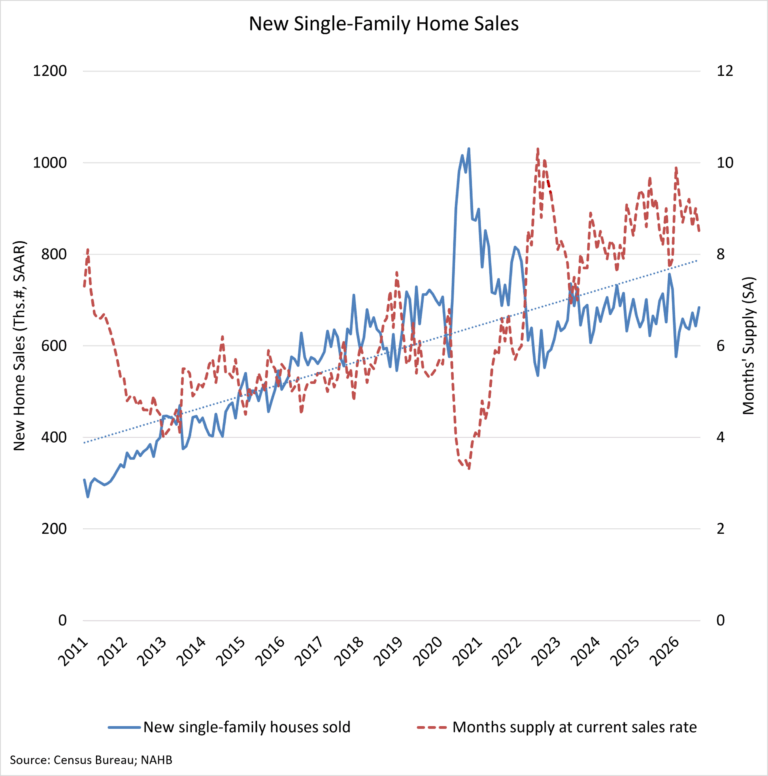
New home sales declined in January, reflecting typical monthly volatility as well as weather-related disruptions. On a three-month moving average basis, sales remain broadly in line with a year ago, suggesting underlying demand conditions have been relatively stable despite the month-to-month fluctuations. Meanwhile, builders continue to rely on incentives to attract buyers and sustain demand. The January NAHB/Wells Fargo Housing Market Index showed that 64% of builders used sales incentives, marking the 12th consecutive month this share exceeded 60%.

Sales of newly built single-family homes fell 17.6% in January to a seasonally adjusted annual rate of 587,000 from a downwardly revised December reading, according to newly released data from the U.S. Department of Housing and Urban Development and the U.S. Census Bureau. The pace of new home sales is down 11.3% from a year earlier. On a three-month moving average basis, sales were 688,000, remaining broadly in line with the 685,000 pace seen a year ago.

A new home sale occurs when a sales contract is signed, or a deposit is accepted. The home can be in any stage of construction: not yet started, under construction or completed. In addition to adjusting for seasonal effects, the January reading of 587,000 units is the number of homes that would sell if this pace continued for the next 12 months.

New single-family home inventory rose to 476,000 units in January. This is 0.4% higher than the previous month, but 4.0% lower than a year earlier. At the current sales pace, months’ supply for new homes stood at 9.7, compared to 9.0 a year ago. The increase in inventory along with weaker sales partly reflects a temporary slowdown in the new home market, as weather disruptions limited transactions during the month, particularly in regions such as the Northeast, where sales declined sharply by 44.7%.

A year ago, there were 116,000 completed, ready-to-occupy homes available for sale (not seasonally adjusted). By the end of January 2026, that number increased 10.3% to 128,000. However, completed, ready-to-occupy inventory accounted for just 27% of total inventory, while homes under construction made up 51%. The remaining 22% of new homes for sale in January were homes that had not started construction when the sales contract was signed.

The median new home sale price declined 4.5% to $400,500, representing a 6.8% decrease from a year ago. In January, 19% of new homes were priced below $300,000, while 34% were priced above $500,000. The share of new homes priced below $300,000 has trended lower since October 2025, after reaching a recent peak of 23% in September 2025.

Regionally, on a year-to-date basis, new home sales are up 1.4% in the Midwest and 4.1% in the South. New home sales are down 8.3% in the Northeast and 3.5% in the West.


This article was originally published by a eyeonhousing.org . Read the Original article here. .


New single-family home size had been falling since 2015 in response to declining affordability conditions. An exception occurred in 2021, when new home size increased as interest rates reached historic lows. However, as mortgage interest rates increased in 2022 and 2023 and affordability worsened, demand shifted back toward smaller homes.

More recent data suggest these trends have stabilized amid modest affordability improvements. According to fourth quarter 2025 data from the Census Quarterly Starts and Completions by Purpose and Design and NAHB analysis, median single-family square floor area was 2,183 square feet, effectively unchanged from the start of the year. Average (mean) square footage for new single-family homes registered at 2,447 square feet, a small increase.

On a one-year moving average basis, the average size of a new single-family home was essentially unchanged at 2,404 square feet, while the median size remained stable at 2,163 square feet.

Home size trends in 2026 are likely to remain relatively flat, reflecting crosswinds from housing affordability constraints and elevated construction costs.


This article was originally published by a eyeonhousing.org . Read the Original article here. .


In a year that saw a more than 6% decline for overall single-family housing starts, custom home building posted a gain. The custom building market is less sensitive to the interest rate cycle than other forms of home building but is more sensitive to changes in household wealth and stock prices. With spec home building down and the stock market up, custom building expanded its market share.

According to NAHB’s analysis of Census data from the Quarterly Starts and Completions by Purpose and Design survey, there were 45,000 total custom building starts during the fourth quarter of 2025. This is down 4% relative to the fourth quarter of 2024.

However, for 2025 as a whole, custom single-family housing starts totaled 186,000 homes, a 3% increase compared to 2024 (181,000).

Currently, the market share of custom home building, based on a one-year moving average, is almost 20% of total single-family starts. This is down from a prior cycle peak of 31.5% set during the second quarter of 2009 and the 21% recent peak rate at the beginning of 2023, after which spec home building gained some market share.

Note that this definition of custom home building does not include homes intended for sale, so the analysis in this post uses a narrow definition of the sector. It represents home construction undertaken on a contract basis for which the builder does not hold tax basis in the structure during construction.


This article was originally published by a eyeonhousing.org . Read the Original article here. .


Following the sharp decline last month, existing home sales bounced back in February as housing affordability improved. Lower mortgage rates and moderating home price growth helped pull buyers back to the market. However, tight inventory will likely continue to push home prices higher if demand outpaces supply growth.

Total existing home sales, including single-family homes, townhomes, condominiums, and co-ops, rose 1.7% to a seasonally adjusted annual rate of 4.09 million in February, according to the National Association of Realtors (NAR). On a year-over-year basis, sales were 1.4% lower than a year ago.

The existing home inventory level was 1.3 million units in February, up 2.4% from January and 4.9% from a year ago. At the current sales rate, February unsold inventory sits at a 3.8-months’ supply, unchanged from last month but up from 3.6-months in February. Inventory between 4.5 to 6 months’ supply is generally considered a balanced market.

Homes stayed on the market for a median of 47 days in February, up from 46 days in the previous month and 42 days in February 2025.

The first-time buyer share was 34% in February, up from 31% in January and one year ago.

The February all-cash sales share was 31% of transactions, up from 27% in January but down from 32% a year ago. All-cash buyers are less affected by changes in interest rates.

The February median sales price of all existing homes was $398,000, up 0.3% from last year. This marks the 32nd consecutive month of year-over-year increases. However, the year-over-year growth has moderated since peaking in December 2024, suggesting that price appreciation may continue to slow. The median condominium/co-op price in February was up 0.9% from a year ago at $358,100. Recent gains for home inventory will put downward pressure on resale home prices in most markets in 2026.

Three of the four major regions saw sales increases in February, ranging from 1.1% in the Midwest to 8.2% in the West. Sales in the Northeast fell 6.0%. On a year-over-year basis, sales rose only in the South (+0.5%), while sales in the West, Midwest, and Northeast all declined (-1.3%, -4.1%, and -4.1%, respectively). 

The Pending Home Sales Index (PHSI) is a forward-looking indicator based on signed contracts. The PHSI fell from 71.5 to 70.9 in January. On a year-over-year basis, pending sales were 0.4% lower than a year ago, according to the National Association of Realtors’ data. The decline suggests buyers are holding back due to limited inventory choices.


This article was originally published by a eyeonhousing.org . Read the Original article here. .

Pin It