Personal income rose 0.3% in November 2025, following a 0.1% increase in October, according to the latest data from the Bureau of Economic Analysis. Gains were largely driven by higher wages and dividend income. However, income growth has cooled noticeably from peaking at a monthly increase of 1.1% in July 2022 to 0.3% now.
Real disposable income, the amount remaining after adjusted for taxes and inflation, was up 0.1% in November, reversing a 0.1% decline in October. On a year-over-year basis, real (inflation-adjusted) disposable income rose 1%, down from a 7.2% year-over-year recent peak recorded in June 2023.
Consumer spending, meanwhile, remained robust but showed signs of softening. Personal consumption expenditures rose 0.5% in November. Real spending, adjusted to remove inflation, increased 0.3% in November, with expenditures on goods climbing 0.6% and spending on services up 0.2%.
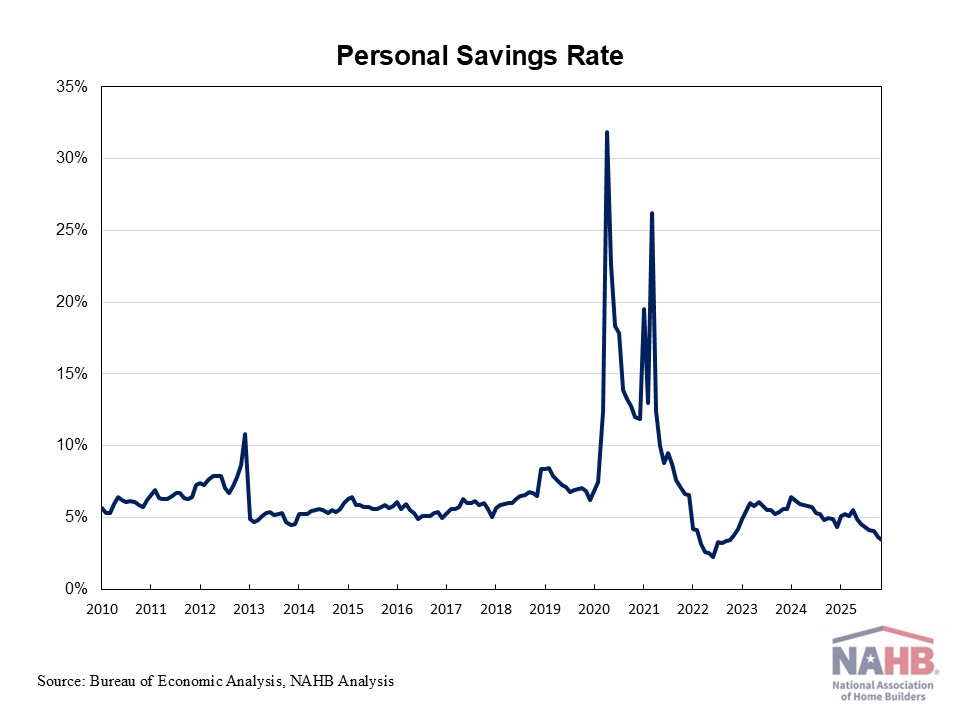
With spending growth outpacing income growth, the personal saving rate decreased to 3.5% in November, the lowest level since late 2022, when core CPI was around the peak. With inflation eroding compensation gains, households are dipping into savings to support spending, especially during the period when some payments were disrupted by the government shutdown. This trend will ultimately lead to a slowing of consumer spending.
This article was originally published by a eyeonhousing.org . Read the Original article here. .