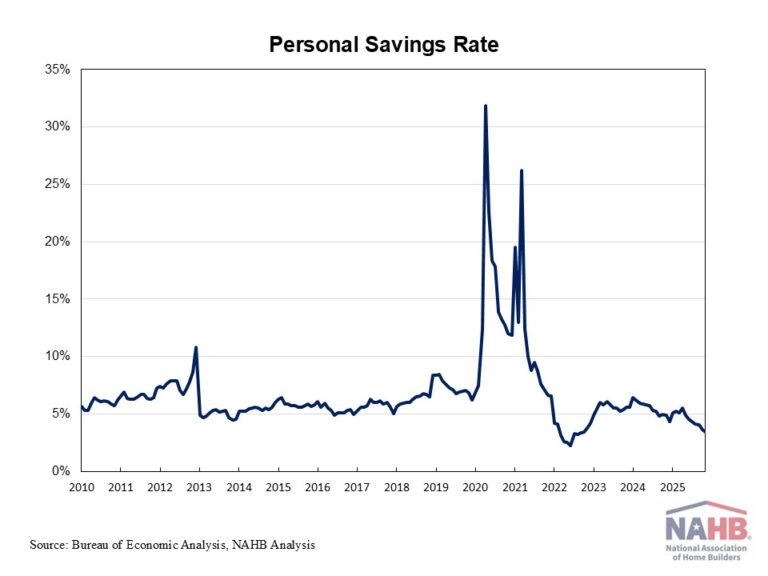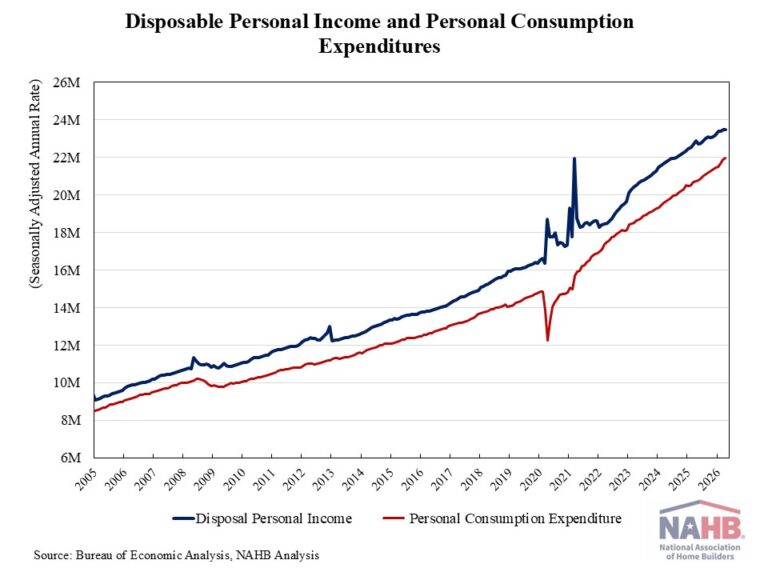
Personal income was essentially unchanged in April 2026, following a 0.5% gain in March, according to the latest data from the Bureau of Economic Analysis. On a year-over-year basis, personal income was 2.5% higher than in April 2025. As consumer spending outpaced income growth, the personal saving rate fell to 2.6%, the lowest level since June 2022. This data point implies households are drawing more heavily on savings to support spending.
Real disposable income, the amount remaining after adjusted for taxes and inflation, was down 0.5% in April, the third consecutive monthly decline. On a year-over-year basis, real (inflation-adjusted) disposable income fell 1.1%, reversing the positive trend seen earlier this year. The Iran war pushed up energy prices, while inflation surged to nearly two-year high in March.
Personal consumption expenditure rose 0.5% in April, following a 1% increase in March. Real spending (adjusted to remove inflation) increased 0.1% in April, with expenditure goods declining 0.2% and spending on services up 0.2%.
With spending growth outpacing income growth, the personal saving rate decreased to 2.6% in April, the lowest level since late 2022, when core CPI was around the peak. With inflation eroding compensation gains, households are dipping into savings to support spending, especially amid higher energy costs following the start of the Iran war.
This article was originally published by a eyeonhousing.org . Read the Original article here. .