
This article was originally published by a www.houzz.com . Read the Original article here. .

This article was originally published by a www.houzz.com . Read the Original article here. .


Whether you’re dealing with clients, colleagues, contractors or vendors, it’s essential to establish clear lines of communication to prevent misunderstandings.
Zlata Rybchenko, founder of Ohra Studio, believes transparency and clarity help to build trust and prevent misunderstandings before they even begin.
“Setting clear goals, budgets and timelines gives every party confidence that we’re working toward the same vision,” she says. “The Houzz Pro tool helps us make this even smoother — we can share proposals, track budgets and manage timelines in one place so nothing is left vague or open to misinterpretation. This level of organization not only keeps clients informed, it also reassures our team that we’re aligned at every step.”
Alicja Wawrzyniak of Alwa Interior Design Studio agrees that clarity generally prevents conflict. “Similar to your personal life, clarity in the professional field helps establish goals and expectations on both sides, reduces anxiety and ensures a project is stress free and more enjoyable. Lack of communication and avoiding updates can cause misunderstandings, which can quickly erupt into conflict.”
“Communication with builders is also crucial,” designer Anna Auzins of Anna Auzins Interiors says. “Contingency for surprises needs to be built in, such as a change to delivery times. I’ve never been involved in a project where something unexpected didn’t crop up.”
Find out how Houzz Pro can help your business
This article was originally published by a www.houzz.com . Read the Original article here. .


Native plants are a favorite jumping-off point for landscape pros when they’re designing a low-maintenance garden. “Plants indigenous to your area will result in lower maintenance needs, as they are well adapted to your natural soils, precipitation patterns and microclimates,” landscape designer Isara Ongwiseth of FormLA Landscaping says.
Oscar Ortega, who oversees maintenance for FormLA Landscaping, adds that native species do not need fertilizers or pesticides, which cuts down on maintenance while also supporting wildlife habitats.
Landscape designer Deborah Gliksman of Urban Oasis Landscape Design is another champion of native plants for the same reasons. She adds that native species often use less water than many nonnative exotics in her Southern California locale, where water considerations are a must, and help restore natural biodiversity.
What to Know About Starting Your First Native Plant Garden
This article was originally published by a www.houzz.com . Read the Original article here. .


Don’t assume a potential customer knows everything about the service you offer. That first conversation is your opportunity to get them excited about hiring your business, so make time to take them through how a project would pan out.
“Clients often underestimate the technique, rigor and commitment required as an interior designer, thinking just a moodboard does the trick,” Eude says. “Explaining the process and the boundaries of the service agreed upon ensures everyone is clear about roles.”
Interior designer Lindsey Higgins goes through a sales process with all her leads to make sure they understand what she would offer at each stage of the project.
“It’s a pathway with touch points to explore their needs, how I can help and how I work,” Higgins says. “It helps us both to work out if we’re a good fit to work together, because that’s critical to achieving the right outcome for a client.
“I always know where the prospect is on that journey and I always make sure they know what the next step is,” she says. “Signing a contract only happens at the end when there are no more questions to be answered.”
10 Questions to Quickly Identify Your Customers’ Needs
This article was originally published by a www.houzz.com . Read the Original article here. .


Once you have your plan for the day, it’s a good idea to work out an effective timeline. “I block out time in meaningful chunks, so I know I can achieve something and make progress in whatever area I’m working on at that time,” Higgins says.
Take into consideration factors that influence the best time for each task. This could be the need to work around the schedules of clients or contractors, but it could also be influenced by how your productivity ebbs and flows throughout the day. If you’re a morning person, perhaps schedule tasks that require concentration earlier on, for example.
“I find using an online [calendar] keeps me organized, not just for appointments, but tasks too,” interior designer Ann Cope says. In addition to setting aside blocks of time to work on your business, she also recommends scheduling breaks away from the desk.
6 Proven Time Management Tips for Home Professionals
This article was originally published by a www.houzz.com . Read the Original article here. .


A few themes stand out in their advice: Umbrellas are hard to beat for instant shade and flexibility, pergolas and other structures deliver the most reliable coverage for outdoor living, and planting a shade tree is the best investment for natural shade.
This article was originally published by a www.houzz.com . Read the Original article here. .


When you have too many plates spinning at the same time, they can all come crashing down around you, so try to focus on one task at a time. An effective strategy, according to James, is to block out time slots for each different activity.
“For instance, set aside blocks of time for client meetings, design concept development, sourcing materials, and administrative tasks,” he says. “Stick to your schedule as closely as possible to ensure you have dedicated time for all aspects of your work.”
“I also prefer blocking out a few hours each week for design work and try to switch off my phone or email in order to focus on the project in hand,” interior designer Chantel Elshout says.
This article was originally published by a www.houzz.com . Read the Original article here. .


Fed up with feeling tired but wired at night? If you want to properly unwind before bed, it’s worth keeping devices away from the bedroom or stop using them an hour or two before bed. Too much exposure to the blue light that many screens emit can interfere with the production of melatonin, which can lead to that feeling of your mind being awake when your body needs to rest.
Try leaving your phone outside the bedroom at night or, if that’s too big a step, limit usage before bedtime and switch it to night mode, which dials down the blue in favor of warmer tones.
This article was originally published by a www.houzz.com . Read the Original article here. .


“As leader, your primary role is to set the vision and strategy for the team — steering the ship toward its goals,” Hains says. “By delegating tasks and responsibilities, you not only free up your time to focus on higher-level priorities but also empower your team members to develop their skills, take ownership of their work and contribute to the team’s success. Effective delegation builds trust within the team.”
“No one person can do it all,” says Jeff True, vice president of operations at Hursthouse Landscape Architects and Contractors in Bolingbrook, Illinois. “If you want to keep people for their entire career, they have to feel they are growing. Growth comes from delegation. It allows a more timely response to clients and lets people be specialists in their area of expertise. A high-performing team that is both efficient and results-oriented is rooted in delegation.”
“When delegating, I focus on the bigger picture and hand off tasks like project management, client communication and execution to my incredible team,” Crosby says. “At first it was hard — especially because I’m a bit of a perfectionist. But once I saw the results of trusting my team, it became easier.”
6 Pros Share Strategies for Leading Under Pressure
This article was originally published by a www.houzz.com . Read the Original article here. .

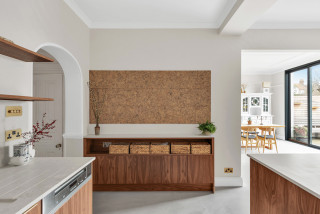
If you’re planning a full kitchen renovation, take inspiration from this thoughtful kitchen design by Studio Fabbri. Designer Gemma Fabbri had a run of floor-to-ceiling cabinets designed to hide appliances, food supplies, the boiler and everyday clutter that might otherwise drift onto work surfaces.
“I wanted to get things off the [countertop] as it’s mostly on the island and I didn’t want much on there,” Fabbri says.
The wall of cabinets has two standard Ikea cabinets on the left, one of which contains the refrigerator, two wider, 32-inch ones, which were custom made. One is a double-door pantry cabinet containing a coffee machine and toaster.
Every member of the family has been considered too. When Fabbri was left with a slim space next to the boiler cupboard, she decided to make a cat tunnel. “The panel pops off so you can get in there to clean it, and there’s a piece of carpet in there so their feet dry a little,” she says.
New to home remodeling? Learn the basics
This article was originally published by a www.houzz.com . Read the Original article here. .

Don’t assume a potential customer knows everything about the service you offer. That first conversation is your opportunity to get them excited about hiring your business, so make time to take them through how a project would pan out.
“Clients often underestimate the technique, rigor and commitment required as an interior designer, thinking just a moodboard does the trick,” Eude says. “Explaining the process and the boundaries of the service agreed upon ensures everyone is clear about roles.”
Interior designer Lindsey Higgins goes through a sales process with all her leads to make sure they understand what she would offer at each stage of the project.
“It’s a pathway with touch points to explore their needs, how I can help and how I work,” Higgins says. “It helps us both to work out if we’re a good fit to work together, because that’s critical to achieving the right outcome for a client.
“I always know where the prospect is on that journey and I always make sure they know what the next step is,” she says. “Signing a contract only happens at the end when there are no more questions to be answered.”
10 Questions to Quickly Identify Your Customers’ Needs