This article was originally published by a www.houzz.com . Read the Original article here. .
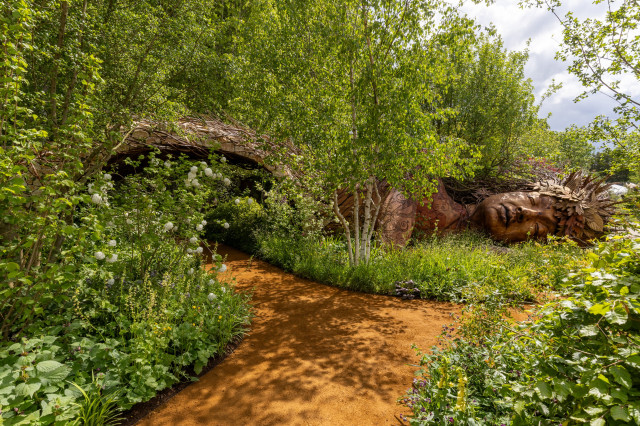
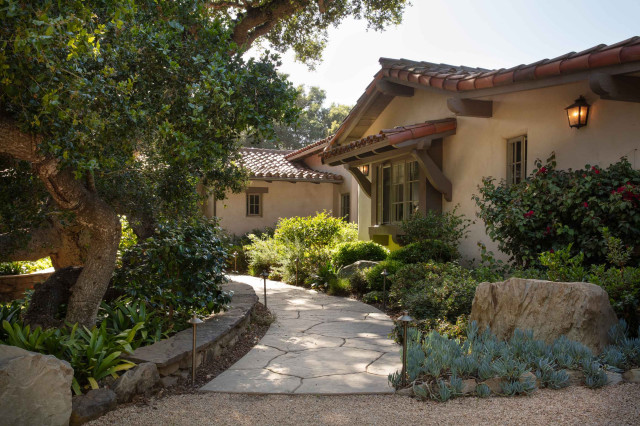
Native plants are a favorite jumping-off point for landscape pros when they’re designing a low-maintenance garden. “Plants indigenous to your area will result in lower maintenance needs, as they are well adapted to your natural soils, precipitation patterns and microclimates,” landscape designer Isara Ongwiseth of FormLA Landscaping says.
Oscar Ortega, who oversees maintenance for FormLA Landscaping, adds that native species do not need fertilizers or pesticides, which cuts down on maintenance while also supporting wildlife habitats.
Landscape designer Deborah Gliksman of Urban Oasis Landscape Design is another champion of native plants for the same reasons. She adds that native species often use less water than many nonnative exotics in her Southern California locale, where water considerations are a must, and help restore natural biodiversity.
What to Know About Starting Your First Native Plant Garden
This article was originally published by a www.houzz.com . Read the Original article here. .
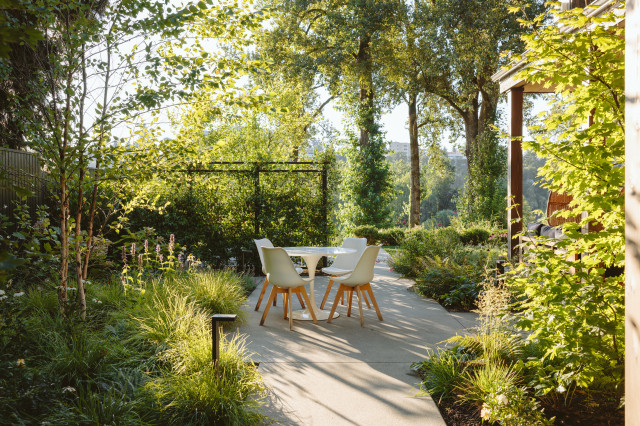
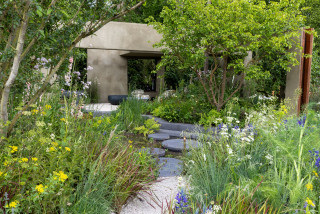
The flowering perennials include ‘Moonshine’ yarrow (Achillea ‘Moonshine’, zones 3 to 9), ‘Caradonna’ sage (Salvia nemorosa ‘Caradonna’, zones 4 to 9), ‘Big Blue’ sea holly (Eryngium x zabelii ‘Big Blue’, zones 5 to 9), ‘Whirling Butterflies’ gaura (Oenothera lindheimeri ‘Whirling Butterflies’, zones 5 to 9), ‘Amistad’ sage (Salvia ‘Amistad’, zones 8 to 11), ‘Blue Boa’ giant hyssop (Agastache ‘Blue Boa’, zones 5 to 9), ‘Blackbird’ beard tongue (Penstemon ‘Blackbird’, zones 7 to 10) and ‘Magnus’ purple coneflower (Echinacea purpurea ‘Magnus’, zones 3 to 8). The plantings also include various ferns, shrubs and hellebores.
Ornamental grasses are another important part of the planting design. ‘Goldtau’ tufted hairgrass (Deschampsia cespitosa ‘Goldtau’, zones 4 to 9) grows in clumps of dark green blades. Its cloud-like blooms in gold, silver, purple and green mature into a yellowish tan in the fall and provide interest through the winter. Another star player in the grass palette is ‘Greenlee’ moor grass (Sesleria ‘Greenlee Hybrid’, zones 5 to 9), which has linear blue-green blades and pale purple flower spikes that bloom in late spring through early summer before transforming into purplish-brown seed heads in the fall.
Get Year-Round Good Looks With Matrix Planting in Your Garden
This article was originally published by a www.houzz.com . Read the Original article here. .

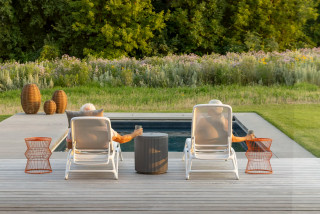
Read on, as landscape design professionals on Houzz offer their advice on the best places to save money on a landscape redesign, such as savvy ways to repurpose or refinish existing materials, strategies for phasing larger landscape projects and more.
This article was originally published by a www.houzz.com . Read the Original article here. .

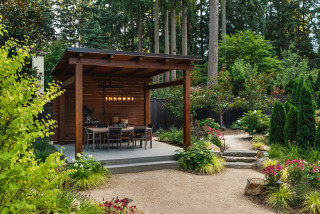
To help with this decision process, we have tapped professionals in the landscape design field to discuss where you might want to splurge and where you can save in a landscape redesign. First, we’ll cover where it makes sense to invest your budget, including a master plan, high-impact elements, long-lasting materials, outdoor furniture and more.
This article was originally published by a www.houzz.com . Read the Original article here. .
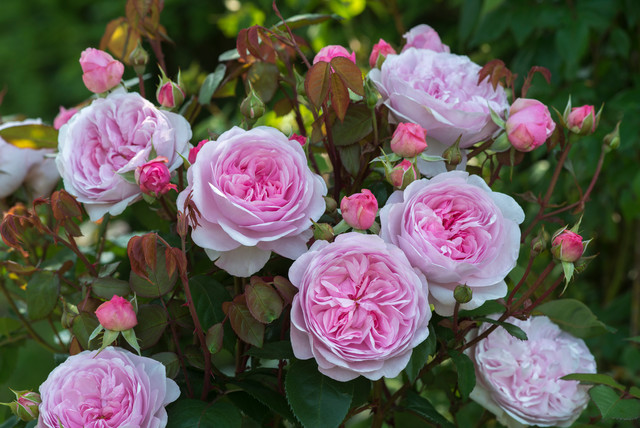
Loved by: Janie McCabe of M.J. McCabe Garden Design in Northford, Connecticut
Why this rose: “The color is an amazing golden amber with pink edges; [this rose also] is abundant with flowers in June, and will repeat bloom later in the season. The foliage is a dark green, and it is quite resistant to diseases,” McCabe says. “It has a nice spicy, rich fragrance, making it a lovely addition to the garden — great for cutting too.”
Special features: In addition to its stunning flowers, continuous bloom and distinct scent, ‘Strike It Rich’ is also considered to be naturally vigorous and disease resistant.
Growing tips: “When initially planting, I dig a very generous hole, adding an organic slow-release fertilizer along with green sand,” McCabe says. Once the rose is in the ground, McCabe surrounds it with plenty of compost and then waters it well with a seaweed-and-fish-emulsion fertilizer. “I continue to fertilize my roses with a diluted liquid seaweed-and-fish-emulsion solution about every two to three weeks,” she says.
Where it will grow: Hardy to minus 15 degrees Fahrenheit, or minus 26.1 degrees Celsius (zones 5 to 9)
Water requirement: Medium
Light requirement: Full sun
Mature size: 4 to 6 feet tall and 2 to 4 feet wide
This article was originally published by a www.houzz.com . Read the Original article here. .
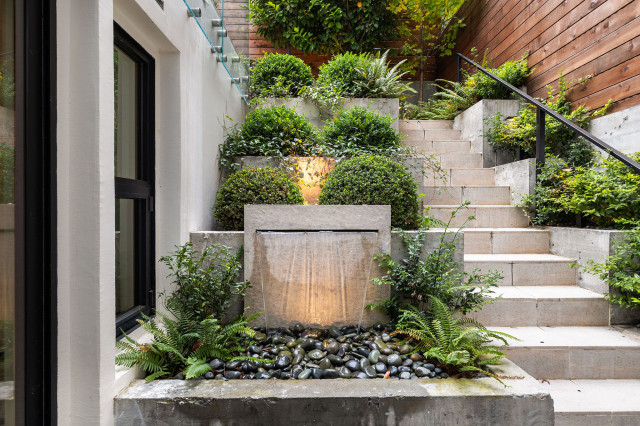
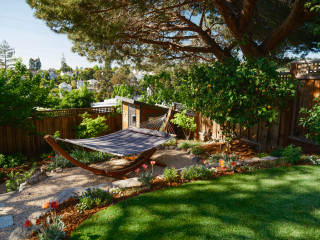
Integrating ways to promote wellness outdoors can stray into more aspirational projects, such as cold plunges and saunas (and this list will too). However, since not everyone can live like a full-time lifestyle guru, below are plenty of simple and inexpensive other ways your outdoor spaces can help improve your health. Check out these 12 ideas for promoting wellness through the landscape to see which ones are a good fit for your home.
This article was originally published by a www.houzz.com . Read the Original article here. .

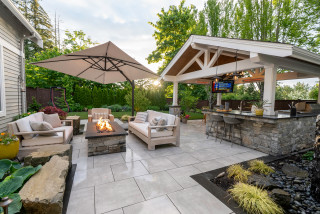
A few themes stand out in their advice: Umbrellas are hard to beat for instant shade and flexibility, pergolas and other structures deliver the most reliable coverage for outdoor living, and planting a shade tree is the best investment for natural shade.
This article was originally published by a www.houzz.com . Read the Original article here. .
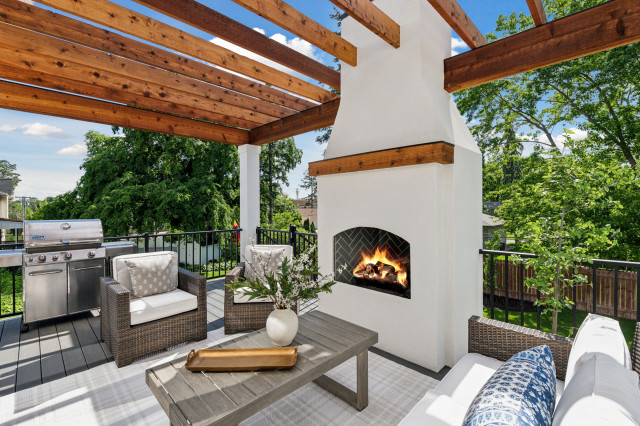
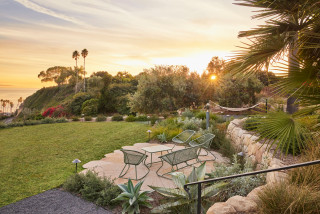
(If you want to learn about other home pros, go to the bottom of this story for links to earlier stories in our “10 Times to Hire” series.)
This article was originally published by a www.houzz.com . Read the Original article here. .

Chicago is known for its brutally cold winters and hot, dry summers. “Just a few hours north and south of here is a very different climate,” says Jeff True.
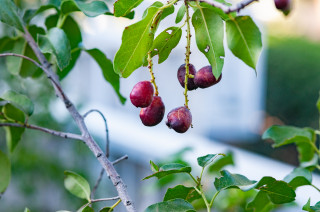
Turn to native hardwoods. True says that native hardwood trees can handle weather extremes and are often his starting points. These include several maples, such as red maple (Acer rubrum, zones 3 to 9), sugar maple (A. saccharum, zones 3 to 8; shown here), silver maple (A. saccharinum, zones 3 to 9) and Freeman’s maple (A. x. freemanii, zones 5 to 8).
Native white oak (Quercus alba, zones 3 to 9), which is the state tree of Illinois, is also a tried-and-true favorite, as are swamp white oak (Q. bicolor, zones 3 to 8), Chinquapin oak (Q. muehlenbergii, zones 5 to 7) and shagbark hickory (Carya ovata, zones 4 to 8). “I personally love Kentucky coffeetree (Gymnocladus dioicus, zones 3 to 8) and hackberry (Celtis occidentalis, zones 2 to 9),” True says.
He adds that the new elm varieties resistant to Dutch elm disease, such as Triumph elm (Ulmus ‘Morton Glossy’, zones 4 to 7), are fast-growing, allowing them to fill in spaces quickly.
8 Reasons to Plant a Great Tree
This article was originally published by a www.houzz.com . Read the Original article here. .
There’s something pleasingly wholesome about gathering plants from our own yards to use in the kitchen. The idea of weaving in less common edibles is gaining popularity, and several designers at this year’s show incorporated varieties that are safe to eat.
The Whittard of Chelsea garden, seen here, designed by Ollie Pike for the esteemed tea company, featured numerous plants with leaves, petals and hips perfect for infusions. These included river birch (Betula nigra, USDA zones 4 to 9; find your zone), which has vitamin-rich leaves; ‘Our Beth’ rose (Rosa ‘Beacarol’, zones 6 to 9); and tea plant (Camellia sinensis, zones 7 to 9).
The Woodland Trust “Forgotten Forests” garden by Ashleigh Aylett contained plants with edible berries, flowers and leaves.
The Eden Project “Bring Me Sunshine” garden (see next photo) by Alex Michaelis and Harry Holding was inspired by a coastal town in northwestern England and wove edible plants that thrive in salty sea air, such as sea kale (Crambe maritima, zones 5 to 9), into soft plantings.