This article was originally published by a www.houzz.com . Read the Original article here. .
This article was originally published by a www.houzz.com . Read the Original article here. .

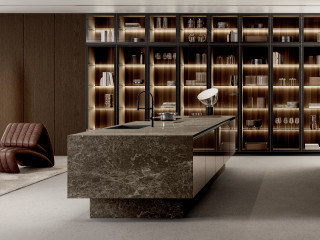
In these designs, spaces flow seamlessly from one to another, alternating between open, social areas and more intimate, functional zones. The island takes on a sculptural form that makes it the focal point of the room, while the breakfast bar becomes a central gathering spot. Lines are softer, with curved and sinuous forms that reflect a home designed around interaction and fluid living. Appliances are becoming more advanced to meet contemporary needs with innovative solutions. The use of matte finishes with a tactile quality grows.
Keep reading to discover seven key kitchen trends from EuroCucina 2026.
This article was originally published by a www.houzz.com . Read the Original article here. .
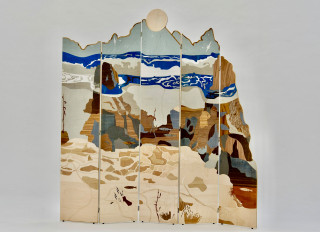
1. Decorative Reuse
The theme of this year’s event was Material Evolution, an idea that embraced not just the new, but the reused and reinvented as well, and there were plenty of examples of reworked waste materials across the show.
But while we’ve become used to the idea of plastic bottles made into countertops and construction waste being turned into bricks, what felt so inspiring were the numerous examples of waste materials being reinvented in intricate and beautiful ways.
The most striking piece was by “Emerging Talent” Eleanor Pickin, who uses industry offcuts and discarded veneers to craft exquisite marquetry. Her Ocean Screen (pictured) depicts an undersea world and, in addition to looking beautiful, serves to remind us of the need to take care of fragile ecosystems.
It’s full of detail (note the emerging octopus, bottom right), has a night scene on the back, and can be commissioned in sections, depending on the size of screen required.
Find home design and remodeling professionals on Houzz
This article was originally published by a www.houzz.com . Read the Original article here. .
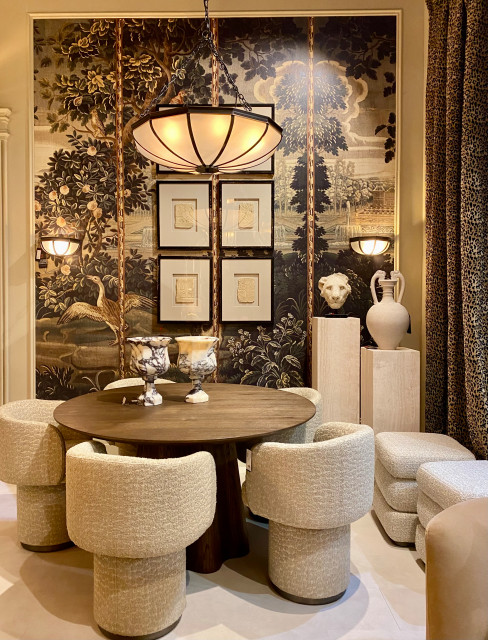
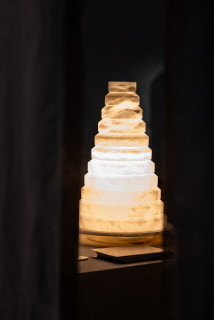
5. Heritage Crafts
The theme of Maison & Objet 2026 was “Past Reveals Future,” an intriguing concept that relates to the way design pieces are made. Brands looked back to reveal traditional manufacturing techniques that can be used or interpreted for creations that suit today’s interiors.
While some preserve tradition, others combine high-tech production with artisanal skills. Whether it be in textiles, hand-painted wallpaper, pottery or objects made of wood or glass, the key is allowing the story of the process to be heard.
Ukrainian brand Guculiya, founded by designer, architect and researcher Danuta Kril, champions an almost-lost pottery technique, Gavarechchyna, named for the western Ukraine region where it originated and survives today, according to the company. The smoky black pottery is baked in a wood-burning oven, where smoke seeps into the clay to oxidize and darken it. Modern shapes and time-honored process combine in the collection.
This article was originally published by a www.houzz.com . Read the Original article here. .
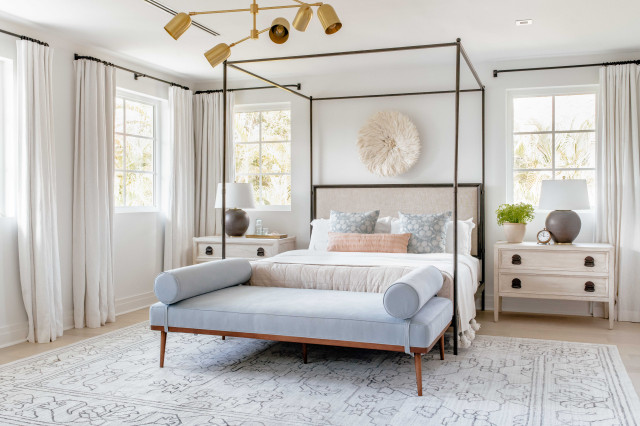
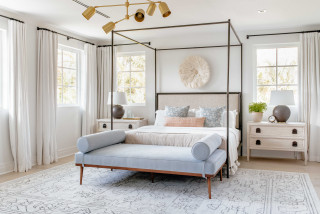
An upholstered headboard versus a hard, solid material will add function to your room. “I always recommend an upholstered headboard,” says designer Heather Hanley of The Tin Roof. “Not only is it an elegant look and timeless, but it’s functional for those of us that love to read in bed, watch TV or work in bed. I love to lean up against the headboard and spread out a project and work while sitting in bed. It’s cozy and seems somewhat like resting, even if it’s not.”
In this Tampa, Florida, bedroom by Debra Ackerbloom, a scalloped channel-tufted headboard elevates the serene style.
This article was originally published by a www.houzz.com . Read the Original article here. .
A majority (56%) of firms in the construction sector are expecting a good to very good year, 28% are anticipating stable conditions, and 16% foresee weaker performance than in 2025. In the architectural and design services sector, half (50%) expect a strong year, 35% report a neutral outlook and 15% anticipate declines in business performance.
Construction firms’ expectations are more subdued for the first quarter of 2026 — after a softening in late 2025 — than for the year overall. Architecture and design firms are on a stronger footing in the first quarter of 2026, buoyed by increased business activity in the fourth quarter of 2025.
“Construction and design businesses are heading into 2026 with a measured but resilient outlook,” says Marine Sargsyan, head of economic research at Houzz. “While expectations for the broader national economy remain subdued, and cost and labor pressures persist, many firms anticipate stable demand for their projects. To drive revenue growth in 2026, businesses are adjusting their strategies by raising prices, prioritizing larger and higher-value projects and investing in employee productivity, reflecting broader industry interest around AI-enabled software tools such as Houzz Pro.”
This article was originally published by a www.houzz.com . Read the Original article here. .
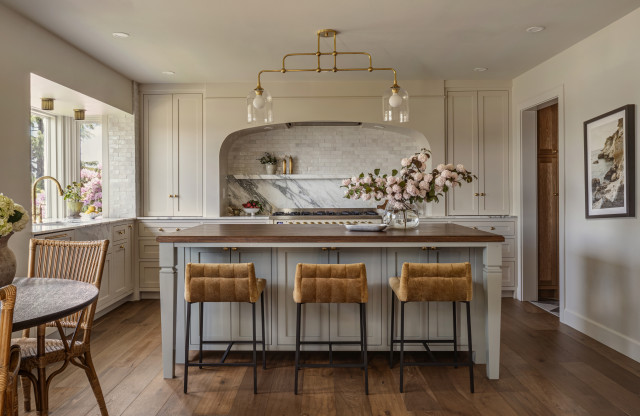
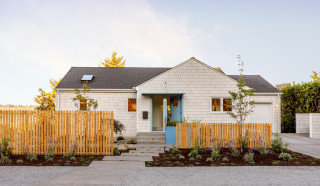
Terra cotta, sage, olive green, dusty blue, muted pastels, creamy beiges, browns, taupes and buttery yellows are taking over interiors. “The reign of all-white interiors and icy gray palettes has definitely come to an end,” says color specialist Jennifer Ott. “Homeowners are now craving warmth, richness and depth in their spaces. For those who still prefer lighter palettes, stark whites are giving way to warmer neutrals that are sun-warmed and tactile — think canvas, parchment or soft stone gray. These hues add subtle depth while maintaining a sense of calm and brightness.”
Kitchens feature terra-cotta-colored tile backsplashes and sage cabinetry, while living rooms lean into buttery yellows, warm taupes and olive accents layered with natural textures like linen, wool and rattan. Bedrooms and bathrooms are embracing muted blues and greens for a soothing, restorative feel, and even entryways and home offices are benefiting from warmer palettes that create inviting spaces rather than stark or clinical ones. “Clients have been increasingly drawn to warm, nature-inspired tones in their kitchen designs, particularly incorporating earthy hues like terra cotta, soft beige and sage green,” says designer Donna Rose. “This trend aligns with the broader shift toward biophilic, nature-inspired design.”
This New Jersey living room by Forina Design showcases the warmth of woodsy tones. Like many of the pros featured in this story, Forina Design subscribes to Houzz Pro. Moody green sofas, deep beige wallpaper, wood accents and touches of yellow, gold and blue create a layered, inviting space that feels both organic and vibrant.
9 Paint Colors Poised to Dominate in 2026
This article was originally published by a www.houzz.com . Read the Original article here. .
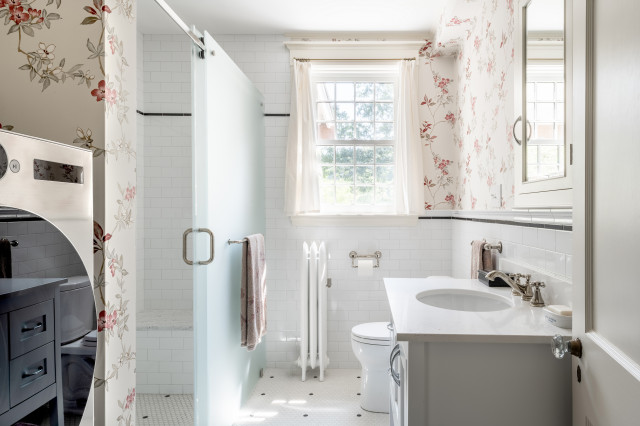
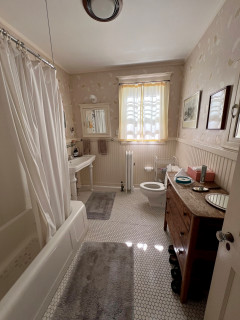
Everything about the new shower makes life easier. It’s zero-threshold, with no curb to step over, and the barn-style glass door glides smoothly on a track. “It also has a large handle that’s easy for arthritic hands to pull,” Greenberg says. A towel bar on the door keeps things within easy reach.
The wife selected a botanical wallpaper that ties into the nature-inspired motifs of the Craftsman era. The tile design also stays true to the period. “My clients wanted traditional 3-by-5-inch subway tile, but we had to look quite hard for just the right cap. This one isn’t too clunky and has a profile that they liked,” Greenberg says.
The floor features matte white hexagonal tiles for maximum traction. “All the original bathroom floors in the house are white hex with black accents and we continued that pattern here,” Greenberg says. A slim black pencil tile around the room ties it all together. The many grout lines add slip resistance — another thoughtful aging-in-place feature.
Keeping the bathroom warm through Massachusetts winters was a key priority. The team refinished the original radiator, giving it a fresh look while retaining its powerful heat output. “That radiator pumps out a lot of heat and they love it,” Greenberg says.
The bath also includes a ceiling-light-fan-heater combo, a feature the homeowners appreciated in the original room. To make the space more energy-efficient, Greenberg’s team padded out the exterior wall for extra insulation and replaced the old window with a historically appropriate reproduction.
Wallpaper: April Blossom, York Wallcoverings
This article was originally published by a www.houzz.com . Read the Original article here. .
House at a Glance
Who lives here: A couple with five children between them
Location: Var region, Provence, France
Size: Five bedrooms and four bathrooms on three floors
Designers: Stephanie Bailey and Jo Miller of Decorbuddi
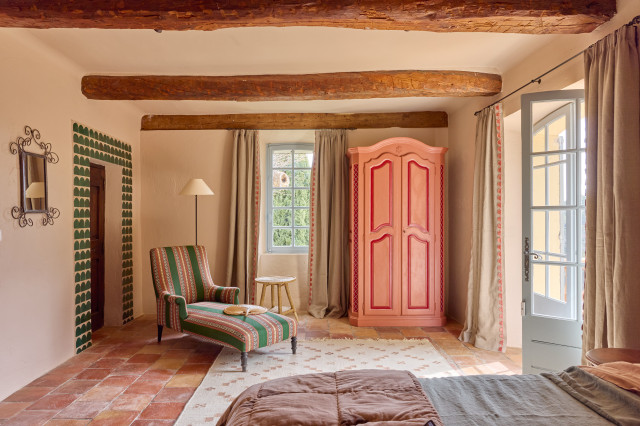
The owner bought this former olive farm in 2024 as a place he and his wife could share with friends and extended family. He wanted a warm and livable design, with sustainable choices throughout and a “wow” moment here and there. “He didn’t want anything so precious that if he broke it, he would be weeping,” Bailey says.
The owner loves Moroccan style, but has worked all over the world. “He’s lived in India, Sri Lanka and Nepal and is really well traveled,” Bailey says. “He has lovely textiles, amazing bold colors and a lifetime’s collection of interesting art and objects in his London house. When Jo and I were presenting mood boards to him there, we saw it and were like, OK, we get what he likes.”
Miller agrees. “To start with, the owner wanted Moroccan and he wanted color, but we swiftly realized he wanted a world look,” she says. “The challenge was to offer him that kind of aesthetic, but to incorporate it within a French farmhouse.”
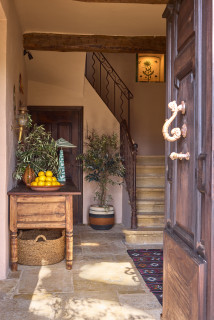
The walls in the hall and landing are painted a warm pinky beige shade. “We wanted it to be really ambient and a bit moody in there, and we knew we had good lighting going in that this tone would work with,” Bailey says.
Miller sourced the old table in France. “We had to have it cut down or it wouldn’t have fitted here,” she says. “It was more like a table than a console originally.”
Hall and landing wall paint: Leather V, Paint & Paper Library; table: Pamono
This article was originally published by a www.houzz.com . Read the Original article here. .

1. Heritage Maximalism
A “more is more” approach has been moving into our interiors for some time now, but there was a more focused take on the maximalism trend at this year’s show. Heritage maximalism sees the eclectic layering of patterns, colors and decorative details, with a nod to traditional country house style for a timeless, lived-in feel.
The look aligns with the move toward interiors with character and brings warmth and elegance to a potentially chaotic look. Traditional shapes and patterns give schemes a nostalgic feel that speaks to those who enjoy a curated display of favorite pieces and a sense of history.
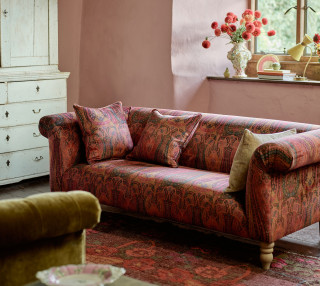
London’s Victoria & Albert Museum (V&A), for instance, has collaborated with several brands, granting them access to its extensive archive for inspiration. Sofas & Stuff has launched a series of couches in paisley velvets inspired by 19th century Kashmiri shawls in six colors, including Rouge (pictured).
Find an interior designer on Houzz
This article was originally published by a www.houzz.com . Read the Original article here. .
Scent is a powerful memory trigger. If there’s a fragrance you associate with a time period in your life or a loved one, adding this scent to your yard can bring you right back. If you don’t have something in particular you’d like to plant, you can’t go wrong with David Austin’s ‘Gertrude Jekyll’ rose, a pink shrub rose with a cabbage center and an old-fashioned rose fragrance.
Adding plants for texture, like fuzzy dusty miller (Jacobaea maritima, USDA zones 7 to 10; find your zone), or for movement, like ornamental grasses that sway in the slightest breeze, is another way to engage the senses and make you feel more connected to a landscape.