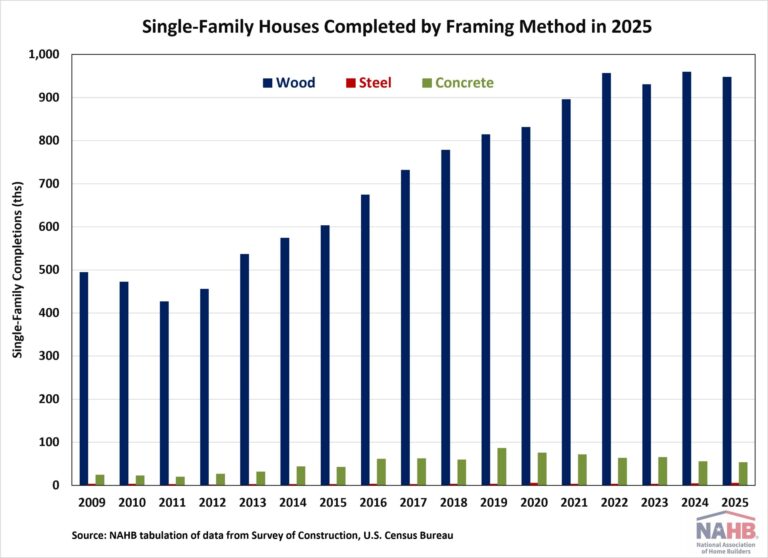
Wood framing continues to dominate the U.S. single-family home construction market, according to NAHB analysis of 2025 Census Bureau data. In 2025, wood framing accounted for 94% of all completed single-family homes, maintaining its position as the leading construction method. Concrete-framed homes represented 5% of completions, while steel-framed homes remained relatively rare, comprising half a percent of the market.
On a count basis, approximately 947,000 wood-framed homes were completed in 2025. This was a 1% decrease compared to the 2024 total. Despite the decline in the number of wood-framed homes, the wood-framed market share remained unchanged at 94% in 2025. Steel-framed homes, while still uncommon, continued to increase. About 5,000 steel-framed homes were completed in 2025, representing a 25% increase from the previous year.
Meanwhile, concrete-framed homes also experienced a decline. The concrete market share remained at 5% in 2025, while the number of concrete-framed homes completed fell to approximately 53,000, a 4% decrease compared to the prior year. Non-wood-based framing methods are primarily concentrated in the South due to residential resiliency requirements. In 2025, concrete-framed homes made up 9% of all single-family home completions in the South. Additionally, about 60% of all steel-framed homes completed in 2025 were built in the South, highlighting the region’s distinct building trends.
This article was originally published by a eyeonhousing.org . Read the Original article here. .
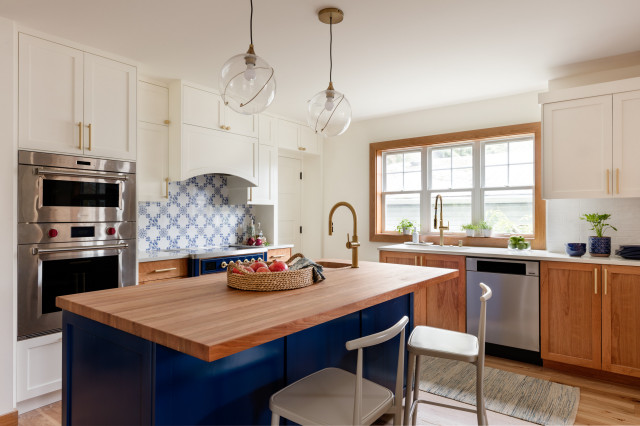

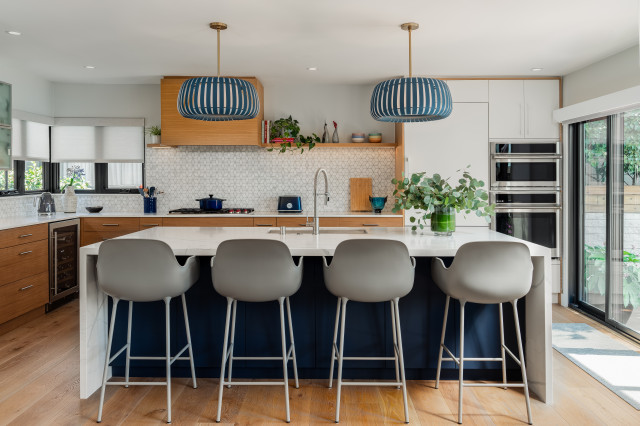

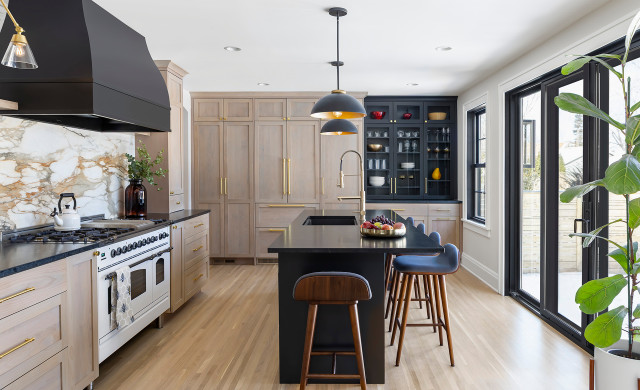

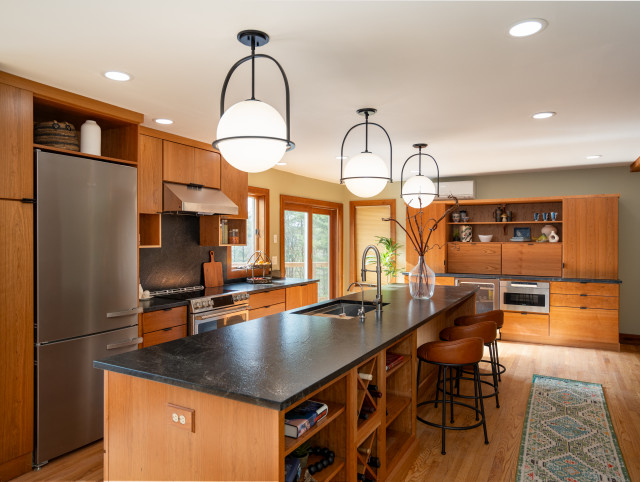
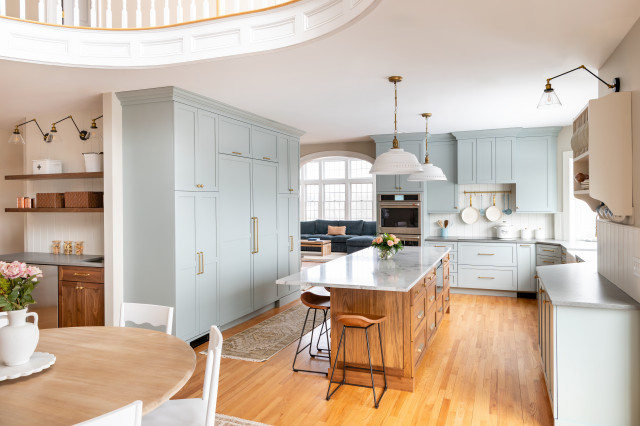
Kitchen at a Glance
Who lives here: An empty-nest couple
Location: Seattle
Size: Before and 240 square feet After
Architect: Miriam Larson of Story
Builder: Blue Sound Construction
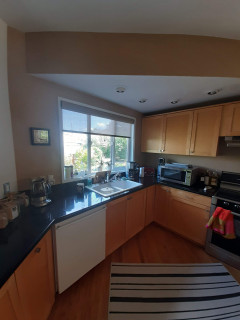
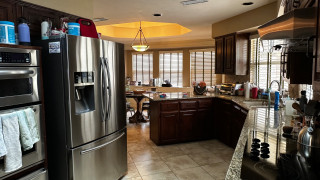
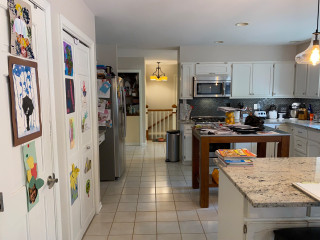
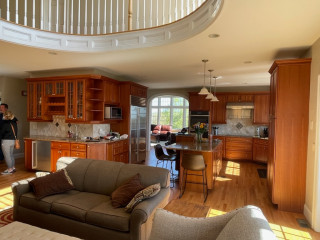
Before: The 177-square-foot kitchen, last updated in the 1980s, had awkward angles that made it difficult to work in. An overbearing soffit, dated black granite countertops and honey oak cabinets that blended into the wood flooring added to the problem. “The kitchen had an outdated plan that was counterintuitive,” Larson says. Out of view, a staircase and powder room further disrupted the layout (see below).
Find home design and building pros on Houzz