Tag

Sales

Browsing


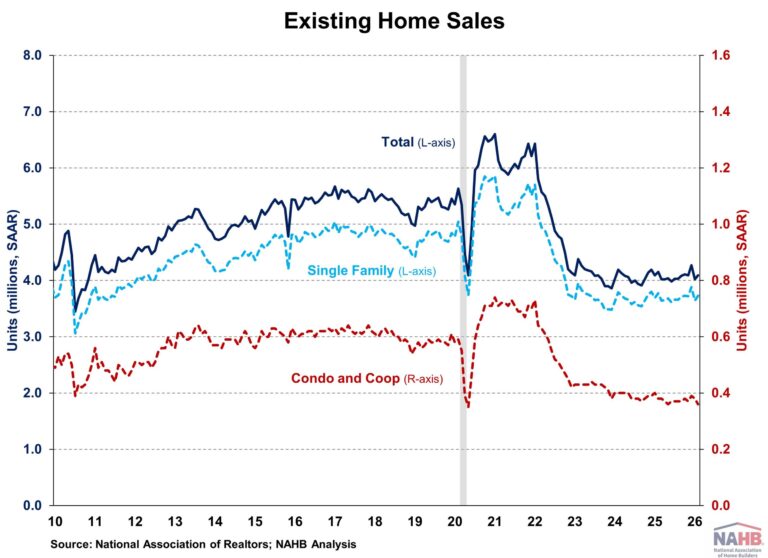
Existing home sales fell to a nine-month low in March as tight inventory, rising mortgage rates and growing concerns about the job market constrained sales activity. While inventory has improved in recent months, it remains below historical norms, continuing to push home prices higher as demand outpaces supply. Meanwhile, the Iran war has reversed the downward trend in mortgage rates, which jumped from 5.98% before the conflict to 6.37% last week. These headwinds will likely dampen home sales while tight inventory continues to drive home prices higher, further worsening housing affordability.

Total existing home sales, including single-family homes, townhomes, condominiums, and co-ops, fell 3.6% to a seasonally adjusted annual rate of 3.98 million in March, the lowest level since June 2025, according to the National Association of Realtors (NAR). On a year-over-year basis, sales were 1.0% lower than a year ago.

The existing home inventory level was 1.4 million units in March, up 3.0% from February and 2.3% from a year ago. At the current sales rate, March unsold inventory sits at a 4.1-months’ supply, up from 3.8-months in February and 4.0-months a year ago. Inventory between 4.5 to 6 months’ supply is generally considered a balanced market.

Homes stayed on the market for a median of 41 days in March, down from 47 days in the previous month and 36 days in March 2025.

The first-time buyer share was 32% in March, down from 34% in February and unchanged from a year ago.

The March all-cash sales share was 27% of transactions, down from 31% in February but up slightly from 26% a year ago. All-cash buyers are less affected by changes in interest rates.

The March median sales price of all existing homes was $408,800, up 1.4% from last year. This marks the 33rd consecutive month of year-over-year increases. The median condominium/co-op price in March was up 2.3% from a year ago at $371,500. Recent gains for home inventory will put downward pressure on resale home prices in most markets in 2026.

All four major regions saw sales declines in March, ranging from 1.3% in the West to 8.5% in the Northeast. On a year-over-year basis, sales rose in the West (+1.3%) and South (+2.2%), while sales in the Midwest and Northeast declined (-3.2% and 12.2% respectively).

The Pending Home Sales Index (PHSI) is a forward-looking indicator based on signed contracts. The PHSI rose from 70.8 to 72.1 in February due to improved affordability. On a year-over-year basis, pending sales were 0.8% lower than a year ago, according to the National Association of Realtors’ data. However, resurgence in mortgage rates driven by the Iran war could reverse the increase.


This article was originally published by a eyeonhousing.org . Read the Original article here. .


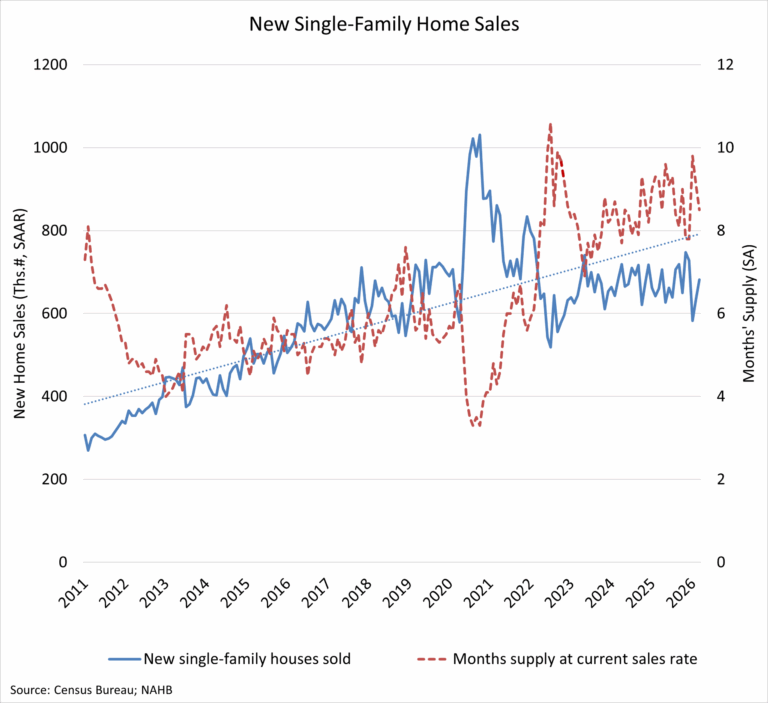
New home sales declined in January, reflecting typical monthly volatility as well as weather-related disruptions. On a three-month moving average basis, sales remain broadly in line with a year ago, suggesting underlying demand conditions have been relatively stable despite the month-to-month fluctuations. Meanwhile, builders continue to rely on incentives to attract buyers and sustain demand. The January NAHB/Wells Fargo Housing Market Index showed that 64% of builders used sales incentives, marking the 12th consecutive month this share exceeded 60%.

Sales of newly built single-family homes fell 17.6% in January to a seasonally adjusted annual rate of 587,000 from a downwardly revised December reading, according to newly released data from the U.S. Department of Housing and Urban Development and the U.S. Census Bureau. The pace of new home sales is down 11.3% from a year earlier. On a three-month moving average basis, sales were 688,000, remaining broadly in line with the 685,000 pace seen a year ago.

A new home sale occurs when a sales contract is signed, or a deposit is accepted. The home can be in any stage of construction: not yet started, under construction or completed. In addition to adjusting for seasonal effects, the January reading of 587,000 units is the number of homes that would sell if this pace continued for the next 12 months.

New single-family home inventory rose to 476,000 units in January. This is 0.4% higher than the previous month, but 4.0% lower than a year earlier. At the current sales pace, months’ supply for new homes stood at 9.7, compared to 9.0 a year ago. The increase in inventory along with weaker sales partly reflects a temporary slowdown in the new home market, as weather disruptions limited transactions during the month, particularly in regions such as the Northeast, where sales declined sharply by 44.7%.

A year ago, there were 116,000 completed, ready-to-occupy homes available for sale (not seasonally adjusted). By the end of January 2026, that number increased 10.3% to 128,000. However, completed, ready-to-occupy inventory accounted for just 27% of total inventory, while homes under construction made up 51%. The remaining 22% of new homes for sale in January were homes that had not started construction when the sales contract was signed.

The median new home sale price declined 4.5% to $400,500, representing a 6.8% decrease from a year ago. In January, 19% of new homes were priced below $300,000, while 34% were priced above $500,000. The share of new homes priced below $300,000 has trended lower since October 2025, after reaching a recent peak of 23% in September 2025.

Regionally, on a year-to-date basis, new home sales are up 1.4% in the Midwest and 4.1% in the South. New home sales are down 8.3% in the Northeast and 3.5% in the West.


This article was originally published by a eyeonhousing.org . Read the Original article here. .


Following the sharp decline last month, existing home sales bounced back in February as housing affordability improved. Lower mortgage rates and moderating home price growth helped pull buyers back to the market. However, tight inventory will likely continue to push home prices higher if demand outpaces supply growth.

Total existing home sales, including single-family homes, townhomes, condominiums, and co-ops, rose 1.7% to a seasonally adjusted annual rate of 4.09 million in February, according to the National Association of Realtors (NAR). On a year-over-year basis, sales were 1.4% lower than a year ago.

The existing home inventory level was 1.3 million units in February, up 2.4% from January and 4.9% from a year ago. At the current sales rate, February unsold inventory sits at a 3.8-months’ supply, unchanged from last month but up from 3.6-months in February. Inventory between 4.5 to 6 months’ supply is generally considered a balanced market.

Homes stayed on the market for a median of 47 days in February, up from 46 days in the previous month and 42 days in February 2025.

The first-time buyer share was 34% in February, up from 31% in January and one year ago.

The February all-cash sales share was 31% of transactions, up from 27% in January but down from 32% a year ago. All-cash buyers are less affected by changes in interest rates.

The February median sales price of all existing homes was $398,000, up 0.3% from last year. This marks the 32nd consecutive month of year-over-year increases. However, the year-over-year growth has moderated since peaking in December 2024, suggesting that price appreciation may continue to slow. The median condominium/co-op price in February was up 0.9% from a year ago at $358,100. Recent gains for home inventory will put downward pressure on resale home prices in most markets in 2026.

Three of the four major regions saw sales increases in February, ranging from 1.1% in the Midwest to 8.2% in the West. Sales in the Northeast fell 6.0%. On a year-over-year basis, sales rose only in the South (+0.5%), while sales in the West, Midwest, and Northeast all declined (-1.3%, -4.1%, and -4.1%, respectively). 

The Pending Home Sales Index (PHSI) is a forward-looking indicator based on signed contracts. The PHSI fell from 71.5 to 70.9 in January. On a year-over-year basis, pending sales were 0.4% lower than a year ago, according to the National Association of Realtors’ data. The decline suggests buyers are holding back due to limited inventory choices.


This article was originally published by a eyeonhousing.org . Read the Original article here. .


New home sales ended 2025 on a mixed but resilient note, signaling steady underlying demand despite ongoing affordability and supply constraints. The latest data released today (and delayed because of the government shutdown in fall of 2025) indicate that while month-to-month activity shows a small decline, sales remain stronger than a year ago, signaling that buyer interest in newly built homes has improved. The December NAHB/Wells Fargo Housing Market Index showed that 67 percent of builders used sales incentives, the highest percentage post-COVID. Builders offered an average home price reduction of 5 percent during December.

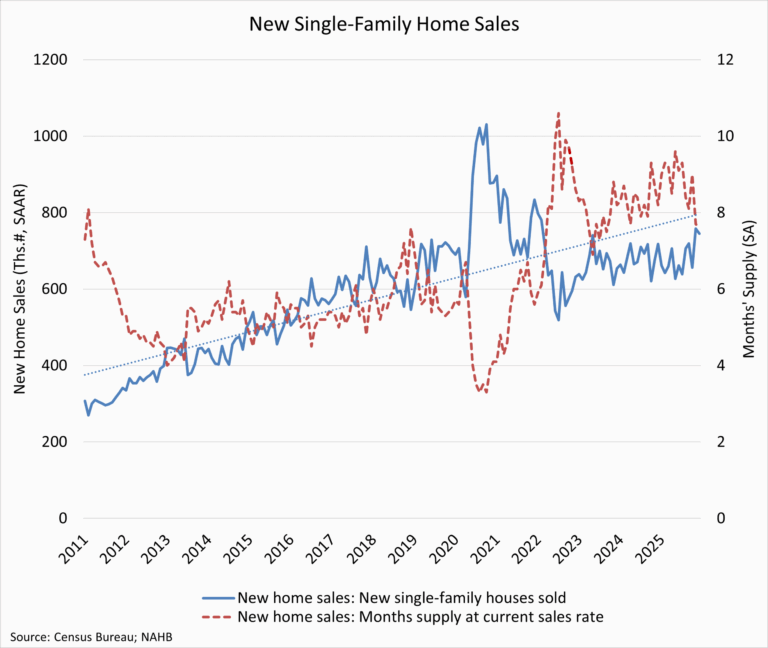
Sales of newly built single-family homes declined 1.7 percent month-over-month in December to a seasonally adjusted annual rate of 745,000 units, according to the U.S. Department of Housing and Urban Development and the U.S. Census Bureau. This represented a 3.8 percent year-over-year increase. An estimated 679,000 homes were sold in 2025, down 1.1 percent from the 2024 rate of 686,000. A new home sale is recorded when a contract is signed or a deposit is accepted, regardless of the stage of construction. The seasonally adjusted annual rate reflects the pace of sales that would occur over a 12-month period if current conditions persisted.

New single-family home inventory totaled 472,000 units in December, 2.7 percent lower than the prior month, and 3.5 percent lower than a year earlier. At the current sales pace, the months’ supply of new homes stood at 7.6 months, down from 8.2 months one year ago, though still above the six-month level that is generally considered balanced.

Combined new and existing home inventory has edged lower in recent months, with total months’ supply declining to 4.0, reflecting slower construction activity. Meanwhile, inventory conditions in the existing home market have retreated after making gradual improvement in prior months. Moderating prices across both markets have helped support buyer demand amid ongoing affordability concerns.

By the end of 2025, there were 128,000 completed, ready-to-occupy homes available for sale on a non-seasonally adjusted basis, up 8.5 percent from a year earlier. Completed homes accounted for a little more than a quarter of the total inventory, while homes under construction made up 51 percent. The remaining 22 percent of homes sold in December had not yet started construction at the time the sales contract was signed.

Home prices showed further signs of easing in 2025. The median new home sale price declined 1.3 percent to $415,000 from $420,300 in 2024. Affordability improved at the lower end of the market, with 20 percent of new homes priced below $300,000. Thirty-four percent of homes were priced above $500,000, while the remaining 46 percent fell within the $300,000 to $500,000 range.

Regionally, year-to-year new home sales were up 1.7 percent in the Midwest and 0.4 percent in the South but declined 4.9 percent in the West and 7.7 percent in the Northeast.


This article was originally published by a eyeonhousing.org . Read the Original article here. .


Existing home sales fell in January to a more than two-year low after December’s strong rebound, as tight inventory continued to push home prices higher and winter storms weighed on activity. Despite mortgage rates trending lower and wage growth outpacing price gains, limited resale supply kept many buyers on the sidelines. Resale inventory remained at lowest level since January 2025. Though home price appreciation has slowed in recent months, affordability remains a challenge.

Total existing home sales, including single-family homes, townhomes, condominiums, and co-ops, fell 8.4% to a seasonally adjusted annual rate of 3.91 million in January, according to the National Association of Realtors (NAR). This marks the lowest level since August 2024. On a year-over-year basis, sales were 4.4% lower than a year ago.

The existing home inventory level was 1.2 million units in January, down 0.8% from December but up 3.4% from a year ago. At the current sales rate, January unsold inventory sits at a 3.7-months’ supply, up from 3.5-months in December and January 2024. Inventory between 4.5 to 6 months’ supply is generally considered a balanced market.

Homes stayed on the market for a median of 46 days in January, up from 39 days in the previous month and 41 days in January 2025.

The first-time buyer share was 31% in January, up from 29% in December and 28% from a year ago.

The January all-cash sales share was 27% of transactions, down from 28% in December and 29% a year ago. All-cash buyers are less affected by changes in interest rates.

The January median sales price of all existing homes was $396,800, up 0.9% from last year. This marks the new high for the month of January and the 31st consecutive month of year-over-year increases. The median condominium/co-op price in January was up 3.8% from a year ago at $364,600. Recent gains for home inventory will put downward pressure on resale home prices in most markets in 2026.

Sales declined in all four major regions in January, ranging from 5.9% in the Northeast to 10.3% in the West. On a year-over-year basis, sales also fell across all regions, from 1.6% in the South to 7.9% in the West.

The Pending Home Sales Index (PHSI) is a forward-looking indicator based on signed contracts. The PHSI fell from 79.2 to 71.8 in December after four months of increases. On a year-over-year basis, pending sales were 3.0% lower than a year ago, according to the National Association of Realtors’ data. The decline suggests buyers are holding back due to limited inventory choices.


This article was originally published by a eyeonhousing.org . Read the Original article here. .


Existing home sales rose in December to the fastest pace in nearly three years, but annual sales for 2025 remained at a 30-year low as elevated home prices and mortgage rates kept buyers on the sidelines, according to the National Association of Realtors (NAR). While mortgage rates have eased from 7% seen at the start of 2025 to near 6% by year-end, tight inventory continued to push home prices higher as more homeowners took listings off the market. Resale inventory dropped to its lowest level since January 2025. Though home price appreciation has been slowed in recent months, housing affordability remains a challenge.

Total existing home sales, including single-family homes, townhomes, condominiums, and co-ops, rose 5.1% to a seasonally adjusted annual rate of 4.35 million in December, the highest level for 2025 and highest since February 2023. On a year-over-year basis, sales were 1.4% higher than a year ago. For the year 2025, existing home sales totaled 4.06 million, unchanged from 2024 and matching the lowest level since 1995.

The existing home inventory level was 1.18 million units in December, down 18.1% from November but up 3.5% from a year ago. At the current sales rate, December unsold inventory sits at a 3.3-months’ supply, down from 4.2-months in November but up from 3.2-months in December 2024. Inventory between 4.5 to 6 months’ supply is generally considered a balanced market.

The December median sales price of all existing homes was $405,400, up 0.4% from last year. This marks the 30th consecutive month of year-over-year increases. The median condominium/co-op price in December was up 1.5% from a year ago at $364,400.  Recent gains for home inventory will put downward pressure on resale home prices in most markets in 2026. All four major regions saw an increase in sales in December, with gains ranging from 2.0% in the Northeast and Midwest to 6.9% in the South. However, sales were mixed on a year-over-year basis. Sales remained unchanged in the Midwest and West, rose 3.6% in the South, and fell 1.9% in the Northeast.

The Pending Home Sales Index (PHSI) is a forward-looking indicator based on signed contracts. The PHSI rose from 76.7 to 79.2 in November due to lower mortgage rates. On a year-over-year basis, pending sales were 2.6% higher than a year ago, according to the National Association of Realtors’ data.


This article was originally published by a eyeonhousing.org . Read the Original article here. .
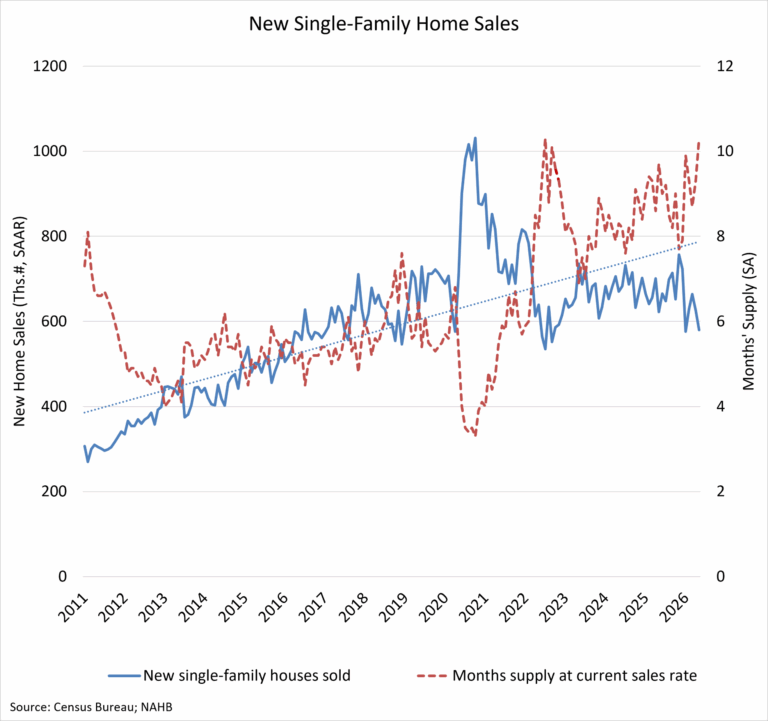

The new home sector has played an increasingly important role in meeting housing demand as resale inventory remains constrained in many regions. The latest data released today (and delayed because of the government shutdown in fall of 2025) indicate that new single-family home sales continue to reflect a stabilizing market after a period of heightened volatility. While month-to-month activity shows some variability, sales remain stronger than a year ago, signaling that buyer interest in newly built homes has improved.

Sales of newly built single-family homes increased 18.7 percent year over year in October to a seasonally adjusted annual rate of 737,000 units, according to the U.S. Department of Housing and Urban Development and the U.S. Census Bureau. This represented a modest 0.1 percent decline from September and a 1.2 percent decrease on a year-to-date basis. A new home sale is recorded when a contract is signed or a deposit is accepted, regardless of the stage of construction. The seasonally adjusted annual rate reflects the pace of sales that would occur over a 12-month period if current conditions persisted.

New single-family home inventory totaled 488,000 units in October, unchanged from the prior month and 1.7 percent higher than a year earlier. At the current sales pace, the months’ supply of new homes stood at 7.9, down from 9.3 months one year ago, though still above the six-month level that is generally considered balanced.

Combined new and existing home inventory has edged lower in recent months, with total months’ supply declining to 4.9, reflecting slower construction activity. Meanwhile, inventory conditions in the existing home market have shown gradual improvement, and moderating prices across both markets have helped support buyer demand amid ongoing affordability concerns.

By the end of October 2025, there were 124,000 completed, ready-to-occupy homes available for sale on a not seasonally adjusted basis, up 10.7 percent from a year earlier. Completed homes accounted for roughly one-quarter of total inventory, while homes under construction made up 51 percent. The remaining 24 percent of homes sold in October had not yet started construction at the time the sales contract was signed.

Home prices showed further signs of easing in October. The median new home sale price declined 3.3 percent to $392,300, marking an 8.0 percent decrease from a year ago. Affordability improved at the lower end of the market, with 25 percent of new homes priced below $300,000, the highest share in recent months. Thirty percent of homes were priced above $500,000, while the remaining 45 percent fell within the $300,000 to $500,000 range.

Regionally, year-to-date new home sales declined in three of the four regions, falling 0.1 percent in the Midwest, 7.2 percent in the West, and 22.9 percent in the Northeast. The South was the only region to post growth, with sales up 2.9 percent.


This article was originally published by a eyeonhousing.org . Read the Original article here. .


Existing home sales rose for the third consecutive month in November as lower mortgage rates continued to boost home sales, according to the National Association of Realtors (NAR). However, the increase remained modest as mortgage rates still stayed above 6% while down from recent highs. The weakening job market also weighed on buyer activity.

Meanwhile, inventory fell for the fourth consecutive month as homeowners with record-high housing wealth held back from listing properties. Relatively tight supply continued to push home prices higher and challenge housing affordability, even as wage growth outpaced home price gains.

Total existing home sales, including single-family homes, townhomes, condominiums, and co-ops, rose 0.5% to a seasonally adjusted annual rate of 4.13 million in November, the highest level since February. However, on a year-over-year basis, sales were 1.0% lower than a year ago.

The existing home inventory level was 1.43 million units in November, down 5.9% from October but up 7.5% from a year ago. At the current sales rate, November unsold inventory sits at a 4.2-months’ supply, down from 4.4-months in October but up from 3.8-months in November 2024. Inventory between 4.5 to 6 months’ supply is generally considered a balanced market.

Homes stayed on the market for a median of 36 days in November, up from 34 days last month and 32 days in November 2024.

The first-time buyer share was 30% in November, down from 32% in October but unchanged from a year ago.

The November all-cash sales share was 27% of transactions, down from 29% in October but up from 25% a year ago. All-cash buyers are less affected by changes in interest rates.

The November median sales price of all existing homes was $409,200, up 1.2% from last year. This marks the 29th consecutive month of year-over-year increases. The median condominium/co-op price in November was up 0.1% from a year ago at $358,600.  Recent gains for home inventory will put downward pressure on resale home prices in most markets in 2025.

Existing home sales in November were mixed across the four major regions. Sales rose in the Northeast (+4.1%) and South (+1.1%), fell in the Midwest (-2.0%), and remained unchanged in the West. On a year-over-year basis, sales were unchanged in the Northeast and South (2.8%), while down in the Midwest (-3.0%) and West (-1.3%).

The Pending Home Sales Index (PHSI) is a forward-looking indicator based on signed contracts. The PHSI rose from 74.9 to 76.3 in October. On a year-over-year basis, pending sales were 0.4% lower than a year ago, according to the National Association of Realtors’ data.


This article was originally published by a eyeonhousing.org . Read the Original article here. .
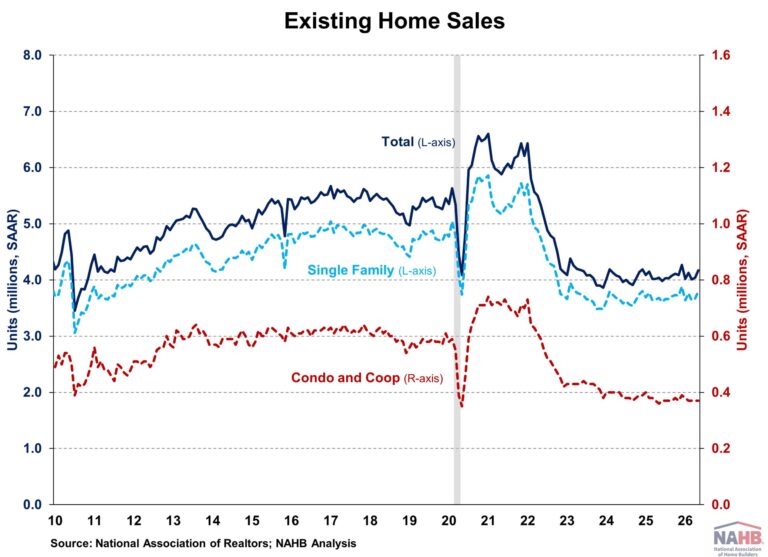

Existing home sales rose to an eight-month high in October as buyers took advantage of lower mortgage rates, according to the National Association of Realtors (NAR). Resale inventory improved from a year ago but remained below pre-pandemic levels. Relatively tight supply continued to push home prices higher and challenge housing affordability. These affordability pressures vary by region, with first-time buyers in the Northeast facing limited inventory, while buyers in the West struggle with elevated home prices.

Mortgage rates hovered between 6.5% and 7% earlier this year due to economic and tariff uncertainty. However, with the Fed resuming rate cuts in September, mortgage rates have fallen gradually. As of October 30th, the average mortgage rate decreased to 6.17%, the lowest in over a year. With additional rate cuts expected in coming months, lower mortgage rates and improved inventory should bring more buyers and sellers into the market.

Total existing home sales, including single-family homes, townhomes, condominiums, and co-ops, rose 1.2% to a seasonally adjusted annual rate of 4.10 million in October, the highest level since February. On a year-over-year basis, sales were 1.7% higher than a year ago.

The existing home inventory level was 1.52 million units in October, down 0.7% from September but up 10.9% from a year ago. At the current sales rate, October unsold inventory sits at a 4.4-months’ supply, down from 4.5-months in September but up from 4.1-months in October 2024. Inventory between 4.5 to 6 months’ supply is generally considered a balanced market.

Homes stayed on the market for a median of 34 days in October, up from 33 days last month and 29 days in October 2024.

The first-time buyer share was 32% in October, up from 30% in September and 27% from a year ago.

The October all-cash sales share was 29% of transactions, down from 30% in September but up from 27% a year ago. All-cash buyers are less affected by changes in interest rates.

The October median sales price of all existing homes was $415,200, up 2.1% from last year. This marks the 28th consecutive month of year-over-year increases. The median condominium/co-op price in October was up 0.9% from a year ago at $363,700.  Recent gains for home inventory will put downward pressure on resale home prices in most markets in 2025.

Existing home sales in October were mixed across the four major regions. Sales rose in the Midwest (5.3%) and South (0.5%), fell in the West (-1.3%), and remained unchanged in the Northeast. On a year-over-year basis, sales were up in the Northeast (4.3%), South (2.8%) and Midwest (2.1%), while down in the West (-2.6%).

The Pending Home Sales Index (PHSI) is a forward-looking indicator based on signed contracts. The PHSI remained unchanged at 74.8 in September, suggesting job market concerns kept buyers on the sideline despite mortgage rates near one-year lows. On a year-over-year basis, pending sales were 0.9% lower than a year ago, according to the National Association of Realtors’ data.


This article was originally published by a eyeonhousing.org . Read the Original article here. .
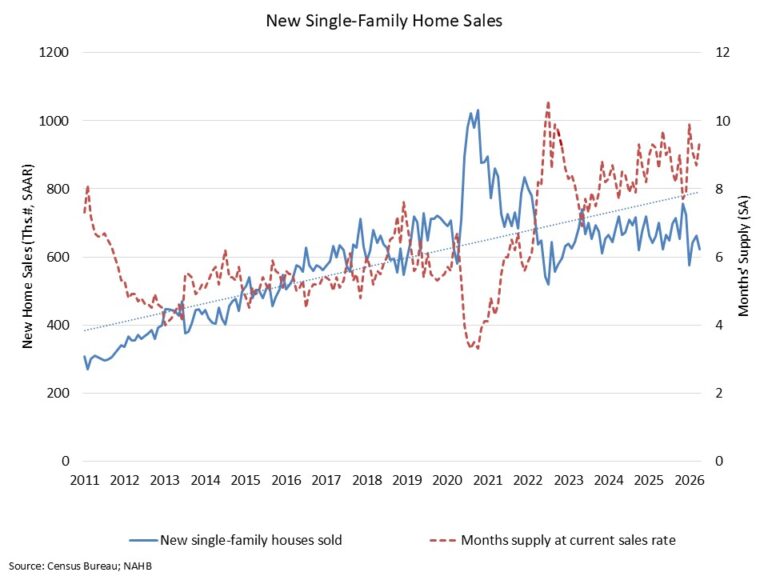

Challenging affordability conditions, elevated interest rates and economic uncertainty continue to act as headwinds on the housing sector as many potential buyers continue to stay on the sidelines.

Sales of newly built single-family homes edged 0.6% higher in June, rising to a seasonally adjusted annual rate of 627,000, according to newly released data from the U.S. Department of Housing and Urban Development and the U.S. Census Bureau. This marks a 0.6% increase from May’s unrevised figures. However, this is 6.6% below the June 2024 level. June new home sales are down 4.3% on a year-to-date basis. The past two months have been the slowest sales pace since October of last year, as mortgage rates averaged above 6.8% in June.

A new home sale occurs when a sales contract is signed, or a deposit is accepted. The home can be at any stage of construction: not yet started, under construction or completed. In addition to adjusting for seasonal effects, the June reading of 627,000 units is the number of homes that would sell if this pace continued for the next 12 months.

New single-family home inventory continued to rise with 511,000 residences marketed for sale as of June. This is 1.2% higher than the previous month, and 8.5% higher than a year ago. At the current sales pace, the months’ supply for new homes remained elevated at 9.8 compared to 8.4 a year ago. A measure near a six months’ supply is considered balanced.

As expected, the combined new and existing total months’ supply has risen over the last few months to a balanced 5.4 months due to continued buyer hesitation in both new and existing home sales markets. Elevated mortgage rates and sustained price levels continue to limit purchasing power, particularly among first-time and middle-income buyers.

A year ago, there were 94,000 completed, ready-to-occupy homes available for sale (not seasonally adjusted). By the end of June 2025, that number increased 21.3% to 114,000. However, completed, ready-to-occupy inventory remains just 22% of total inventory, while homes under construction account for 54%. The remaining 24% of new homes sold in June were homes that had not started construction when the sales contract was signed.

The median new home sale price edged down 4.9% in June to $401,800. This is down 2.9% compared to a year ago. In terms of affordability, the share of entry-level homes priced below $300,000 has been steadily falling in recent years. Only 14% of the homes were priced in this entry-level affordable range, while 28% of the homes were priced above $500,000. Most of the homes were priced between $300,000-$500,000.

Regionally, on a year-to-date basis, new home sales are down in all four regions, falling 1.6% in the South, 4.0% in the West, 8.5% in the Midwest, and 25.6% in the Northeast.

Discover more from Eye On Housing

Subscribe to get the latest posts sent to your email.


This article was originally published by a eyeonhousing.org . Read the Original article here. .

Pin It