This article was originally published by a www.houzz.com . Read the Original article here. .
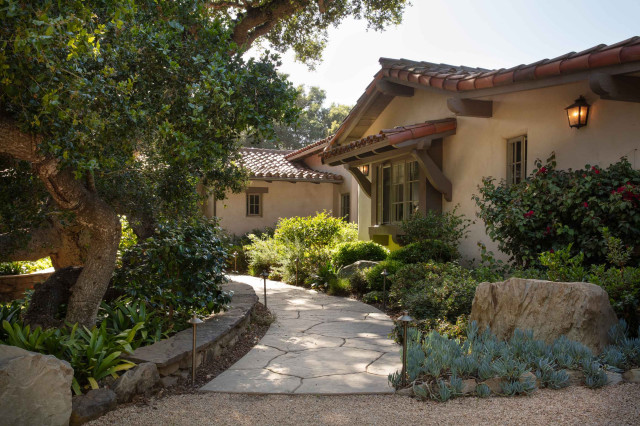

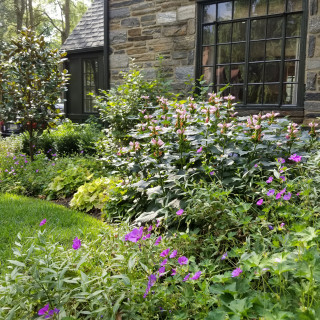
Focus on natives. Some of Deborah Gliksman’s favorite shrubs from California are the tall ‘Dark Star’ ceanothus (Ceanothus ‘Dark Star’, zones 8 to 10) and the smaller ‘Valley Violet’ ceanothus (Ceanothus maritimus ‘Valley Violet’, zones 8 to 10). Gliksman also recommends ‘Aromas’ sage (Salvia ‘Aromas’, zones 8 to 10), bush anemone (Carpenteria californica, Zone 9), ‘De La Mina’ Cedros Island verbena (Verbena lilacina ‘De La Mina’, zones 8 to 10), globe mallow (Sphaeralcea ambigua, zones 6 to 9) and St. Catherine’s lace (Eriogonum giganteum, zones 9 to 11). “They’re all stunning shrubs,” she says.
For perennials, Gliksman often uses yarrow (Achillea millefolium, zones 3 to 9), monkeyflower (Mimulus spp.), penstemons and Douglas iris (Iris douglasiana, zones 6 to 10). For ground covers, she loves ‘Silver Carpet’ aster (Corethrogyne filaginifolia ‘Silver Carpet’, zones 8 to 10), ground currant (Ribes spp.) and seaside daisy (Erigeron glaucus, zones 8 to 10).
What not to plant. Gliksman advises against using invasive plants. Besides possibly taking over your garden and even your neighborhood, she says, they can compete with native species and threaten biodiversity.
Your turn: What are your favorite low-maintenance plants to grow in your garden? Tell us in the Comments.
More on Houzz
Read more gardening guides
Get landscape design ideas
Find a landscape designer
Shop for gardening tools
This article was originally published by a www.houzz.com . Read the Original article here. .
Native plants are a favorite jumping-off point for landscape pros when they’re designing a low-maintenance garden. “Plants indigenous to your area will result in lower maintenance needs, as they are well adapted to your natural soils, precipitation patterns and microclimates,” landscape designer Isara Ongwiseth of FormLA Landscaping says.
Oscar Ortega, who oversees maintenance for FormLA Landscaping, adds that native species do not need fertilizers or pesticides, which cuts down on maintenance while also supporting wildlife habitats.
Landscape designer Deborah Gliksman of Urban Oasis Landscape Design is another champion of native plants for the same reasons. She adds that native species often use less water than many nonnative exotics in her Southern California locale, where water considerations are a must, and help restore natural biodiversity.
What to Know About Starting Your First Native Plant Garden