Tag

Fed

Browsing


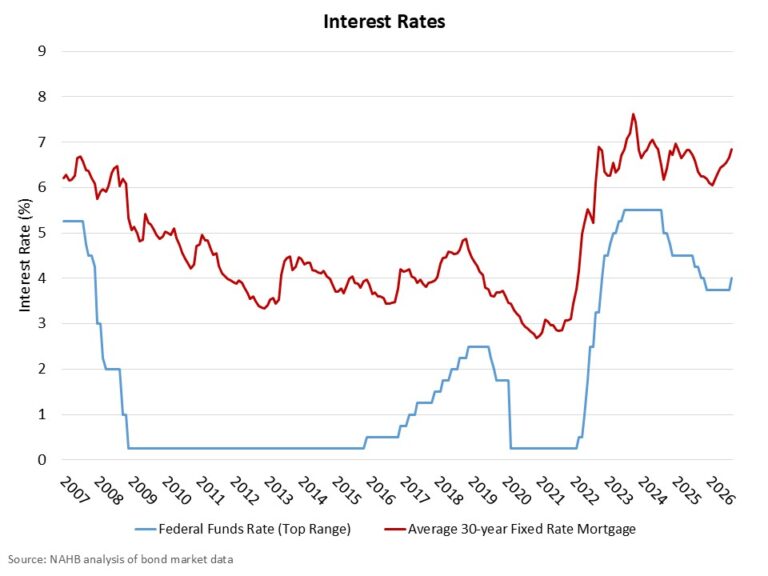
The Federal Reserve raised the federal funds rate by 25 basis points at the conclusion of its September policy meeting, bringing the target range to 3.75% to 4%. The decision comes amid renewed inflation concerns and an increase in long-term interest rates. Notably, the decision was unanimous 12-0 vote, reflecting a unified view to tackle renewed inflationary pressures.

With respect to economic conditions, the Federal Open Market Committee (FOMC) stated that “economic activity is expanding at a solid pace.” In fact, the Fed slightly upgraded its growth projections, and Chairman Warsh noted that the demand for capital has increased, leading to higher market interest rates. Additionally, the FOMC noted that “uncertainty remains elevated” due to “geopolitical developments,” which is a nod to current trade issues and the Iran war.

On inflation, the FOMC stated simply that “inflation remains elevated.” The Fed noted that today’s hike, which is in response to inflation rising to a 3.4% year-over-year rate, “will support a timelier return to the Committee’s two percent goal.”  Echoing recent statements from Chairman Warsh, President Trump’s pick to lead the Fed, today’s statement repeated that “the Committee will deliver price stability.” 

Today’s hike reflects a difficult policy environment. Long-term interest rates have increased in recent weeks as corporate firms issue more debt to finance technology investment and growth, while concerns persist over long-term federal budget constraints, and, most particularly in the short run, oil prices rise due to the Iran war. Together, these forces have increased financing costs for households and businesses, including home buyers and home builders.

The prior case for holding rates steady, or at least moving slowly, rested on the source of recent inflation. To the extent that higher prices reflected one-off adjustments, the Fed could potentially “look through” these increases rather than respond to each change with tighter policy. An increase in the price level does not necessarily imply a persistently higher inflation rate.

This distinction is particularly relevant for housing. While the central bank’s federal funds rate does not have a direct effect on mortgage rates, an increase in the funds rate does increase the cost of financing for builder acquisition, development and construction (AD&C) loans. Higher borrowing costs make it more difficult to finance new construction and reduce the purchasing power of prospective buyers via higher construction costs. Slower home building limits progress in addressing the housing affordability crisis, an underlying source of pressure on shelter costs and the problem of overall inflation.

Today’s Fed hike did not measurably change long-term interest rates, including the critical 10-year Treasury rate, as much of the increase was already priced into markets. The last few weeks of bond market changes suggest investors are demanding higher yields in response to inflation risks and other pressures. If higher energy prices begin to affect broader price-setting behavior and inflation expectations, waiting for conclusive evidence could leave the central bank with more work to do later. Additional constraints on oil products are a key concern whereby interest rates could move even higher.

Looking forward, the September SEP (Summary of Economic Projections) indicates a slightly stronger growth outlook relative to June. The median projection for real economic growth in 2026 is 2.3%, measured on a fourth-quarter-over-fourth-quarter basis, compared with 2.2% in June. (NAHB is forecasting 2.1% for 2026.) Growth is expected to register 2.4% in 2027 and 2.2% in 2028, with the newly added 2029 projection at 2.1%. The unemployment rate is projected to average 4.1% in the fourth quarter of 2026 and 4.1% in late 2027, suggesting tempered labor market conditions in the current “low hire, low fire” environment.

The median forecast for headline personal consumption expenditures (PCE) inflation in 2026 is 3.7%, while core PCE inflation, which excludes food and energy, is projected at 3.4%, compared with 3.3% in June. Core inflation is expected to decline to 2.5% in 2027 and 2.2% in 2028. The projections indicate a return to the Fed’s two-percent inflation objective in 2029. The process of getting to the Fed’s policy target will thus take more time given the number of supply-shocks affecting the U.S. economy. (It is worth noting that Chairman Warsh did not participate in the September SEP.)

With respect to monetary policy, the updated dot plot indicates a median federal funds rate of 4.1% at the end of 2026, implying one more rate hike in 2026 following today’s increase. The median projections for year-end 2027 and 2028 are 4.1% and 3.9%, respectively, with a 2029 projection of 3.6%. The longer-run rate estimate was revised higher to 3.2 compared to 3.1% in the June SEP.

Today’s outlook suggests an additional rate hike in December, with either flat conditions in 2027 or a combination of an additional hike and then an offsetting cut that year. These projections are conditional outlooks, rather than commitments.

There was also an important omission from today’s communications: the Fed did not discuss changes to balance sheet policy. This is relatively good news for the mortgage sector and home builders. Accelerated reductions in the Fed’s securities holdings, particularly mortgage-backed securities, would place additional upward pressure on mortgage rates.

For housing, the path of long-term rates, and the energy, fiscal and investment pressures influencing those rates, will remain critical in the months ahead.


This article was originally published by a eyeonhousing.org . Read the Original article here. .
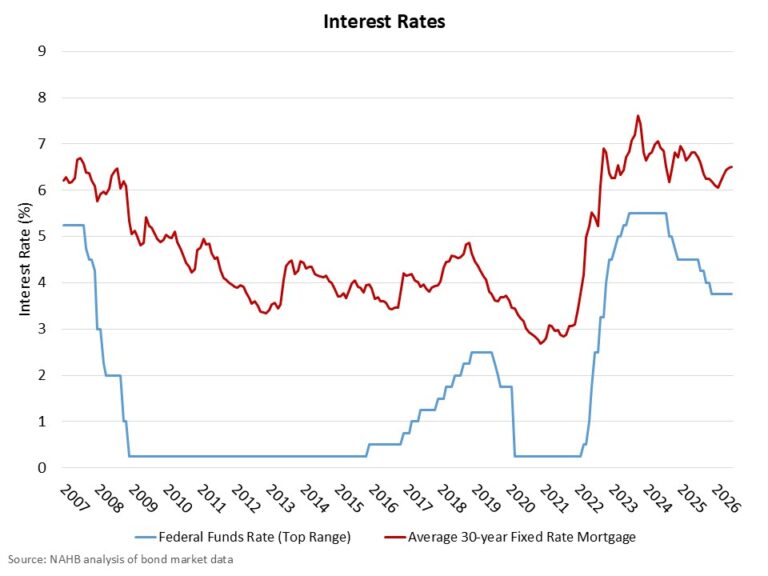

The Federal Reserve held the federal funds rate at a target range of 3.5% to 3.75% at the conclusion of its July policy meeting. There were three dissenting votes on the Federal Open Market Committee (FOMC), all of which supported raising the federal funds rate by 25 basis points. The July monetary policy hold marked the fifth consecutive hold, following 75 basis points of cuts at the end of 2025.

The central bank noted that “economic activity is expanding at a solid pace despite elevated uncertainty.” The Fed also stated that this uncertainty is due in part to the conflict in the Middle East. Additionally, Chairman Warsh noted at his press conference that the economy has shown “impressive resilience” in the face of these headline risks.

In a theme likely to receive growing attention in the quarters ahead, the Fed noted that productivity growth and capital investment are strong. Productivity growth, in particular, suggests future deflationary forces. The Fed also noted that the unemployment rate has experienced little change in recent data.

With respect to inflation, the Fed stated that “inflation remains elevated” relative to the central bank’s two percent target. Importantly, the Fed attributed these inflation challenges to “supply shocks,” including the energy sector.

If you squint a little, this can be seen as a dovish policy message because, while the Fed can affect aggregate demand by tightening monetary policy (as the bond market appears to expect), the central bank cannot effectively address supply shocks with policy. While this should not be interpreted as taking rate hikes off the table, it is an accurate statement of current macroeconomic conditions and many analysts’ views that the Fed cannot solve energy price increases due to war or one-off tariff effects with monetary policy. The same can be said about the impact of the housing deficit on the shelter component of overall inflation, which can only be addressed by other policies that bend the cost curve for housing supply.

From a policy perspective, the Fed noted very clearly, “The Committee will deliver price stability.” The Fed also explicitly emphasized the FOMC’s two percent inflation goal. Chairman Warsh reiterated this two percent goal clearly in his press conference. Moreover, the Fed Chairman noted that nominal long-term interest rates had moved higher since the last meeting, which he attributed to economic data rather than Fed forward guidance.

Indeed, the two-year Treasury rate is now 50 basis points higher than the top target rate for the federal funds rate, indicating that the bond market is expecting Fed tightening. However, one could also argue, as Chairman Warsh appeared to do so at his press conference, that the market has responded to the Fed’s current stance and goals and is delivering an environment in which market forces do the work of tighter policy. Chairman Warsh even suggested that despite the “no change” policy for the July meeting, other changes in market conditions indicate that the July meeting did not result in a policy “pause.”

There were important items not discussed in today’s statement, although they were referenced in today’s press conference. Chairman Warsh has established several task forces looking at Fed communications, forward guidance, data measurement (including how inflation is measured, a topic discussed at the Chairman’s press conference, suggesting new, preferred measures are coming), and other policy-related topics. We will learn more about those efforts down the road.

The Fed will also likely address the status of the central bank’s balance sheet, which can affect long-term interest rates, including mortgage rates, if balance sheet reduction were to be accelerated. These long-term rate changes, set by markets, are in the driver’s seat in the meantime.


This article was originally published by a eyeonhousing.org . Read the Original article here. .


Mortgage rates continued to increase in June as markets priced in a rate hike due to high inflation and stronger-than-expected labor market. According to Freddie Mac, the 30-year fixed-rate mortgage averaged 6.49% in June, up 8 basis points (bps) over May. Since the conflict in the Middle East began, the 30-year mortgage rate has increased by 44 basis points. The average 15-year rate averaged 5.82% in June, up 8 bps from May, and up 39 basis points since the end of February. Even so, both rates remain lower than a year ago by 33 bps and 13 bps, respectively.

The 10-year Treasury yield, a key benchmark for long-term borrowing, held steady at an average of 4.48% in June. The 10-year yield surpassed 4.5% in the second week of the month following reports of persistent high inflation and a surprisingly resilient labor market. Furthermore, the latest Federal Open Market Committee (FOMC) meeting revealed that nine out of 18 Fed officials indicated at least one rate hike within the year.

Nonetheless, the 10-year Treasury yield eased later in the month, ending June at around 4.44%, as the United States and Iran reached a preliminary agreement and signed a Memorandum of Understanding (MoU). The agreement temporarily reopened the Strait of Hormuz to commercial shipping on a “toll-free” basis through mid-August to facilitate further negotiations over Iran’s nuclear program.


This article was originally published by a eyeonhousing.org . Read the Original article here. .
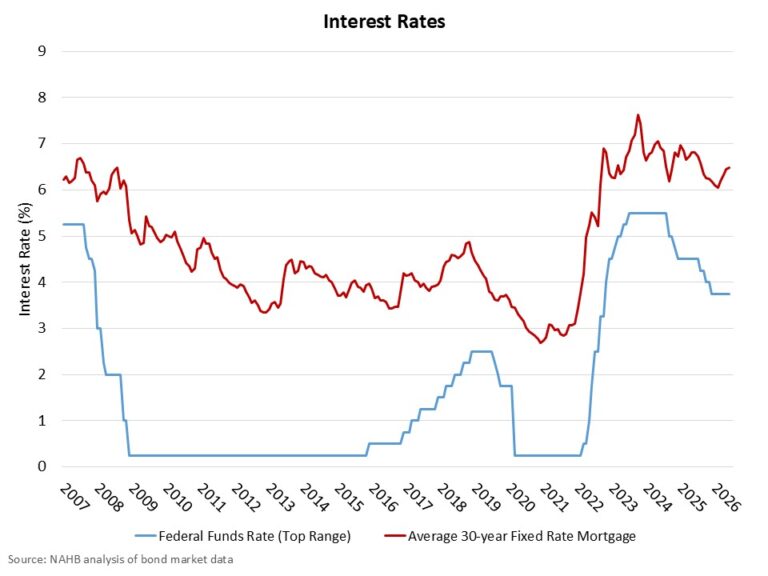

With a new Fed Chair and plans for evolving operating strategies, the Federal Reserve maintained its target policy rate at the conclusion of the June Federal Open Market Committee (FOMC) meeting. For the fourth consecutive meeting, the FOMC maintained the short-term federal funds rate at a top rate of 3.75%.

The central bank also reaffirmed its current balance sheet strategy of ample reserves. This is important because some analysts have speculated that Chair Warsh would be more aggressive with respect to managing the Fed’s balance sheet. However, such a change in strategy may come later, as described below.

Overall, the FOMC statement was short, even laconic, indicating a new communication strategy. There were no dissenting votes. The two-year Treasury rate increased by more than10 basis points after the FOMC announcement. It is worth noting that while the statement was short, the press conference revealed a number of new plans under Fed Chair Warsh.

While holding rates constant, the Fed pivoted to a more hawkish tone in its policy statement. Among the items dropped from the current FOMC statement was its prior easing bias for monetary policy. This is consistent with recent moves in the bond market, which have increased long-term interest rates as a result of elevated inflationary pressure from increased energy and commodity prices due to the Iran war and the lingering impacts of tariffs. It is worth noting however that forecasts suggest this inflation pressure should ease in the coming months, which should be part of the Fed’s outlook.

The statement also declared that the Fed “will deliver price stability.”  This wording was emphasized by Chair Warsh in his press conference. Without a reference to full employment, this formulation suggests a hawkish bias toward fighting inflation.

The FOMC statement noted that the economy is expanding at a “solid” pace despite geopolitical macro concerns, such as the Iran war. The statement also indicated that productivity growth is strong, which is a dovish signal many may downplay amidst the overall hawkish tone of today’s statement. The Fed also stated that inflation remains “elevated” relative to the FOMC’s goal of two percent (an explicit nod to no change for the target under new leadership).

Looking forward, the Fed’s outlook for the economy and monetary policy reflects recent supply shocks. Estimates from the central bank’s updated Summary of Economic Projections (SEP) indicate a solid but weaker economic growth outlook, with a 2.2% fourth-quarter year-over-year growth rate for 2026 (revised down from 2.4% as projected in March) and 2.3% for 2027 (unchanged from March).

The SEP estimates also reveal an expectation of a low 4.3% unemployment rate in 2026 and a notably increased expectation for inflation (core PCE) of 3.3%, revised higher from 2.7% in March. The revised SEP does not anticipate the economy reaching the Fed’s target inflation rate of 2% until after 2028.

With respect to policy, the SEP outlook is significantly more hawkish in the near term. The dot plot suggests at least one rate hike by the end of 2026 (nine respondents indicated a hike, eight indicated no change, and one saw a cut for 2026), followed by a cut in 2027 and a further cut in 2028.  The long-run projection (beyond 2028) for the federal funds rate was unchanged.

It is notable that there was a missing dot plot participant for the SEP. Chair Warsh confirmed at his press conference that while he encourages FOMC members to participate, he himself did not do so. Warsh also announced a task force to review Fed operations in five areas: Fed communications, the Fed’s balance sheet, data sources, productivity and employment analysis, and the Fed’s inflation framework. This task force will propose changes to Fed policies, including the balance sheet.

In the press conference, Warsh also noted that current Fed policy is “somewhat restrictive” for the housing market, although Fed policy is not the single determinant of the challenges in the housing market. This is not necessarily the case for other sectors of the economy according to Warsh.

Overall, the June meeting pivoted the Fed to a notably more hawkish bias, reflecting an increase in current inflationary challenges. Without relief from underlying causes of inflation, Fed policy action will not aid the housing and building market in the near term. However, there are dovish or disinflationary possibilities in the outlook, from resolution of geopolitical headline risks or benefits from productivity growth.


This article was originally published by a eyeonhousing.org . Read the Original article here. .


The Fed continued its current pause for rate reductions at the conclusion of the March meeting of the Federal Open Market Committee, the central bank’s monetary policy body. The Fed held the short-term federal funds rate at a top rate of 3.75%, the level set in December of last year. This marked the second policy pause since the Fed resumed easing in September of 2025.

Characterizing current economic conditions, the Fed stated that “uncertainty about the economic outlook remains elevated.” The central bank also noted that “the implications of developments in the Middle East for the U.S. economy are uncertain.” The March statement noted:

Available indicators suggest that economic activity has been expanding at a solid pace. Job gains have remained low, and the unemployment rate has been little changed in recent months. Inflation remains somewhat elevated.

Chair Powell noted during his press conference that activity in the housing sector remains “weak.” Despite elevated uncertainty, Chair Powell noted there is expectation of ongoing progress for inflation, describing policy as mildly restrictive.

The Fed’s statement noted the central bank will continue to consider risks associated with both sides of its dual mandate, to maintain maximum employment and stable prices.

There was only one dissenting vote (Miran), who voted for a quarter point cut. Governor Miran has previously made the argument for more dovish monetary policy due to limited tariff effects and an improving productivity outlook that would mute future inflation pressure.  During the press conference there was discussion about the uncertain scale effects from higher oil prices and the merit of looking through supply-side shocks that can have offsetting effects on inflation (higher) and growth (lower).

Chair Powell has one remaining meeting at the helm at the Fed. President Trump has nominated former Federal Reserve Governor Kevin Warsh as the next Chair of the Federal Reserve. Powell said today he will stay on as Chair pro tem until Warsh is confirmed. Powell has not made a decision regarding whether he will remain as a Governor after his term as Chair ends. Powell can remain a Governor until the end of January, 2028.

NAHB had forecasted two additional rate cuts for 2026, based on the expectation of modest easing of inflation and a cool labor market. However, consistent with market expectations, our forecast will reduce this to just one rate cut for 2026 due to higher inflation pressure related to headline issues, including increased oil prices due to the Iran war. A longer conflict will have a relatively greater impact on the delay for future Fed rate cuts.

While reductions for the federal funds rate do not have a direct effect on mortgage interest rates, which remain slightly above 6%, federal funds rate reductions do lower interest rates on builder and developer loans, helping the supply-side of the housing market. Supplying more housing and at lower cost is key to solving the ongoing housing affordability challenge. Lower financing costs are part of the overall solution.

Looking forward, the Fed’s outlook for the economy and monetary policy is mixed. Estimates from the central bank’s updated Summary of Economic Projections (SEP) indicate an improved economic growth outlook, with a 2.4% fourth quarter year-over-year growth rate for 2026 (revised up from 2.3% as projected in December) and 2.3% for 2027 (revised up from 2%).

The SEP estimates also reveal an expectation of a 4.4% unemployment rate in 2026 and higher expectation for inflation (core PCE) of 2.7%, revised higher from 2.4% in December. The revised SEP does not anticipate the economy reaching the Fed’s target inflation rate of 2% until 2028.

With respect to policy, the SEP outlook suggests one rate cut in 2026 and one final rate cut in 2027. The “dot plot” of individual responses suggests one member expecting four rate cuts in 2026.


This article was originally published by a eyeonhousing.org . Read the Original article here. .
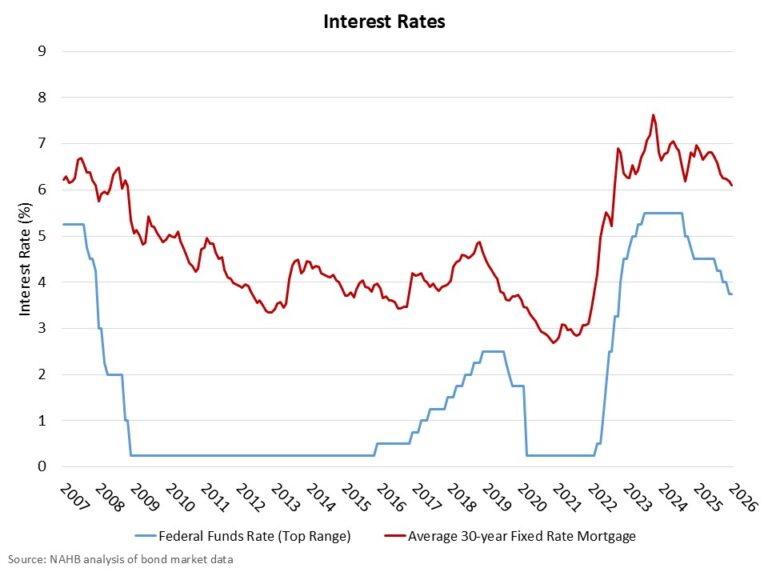

The Fed paused its easing cycle at the conclusion of the January meeting of the Federal Open Market Committee, the central bank’s monetary policy body. The Fed held the short-term federal funds rate at a top rate of 3.75%, the level set in December. This marked the first policy pause since the Fed resumed easing in September of last year.

The Fed characterized the economy as being in solid health. The January statement noted:

Available indicators suggest that economic activity has been expanding at a solid pace. Job gains have remained low, and the unemployment rate has shown some signs of stabilization. Inflation remains somewhat elevated.

The Fed’s statement noted the central bank will continue to consider risks associated with both sides of its dual mandate, to maintain maximum employment and stable prices. It is worth noting that the January statement did not include a reference to a concern of higher risk from a weakening labor market, as was specified in December. Thus, the January statement suggests the Fed sees balanced risks from inflation and current labor market conditions.

There was little forward guidance in today’s statement. There were two dissenting votes (Waller, a Fed Chair candidate, and Miran), who voted for a quarter point cut. Both economists have previously made the argument for more dovish monetary policy due to limited tariff effects and an improving productivity outlook that would mute future inflation pressure.

Chair Powell has two remaining meetings at the helm at the Fed. President Trump has promised an announcement soon regarding the next chair, whose candidates include Governor Waller, White House economist Kevin Hassett, prior Fed Governor Kevin Warsh and Rick Reider from Blackrock. Reider’s prospects appeared to have increased in recent weeks.

NAHB is forecasting two additional rate cuts for 2026, based on expectation of modest easing of inflation and a cooled labor market.  

While reductions for the federal funds rate do not have a direct effect on mortgage interest rates, which remain slightly above 6%, federal funds rate reductions do lower interest rates on builder and developer loans, helping the supply-side of the housing market. Supplying more housing and at lower cost is key to solving the ongoing housing affordability challenge. Lower financing costs are part of the overall solution.


This article was originally published by a eyeonhousing.org . Read the Original article here. .


The central bank’s Federal Open Market Committee (FOMC) cut rates a third and final time in 2025, reducing the target range for the federal funds rate by 25 basis points to a 3.5% to 3.75% range. This reduction will help reduce financing costs of builder and developer loans.

Furthermore, and explicitly noted by Fed Chair Powell as separate from policy considerations, to maintain an appropriate level of reserves as a means of monetary policy implementation and to enable smooth market functioning, the Fed will initiate purchases of short-term Treasury securities on December 12th.

The tone of today’s meeting was more dovish than investors expected. Overall, the Fed faces a complicated outlook with risks on both sides of its dual mandate: supporting the labor market and maintaining stable prices. Interest rate-sensitive sectors such as housing continue to face restrictive conditions. The slightly dovish stance of today’s announcement suggests the FOMC perceives greater near-term downside risk for the labor market component of its mandate, despite an improving outlook for GDP growth.

There was a notable level of dissent at the December meeting. Two voting members of the FOMC (Goolsbee and Schmid) preferred no change to the target rate. In contrast, Governor Miran supported a 50-basis-point reduction. This marks the largest level of dissent since September 2019.

The Fed’s statement noted that job gains have slowed, and the unemployment rate has edged higher through September. In contrast to recent policy statements, the Fed did not note unemployment as “low.”  The slowing of the labor market is due to both a decline in immigration and a pullback in hiring by firms. The December view of the economy was somewhat obscured by missing or delayed government data due to the now-ended government shutdown.

Chair Powell noted in his press conference that activity in the housing sector remains “weak.” Powell also noted that supply remains low, and homeowners remain locked-in due to low-rate mortgages. Finally, the Fed Chair indicated that the U.S. has not built enough housing, leading to affordability challenges due to a structural housing shortage.

Chair Powell also noted that inflation has been lowered but remains “elevated,” because of recent monetary policy actions. Inflation expectations have declined, and long-term expectations remain anchored to the central bank’s 2% target.

This framing of the economic situation is consistent with the December rate cut as being an insurance policy of easing given weakening of the labor market due to policy uncertainty and tariffs. That is, the Fed’s cut biases policy to responding to future weakening of economic growth rather than to concerns about inflation reaccelerating (some FOMC members have argued, for example, that markets can look through any tariff effects, which will be one-off impacts).

Looking forward, the Fed’s outlook for the economy and monetary policy is mixed. Estimates from the central bank’s Summary of Economic Projections (SEP) indicate an expectation of stronger economic growth next year, with a 2026 2.3% fourth quarter year-over-year growth rate. This is an upward revision compared to the 1.8% estimate from September. The SEP estimates also reveal an expectation of a 4.4% unemployment rate in 2026 and decline for inflation (core PCE) of 2.4%, relative to 2.9% in 2025. The revised SEP does not anticipate the economy reaching the Fed’s target inflation rate of 2% until 2028.

With respect to policy, the SEP outlook suggests one rate cut in 2026 and one final rate cut in 2027. The “dot plot” of individual responses suggests one respondent, presumably Governor Miran, foresees approximately five rate cuts in 2026. The policy outlook is clouded by the fact that the Fed will have new leadership next year, with a new Chair taking office in May 2026.


This article was originally published by a eyeonhousing.org . Read the Original article here. .


At the conclusion of its July meeting, the Federal Reserve’s monetary policy committee once again held the federal funds rate constant at a top rate of 4.5%. However, two members of the committee dissented from the decision (Fed Board Governors Waller and Bowman), the largest number of dissenting votes since 1993.

Moreover, some economic data – including a slowing housing market – are pointing to a need to resume normalizing the federal funds rate from its current, restrictive stance. In particular, Chair Powell noted in his press conference that the “housing market remains weak” and policy is “modestly restrictive.” NAHB is forecasting two rate reductions before the end of the year, including one at the next Fed meeting in September. President Trump has made it clear that he believes the central bank needs to cut again. All that said, except for the presence of dissenting votes in today’s decision, the Fed’s statement did not appear to be more dovish than those of prior months, which is indicative that the Fed remains data dependent.

While the Fed pointed to moderating growth, including a soft first quarter, “elevated uncertainty” about the outlook continues to be cited by the central bank. It is the case that evolving tariff policy, and trade negotiations in general, represent an uncertainty risk (although some, like Governor Waller, argue that tariff effects will represent a one-time effect on prices, not a source of ongoing inflation).

However, the combination of a quick move for cuts at the end of 2024 and the subsequent long, ongoing pause in 2025 is itself a source of uncertainty, particularly for businesses in sectors like residential construction whose financing costs are tied to short-term lending rates controlled by the Federal Reserve. The continued decline for service sector inflation points to moderating overall inflation, which when combined with softening job openings data and growing specifics about trade policy, provides justification for a resumption of continued monetary policy easing.

While a reduction in the federal funds rate would help the supply-side of the housing market via builder financing costs, long-term rates like mortgage interest rates are determined by investors and the bond market, not the Fed. So, while the economy would benefit from a resumption of monetary policy easing, impactful reductions for long-term interest rates depends on declines for inflation expectations, improvement of the government’s deficit outlook, and gains for productivity for the economy.

Discover more from Eye On Housing

Subscribe to get the latest posts sent to your email.


This article was originally published by a eyeonhousing.org . Read the Original article here. .
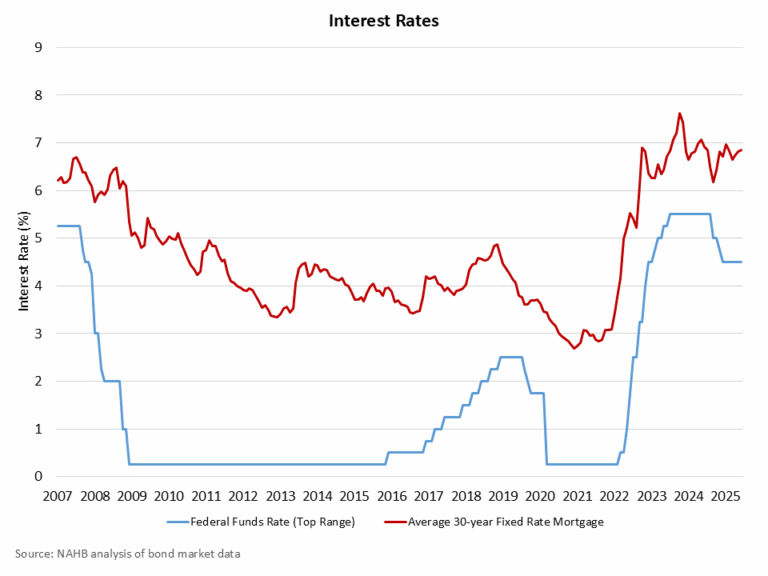

Reflecting most forecasters’ expectations for the June FOMC meeting, the Federal Reserve continued its post-2024 pause for federal funds rate cuts, retaining a target rate of 4.5% to 4.25%. The pause comes after a 100 basis point series of reductions in late 2024. Despite these cuts, mortgage rates have remained in the high 6% range. The Fed also held unchanged its ongoing quantitative tightening program, which is more strongly focused on balance sheet reduction for mortgage-backed securities (MBS).

The Fed reaffirmed its policy commitment to achieve maximum employment and reduce inflation to a two percent target rate. During the 2025 policy pause, the Fed remains data dependent in a “wait and see” mode for developments in areas like tariff policy. Chair Powell noted that we learn more about tariffs later this summer. NAHB’s forecast incorporates two rate cuts from the Fed for 2025, one in the third quarter and one in the fourth quarter.

The Fed noted that economic activity continues at a “solid pace,” however swings in imports affected the first quarter GDP data. The central bank also stated that the unemployment rate remains low and inflation remains “somewhat elevated.”

I would note that the primary driver of this elevated inflation is ongoing high rates of shelter inflation, which reflect significant, underlying increases for residential construction costs for the post-covid period. During his press conference, Chair Powell cited that the housing market suffers from both long-run and short-run issues, involving affordability and a [structural] housing shortage. In prior comments to Congress, Powell has noted that home builders face a perfect storm of challenges from both the demand- and supply-sides of the market.

The Federal Reserve also published an update for its Summary of Economic Projections (SEP). Compared to its prior March projections, the Fed reduced its 2025 GDP forecast from 1.7% to 1.4% (year-over-year rate from the fourth quarter). During his press conference, Chair Powell linked policy uncertainty as a complicating factor for economic growth. Additionally in the SEP, the Fed slightly increased its 2025 forecast for the unemployment rate in the fourth quarter from 4.4% to 4.5%.

The central bank also increased its core PCE inflation projection for the final quarter of the year from 2.8% to 3.1%. During his press conference, Chair Powell noted that economic forecasters cited tariff policy as a contributing factor for a higher than expected level of inflation for 2025. He specifically projected that a measurable amount of inflation will arrive to the economy this summer. There is some debate among economists whether tariffs would have just a one-time impact on the aggregate price level, which would not be inflation pressure felt over a sustained period of time, or would in fact be a factor increasing inflation as a series of price increases.

Looking forward to future monetary policy, the “dot plot” projections of the SEP leave the Fed forecasting two rate cuts in 2025, followed by just one reduction in 2026 and one more cut in 2027. This projection removes one rate cute from both 2026 and 2027 compared to the March dot plot, although the Fed continues to point to 3% as the long-run, terminal rate for the federal funds rate.

Discover more from Eye On Housing

Subscribe to get the latest posts sent to your email.


This article was originally published by a eyeonhousing.org . Read the Original article here. .
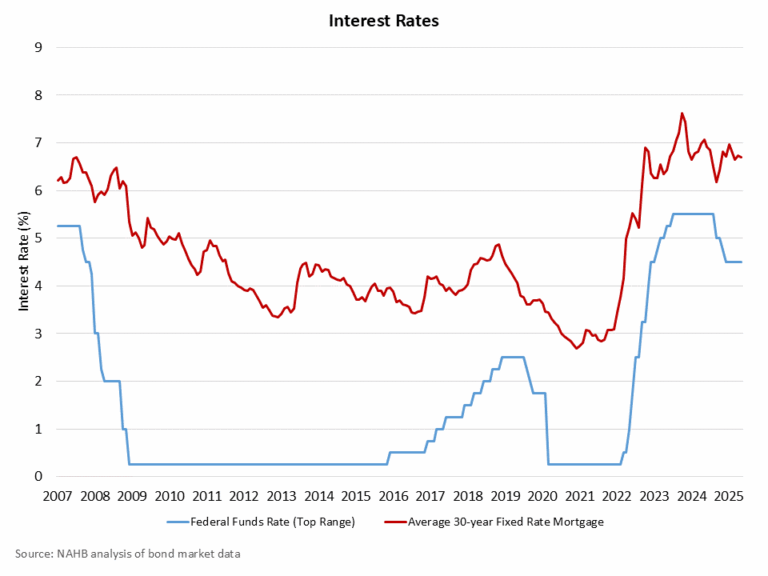

The Federal Reserve remained on pause with respect to rate cuts at the conclusion of its May meeting, maintaining the federal funds rate in the 4.25% to 4.5% range. Characterizing current market conditions, the central bank noted that the “unemployment rate has stabilized at a low level in recent months, and labor market conditions remain solid.” However, the Fed noted that “inflation remains somewhat elevated.”

Today’s statement acknowledged the weak first quarter GDP report via a reference to “swings in net exports have affected data” but otherwise the economy continues to expand at a “solid pace.” The Fed also reiterated its commitment to maintain maximum employment and bring inflation back to its 2% target rate.

With respect to monetary policy, the Fed noted that uncertainty for the U.S. economy has increased. Mindful of its dual mandate (price stability and maximum employment), the Fed noted that the “risks of higher unemployment and higher inflation have risen.” This statement reflects the complex situation the Fed currently faces, with risks to both sides of its policy mandate increasing.

While todays statement does not explicitly reference tariff policy, the debate over tariffs is an obvious candidate for the source of these rising risks that would harm the labor market and raise prices. Indeed, Chair Powell referenced industry reports of tariff risks in his press conference. Many economists, who as a profession dislike tariffs, would argue that the Fed would likely move further on normalizing monetary policy and reducing rates, if not for the risks of future tariff policy.

In the meantime, as Chair Powell noted, otherwise solid economic conditions leave the Fed with moderately restrictive policy and “in a good place to wait and see” with respect to future policy.

Today’s statement noted that the Federal Open Market Committee “will carefully assess incoming data, the evolving outlook, and the balance of risks.” In particular, the Fed will review “readings on labor market conditions, inflation pressures and inflation expectations, and financial and international developments.”

While the list of data sources the Fed is watching seems like everything but the kitchen sink, the Fed should be sure to watch sinks, windows, lighting fixtures, and other building material pricing and availability to gauge future economic and inflation conditions. Shelter inflation remains a leading source of ongoing elevated inflation. And shelter inflation can only be reduced by building more attainable housing.

Discover more from Eye On Housing

Subscribe to get the latest posts sent to your email.


This article was originally published by a eyeonhousing.org . Read the Original article here. .
Pin It