Every rookie investor arrives at the same fork in the road early on: single-family home or multifamily. Which one’s actually the better option? The property type you choose first can shape how fast you cash flow and how quickly you’re able to scale your real estate portfolio. Today, we’re breaking down both approaches so you can make that choice with confidence!
Welcome back to the Real Estate Rookie Podcast! We’re covering the real pros, cons, and differences between single-family and multifamily investing, including how your first rental property affects your options down the road. We’re also running deal analysis on a similar single-family home and duplex to show you exactly where the major differences lie and dig into the numbers to see which path actually builds more wealth.
While the decision largely depends on your market, budget, and time, this episode shows you exactly how to weigh those factors against your own goals. By the end, you’ll know which property type will get you where you want to go!
Ashley Kehr:
Should you buy a multifamily or a single family rental property? It’s an age old debate in real estate, and it’s also one of the first decisions you’ll need to make before building your own real estate portfolio.
Tony Robinson:
And one of these properties tends to be more affordable and is arguably easier to manage. The other is more scalable and may even give you more cash flow, but which one is the better long-term investment and which one will actually help you reach financial freedom faster?
Ashley Kehr:
Today, we’re putting them head to head. We’ll break down the biggest differences between the two, weigh the pros and cons and put a couple of real properties under the microscope. We’ll even let you know which one we would buy if we were starting over today. Okay, Tony, single family versus multifamily. What was your first actually? Was it a single family or was it a duplex?
Tony Robinson:
My first was a single family. I’ve actually never owned traditional multifamily property. Every investment that I purchased has been a single family and then we got a mortel. So I’ve never done small multifamily before. And as we all know, yours was like a $17 duplex somewhere that you bought.
Ashley Kehr:
17,000, Tony, not $17.
Tony Robinson:
Okay. All right. I was close. I was close.
Ashley Kehr:
Yeah, my first was a duplex. So the difference between a single family and multifamily is first single family, one household typically. Sometimes a single family can be considered. It may have an ADU or something like that, but it’s zoned as a single family. So sometimes it could be considered a single family, but technically have two units in it depending on how it’s permitted and things like that. And then small multifamily or multifamily property is when there are multiple units so that multiple families, how it has its name, can occupy the property. So you’re looking at a duplex, which is two units, a triplex three, a quadplex four. And then after that it just goes to a five unit, six unit, seven unit, eight all the way up. I would say one of the biggest differences between single family and multifamily is the common areas and just the fact that you’re having multiple families or individuals of separate households living together on the property.
And then the second thing is actually the market value and how the value of these two properties compare in different markets.
Tony Robinson:
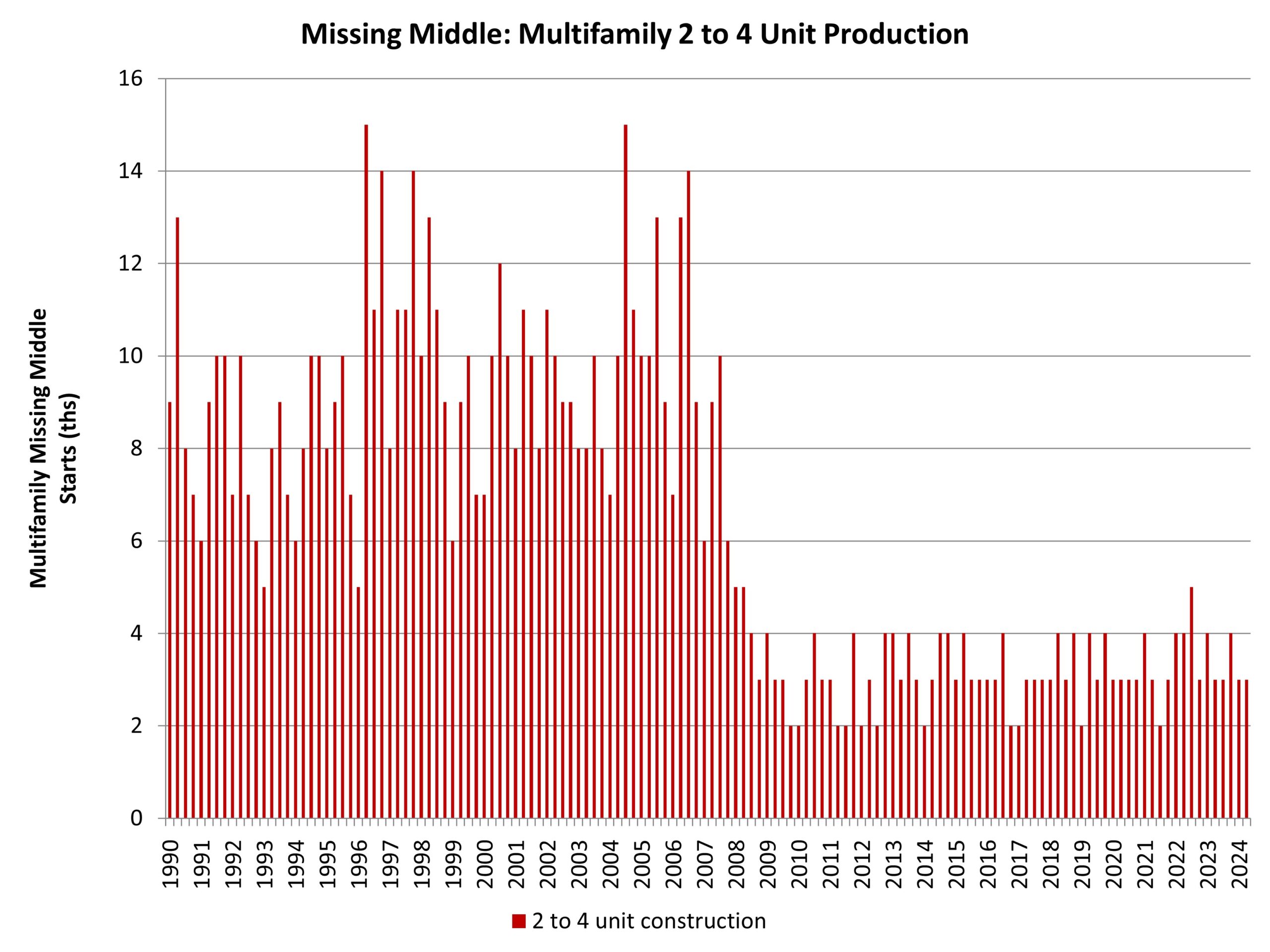
Let’s talk about that a little bit and maybe let’s just break down the pros and cons of both sides. I think both serve a purpose in different ways. And maybe we can talk about single family homes first. I think the biggest pro to a single family home is the simplicity and abundance of deals. Simplicity in the sense that almost every single market across the country has a single family home for sale. Not every single market has small multifamily for sale at any point in time. In my neighborhood where I live in Southern California, there just isn’t a lot of multifamily. It just doesn’t happen. There aren’t a lot of duplexes or triplexes. Most of my neighborhood is very suburban sprawl where it’s all single family homes. So we just don’t have a lot of inventory. So for me, I can open up Zillow on any day and find a deal to go underwrite if it’s a traditional single family property.
And then just again, simplicity wise, I think rookie investors can just wrap their heads around the idea of one house, one family inside, one door as a stepping stone for their first deals.
Ashley Kehr:
And as I mentioned, the fact of looking at the market value of each of those properties in different markets, that plays a big role into it as to single families are easier to sell because you have a larger buyer pool. So in my market that I invest in, a single family home has shown more appreciation over the years than a duplex has. Very similar property, but if it’s broken into two units compared to single family home, the single family home has had more appreciation over the years than the duplex in my market.
Tony Robinson:
Let’s talk about that just for a little bit too, Ash, because in small multifamily, maybe not as much, but definitely when you get into larger multifamily, the value of the property is a little less based on comparable sales and more so based on the net operating income. But for the smaller multifamily properties, are you seeing that they’re also using that approach of NOI, net operating income to appraise a property? Or are they actually doing just the comparable sales approach where they’re looking for other duplexes, triplexes, and fourplexes in the area?
Ashley Kehr:
Kind of depend on the loan product. So if you’re buying it as an investor and you’re getting a commercial loan, they may look at that. But in all of mine that I’ve purchased, they’ve never ever looked at that for a duplex. I have a six unit property and a five unit property, and they did look at that for those when they did the appraisal. But as far as getting appraised to find the value of a property, it is the same as a single family home for the duplex. They’re just using other duplexes as comparison for when they’re doing the appraisal.
Tony Robinson:
Yeah. So I guess that maybe sometimes is another benefit to the traditional single family home is that even just the appraisal part is going to be a little bit easier because there just tends to be a lot more inventory of single family homes they can appraise against.
Ashley Kehr:
And cheaper. Sometimes they charge more because it’s two units there.
Tony Robinson:
That’s true. Even the appraisal itself is a little bit cheaper. Have you been in a situation though, Ash, where they just couldn’t find another small multifamily to really appraise against yours and because of that you felt like your appraisal was impacted negatively?
Ashley Kehr:
No, I wouldn’t say that for the small multifamily. I would say more for my short-term rental actually. It’s two single family homes on one parcel. That’s where I had trouble, but not for duplexes. But if you are in a market where there’s not a lot of small multifamily, then yeah, they’ll probably have to stretch out farther and look at a bigger area. And then you could get yourself into trouble because you could know that where your property is, the neighborhood is really good. But if you’re going out a couple more miles, you know that area is not as nice. But since it’s in close proximity, they could still use that as a comp because when they’re pulling comps, they’re not looking at where the crime is and things like that. They’re just using a radius around that house that you’re purchasing or appraising as to which ones to use for comps.
And I think a lot of us know, Tony, that when you’re looking at a city, and if you don’t know this, you’re going to learn it today, is you’re looking at a city that you could literally turn a corner and it can now be an area where nobody wants to live and nobody wants to be in, it’s in high crime, but around the other side of the street, it’s the best neighborhood that you want to be in. So it can just change so quickly and rapidly street to street.
Tony Robinson:
And I think that’s another benefit too though of the single family home is because there are so many different neighborhoods and there are so many different options, selling the property in the back end can be a lot easier as well because a lot of times when you’re selling single family, you could be selling to another investor, but a lot of times you might just be selling to someone who wants to move in there for themselves. So your pool of potential buyers just tend to be a lot bigger on the backend exit as well.
Ashley Kehr:
One more pro that I really want to highlight too is the management of the single family because when you’re putting together their lease agreements, since they’re the only person living in it, you can ultimately put in there whatever you want them to take care of. If you want them to be in charge of the snow removal, if you want them to do the landscaping, where if you have a small multifamily that has shared areas, if all of your tenants are sharing the driveway, it’s hard to say, okay, you guys are all responsible for making sure the snow is removed. It’s just going to cause fights and cause problems because someone’s not pulling their weight to shovel their little portion of the driveway or whatever. Then you also have to deal with parking. They’re all getting along and parking well if you only have so many parking spots in the parking lot or they have to, in a lot of cities where the driveway is so narrow, you only can park in front and behind each other and then it’s coordinating cars to get in and out when someone has to go to work, the other one has to get up, move their car around.
And I’m speaking of all these examples from experience. So I really like single family that it eliminates a lot of the issues that can come up with having multiple households living on one property and sharing common areas too.
Tony Robinson:
That’s a great point, Ash. And I think maybe we can transition now into the pros of multifamily because it almost acts as like a counter to the pro that you just mentioned because while all those things you said are very, very true, I think that the benefit of multifamily is that if I have four single family homes or 10 single family homes and I’ve got one 10 unit multifamily building, and you can check me if I’m wrong here, but we’ve felt this experience with our single family Airbnbs in our motel, the 13 room motel, much, much easier to manage than 13 separate individual Airbnb properties. And for multifamily, I would assume it’s the same way. Have you seen that experience yourself that the fourplex is easier to manage than four separate individual single family homes just because of everything’s under one roof, you get one handyman who knows the whole building and they can tackle all those things.
Are you seeing the same thing in your portfolio?That’s
Ashley Kehr:
Actually a great question. And I used to manage a 40 unit apartment complex and then I have 40 rentals. I would take my 40 separate rentals over that 40 unit apartment complex. And I never ever thought that I would think that way. I never ever thought that because I always though you have one roof, you have less overhead. It just makes sense mathematically that you have this. Everything under there, like you said, that there’s only one place the handyman needs to go. You have one building. I will say as far as managing the properties, so take the tenant side of the equation, managing the properties, it is 100% easier to have those 40 units under one roof. You have all the information for the building, you only have to remember or write down or have the information for one building. You only have one roof to worry about.
You only have one parking lot to worry about that the property management. On the other side, with me having 40 units, when there’s a question about one of the houses, I have to pull up that information with that house and they’re in different towns that have different laws that has different rules, like garbage pickup days, five different days across all the properties. There’s so much more information that you need to have and keep track of with having the 40 different units separated across. But here’s what I’ll tell you is easier. Managing these 40 separate units compared to the 40 unit building, managing the tenants, it is way worse with the 40 unit apartment building, way worse. And I don’t know if it’s because everybody’s living in one place, but all the disputes and disagreements of managing 40 different households, all trying to share the same hallways, the same dumpster, the same mail room, the same parking lot, that side of it was way worse than what it is for my 40 unit apartments.
40 unit apartment, every single day there was communication of some kind. I probably have in my 40 units probably maybe interaction with my tenants at maximum five times a month, as in that would include a maintenance request. That would include just a message asking about something or talking with them about late rent or an issue or problem that has come up, probably five max. Where at the other, the 40 unit was every single day there was something that needed to be communicated or taken care of with a tenant
Tony Robinson:
Specifically. Ash, does it have anything to do with the class of property? Are your single families in A and B class neighborhoods and your multifamily’s in C class?
Ashley Kehr:
No, they’re all pretty much in the same market or very close. And mine aren’t 40 single family. They’re still small multifamily. So it’s a mix of both single family and small multifamily, but just using a bigger one, a larger multifamily as comparison. But also too, when you’re getting into that scenario of having a 40 unit, it makes sense to hire property management or to hire someone to run it because you have the, well, hopefully you have the cash flow from that property to support having a property manager to take care of those issues. But in my experience personally, I would rather take the 40 individual if I had to pick the tenant management of it is what I would rather do is the individual properties than the complex altogether.
Tony Robinson:
Okay. Well, that’s good to know. That’s why we got you on here as a resident, multifamily, large and small expert. Ash, you can give those insights.
Ashley Kehr:
Oh, and one more thing on that too, is that I feel like you have more financial opportunity with having the separate units than the one building. Because if you need cash, you can go and refinance, you can get a line of credit on your apartment complex, you can do all of that. But with the small multifamily, you could list one property for sale. You could put a line of credit on one of them, on two of them, you could pay off one of them. So with the large apartment complex, you’re going to pay off that property, that’s probably going to be a lot of money you need to pay off that. Where at the single family, you could have some that are completely paid off and then other ones with mortgages on it. So I kind of like that side of it too, is that with having the different units, you have flexibility and financial opportunity where you can kind of move things around if necessary.
That’s
Tony Robinson:
A great point. You have more levers to pull, which you don’t get with the multifamily. I think maybe on the inverse side of that though, one of the other benefits of multifamily is that there’s maybe less risk in the sense that on a single family home, if someone moves out, you’re at 0% or 100% vacancy or 0% occupancy, if I’m using my short termmental words. But on the other side with multifamily, if I have a fourplex and I’ve got three out of the four units rented, well, at least I still got some income even though someone’s out. So there’s a benefit in the other direction of having multiple people under the same roof.
Ashley Kehr:
And it’s more scalable for small multifamily or even large multifamily, just multifamily in general is you are purchasing, you’re doing one acquisition. So you’re making one offer, you’re doing due diligence on one building, you’re closing, you’re doing one mortgage, you’re done. But if you say that that was a five unit you just bought, that was one process. But if you’re going to buy five single family, you have to do that five times over. You have to go and find five different properties. You have to offer on them, you have to get them accepted, you have to do due diligence on those properties, you have to get through the closing. So acquisition I think is much easier to get more under one roof than it is to do them all separately too.
Tony Robinson:
In general, I feel like there’s pros and cons to each, right? Both can be successful, but each one has its own pros and cons. I think maybe the last thing I’d highlight, Ash, on the multifamily side is that in addition to your point of just being able to scale faster, you can typically also get more cash flow. If I have one single family residence that’s $300,000 versus same price, 300K, but I’ve now got five units or four units, in theory, the rent across the four would be more than the rent for that one property. So more cash flow, potentially better returns as well.
Ashley Kehr:
Okay. So we covered the benefits and some of the cons of each of these different asset classes, but when we come back, we’re going to highlight a few more cons you should be aware of for each strategy. We’ll be right back. Okay. Welcome back from our short break, and thank you so much for taking the time to check out our show sponsors. Let’s go over some of the cons, the additional cons that we haven’t discussed yet for single family properties. And Tony, I think one of these is house hacking, completely capable of doing house hacking by renting by the room with single family. But a lot of times that may not be something that you actually want to do is rent by the room with other people living in your property and you’re more comfortable having your own unit. So it does limit the amount of people who would use house hacking as a strategy if they only had the option of a single family because you do have to live with others where if you get your own unit, to me, that at least sounds a lot nicer idea of house hacking than single family.
Tony Robinson:
And then on the multifamily side is that as you get bigger, the financing requirements start to change as well. Obviously, if you go super, super big, say you’re syndicating an apartment complex that’s multiple seven figures and it gets really, really complex where you’ve got to have a guarantor on loan and someone who’s got the net worth to be able to sign for it and it gets a little bit more complex. A lot of times you’ll eat more money down. We talk about buying a single family home. To your point, Ash, house hacking a single family home, 3.5% down, FHA, there are some loan options that are 0% down, but as you get into some of the larger multifamily things, they want 20, 25%, sometimes 30% down in order for those deals to make sense. So I think even on the financing side, it can become a little bit more complex as you get into the multifamily space as well.
Ashley Kehr:
There’s also requirements with commercial loans, and not even just for large multifamily, but even for my five unit, my six unit is when you’re doing a commercial loan, a lot of times they will have requirements of you need to keep as long as you have the life of the loan. For example, you need to have sometimes so much money in reserves, and then sometimes you need to stick within a specific DSER kind of range in order to keep the loan in good faith or that it’s in compliance. So there are other things with commercial loans when you’re getting into small multifamily or large multifamily that you do need to consider to make sure that your property is performing well. So if you do have a single family and your property sits vacant for a while and you don’t have any income coming in, but you just have a conventional loan as the financing, no one’s going to be checking and caring that there’s no income as long as you’re going in and paying your rent.
But when you have one of these commercial loans, they’re going to ask you for financials every single year and they’re going to make sure that your property is performing and that it’s not all of a sudden going downhill. When I worked for another investor, every year we would submit the financials and if there was anything that was out of the ordinary, they would question and I would have to show like, “Oh, we replaced the roof. That’s why the capital improvements was so much higher this year or we did a whole re-landscaping,” different things like that. Or we just had a ton of repairs and I would have to show what those repairs were to the bank too. So that’s also something to be cautious of when considering going with a commercial loan for a small multifamily too.
Tony Robinson:
Wash, what do you think? Should we look at maybe some real examples of what this might look like in practice? So the team at BiggerPockets here gave us two deals that are actually on the market right now. One is a single family home in Memphis, Tennessee. We’ll call that Maple Tree Drive. The other is a duplex also in Memphis and it’s on Waynoca Avenue. So we got the Maple Tree single family home. We have the duplex on Waynoca.
Ashley Kehr:
Why can’t we just call them single family and then the multifamily?
Tony Robinson:
Because I just want to hear you stumble over the words. That’s the whole reason why. I saw that. I was like, I’ve got to get Ash to try and say that live on air. So we got the single family, we’ve got the duplex. So the single family here is 210,000 bucks. And let’s just assume that for both of these, we’re going to do 20% down, call it a 7% mortgage rate, 8% for vacancy and 1% of purchase price for maintenance and CapEx. So if we just use those as ballpark figures for both. On the single family home, 210,000 bucks, 20% down, 7% rate. Your principal and interest will be about $1,100. Property taxes, about 230, insurance 120, maintenance 175, vacancy 128. And based on what we’re seeing, rents in this area are about 1,600. So guys, if we take that 1,600 and we subtract out all of those expenses we just listed, we end up with a cash flow of negative $172 per month.
So here’s a single family home with brand new construction, beautifully done, but we will be losing negative 172. Now I just want to highlight too, because we’re also including maintenance and vacancy which hasn’t happened. We don’t know if that’s going to happen, but we still want to make sure that we account for those things as well in our initial underwriting. So it’s tough on a single family home, at least in this market for this specific deal. But let’s look at maybe how the duplex compares to that one.
Ashley Kehr:
So the duplex, we are going to purchase it at 269,900 with 20% down, also 7% mortgage rate. So for P&I, we’re looking at about 1,400 bucks a month. The property tax, 315 a month, insurance 160, maintenance about 225. Vacancy at 8% is around $200. And we think we can get for rent about 1250 per unit, so $2,500 in total per month. This would put us for our monthly cash flow at $164 per month. So sometimes this is easier to get a multifamily property cash flow because you have the higher combined rents, but you also have similar expenses. So for example, let’s look at the property taxes. The single family home, the property tax is $231 per month, and the property tax of the duplex is 315. So even though you’re getting double the rent, you are only paying $100 more in property taxes, basically actually less than that each month.
And then the insurance for the single family, 120, the insurance for the duplex, 160. So a lot of those expenses are not that much more if you have more units in the property, which can make a big difference.
Tony Robinson:
And even though the per unit rent on the duplex is cheaper than the overall rent for the single family home, because there’s two, we’re generally going to make more. Guys, in this example, the duplex gives you more cash, but which one of these properties actually get you to financial freedom faster? And let’s assume obviously that we’re only buying single family homes that produce cash flow, right? But don’t go anywhere because we’ll cover that and more right after the break. All right. So what is the best path to financial freedom and which property would Ash and I actually choose? I think this largely depends on what your goals are. Why exactly is it that you chose to invest in real estate? Do you want to quit your job as soon as humanly possible? Tony asked, if I could quit yesterday, I would’ve done it. Do you want to build maybe a bigger portfolio that gives you at least maybe some job optionality where maybe it’s not quitting and not working at all, but can I go maybe take a lesser paying job that I enjoy more because I have the real estate?
Or maybe you’re like, Tony, I love what I do. I’m a teacher. I love teaching. I’m a doctor. I love being a doctor. I’m going to do this if I can’t do it anymore. And real estate investing is just another way for me to diversify and build wealth for retirement. All those strategies or all those goals are fine. I think it’s just first clearly defining which one is the one that you’re actually working toward because different goals could lead to different solutions. If your goal is, hey, 30 years from now I want this, well then maybe you’re fine if the duplex or the single family home is barely breaking even because in 30 years it’ll be paid off and it’s in a very high appreciating market, so you’ll be set. But if you want to quit today, the barely breaking even is going to help a whole heck of a lot.
Ashley Kehr:
It also depends on your time and what you are capable of doing or maybe what you even want to do. So if you’re going to go after multifamily and you want to take down a 10 to 20 unit, do you have the time to manage a property like that? Sometimes there’s this little gray area where it consumes a lot of your time for the management, but it’s also there’s not enough room in the cash flow to actually hire someone to be the property manager on these units or it really cuts down into the cash flow of these properties and you don’t have the huge unit count to actually cover the price of hiring your own property manager in-house too. So that’s one thing you got to look at, or maybe you do really want to be a full-time property manager for your rentals. I feel like that’s basically what I am is I self-manage.
I use a lot of tools and resources, but is that something you actually want to do? Do you want to not pay a property manager and then you keep that money in house and that helps you leave your nine to five job because you’re keeping that money instead of giving it out to property manager? Then maybe going after multifamily is better because you’re going to get more units than you would buying a single family one at a time throughout the time period. The next thing that you want to look at is your market. You need to understand what will work and what won’t work in your market too. So like I said in the beginning, single families in the market that I invest in appreciate better over time than multifamily does, but that could be the complete opposite in your market. So you need to do your own research and verify the market that you’re looking in.
Look at all of the things we talk about, the pros and the cons. Look at rents. Do people pay more for a single family home for rent, even though it’s the same bedroom count, the same bath count, because they’re getting that privacy of their own home instead of living in a duplex or a triplex where they’re still sharing that area with others? Or maybe it’s opposite. Maybe people prefer to live in an apartment than living in a single family home. So these are all things that can vary market to market. So you do need to do your own research in the market that you’re looking at. Just take all of the points that we talked about and then use that to analyze your market.
Tony Robinson:
Guys, I think the bottom line is that both property types can work. And the beauty of real estate investing is that you can layer different strategies together. So if you want to go out and buy a single family home, maybe it doesn’t work as a traditional long-term rental, but could you rent by the room? Could you add an ADU on the back and turn it into a multifamily? Can you turn it into an assisted living facility? Can you turn it into a midterm rental or a short-term rental? There are so many different strategies that we can layer together. And Ash and I, we’ve both done a little bit of everything. I built most of my portfolio with single family homes in more expensive markets. Ash built her portfolio with the mix, single family, small multifamily and more affordable cities. Both of us have found success.
So I think the question guys is less about which strategy is best And it’s more so about which one can you execute the best on? And if you can answer that question, then everything’s going to work in your favor at that point.
Ashley Kehr:
Okay. Now Tony, if you were starting over in 2026 going into 2027, would you pick the single family? Would you pick multifamily?
Tony Robinson:
I would pick single family.
Ashley Kehr:
Yeah, I feel like your answer is so obvious.
Tony Robinson:
I would pick single family. Obviously my first instinct is that I do a short-term rental because that’s what I know so well. But let’s say that I’m starting over as a rookie and I didn’t have the experience that I have and I was just like Tony who was still working at Tesla, I would probably still do that same thing because not only would short-term rentals give me the cash flow, the increased cashflow above the long-term rentals, but it would also give me the tax benefit, which would then allow me to hopefully get a big tax refund and then just repeat that same process over again. And traditionally speaking, single family properties can produce more revenue than an equivalent small multi or duplex because folks want that space and those experiences. So that’s what I would do. Ash, what about you? If you’re starting over.
Ashley Kehr:
Yeah. I mean, I actually have a really hard decision on this, because I think my start went out great doing duplexes. That’s all I bought at first was just duplexes and I think it worked out really well. But if I go back to that and the cash flow was decent and it definitely would’ve been harder to cash flow at first. So I don’t think that I would’ve been as successful in the early years if I was doing single family homes because the cash flow was so much smaller on those than the small multifamily, the duplexes. But if I look back over the last 10 years and I compare the appreciation from a single family, if I would’ve bought it at that time and what it’s worth now compared to my first ever duplex and what that’s worth now, I would have a lot more wealth, I would say.
So I think the duplex was the right choice because at the time I was chasing cashflow and I wanted cash flow. I didn’t want to work anymore and that was the right strategy for that. And I think a good mix was to start with that and then add in the single family properties. And I still don’t have a lot of single family homes. I just have a small handful, but they definitely see way more appreciation than the small multifamily for sure. But also at the time too, when I first started, I thought I would never ever sell a property. So I didn’t think that I would ever do that. I just though maybe I would pay them off or I would maybe refinance them or something like that. But I learned along the way that your goals change, your buy changes, and I didn’t want my dumpy little duplexes that Tony’s jealous of that I bought for $20,000 anymore.
Well, thank you guys so much for listening to this episode. We want to know if you’re watching on YouTube, but what strategy are you going after or are you currently investing in? Is it single family or multifamily properties? Let us know in the comments. I’m Ashley. He’s Tony and we’ll see you guys on another episode of Real Estate Ricky.
Help us reach new listeners on iTunes by leaving us a rating and review! It takes just 30 seconds and instructions can be found here. Thanks! We really appreciate it!
Interested in learning more about today’s sponsors or becoming a BiggerPockets partner yourself? Email [email protected].