Tag

Applications

Browsing


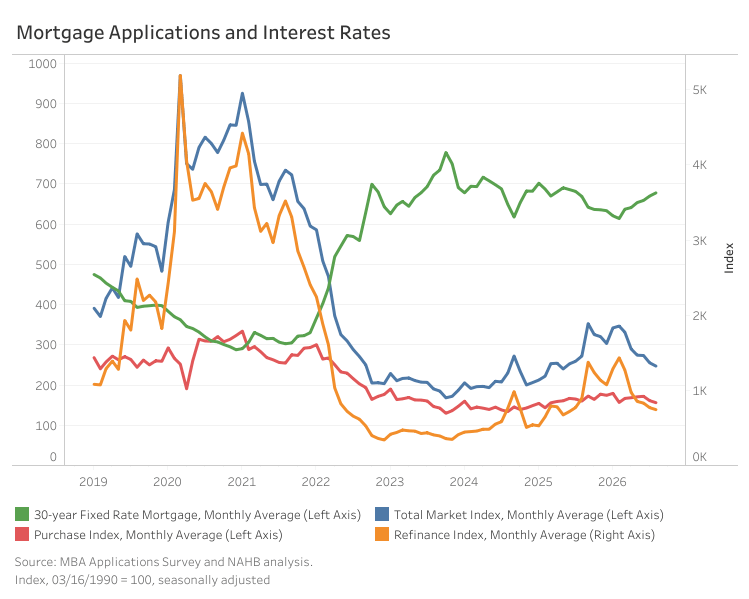
Mortgage application activity continued to decline in August as elevated US treasury yields pushed mortgage rates higher. The Mortgage Bankers Association’s (MBA) Market Composite Index, a measure of total mortgage application volume, declined 3.2% month-over-month in August on a seasonally adjusted basis, marking the sixth consecutive monthly decline. Compared to a year ago, total mortgage applications declined 9.1%.

The monthly decline occurred in both major components. Purchase applications decreased 3.1% from July, while refinance applications declined 3.5%. Relative to August 2025, purchase and refinance activities were also down 2.5% and 16.6%, respectively.

The decline in market activity continued to slow down as the average contract rate for a 30-year fixed-rate mortgage rose. Compared to last month, the mortgage rate increased 8 basis points (bps) to 6.78%. The rate was also 9 bps higher than a year ago.

By loan type, applications for adjustable-rate mortgages (ARMs) and fixed-rate mortgages (FRMs) decreased 0.6% and 3.4% month-over-month, respectively. Compared with a year earlier, ARM application volume fell 18.2%, while FRM applications declined 8.2%. Despite the monthly decline in ARM applications, their share of total applications edged higher because ARM activity fell less than FRM activity. ARMs, including both purchase and refinance loans, accounted for 7.9% of total applications on a non-seasonally adjusted basis in August, up 0.2 percentage points from July but 0.9 percentage points below the share recorded a year earlier. The average contract interest rate for 5/1 ARMs was 5.90% in August.

Average loan sizes also declined across all categories in August. The overall loan size decreased 2.3% to $375,300. The average purchase loan size fell 0.8% to $441,000, while the average refinance loan size declined 4.5% to $283,000. The average ARM loan size edged down 1.5% to $923,800.


This article was originally published by a eyeonhousing.org . Read the Original article here. .


Mortgage application activity slowed in July amid continuation of the war in Iran. The Mortgage Bankers Association’s (MBA) Market Composite Index, a measure of total mortgage application volume, declined 6.6% month-over-month in July on a seasonally adjusted basis. Compared to a year ago, total mortgage applications declined 1.5%, the first year-over-year decline in two years.

The market decline occurred in both major components. Purchase applications decreased 6.4% from June, while refinance applications declined 7.2%. Relative to July 2025, purchase and refinance activities were also down 2.4% and 0.1%, respectively.

The slowdown coincided with higher borrowing costs as ongoing conflict in Iran pushed the average contract rate for a 30-year fixed-rate mortgage up 11 basis points (bps) to 6.70%. Nonetheless, the rate remained 12 bps lower than its level a year ago.

By loan type, applications for adjustable-rate mortgages (ARMs) and fixed-rate mortgages (FRMs) decreased 12.5% and 6.1% month-over-month. Compared with a year earlier, ARM application volume was unchanged, while FRM applications declined 1.6%. ARMs, including both purchase and refinance loans, accounted for 7.7% of total applications on a non-seasonally adjusted basis in July. This was 0.5 percentage points lower than in June and 0.1 percentage points higher than the share recorded a year earlier. The average contract interest rate for 5/1 ARMs was 5.9% in July.

Average loan sizes declined across all categories in July. The overall loan size decreased 2.5% to $383,600. The average purchase loan size fell 2.6% to $444,600, while the average refinance loan size declined 2.2% to $296,000. The average ARM loan size edged down 0.7% to $937,600.


This article was originally published by a eyeonhousing.org . Read the Original article here. .


Mortgage application activity declined again in May as higher mortgage rates continued to suppress the market, although adjustable-rate mortgages (ARM) gained some traction. According to the Mortgage Bankers Association’s (MBA) Market Composite Index, a measure of total mortgage application volume, applications fell 5.5% month-over-month in May on a seasonally adjusted basis. The decline was driven by refinance activity, which dropped 12.3% over the month, while purchase applications posted a modest 1.8% increase. Compared with a year earlier, however, total mortgage application activity remained 14.2% higher, with refinance applications up 26.4% and purchase applications rising 6.2%. Meanwhile, applications for adjustable-rate mortgages (ARM) rose 3.1% over the month, nudging the ARM share of total applications up to 9.0%.

The average contract rate for a 30-year fixed-rate mortgage increased 13 basis points (bps) to 6.54% in May, as conflict in Iran pushed Treasury yields higher. Nonetheless, the rate remained 36 bps lower than its level a year ago. As borrowing costs moved up, borrowers showed some renewed interest in ARMs, which can offer lower initial rates than fixed-rate loans.

By loan type, applications for ARMs increased 3.0%, while fixed-rate mortgages (FRMs) decreased about 6.1% from the previous month. On a year-over-year basis, applications for FRM and ARMs were up 12.4% and 38.2%, respectively. As of May 2026, ARMs applications, including both purchase and refinance loans, accounted for 9.0% of total applications on a non-seasonally adjusted basis, up 0.7 percentage points from the prior month and 1.5 percentage points a year earlier. The average contract interest rate for 5/1 ARMs was 5.7% in April.

Loan sizes increased across most categories in May, with refinance loans being the main exception. Consequently, the overall average loan size edged up 2.5% to $407,600. The average purchase loan size increased 2.2% to $465,000, while the average refinance loan size declined 1.5% to $321,000. The average ARM loan size edged up, decreasing 1.9% to $937,200.


This article was originally published by a eyeonhousing.org . Read the Original article here. .
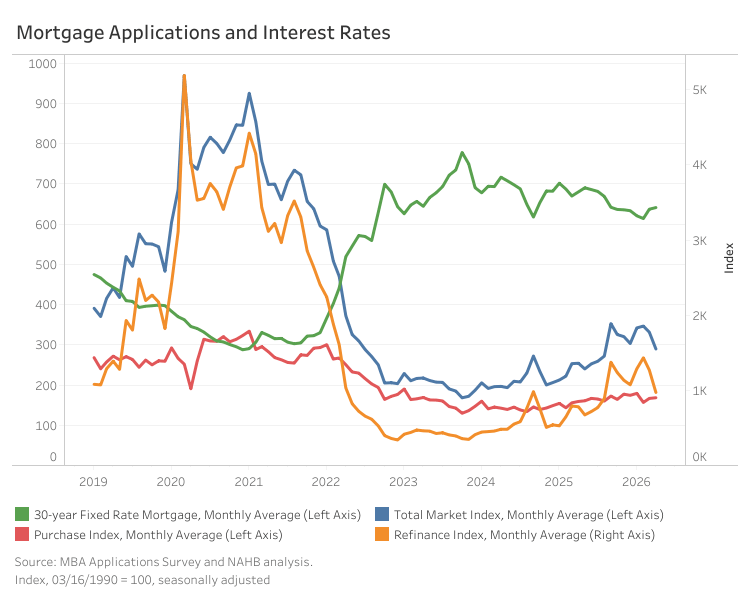

Mortgage application activity decreased month-over-month as the 30-year fixed mortgage rate rose. The Mortgage Bankers Association’s (MBA) Market Composite Index, a measure of total mortgage application volume, declined 12.4% month-over-month in April on a seasonally adjusted basis. However, overall activity remained 14.2% higher than a year earlier. Applications for adjustable-rate mortgages (ARM) also fell 12.4% month-over-month, while the ARM share of total applications was unchanged at 8.3%.

The average contract rate for a 30-year fixed-rate mortgage increased four basis points (bps) to 6.41% as the conflict in Iran pushed yields higher. Nonetheless, the rate remained 39 bps lower than its level a year ago. Refinance applications fell sharply by 23.5% from March, while purchase applications held steady. Relative to April 2025, refinance and purchase activities were up 24.5% and 5.7%, respectively.

By loan type, applications for both adjustable-rate mortgages (ARMs) and fixed-rate mortgages (FRMs) decreased approximately 12.4% month-over-month. On a year-over-year basis, FRM applications were up 13.9%, while ARM applications rose 13.2%. As of April 2026, ARMs applications, including both purchase and refinance loans, accounted for 8.3% of total applications on a non-seasonally adjusted basis, unchanged from the prior month and a year earlier. The average contract interest rate for 5/1 ARMs was 5.6% in April.

Loan sizes declined across all categories except purchase loans in April, edging the overall average loan size down 0.9% to $397,800. The average purchase loan size increased marginally by 0.9% to $454,800, while the average refinance loan size fell 7.1% to $326,000. The average ARM loan size declined 1.1% to $919,500.


This article was originally published by a eyeonhousing.org . Read the Original article here. .


Home improvement activity has remained elevated in the post-pandemic period, but both the volume of loan applications and the age profile of borrowers have shifted in notable ways. Data from the Home Mortgage Disclosure Act (HMDA), analyzed by NAHB, show that total home improvement loan applications have eased from their recent post-pandemic peak, and the distribution of borrowers across age groups has gradually tilted older.

The number of home improvement loan applications increased sharply during the housing boom and the remodeling surge that followed the onset of the pandemic. After totaling 1.15 million loans in 2019, activity fell 20% to 0.92 million in 2020 as uncertainty and lockdowns disrupted markets. Applications then rebounded to 1.07 million in 2021 and climbed to a cycle high of 1.49 million in 2022, reflecting strong demand for renovations. Since then, activity has moderated but remains historically solid, edging down to 1.25 million loans in 2023 and 1.20 million in 2024. Despite cooling from the pandemic-era surge, the 2024 total stands above pre-pandemic levels, supported by an aging housing stock and limited inventory of existing homes for sale.

Alongside these changes in loan volume, the age composition of borrowers has gradually shifted, revealing notable changes across age groups.

In 2019, applicants ages 45-54 accounted for the largest share of home improvement loans at 26.0%. By 2024, their share slipped slightly to 25.2% but remained the largest cohort. The 55-64 age group experienced a more noticeable decline, falling from 23.2% in 2019 to 21.7% in 2024.

In contrast, both younger and older segments expanded their presence in the remodeling market. Borrowers ages 35-44 increased their share from 22.0% to 22.9%, while those ages 25-34 rose from 8.7% to 9.1%. Although, still representing a small portion of total applications, applicants under age 25 edged up from 0.4% to 0.5%. More notably, the share of older loan applicants increased. The 65-74 cohort ticked up from 13.1% to 13.2%, and applicants over age 74 rose from 4.7% to 5.4%.

Overall, the data indicate a gradual aging of home improvement activity. Borrowers aged 65 and older accounted for 17.8% of loan applications in 2019, increasing to 18.6% in 2024. This shift likely reflects both the aging of the homeowner population and a growing preference among older homeowners to undertake aging-in-place renovation and maintain homes they have owned for many years. Meanwhile, the modest gains among borrowers in their mid-30s to early 40s suggest continued renovation demand from trade-up buyers and households choosing to remodel rather than buy a new home amid high interest rates.


This article was originally published by a eyeonhousing.org . Read the Original article here. .


All types of mortgage activity rose on a year-over-year basis in October, supported by recent declines in interest rates. Notably, adjustable-rate mortgage (ARM) applications more than doubled from a year ago, and refinancing activity continued to strengthen. 

The Mortgage Bankers Association’s (MBA) Market Composite Index, a measure of total mortgage application volume, fell 7.7% from September on a seasonally adjusted basis but was 39.0% higher than a year ago. 

The average contract interest rate for 30-year fixed mortgages fell 5.4 basis points to 6.37%, the lowest in over a year. Following a strong increase in September, refinancing activity in October dropped 10% month over month, while purchase applications decreased 4.8%. Compared to a year ago, purchase and refinance applications were up 18.1% and 63.0%, respectively. 

By loan type, fixed-rate mortgage applications decreased 7% from September but were 34% higher year-over-year. Adjustable-rate mortgage applications dropped 13% month-over-month, yet surged 116.5% from a year earlier, following a 124% annual gain in September. As a result, ARMs accounted for 9.44% of total applications in October, one of the highest shares in the past three years. 

The average loan size across all mortgages was $408,000, down 3% from the previous month. The average purchase loan size remained steady at $437,000, while the average refinance loan size declined 6% to $385,000. For adjustable-rate mortgages, the average loan size fell 5% to $938,000, compared to a 2% decline for fixed-rate mortgages to $353,000. 


This article was originally published by a eyeonhousing.org . Read the Original article here. .
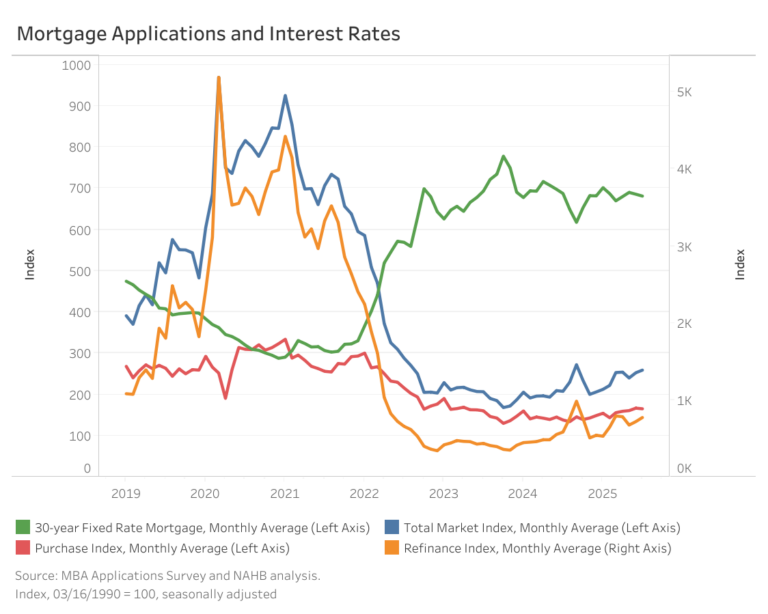

Mortgage application activity picked up in July as interest rates eased modestly. The Mortgage Bankers Association’s (MBA) Market Composite Index, which tracks mortgage application volume, rose 2.4% from June on a seasonally adjusted basis. Compared to July 2024, total applications were up 24.5%.

The average contract rate for 30-year fixed mortgages edged down by 4 basis points to 6.8%. While refinancing increased by 7.4%, purchase applications slipped 1.2% as high home prices and mortgage rates continued to keep homebuyers on the sideline. Year-over-year, the 30-year rate was 6 basis points lower, with purchase and refinance applications up 19.6% and 32.2%, respectively.

Loan sizes continued to trend downward for the third consecutive month. The average loan amount across all loan types declined 1.7% to $376,500. Purchase loan sizes fell 2.5% to $428,800, while refinance loans increased 3.0% to $299,300. Adjustable-rate mortgage (ARM) loan sizes saw the largest decline among all loan types, falling 6.6% to $957,500 from $1.03 million.   

Discover more from Eye On Housing

Subscribe to get the latest posts sent to your email.


This article was originally published by a eyeonhousing.org . Read the Original article here. .
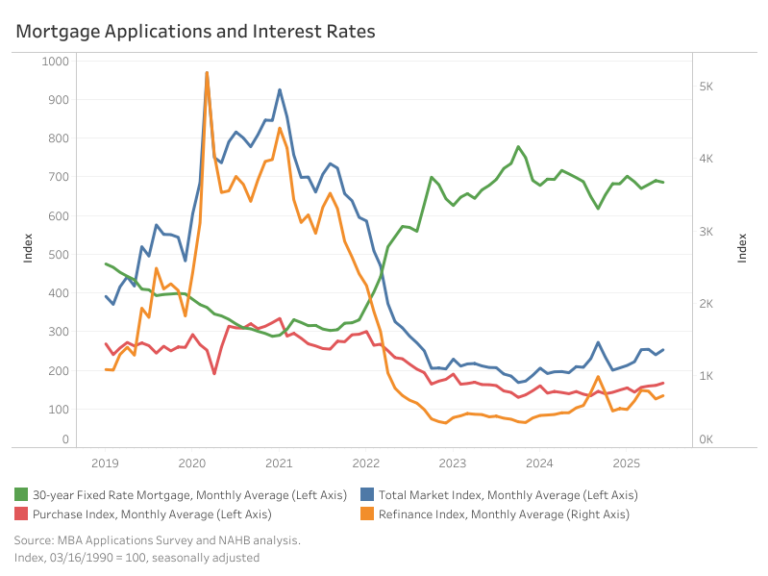

Mortgage application activity picked up in June, supported by a slight decline in interest rates. The Mortgage Bankers Association’s (MBA) Market Composite Index, which tracks mortgage application volume, rose 5.4% from May on a seasonally adjusted basis. Compared to June 2024, total applications were up 21.1%.

The average contract rate for 30-year fixed mortgages edged down by 4 basis points to 6.86%. In response, purchase applications increased 3.7% month-over-month, while refinance activity climbed 6.5%. On a year-over-year basis, the 30-year rate was 12 basis points lower, with purchase and refinance applications up 15.2% and 30.3%, respectively.

Loan sizes continued to trend lower. The average loan amount across all loan types declined 2% to $383,000. Purchase loans edged down 0.9% to $439,800, and refinance loans decreased 1.8% to $290,500. Adjustable-rate mortgage (ARM) loan sizes dropped 3.1% to $1.03 million. 

Discover more from Eye On Housing

Subscribe to get the latest posts sent to your email.


This article was originally published by a eyeonhousing.org . Read the Original article here. .
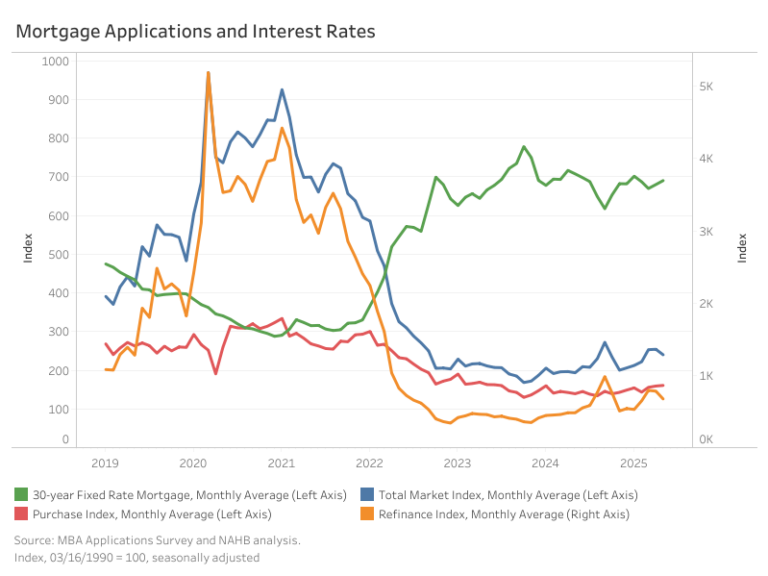

Mortgage loan applications declined in May, driven by a drop for refinancing activity. According to the Mortgage Bankers Association (MBA) weekly survey, the Market Composite Index, which measures mortgage application volume, fell 5.5% month-over-month on a seasonally adjusted (SA) basis. Despite the monthly dip, application volume remains 23.7% higher than in May 2024.

The average 30-year fixed mortgage rate rose for the second consecutive month, climbing 10 basis points to 6.9%. Purchase activity remained resilient, posting a modest 1.3% monthly gain from the previous month, while the Refinance Index declined 13.7% (SA). Compared to a year ago, mortgage rates are still 18 basis points lower, with purchase and refinance applications up 15.8% and 39.8%, respectively.

Average loan sizes also declined. In May, the average loan amount for the overall market, which includes purchases and refinances, declined 3.1% to $390,800. Purchase loan sizes stayed flat at $443,600, while refinance loan sizes dropped 12.8% to $296,000. The average size for adjustable-rate mortgages (ARMs) ticked up 0.5%, from $1.05 million to $1.06 million.

Discover more from Eye On Housing

Subscribe to get the latest posts sent to your email.


This article was originally published by a eyeonhousing.org . Read the Original article here. .


The Market Composite Index, a measure of mortgage loan application volume from the Mortgage Bankers Association’s (MBA) weekly survey, increased by 3.1% month-over-month on a seasonally adjusted (SA) basis, primarily driven by purchasing activity. Compared to January last year, the index is higher by 3.4%. The Market Composite Index which includes the Purchase and Refinance Indices: purchasing experienced a monthly gain of 3.8%, while refinancing decreased 2.3% (SA). On a year-over-year basis, however, the Purchase Index is lower by 3.4%, while the Refinance Index remains higher at 18.6%.

The average 30-year fixed rate mortgage reported in the MBA survey for January ticked up 20 basis points (bps) to 7.02% (index level 702). This rate is 24 basis points higher than the same period last year.

Average loan size (purchases and refinances combined) increased slightly by 0.8% on a non-seasonally adjusted (NSA) basis from December to $373,200. For purchase loans, the average size increased by 1.8% to $429,400, while refinance loans experienced a 5.4% decrease, reaching an average of $288,200. Adjustable-rate mortgages (ARMs) saw a continued decline in average loan size for three consecutive months, down 0.6% from $1.074 million to $1.068 million.

Discover more from Eye On Housing

Subscribe to get the latest posts sent to your email.


This article was originally published by a eyeonhousing.org . Read the Original article here. .
Pin It