Each quarter, the BiggerPockets Pulse survey captures how investors in our community feel about and behave in the current market. Our Q3 2026 results paint a profile of a resilient investor who continues to seek opportunities despite a difficult rate environment and geopolitical shocks.
However, there has been a gradual decline in overall sentiment since the beginning of the year. In Q1, the Pulse Index was 108 points. In Q2, the Pulse Index clocked in at 102 points. Today, the Index has fallen to 96 points. It’s still what we consider a neutral rating, but the downward trend remains steady.
Driving worsening sentiment are several challenges, most notably the difficulty of finding deals and securing capital. Additionally, investors are increasingly concerned about holding costs, including rising insurance premiums, property taxes, and maintenance expenses that erode cash flow.
Below are the results and highlights of the survey.
Behavior and Sentiment
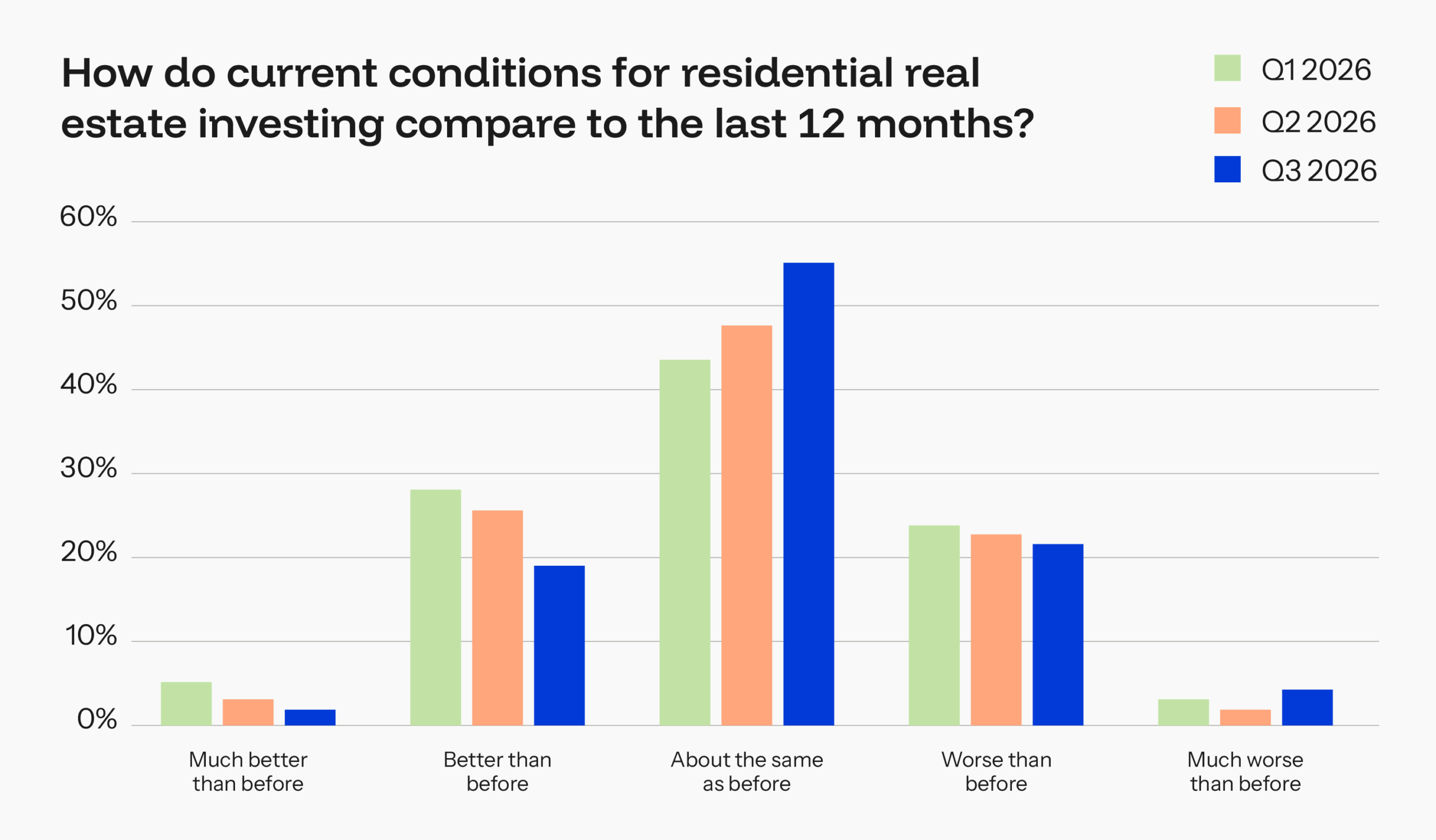
When asked how conditions for residential real estate investing compare to the last 12 months, most investors settled into the middle. In Q3, 55% said conditions are about the same as before, up from 47.5% in Q2 and 43.5% in Q1. The share who feel conditions are better than before slipped to 19%, down from 25.5% last quarter, while 21.5% said things are worse than before.
That steady climb in the “about the same” answer says a lot. Investors increasingly see the market as holding in place, which fits the gradual cooling in overall sentiment we’ve tracked all year.

The outlook for the next 12 months tells the same story. A full 55% expect conditions to stay about the same, a sharp jump from 41% in Q2 and 36% in Q1. Only 19% expect conditions to improve somewhat, down from 35% last quarter, and just 1.5% expect a significant improvement. On the other side, 21% expect conditions to decline somewhat, and 4% expect a significant decline.
The takeaway is a flattening of expectations. Fewer investors are betting on a rebound anytime soon and are instead bracing for more of the same.
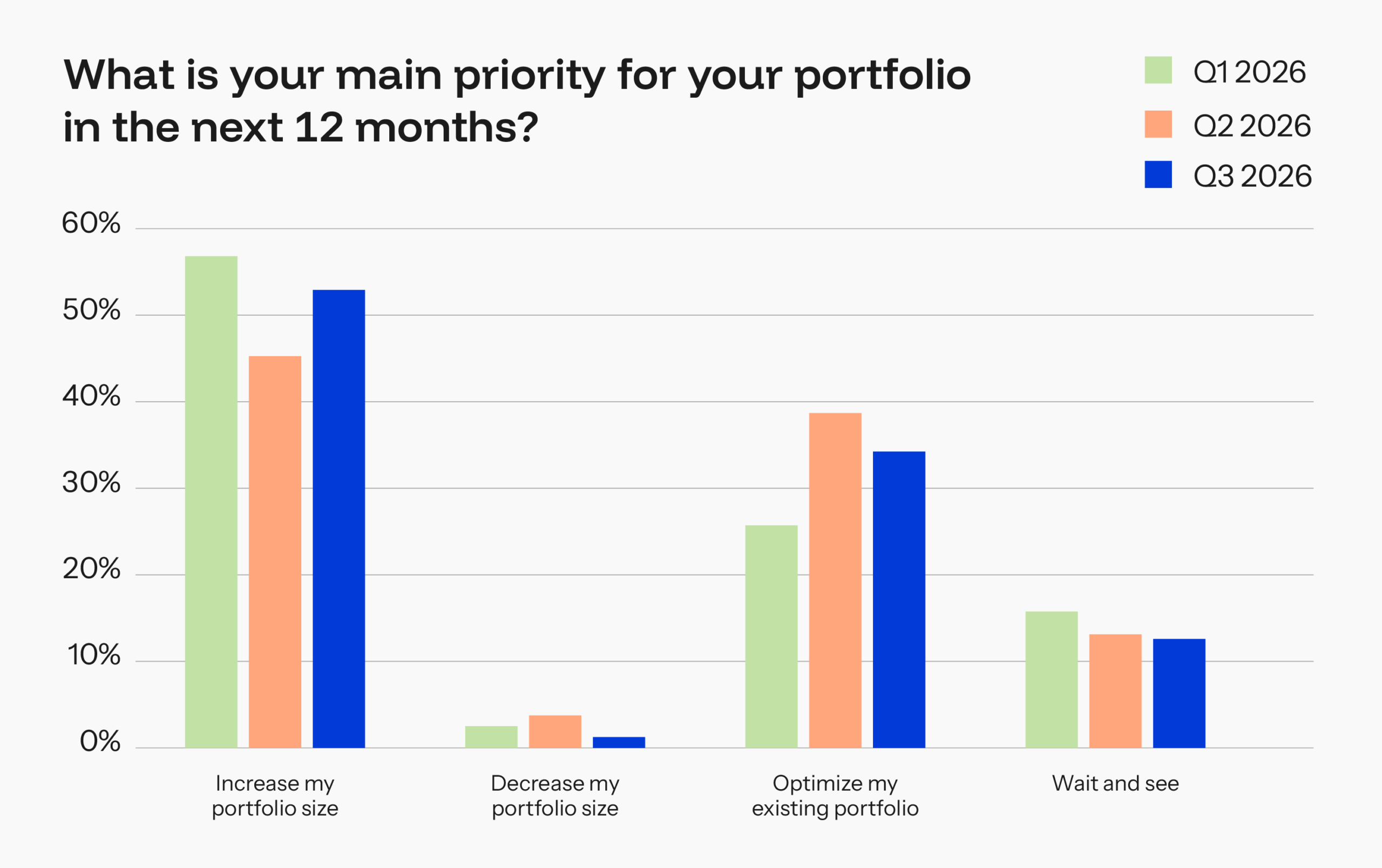
Even with that cautious mood, most investors are still playing offense. 53% say their main priority over the next 12 months is to increase their portfolio size, up from 45% in Q2, though shy of Q1’s 57%. Another 34% plan to optimize their existing portfolio, 12.5% are waiting and seeing, and only 1% intend to shrink.
This implies that this group is not sitting on the sidelines. They are focused on putting capital to work and hunting for deals that make sense, even in a down market.
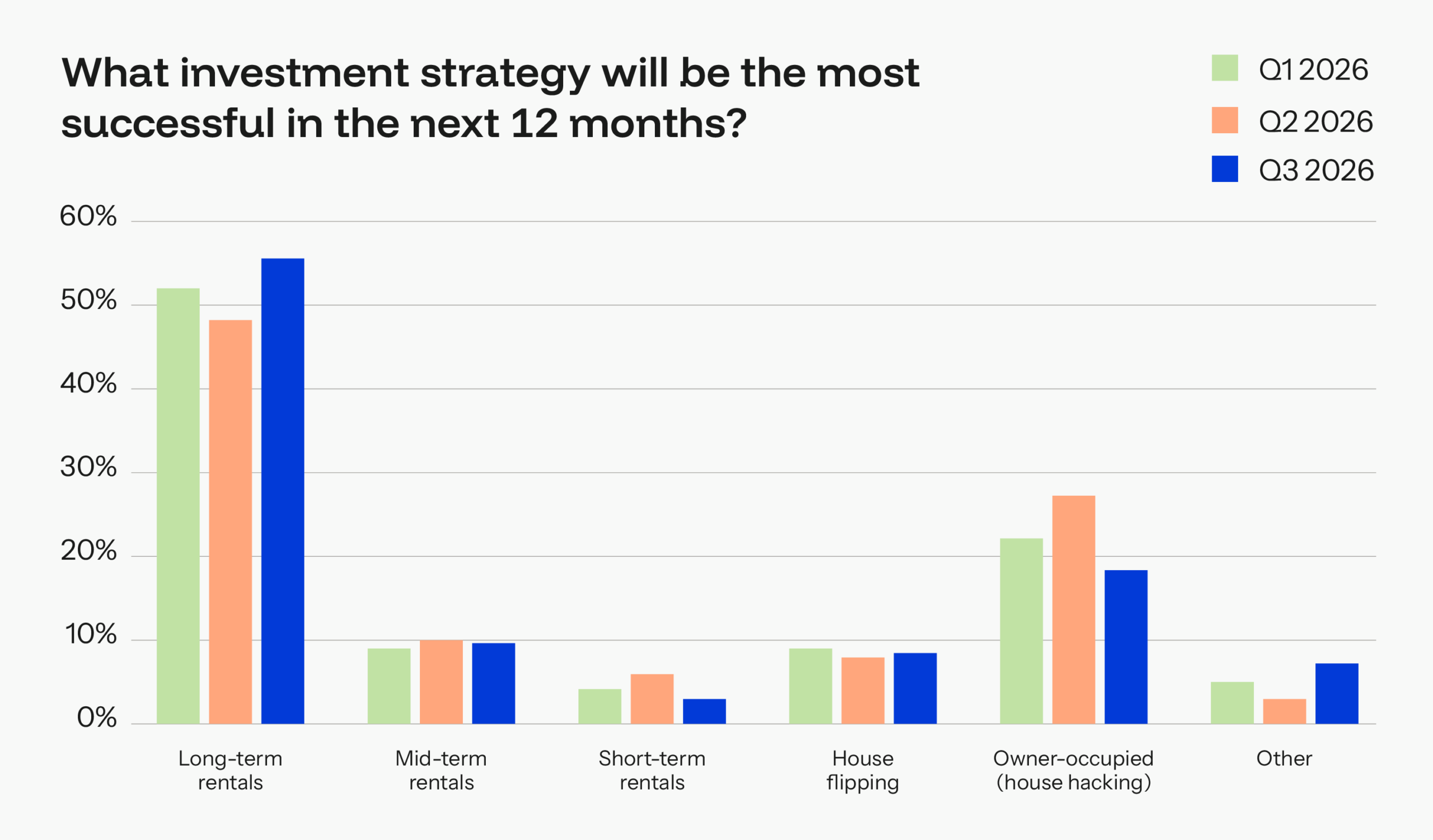
Long-term rentals remain the strategy investors trust most, chosen by 55% in Q3 as the most successful strategy over the next 12 months, up from 48% in Q2 and back near Q1 levels. Owner-occupied house hacking came in a distant second at 18%, followed by mid-term rentals at just under 10% and house flipping at around 8.5%. Short-term rentals continue to lose favor, sitting at just 3%.
The message is consistency. When the market feels uncertain, investors lean toward the durable cash flow and lower turnover of long-term rentals.
Current Challenge
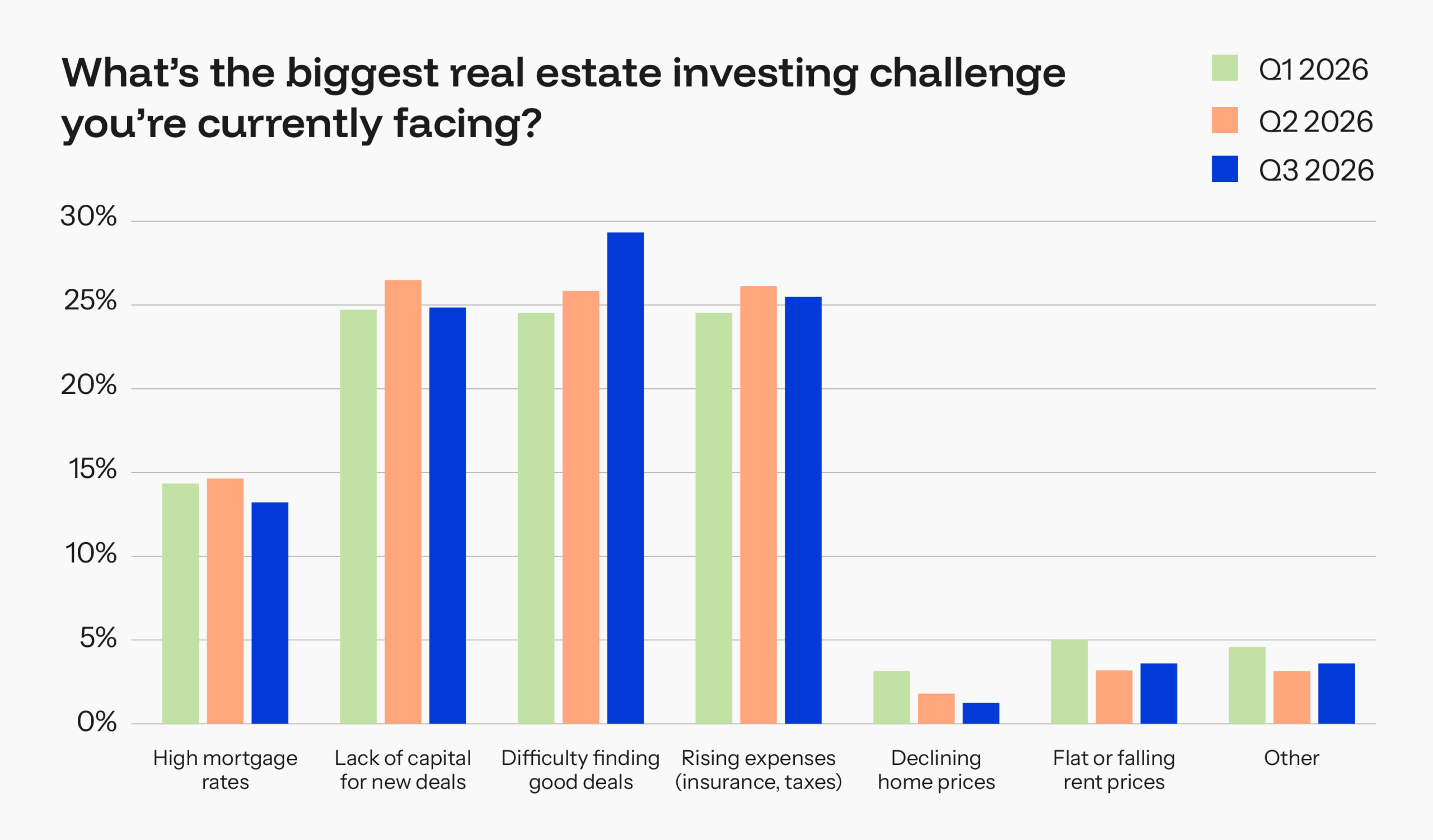
“Difficulty finding good deals” is now the single biggest challenge investors report, chosen by nearly 30% of respondents in Q3, up from 26% in Q2. “Rising expenses” like insurance and taxes and “lack of capital for new deals” follow close behind, each landing around 25%. High mortgage rates, once the defining complaint, have faded to 13%.
That tells a clear story. Investors are being squeezed by supply and cost at the same time. There is a shortage of inventory at prices that pencil out, and even when a deal appears, holding costs and thin financing options stand in the way of closing it.
Future Challenge

Projecting 12 months ahead, the picture shifts only slightly. Difficulty finding good deals remains at the top, at 28.5%, while rising expenses hold firm at around 25.5%. Lack of capital eases from 25% today to 22% as a future concern, while flat or falling rent prices climb to 7.5%, roughly double their share as a current challenge.
Conversely, it shows that investors feel increasingly confident about raising capital over time. Their main worry moves to what happens after closing, from rising insurance premiums and reassessed tax bills to the risk of soft rents, all factors they have little control over and all of which cut into cash flow.
Biggest Opportunity

On the opportunity side, investors are focused on leverage and price. The biggest perceived opportunity in Q3 is a better ability to negotiate, chosen by 27.5%. Falling prices climbed to 24%, up from 17.5% in Q2, as more investors come to see a softer market as a buyer’s advantage. Increasing inventory and better deal flow followed at 21.5%.
Lower mortgage rates, once a top hope at 28.5% back in Q1, dropped to 12.5%. That decline says investors have largely stopped waiting for rate relief and are instead looking to win on price and terms.
Market Outlook
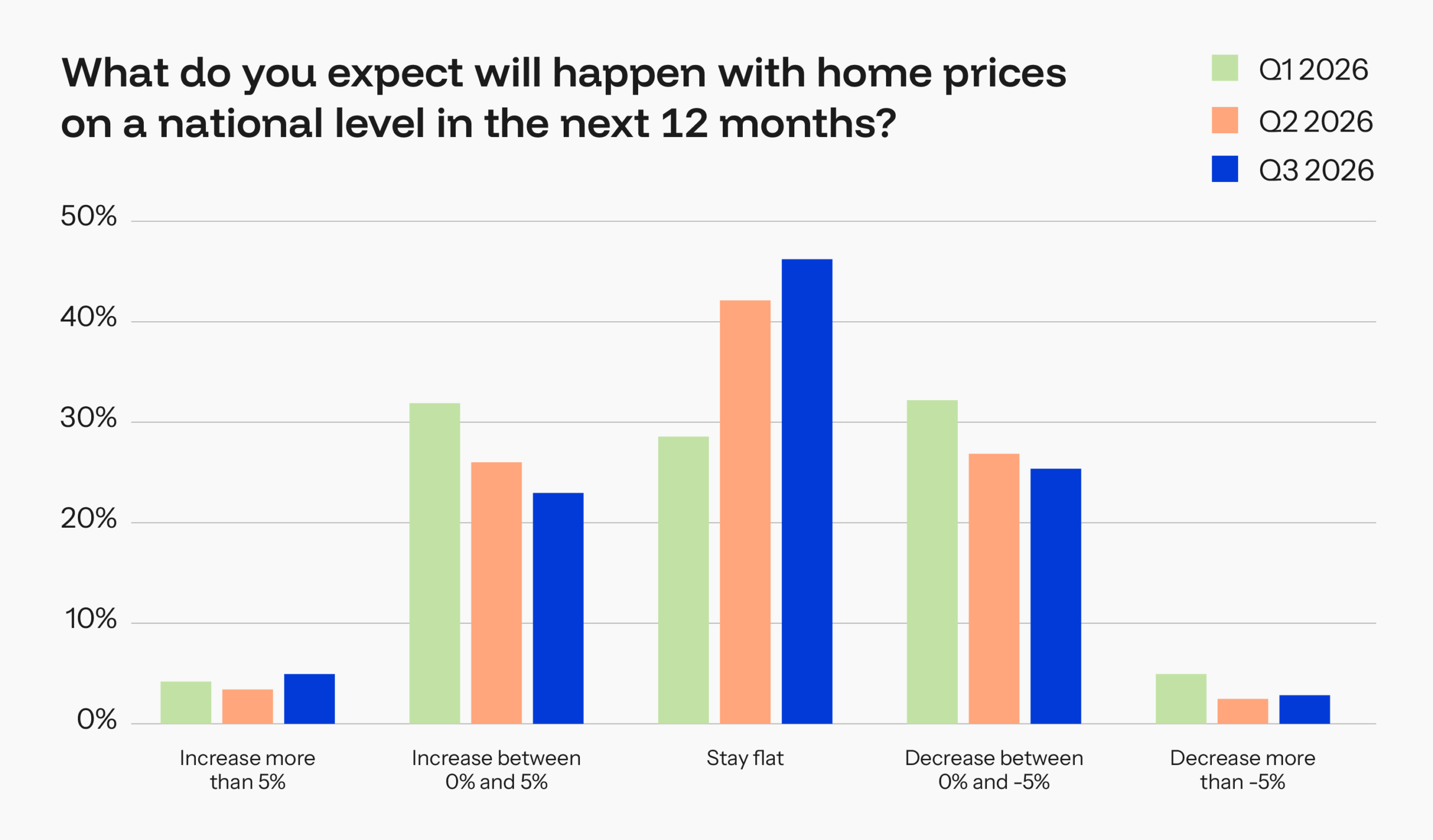
On home prices, the consensus is a holding pattern. 46% of investors expect prices to stay flat nationally over the next 12 months, up from 42% in Q2 and just 28.5% in Q1. Beyond that, opinion is split evenly, with 25% expecting a mild decrease and 23% expecting a mild increase. Very few expect a swing of more than 5% in either direction.
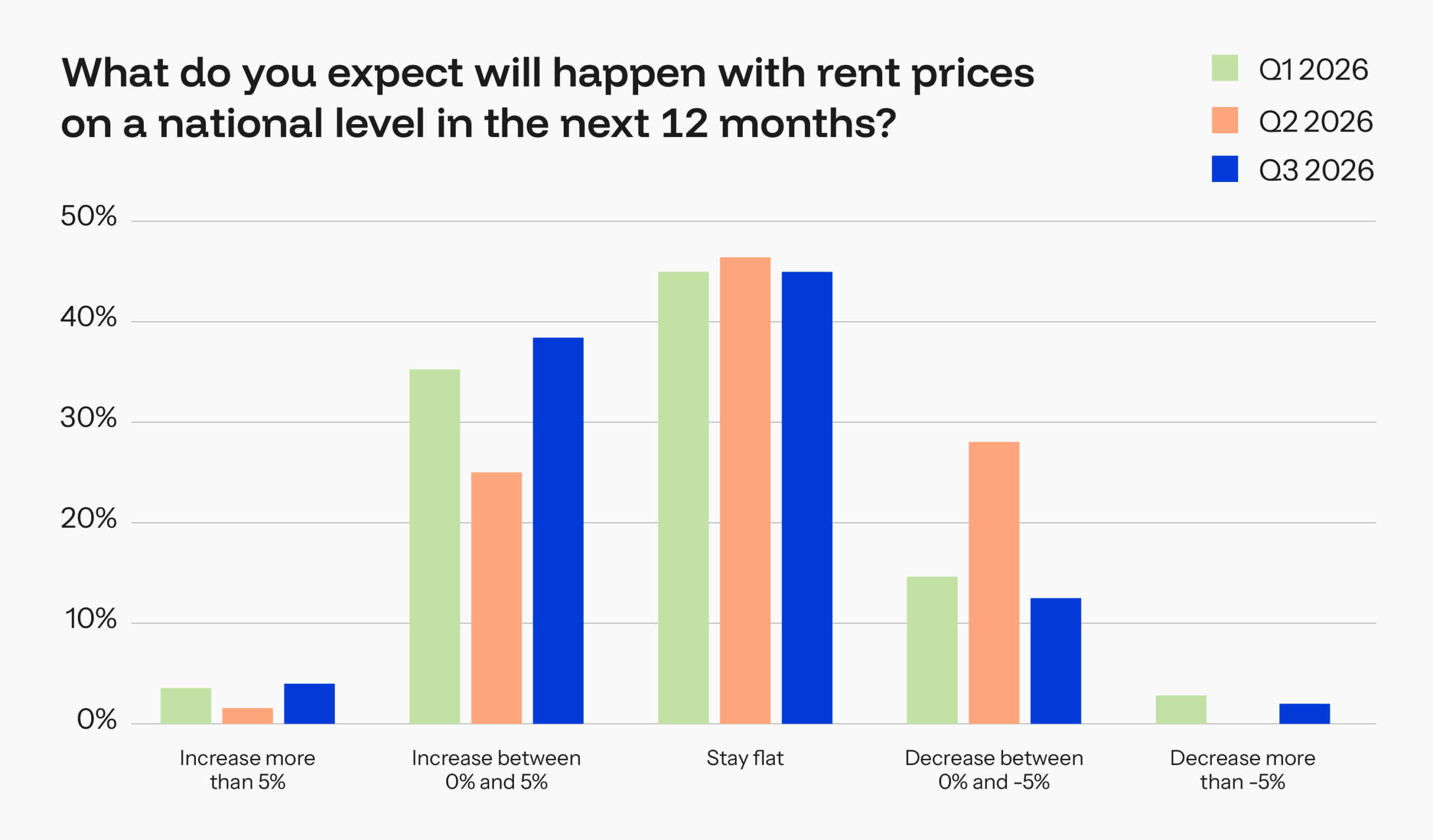
Rents follow a similar pattern. 45% expect rent prices to stay flat, while 38% expect a modest increase between 0% and 5%. Only 12.5% expect a mild decrease. Taken together, investors see rents as flat to slightly higher, a steadier picture than the one they paint for home prices.
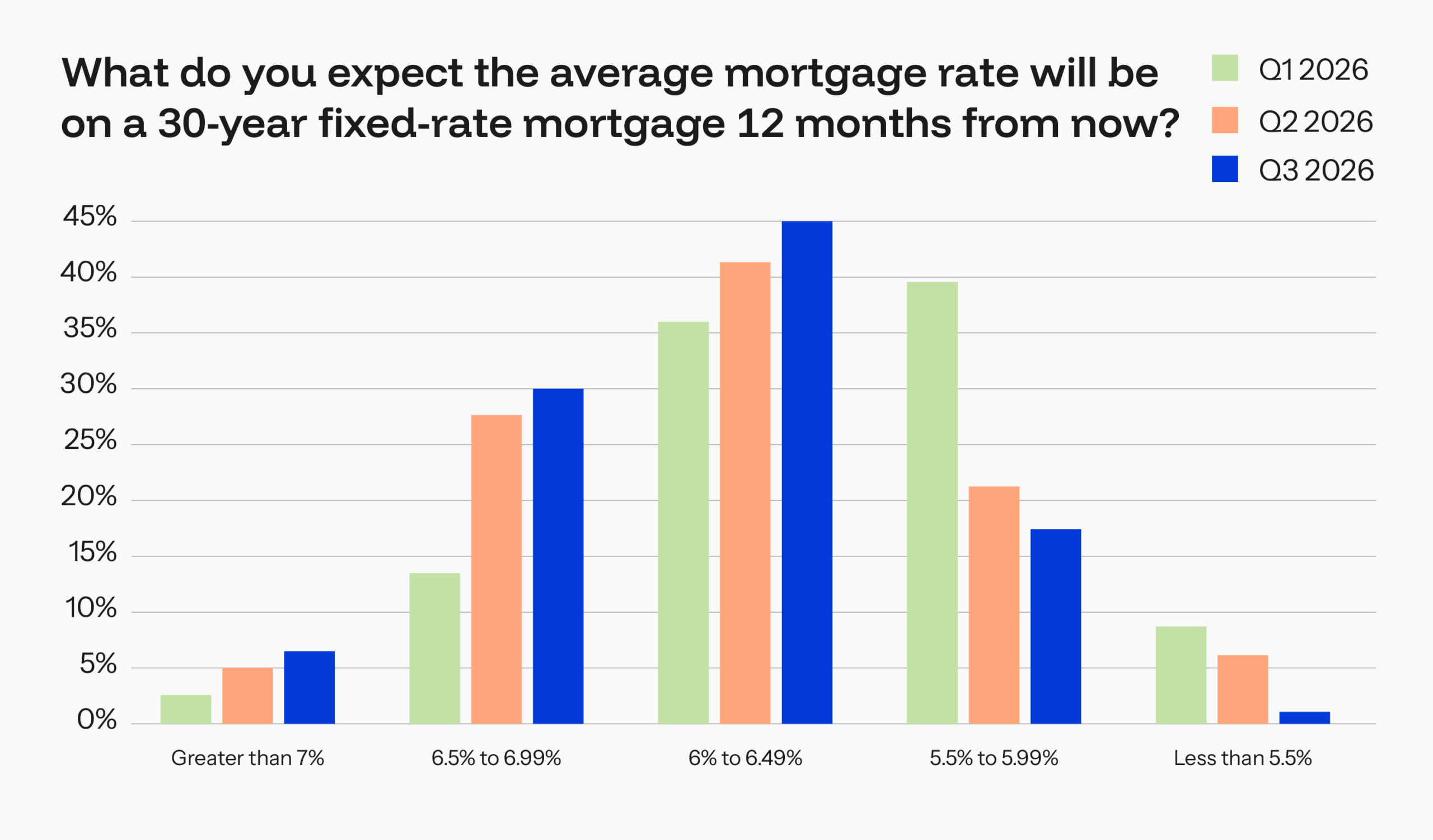
Rate expectations have drifted higher all year. 45% of investors now expect the average 30-year fixed rate to land between 6% and 6.49% a year from now, and another 30% expect it to sit between 6.5% and 6.99%. Compare that to Q1, when nearly 40% expected a rate in the 5.5%-5.99% range. Today, only 17.5% hold that view. Investors are underwriting higher rates as the new norm.
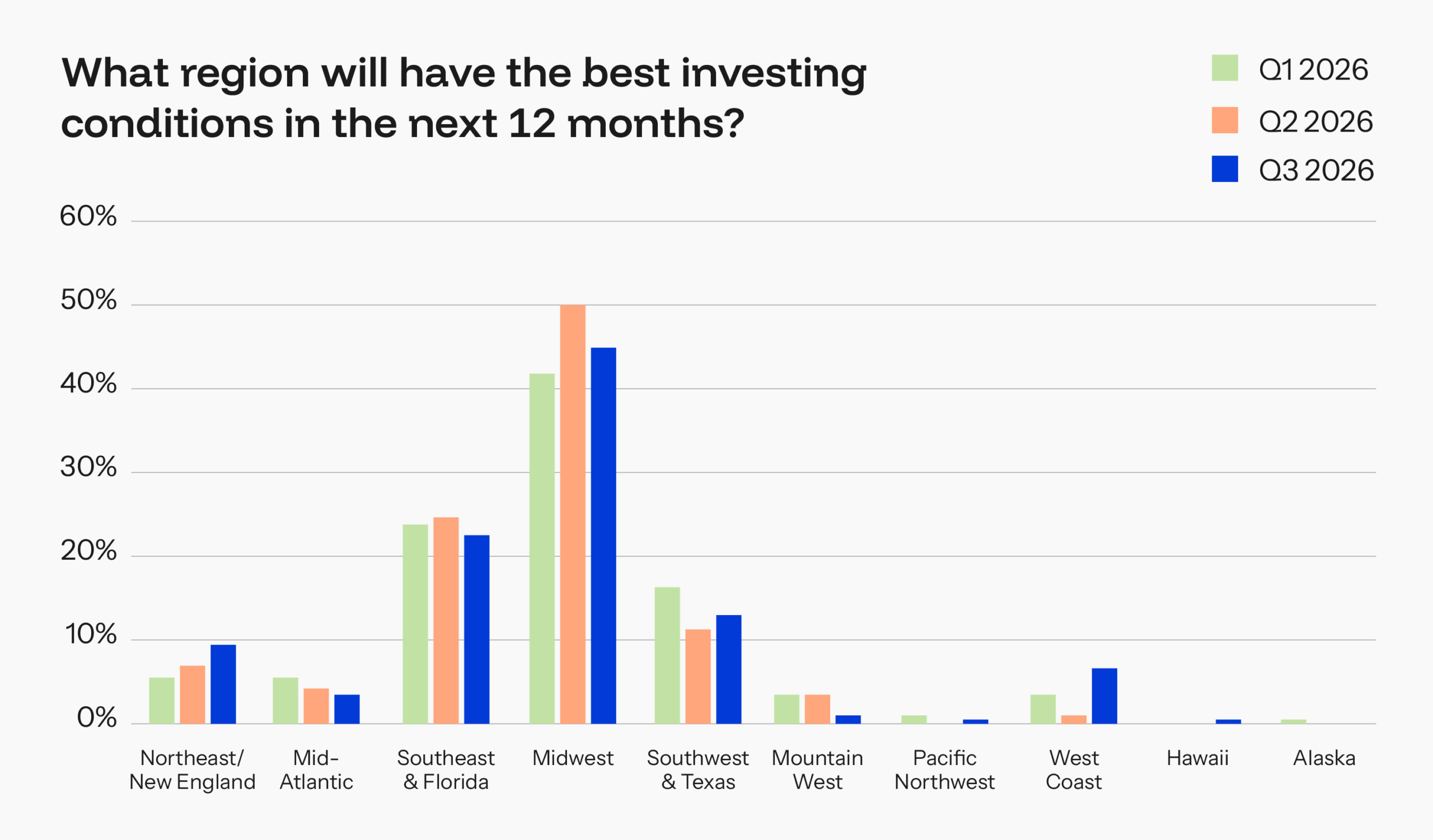
When it comes to geography, the Midwest is the clear favorite. 45% of investors named it the region with the best investing conditions in Q3, easily ahead of Southeast and Florida at 22.5% and Southwest and Texas at 13%. The Midwest’s appeal has held steady across all three quarters, reflecting its reputation for affordability and cash flow.
Views of the Fed and Inflation

Most investors are reserving judgment on Kevin Warsh and his potential impact on the Federal Reserve. 67% are neutral on what his tenure as chairman would mean for real estate investing. Another 21.5% see his leadership as positive and 5% as very positive, while just 5% see it as negative and 2% as very negative.
The neutrality hints at a wait-and-see attitude toward the Fed’s next moves on interest rates, perhaps with the ongoing Iran war in mind. It also shows that most investors are more concerned with what they can control than with what they cannot, and that personalities rank low on their list of considerations.

Rising inflation is weighing on investors’ plans. 43% say it makes them slightly less likely to invest over the next three months, and another 9.5% say much less likely. 38% are neutral, while only about 10% say it makes them more likely to invest.
That balance reflects real caution. For most investors, higher costs eat into margins and give them pause, even as a small share still leans into real estate as a hedge against rising prices, heeding Warren Buffett’s advice to be greedy only when others are fearful.
Geopolitics and AI
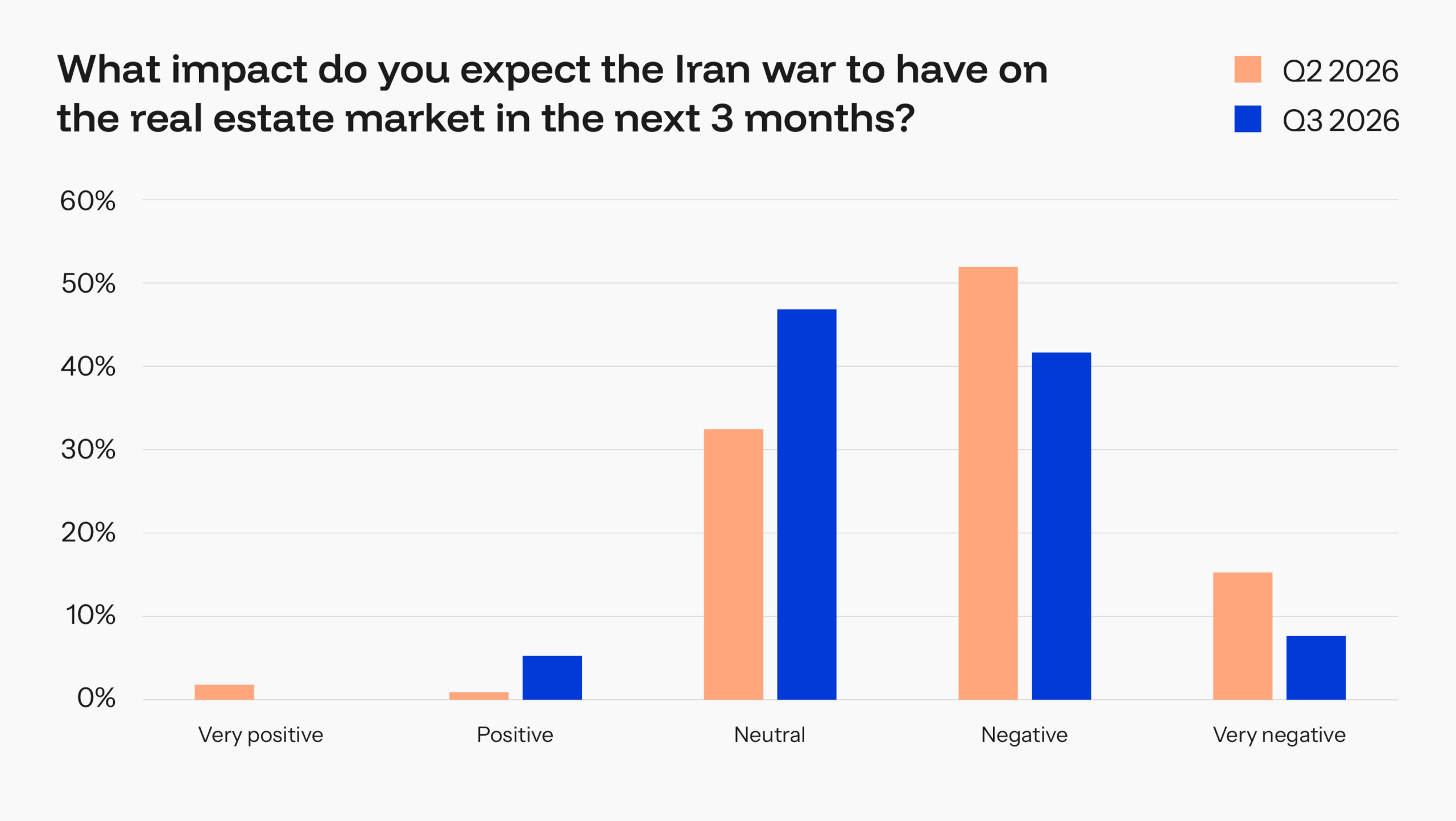
Worry about the war in Iran has eased since last quarter. In Q3, 47% of investors expect the war to have a neutral impact on the real estate market over the next three months, up sharply from 32.5% in Q2. The share expecting a negative impact fell to 41.5% from 52%, and those expecting a very negative impact dropped to 7.5% from 15%.
The shift suggests investors have absorbed the initial shock and no longer see the conflict as the market threat they did a quarter ago.
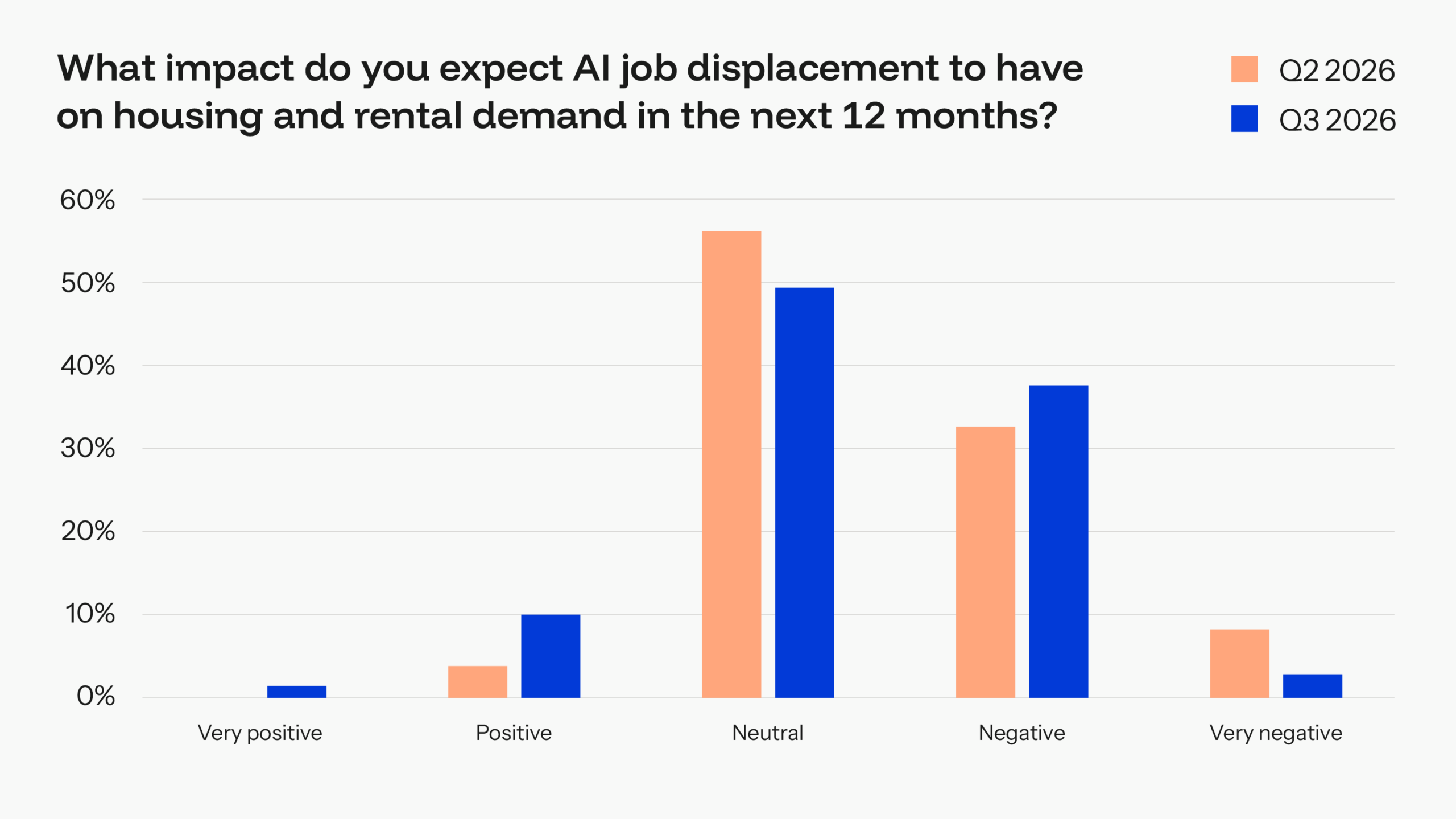
Views on AI job displacement are more divided. Nearly half of investors (49.5%) expect it to have a neutral impact on housing and rental demand over the next 12 months, down from 56% in Q2. The share expecting a negative impact rose to 37.5%, while those expecting a positive impact also grew, reaching 10%. The extremes shrank, with very negative falling to 2.5%.
Taken together, more investors are forming an opinion on AI, and while the balance tilts toward concern, a growing minority sees potential upside for housing demand.
About the survey
BiggerPockets is a community of retail real estate investors with over 3 million members who, collectively, make up the largest bloc of residential property investors in the United States. The BiggerPockets Pulse is a quarterly survey that measures and shares the sentiment and intended behavior of this important economic force.
Investors in this survey were solidly middle-aged. Just over half (53%) fall between 45 and 64, and the largest single age group (30%) is 45 to 54. Older investors are well represented, with 14% aged 65 or older, while only 8% are under 35 and just 1% are under 25. The sample was also heavily male-skewed, with 73% of respondents reporting as male and 27% as female.
Household income in the sample was at the higher end of national incomes, but not concentrated in any single group. The largest single group, 27%, earns between $100,000 and $150,000, and another 19% earn $300,000 or more per year. Just over a third fall somewhere between $150,000 and $300,000, and relatively few households, just 3%, earn below $50,000.
The respondents are seasoned investors for the most part. Four in ten own between two and five investment properties, and another one in five own six or more. About a quarter (26%) do not currently own an investment property, a reminder that the survey reaches both aspiring and established investors. Single-family homes are the most common asset class, held by roughly 72% of respondents, followed by small multifamily properties of two to four units.