This article was originally published by a www.houzz.com . Read the Original article here. .
This article was originally published by a www.houzz.com . Read the Original article here. .
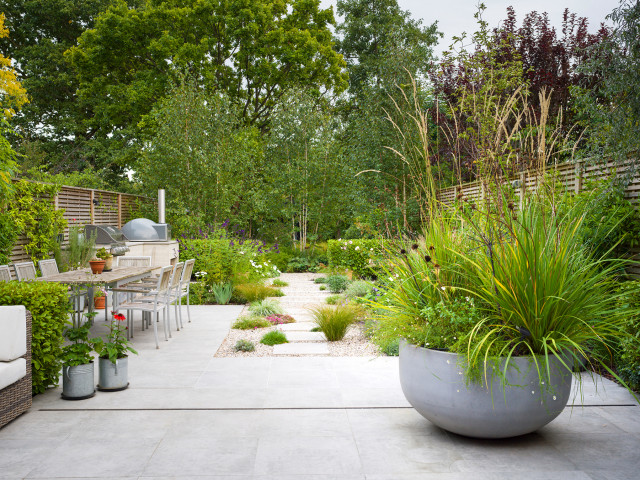
“The gravel sits within a honeycomb grid so it doesn’t kick everywhere, and it’s easier to walk on, but it still gives that lovely crunching sound,” Hugh-Jones says. “It’s much better than hard landscaping for drainage too.”
New inset paving stones connect the solid patio next to the house to the gravel paths that lead into the woodland area. “Having the paving stones running through leads you down into that space,” Hugh-Jones says. “I wanted the two spaces to merge and the beds on the right-hand side to merge into the gravel as well, keeping it very fluid.”
Choosing gravel over grass allows plants to spill over and soften the bed edges. Varieties such as Mexican fleabane (Erigeron karvinskianus, zones 6 to 9), grasses and thyme have been planted directly into the gravel, adding color and structure to the pathway. In the small square bed, the taller plants are white cosmos (Cosmos bipinnatus, zones 2 to 11) and ‘Amistad’ purple friendship sage (Salvia ‘Amistad’, zones 8 to 11).
This article was originally published by a www.houzz.com . Read the Original article here. .

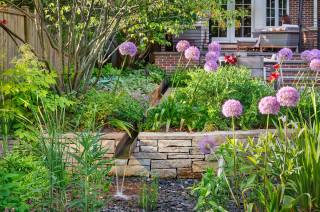
Slowing the flow and directing water into the ground prevents damaging runoff and pooling, making your yard more usable while nourishing any plants. If space allows, creating a dedicated area where water is welcomed can diversify your plantings and attract local wildlife. These backyard solutions also contribute more broadly by reducing the strain on overburdened storm drains.
Water management doesn’t have to come at the expense of style, either. Discover how these designs turn drainage into an attractive landscape feature.
This article was originally published by a www.houzz.com . Read the Original article here. .
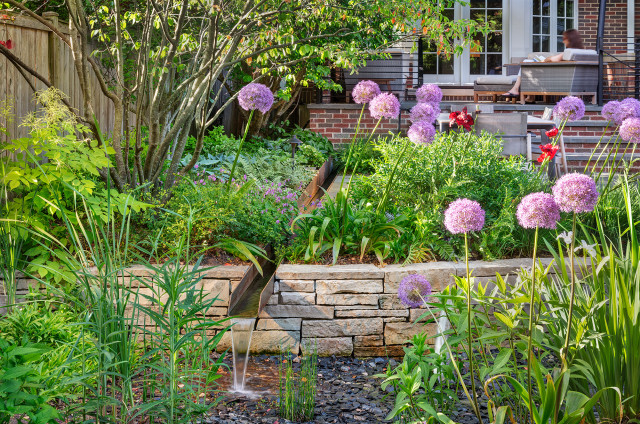
Slowing the flow and directing water into the ground prevents damaging runoff and pooling, making your yard more usable while nourishing any plants. If space allows, creating a dedicated area where water is welcomed can diversify your plantings and attract local wildlife. These backyard solutions also contribute more broadly by reducing the strain on overburdened storm drains.
Water management doesn’t have to come at the expense of style, either. Discover how these designs turn drainage into an attractive landscape feature.
This article was originally published by a www.houzz.com . Read the Original article here. .
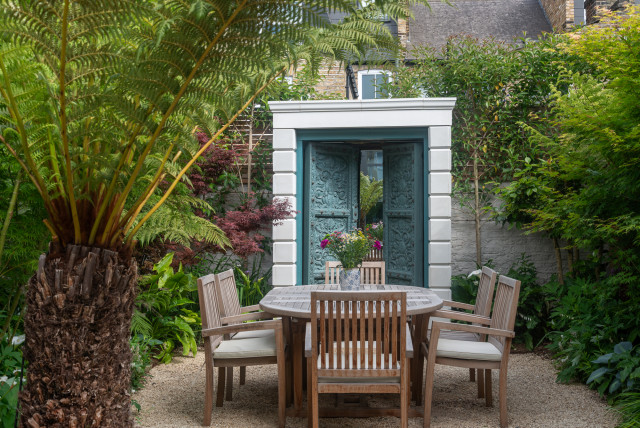
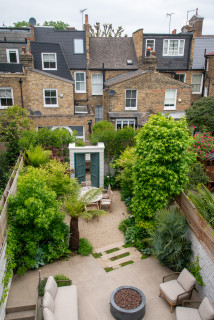
“Because it’s such a small space, the texture was incredibly important,” she says. “It’s all about the different greens and mix of shapes. The flowers come and go — they’re quite transient. Apart from an existing red rose and camellia, both of which I kept, the flowers are mostly white and surrounded by all these lush greens.” The sweet gum (Liquidambar sp.) on the right was existing; Boyle added a multistemmed one on the other side to match it, “so you frame that space,” she says.
“I planted quite heavily, but that was because we wanted to create this green haven,” she says. “I like to create a rhythm, so I have three [Japanese maples] in a triangle, and three Tasmanian tree ferns [Dicksonia antarctica, zones 9 to 10], which give a jungly feel and a lovely canopy while still allowing for stuff [to grow] underneath. Their trunks add nice texture, which is offset beautifully against the rest of the planting.” Boyle installed root barriers so the plants won’t spread to other yards.
See why you should hire a professional who uses Houzz Pro software
This article was originally published by a www.houzz.com . Read the Original article here. .
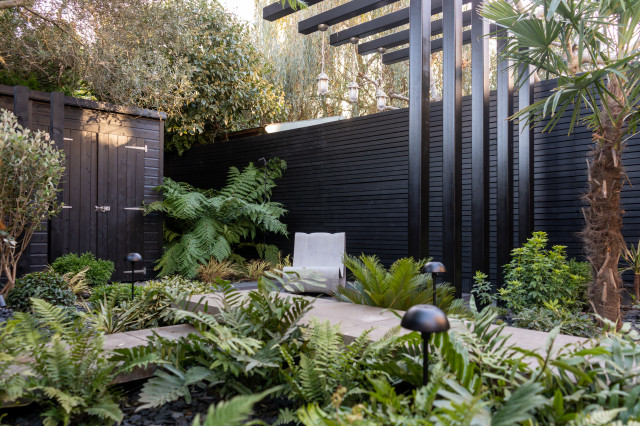
You can also see one of the ways she gave the small space depth, with the eye going from the black patio door frames to the steel pergola to the black wood posts attached to the shed.
Bejanaru also planted four new trees, placing the two tallest nearer to the house and the two shorter ones at the back. “The plants in front draw the eye upward, then the shorter ones — visually below the other two — draw your eye to the back of the [yard], so you have several focal points,” she says.
The new trees consist of two Tasmanian tree ferns (Dicksonia antarctica, USDA zones 9 to 10; find your zone) — one on the front left and the other at the back right; a tall windmill palm (Trachycarpus fortunei, zones 7 to 11) and a pineapple guava (Acca sellowiana, zones 8 to 10) in front of the shed.
The huge olive tree was already there. “We kept it, of course, because it’s beautiful and I also love the color of the bark, which stands out,” Bejanaru says.
9 Design Tips to Enhance Views of Your Garden From Indoors
This article was originally published by a www.houzz.com . Read the Original article here. .
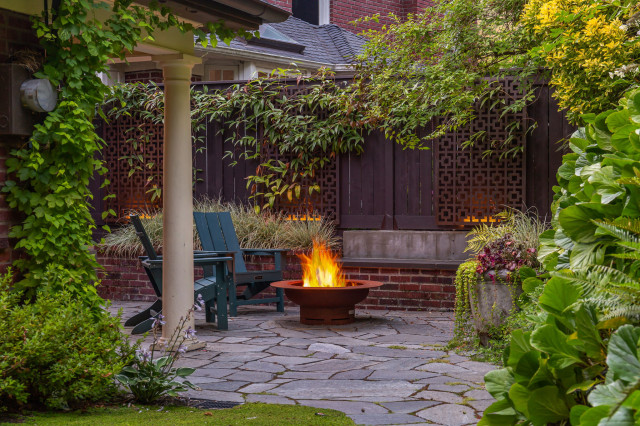
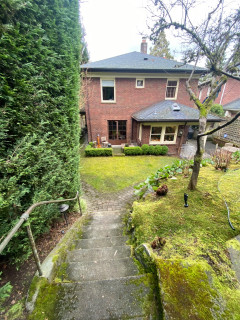
The vine growing up the corner of the house and along the entry overhang was another priority within the design. “This is a hop vine [Humulus lupulus, zones 4 to 8] that the homeowner has been growing for many years. He had trained it across the overhang, and it was important to him that we protect it,” Galante says.
Galante reports that the homeowners love their pots and planters. She filled the built-in brick planters around the patio with ‘EverColor Everest’ Japanese sedge (Carex oshimensis EverColor Everest ’Carfit01’, zones 5 to 9), which adds soft color and texture against the fence. The pot on the right has autumn fern (Dryopteris erythrosora, zones 5 to 8) and creeping jenny (Lysimachia nummularia, zones 3 to 9).
This article was originally published by a www.houzz.com . Read the Original article here. .
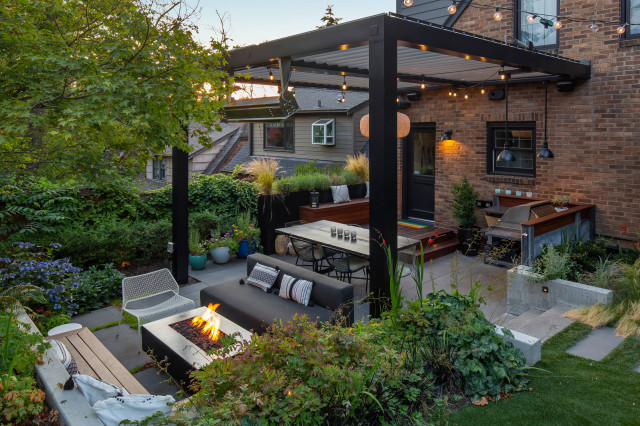
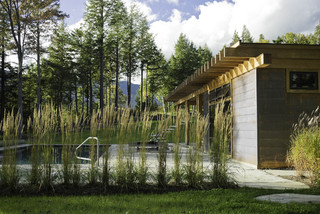
“Pleached trees are a fantastic solution for screening higher buildings beyond the [yard] by adding extra height above the fence line,” Lindsay says. “They’re often a great solution for your neighbors, too, as they give pleasing green screening and privacy on both sides.”
“They can add a lovely formal feel to a garden,” Tyrrell adds. Hornbeam (Carpinus spp.) is a popular choice, and Lindsay also loves beech (Fagus spp.).
Wilson has a preference for deciduous species. “[With these,] you get seasonal change and variety, and this approach allows light levels through in the winter months while the interwoven framework of the trees will still provide a modicum of privacy,” he says.
This article was originally published by a www.houzz.com . Read the Original article here. .

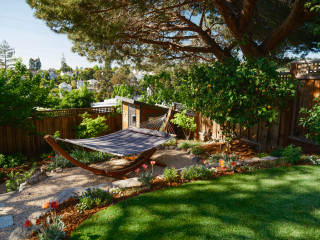
Integrating ways to promote wellness outdoors can stray into more aspirational projects, such as cold plunges and saunas (and this list will too). However, since not everyone can live like a full-time lifestyle guru, below are plenty of simple and inexpensive other ways your outdoor spaces can help improve your health. Check out these 12 ideas for promoting wellness through the landscape to see which ones are a good fit for your home.
This article was originally published by a www.houzz.com . Read the Original article here. .
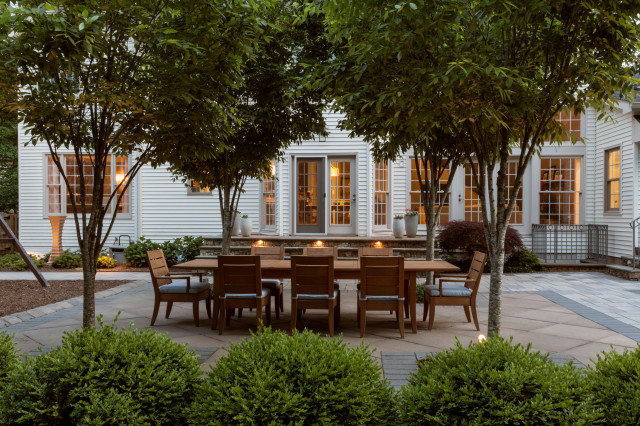
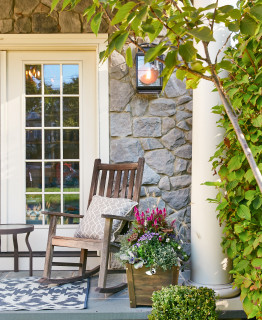
As fall settles in, our homes and gardens take on a new character — inviting us to enjoy them in fresh ways. A vibrant pot of chrysanthemums can brighten an overlooked part of your porch, while outdoor lighting or a patio heater can make it feel cozy to linger outside on fall evenings. With just a few thoughtful updates, you can extend the beauty and comfort of your outdoor spaces for the season. Read on for simple, high-impact ideas to make the most of your yard.
Container gardens are an easy way to bring color and seasonal interest to your outdoor spaces. Rework summer containers with fall perennials that are just coming into their own, such as chrysanthemums (Chrysanthemum spp.,USDA zones 5 to 9; find your zone) coneflowers (Echinacea spp., zones 3 to 9), ‘Autumn Joy’ stonecrop (Sedum ‘Autumn Joy’, zones 3 to 8) and ornamental grasses. These hardy selections add color and texture, ensuring containers remain vibrant well into fall.
9 Ways to Refresh Your Summer Container Gardens for Fall
For a fall harvest you’ll enjoy for years to come, consider planting an apple, pear, pomegrante or persimmon tree. September and October are the best months to plant fruit trees in mild climates. (Cold-winter climates should wait until late winter or spring.) Soils are still warm, rain is more frequent and trees can settle in over the winter, establishing strong root systems that will fuel growth next spring.
Find a landscape contractor in your area
As the days grow shorter, exterior lighting can transform your home’s entry from dark and shadowy to warm and welcoming. Focus on your front entrance, where the impact is greatest. Lighting options include wall-mounted sconces, pendant lights, recessed fixtures, pathway lighting or a layered combination of several sources. If your current lighting setup is effective, fall is a good time to replace bulbs, clean fixtures and ensure everything shines its brightest.
What to Know About Adding Outdoor Lighting
With a few additions for comfort, your patio or deck can be a welcoming spot for meals and fall gatherings. Layer warm textiles to make seating cozy and inviting, and add soft lighting with string lights or lanterns to create ambiance as dusk falls. Bring in seasonal table settings with gourds, branches and fall colors. If your outdoor table is on an exposed deck or patio, you may want to consider moving it under the covering of a porch or solid-roof shade structure to provide more shelter.
10 Ideas for Styling Your Patio for Outdoor Dining This Fall
The addition of outdoor heaters can help extend your enjoyment of outdoor spaces as temperatures dip. Freestanding propane-fueled outdoor heaters (as pictured here) can provide an area of warmth 10 to 12 feet in diameter. You’ll need one heater for a small table or seating area and two to cover an eight-person table.
See why you should hire a professional who uses Houzz Pro software
If you’re not investing in outdoor heaters this season, bring out blankets and quilts for warmth. Tuck them into a basket near the door or drape them over chairs for family members and guests to enjoy. To further increase coziness in your outdoor seating area, consider adding a textured outdoor rug to define the space and create warmth underfoot.
New to home remodeling? Learn the basics
The end of summer doesn’t mean outdoor fun has to come to a halt. Even as temperatures cool, kids of all ages need space to stay active, explore and burn off energy. Encourage them to get outside by including play and sports equipment in the backyard. Install a swing set, rig up a badminton net or soccer goal and establish a new routine for after school.
Adding a few fall-blooming flowers, ornamental grasses or shrubs with colorful foliage or berries can help add interest for the season. Nurseries should be well stocked this time of year with plenty of seasonal options to choose from.
Don’t have the time for planting? A top dressing of fresh mulch can make garden beds look tidy and insulate bulbs and shallow roots over the winter. Choose a quality bark mulch (avoiding ones with dyes) and spread on garden beds about 2 to 3 inches thick, keeping mulch away from the trunks of trees and large shrubs.
20 Favorite Flowers for the Fall Landscape
Shop for Outdoor Products
Item 1 of 5
This article was originally published by a www.houzz.com . Read the Original article here. .
Scent is a powerful memory trigger. If there’s a fragrance you associate with a time period in your life or a loved one, adding this scent to your yard can bring you right back. If you don’t have something in particular you’d like to plant, you can’t go wrong with David Austin’s ‘Gertrude Jekyll’ rose, a pink shrub rose with a cabbage center and an old-fashioned rose fragrance.
Adding plants for texture, like fuzzy dusty miller (Jacobaea maritima, USDA zones 7 to 10; find your zone), or for movement, like ornamental grasses that sway in the slightest breeze, is another way to engage the senses and make you feel more connected to a landscape.