This article was originally published by a www.houzz.com . Read the Original article here. .

This article was originally published by a www.houzz.com . Read the Original article here. .

This Trending Now story features the most-saved home office photos uploaded to Houzz between March 15 and June 15, 2025.
No matter how you like to work from home, this countdown of the most-saved new home offices on Houzz offers inspiration. Whether tucked into a compact alcove or spread throughout a spacious room, these setups reflect a range of design approaches — each tailored to support productivity, creativity and comfort.
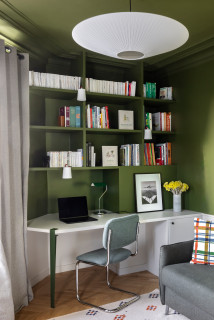
In this Paris home office, Poësis Studio created a serene atmosphere by painting the walls, trim, built-in shelves and ceiling a deep olive green. The color provides a calm backdrop, allowing the crisp white desk and pleated cotton pendant light to stand out.
Paint color: Bancha, Farrow & Ball
Find a local interior designer on Houzz
An elegant arch frames this sophisticated office nook in Toronto. Rosen+Co Design Studio integrated the desk area into sleek built-ins that discreetly hide office equipment and documents. This smart space planning allowed for a comfortable sofa alcove on the opposite side of the room and a prime location for the TV.
Shop for home office furniture
In this Sonoma County, California, home office, Studio CM maximized natural light by wrapping two desks around a corner flanked by tall windows overlooking the front garden. To ensure the space stays bright even on overcast days, the designers incorporated desk lamps and discreet track lighting that align with the home’s classic midcentury modern style.
How to Set Up Your Home Office on Nearly Any Budget
A 14-foot addition and full remodel of this St. Louis Park, Minnesota, home was designed with aging in place in mind. In the new office, Christopher Strom Architects extended the desk along two walls, seamlessly integrating it with built-in shelves and cabinets. The cohesive design draws the eye to the outdoor view and helps the long, narrow room feel more spacious and intentional.
Dovetail Group curated furnishings that thoughtfully complement the refined character of this Zionsville, Indiana, home office. Rich built-ins, a tufted leather chair, an antique desk, a vintage map and classic light fixtures come together to evoke the timeless elegance of a stately library.
Key Measurements to Help You Design the Perfect Home Office
Trim Team NJ masterfully blended traditional and modern styles, along with light and dark elements, in this northern New Jersey office. Integrated lighting and brass accents provide striking contrast against the dark, moody built-ins. The lower cabinets feature classic Shaker-style profiles, while the shelves above maintain a clean-lined, unfussy aesthetic.
Sometimes a home office calls for guitar hooks and cozy seating for strumming, rather than laptops and ergonomic chairs. That was the case in this Nashville, Tennessee-area workspace. Southern Hills Construction enveloped the room in a rich, warm gray paint and installed white oak pocket doors within the arched doorway. No matter the use, soundproofing remains essential in this versatile office.
New to home remodeling? Learn the basics
Designer Carly Zuba of CM Studio achieved a striking balance of light and dark in her own Evanston, Illinois, home office. Light wood floors contrast with black architectural elements in the space. A light-colored desk, chair, rug and chandelier form a bright focal point, while large windows flood the room with natural light.
This article was originally published by a www.houzz.com . Read the Original article here. .
“We also look for people that want to learn and grow and who will thrive within a team environment,” he says. “If a team member is a professional communicator and understands that serving each other is how we best serve our clients, they are Hursthouse material.”
Some skills are harder to find than others, True says. “One is a work ethic of truly caring about the desired result. The balance between an extremely high level of creativity, a terrific communicator and a focused determination to excel at the highest level of client service is a rare find.
“On one hand, I feel it’s getting harder to find special people, as there [seem to] be less people entering the industry,” he says. “On the other hand, people are changing companies more often, so [in some ways] it might be a bit easier. If a company doesn’t take good care of its people, they will have a revolving door — and that’s an opportunity for Hursthouse.
“Our average seniority for team members at Hursthouse is now 13 years, with many over 20, 25 and 30 years,” True says. “We try to have our team sing about how great it is to work at Hursthouse.”
This article was originally published by a www.houzz.com . Read the Original article here. .
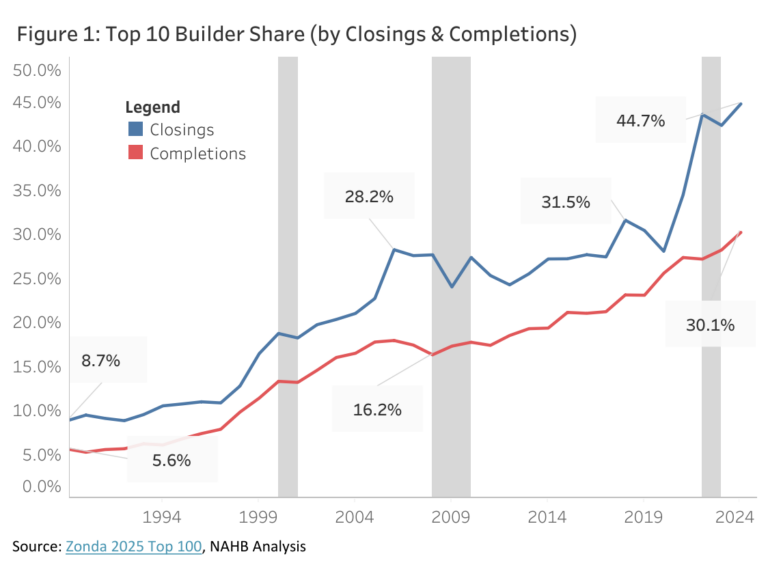
The top ten builders captured a record 44.7% of all new U.S. single-family home closings in 2024, up 2.4 percentage points from 2023 (42.3%). This is the highest share ever captured by the top ten builders since NAHB began tracking BUILDER magazine data on new single-family home closings in 1989. The 2024 share constitutes 306,932 closings out of 686,000 new single-family houses sold in 2024. However, closings by the top 10 builders only represent 30.1% of new single-family home completions, a wider measure of home building that covers not-for-sale home construction. Also of note, the top 15 builders accounted for more than half of all closings (51%) for the first time ever in 2024.
The top ten builder share has increased significantly –albeit unevenly– in the last 35 years. In 1989, the top ten builders accounted for only 8.7% of single-family home closings. By 2000, the share had more than doubled to 18.7%, growing to 28.2% by 2006 and 31.5% by 2018. After slight declines in 2019 and 2020, the share exceeded 40% for the first time in 2022 (43.5%) and reached a record high in 2024 (44.7%). (Figure 1).
Meanwhile, the top ten builder share by completions, has also trended upward, with a share of just 5.6% in 1989. It reached double digits for the first time in 1999 (11.3%) and rose to a cycle high of 17.9% in 2006. The share broke the 20% mark for the first time in 2015 (21.0%) and has continued to trend upward since, reaching an all-time high of 30.1% in 2024 (Figure 1).
The top five highest producing builders did not change from 2023 to 2024, with D.R. Horton maintaining its position as America’s largest single-family home builder. D.R. Horton captured 13.6% of the market with 93,311 closings, marking a fourth consecutive year with a market share above 10%, and a 23rd consecutive year atop the list. Results also show that 2024 marked the third year in a row where the top three builders accounted for more than a quarter (29.9%) of overall closings, with Lennar and PulteGroup achieving 11.7% and 4.6%, respectively. With 3.3% and 2.3% of overall closings, NVR and Meritage Homes ranked fourth and fifth on the list, respectively.
Notably, SH Residential Holdings (U.S. subsidiary of Sekisui House, a Japanese homebuilder, who acquired M.D.C. Holdings in 2024) broke into the top ten in 2024, ranking sixth on the list with 2.2% of the market. Clayton Properties Group, ranking 8th in 2023, fell out of the top 10 for the first time since 2019. KB Home (2.1%), Taylor Morrison (1.9%), Century Communities (1.6%), and Toll Brothers (1.6%) round out the top 10 builders for 2024 (Figure 2).
Builder Magazine also released Local Leaders data on the top 10 builders in the top 50 largest new-home markets in the U.S. where ranking is determined by the number of single-family permits, which NAHB will analyze in a later post.
Discover more from Eye On Housing
Subscribe to get the latest posts sent to your email.
This article was originally published by a eyeonhousing.org . Read the Original article here. .
4. Recycled Options
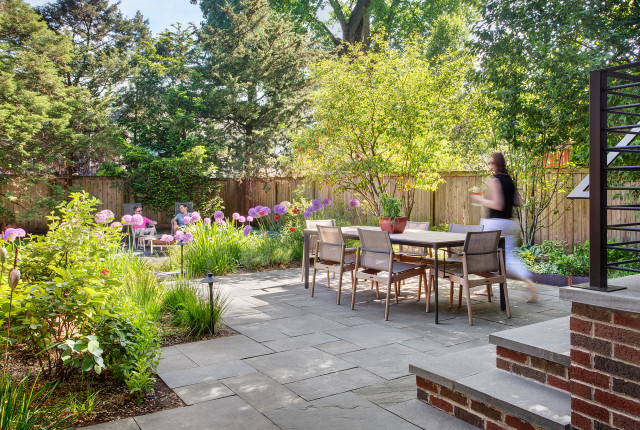
Reusing materials that have proven they can handle difficult conditions — such as stone, concrete and brick —combines resiliency with sustainability. You also can look for composites made from recycled materials. These cut down on waste and reliance on landfills. You’ll often see these materials used for decking and edging as well as other hardscape features. “There are companies that use recycled plastic, such as grocery bags, for fences and benches,” Vogt says. Products made from recycled materials have become much more natural-looking in recent years, and can be lower-maintenance and longer-lasting than natural wood.
This article was originally published by a www.houzz.com . Read the Original article here. .

Chicago is known for its brutally cold winters and hot, dry summers. “Just a few hours north and south of here is a very different climate,” says Jeff True.
Turn to native hardwoods. True says that native hardwood trees can handle weather extremes and are often his starting points. These include several maples, such as red maple (Acer rubrum, zones 3 to 9), sugar maple (A. saccharum, zones 3 to 8; shown here), silver maple (A. saccharinum, zones 3 to 9) and Freeman’s maple (A. x. freemanii, zones 5 to 8).
Native white oak (Quercus alba, zones 3 to 9), which is the state tree of Illinois, is also a tried-and-true favorite, as are swamp white oak (Q. bicolor, zones 3 to 8), Chinquapin oak (Q. muehlenbergii, zones 5 to 7) and shagbark hickory (Carya ovata, zones 4 to 8). “I personally love Kentucky coffeetree (Gymnocladus dioicus, zones 3 to 8) and hackberry (Celtis occidentalis, zones 2 to 9),” True says.
He adds that the new elm varieties resistant to Dutch elm disease, such as Triumph elm (Ulmus ‘Morton Glossy’, zones 4 to 7), are fast-growing, allowing them to fill in spaces quickly.
8 Reasons to Plant a Great Tree
This article was originally published by a www.houzz.com . Read the Original article here. .
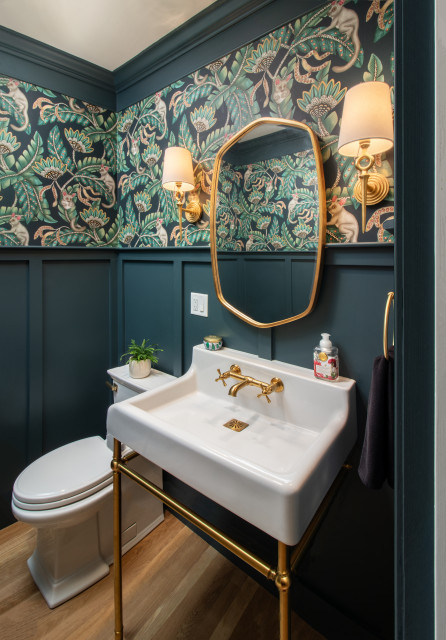
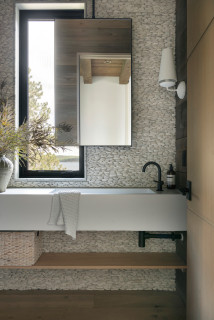
We all know that because they’re small and tucked away, powder rooms offer the chance to play outside the rest of the home’s design comfort zone. Vivid colors? Go ahead. Dramatic prints? Be our guest. But a powder room also can be the picture of serenity, drawing from nature to infuse us with calm as soon as we close the door. You’ll find plenty of ideas for any design approach in this countdown of the most-saved new powder room photos uploaded to Houzz so far this year.
This article was originally published by a www.houzz.com . Read the Original article here. .
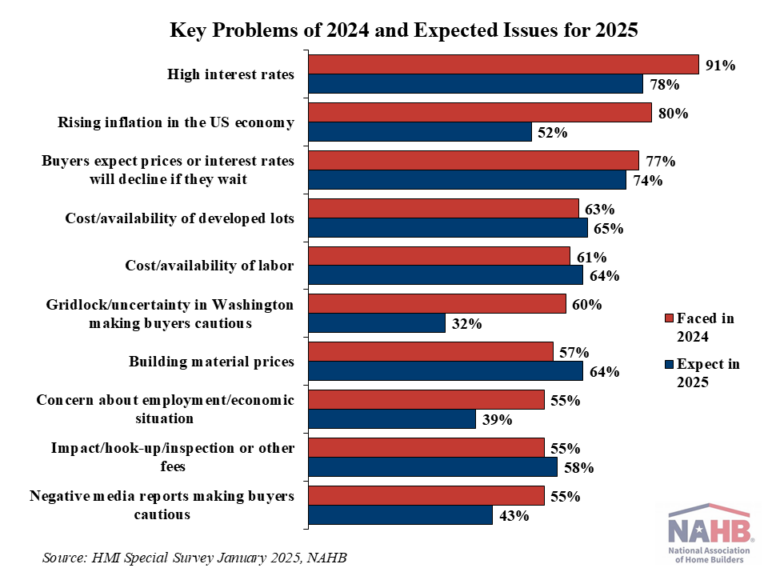
The most significant challenge builders faced in 2024 was high interest rates, as reported by 91% of builders in the latest NAHB/Wells Fargo Housing Market Index survey. A smaller, albeit still significant share of 78% expect interest rates to remain a problem in 2025. The next four most serious issues builders faced in 2024 were rising inflation in the U.S. economy (80%), buyers expecting prices/interest rates to decline (77%), the cost/availability of developed lots (63%), and the cost/availability of labor (61%). Builders don’t expect much improvement in these challenges in 2025, except for rising inflation, which ‘only’ 52% see as a serious problem in the year ahead.
In addition to those top tier challenges, 55% to 60% of builders also reported facing serious problems in 2024 with gridlock/uncertainty in Washington (60%), building material prices (57%), concern about employment/economic situation (55%), impact/hook-up/inspection and other fees (55%), and negative media reports making buyers cautious (55%). Looking ahead at 2025, significantly fewer builders expect gridlock/uncertainty in Washington (32%) or have concerns about the employment/economic situation (39%). In contrast, more builders are expecting building material prices to be a problem in 2025 (64%) and about the same expect continuing problems with impact and other fees (58%).
Builders have been asked about their most serious challenges every year since 2011. High interest rates have been a problem for a negligible share of builders (under 10%) during most years, except for 2022 (66%), 2023 (90%), and 2024 (91%). When first introduced to the survey in 2021, 63% of builders reported challenges with rising inflation in the U.S. economy, but the share grew to at least 80% in 2022, 2023, and 2024. Prior to 2022, relatively few builders reported problems with buyers expecting prices or interest rates to fall, but that share rose to 49% in 2022, 71% in 2023, and 77% in 2024.
The cost/availability of developed lots has been a serious challenge to most builders in nine of the 14 years of the series history. In 2022, 51% of builders faced this problem; by 2024, 63% did—tying a record high set in 2019. Meanwhile, more than half of builders have reported the cost/availability of labor as a serious problem for the past 11 years in a row. While 82% and 85% of builders faced this challenge in 2021 and 2022, respectively, the share has eased to 73% in 2023 and to 61% in 2024.
For additional details, including a complete history for each reported and expected problem listed in the survey, please consult the full survey report.
Discover more from Eye On Housing
Subscribe to get the latest posts sent to your email.
This article was originally published by a eyeonhousing.org . Read the Original article here. .
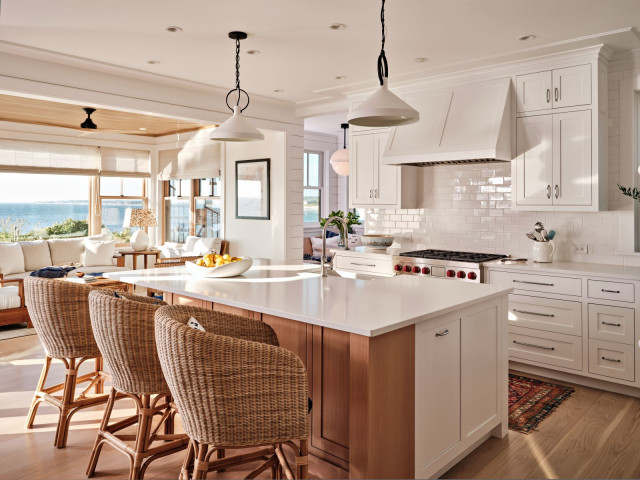
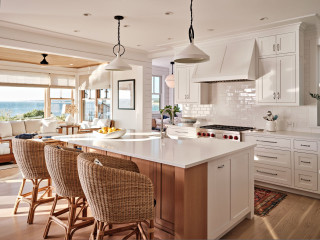
With advances in technology and efficiency, new appliances are an important upgrade for many renovating homeowners.
Among large kitchen appliances, renovating homeowners go for dishwashers (71%) and microwaves (70%) most frequently, followed by ranges (64%), refrigerator-freezer combinations (62%) and range hoods (61%). Homeowners also frequently upgrade cooktops (39%) and wall ovens (31%), while smaller shares opt for beverage refrigerators (18%) and wine refrigerators (14%).
For the most part, homeowners prioritize quality and aesthetics over cost. Quality is the top priority, influencing 64% of homeowners, while look and feel is most important for 50%. Though cost is a lower priority for most, 29% of renovating homeowners still cite it as the reason for their appliance purchase. Substantial shares also prioritize size (27%), specialty features (25%) and energy efficiency (22%).
Meanwhile, stainless steel is by far the leading choice for appliances, chosen by 74% of homeowners. White (7%), black stainless steel (5%) and black (3%) trail far behind.
This article was originally published by a www.houzz.com . Read the Original article here. .
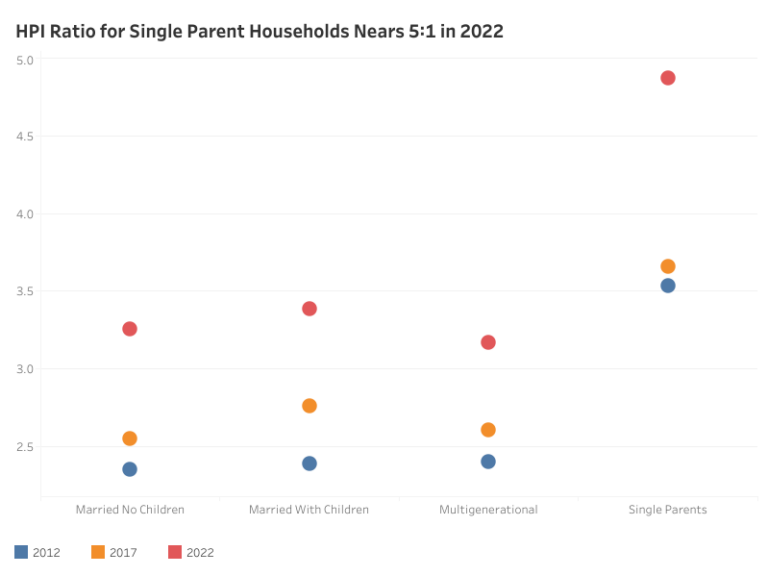
With the end of 2024 approaching, NAHB’s Eye on Housing is reviewing the posts that attracted the most readers over the last year. In September, Catherine Koh dived into data on the homeownership rate of various household types including married couples with children, married couples with no children, single parents, and others.
The homeownership rate for multigenerational households increased by 4.9 percentage points (pp) over the last decade, but there’s another household type that experienced an even larger increase in the homeownership rate over the same period—single parent households.
In further analysis of the Census’s American Community Survey (ACS) data, NAHB dives deeper into the homeownership rate for other family household types: married couples with no children, married couples with children and single parent households. In 2022, most family households were married with no children (44%), followed by married with children (26%), single parents (12%), others (12%), and multigenerational families (6%). This composition has not changed much, with the exception of a gradual decrease in the share of married with children and single parent households, which is offset by an increase in the share of married with no children households.
The homeownership rate for single parent households saw the largest gains in homeownership rate with an increase of 5.7 percentage points over the decade. However, the overall level of homeownership rate for single parent households remains the lowest among all other family household types at just 41%. Another group that saw a large increase was the married couple with children households, with a 4.5% increase over the decade from 73% to 78%. Like multigenerational households, these increases were spurred on by historically low mortgage rates in 2021.
The only household type to have plateaued was married without children. As a matter of fact, these households saw decreasing homeownership rates for a few years before creeping back up to be at roughly the same rate as they were ten years ago at 84%. Nonetheless, married without children households remain as the group with the highest homeownership rate with an average rate of 84% over the decade.
We also examined the estimated home price-to-income ratio (HPI) for various household types. To calculate the home prices for recent homebuyers we used the median property value for owners who moved into their property within the past year. Here is where we see the effect of how multigenerational households were able to lower their HPI with pooled income and budgets. In contrast are single parent households with their estimated home prices approaching five times their income, indicating that these households are significantly burdened by housing costs.
Given that homeownership rates jumped in recent years for most household types despite increases in home prices suggests that the low mortgage rates in 2021 made steep home prices more palatable for homebuyers to enter the market. However, it is unlikely that we’ll see a continued increase in homeownership while mortgage rates remain elevated.
Discover more from Eye On Housing
Subscribe to get the latest posts sent to your email.
This article was originally published by a eyeonhousing.org . Read the Original article here. .
Focus on natives. Some of Deborah Gliksman’s favorite shrubs from California are the tall ‘Dark Star’ ceanothus (Ceanothus ‘Dark Star’, zones 8 to 10) and the smaller ‘Valley Violet’ ceanothus (Ceanothus maritimus ‘Valley Violet’, zones 8 to 10). Gliksman also recommends ‘Aromas’ sage (Salvia ‘Aromas’, zones 8 to 10), bush anemone (Carpenteria californica, Zone 9), ‘De La Mina’ Cedros Island verbena (Verbena lilacina ‘De La Mina’, zones 8 to 10), globe mallow (Sphaeralcea ambigua, zones 6 to 9) and St. Catherine’s lace (Eriogonum giganteum, zones 9 to 11). “They’re all stunning shrubs,” she says.
For perennials, Gliksman often uses yarrow (Achillea millefolium, zones 3 to 9), monkeyflower (Mimulus spp.), penstemons and Douglas iris (Iris douglasiana, zones 6 to 10). For ground covers, she loves ‘Silver Carpet’ aster (Corethrogyne filaginifolia ‘Silver Carpet’, zones 8 to 10), ground currant (Ribes spp.) and seaside daisy (Erigeron glaucus, zones 8 to 10).
What not to plant. Gliksman advises against using invasive plants. Besides possibly taking over your garden and even your neighborhood, she says, they can compete with native species and threaten biodiversity.
Your turn: What are your favorite low-maintenance plants to grow in your garden? Tell us in the Comments.
More on Houzz
Read more gardening guides
Get landscape design ideas
Find a landscape designer
Shop for gardening tools