Tag

Starts

Browsing


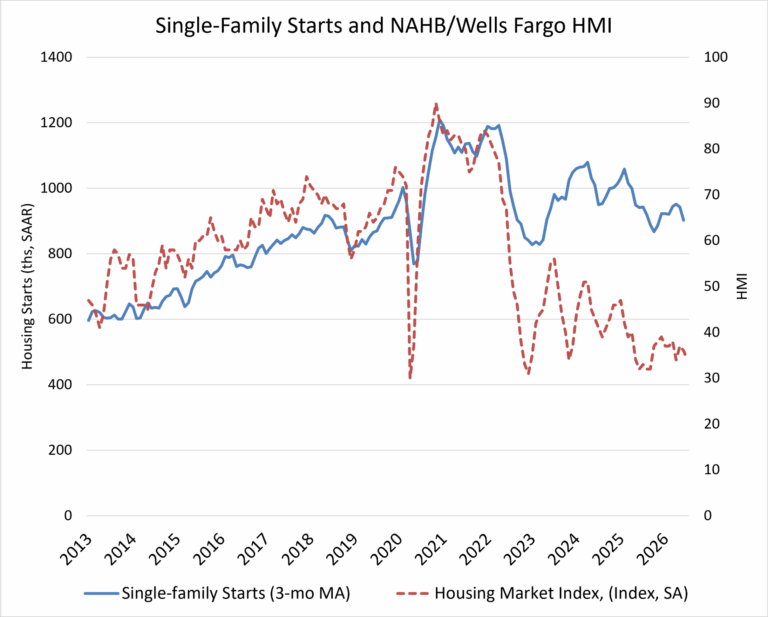
Elevated construction costs and constrained affordability conditions led to a reduction in single-family housing starts in January.

However, led by solid multifamily production, overall housing starts increased 7.2% in January to a seasonally adjusted annual rate of 1.49 million units, according to a report from the U.S. Department of Housing and Urban Development and the U.S. Census Bureau.

The January reading of 1.49 million starts is the number of housing units builders would begin if development kept this pace for the next 12 months.

Within this overall number, single-family starts decreased 2.8% to a 935,000 seasonally adjusted annual rate. Weather effects also likely depressed single-family construction in the Northeast, where single-family starts were down 33% from December 2025 and down more than 6% compared to January 2025 readings.

The multifamily sector, which includes apartment buildings and condos, increased 30% to an annualized 552,000 pace. However, this data may be revised lower in future revisions. Furthermore, prior NAHB analysis of the geography of permit data has shown recent gains for apartment construction occurring in lower density areas, such as exurbs, secondary cities and small towns.

On a regional basis compared to the previous month, combined single-family and multifamily starts were 47.4% higher in the Northeast, 10.8% lower in the Midwest, 11.4% higher in the South and 7.5% lower in the West.

Overall permits decreased 5.4% to a 1.38 million unit annualized rate in January. Single-family permits decreased 0.9% to an 873,000-unit rate, which is the weakest reading since August of last year. This is an indicator of relatively flat construction starts conditions for 2026 amid the ongoing affordability crisis. Multifamily permits decreased 12% to an annualized 503,000 pace.

Looking at regional permit data compared to the previous month, permits were 9.6% lower in the Northeast, 9% higher in the Midwest, 3.5% lower in the South and 15.7% in the West.

The number of single-family homes under construction fell back to 582,000 in January, down 8.8% year over year as the single-family home building market has slowed. Despite recent gains for apartment construction, the number of apartments under construction has fallen back to 686,000 units, a 10% decline from January 2025.

The multiyear trend of a smaller number of units under construction is consistent with builders pulling back construction given higher post-covid construction costs and affordability constraints.


This article was originally published by a eyeonhousing.org . Read the Original article here. .
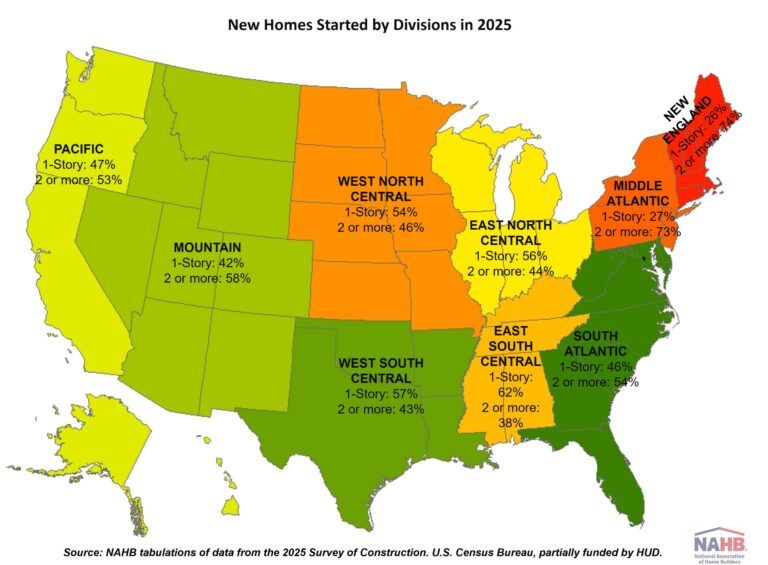

Despite a strong finish in December, single-family home building dipped in 2025 as persistent affordability challenges continued to weigh on the market.

Total housing starts for 2025 were 1.36 million, down 0.6% from the 1.37 million total in 2024. Single-family starts in 2025 totaled 943,000, down 6.9% from the previous year. Multifamily starts ended the year up 17.4% compared with 2024.

Overall housing starts increased 6.2% in December to a seasonally adjusted annual rate of 1.40 million units, according to a report from the U.S. Department of Housing and Urban Development and the U.S. Census Bureau. This pace reflects the number of housing units builders would begin over the next 12 months if December’s activity were sustained.

Within this overall number, single-family starts rose 4.1% to a seasonally adjusted annual rate of 981,000 units. This is the highest rate since February 2025. The multifamily sector, which includes apartment buildings and condos, increased 11.3% to a 423,000-unit pace.

Looking at regional housing starts for 2025, combined single-family and multifamily starts were 8.7% higher in the Northeast, 7.2% higher in the Midwest, 4.0% lower in the South, and 0.8% lower in the West.

Overall permits rose 4.3% to a 1.45 million annualized rate in December but were down 2.2% compared with December 2024. Single-family permits declined 1.7% to an 881,000-unit rate and were 10.9% lower than a year earlier. Multifamily permits increased 15.2% to a 567,000-unit pace.

Total permits for 2025 were 1.43 million, a 3.6% decline from the 1.48 million total in 2024. Single-family permits in 2025 totaled 909,600, down 7.4% from the previous year.

Looking at regional permit data for 2025, total permits were 7.7% lower in the Northeast, 3.0% higher in the Midwest, 5.2% lower in the South, and 1.9% lower in the West.

The total number of housing units under construction stood at 1.3 million in December, down 10.5% from a year earlier. Single-family homes under construction fell to 587,000 units, an 8.4% year-over-year decline and the lowest level since November 2020. Multifamily units under construction declined to 690,000, down 12.2% from a year earlier and well below the peak of more than 1 million units reached in December 2023.


This article was originally published by a eyeonhousing.org . Read the Original article here. .
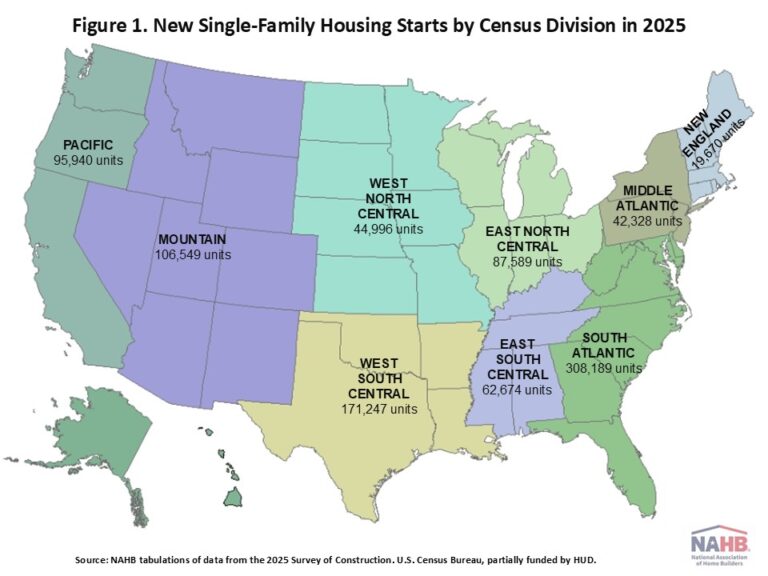

Single-family housing starts posted a modest gain in July as builders continue to contend with challenging housing affordability conditions and a host of supply-side headwinds, including labor shortages, elevated construction costs and inefficient regulatory costs.

Led by solid multifamily production, overall housing starts increased 5.2% in July to a seasonally adjusted annual rate of 1.43 million units, according to a report from the U.S. Department of Housing and Urban Development and the U.S. Census Bureau.

The July reading of 1.43 million starts is the number of housing units builders would begin if development kept this pace for the next 12 months. Within this overall number, single-family starts increased 2.8% to a 939,000 seasonally adjusted annual rate and are down 4.2% on a year-to-date basis. The multifamily sector, which includes apartment buildings and condos, increased 9.9% to an annualized 489,000 pace.

The slowdown in single-family home building has narrowed the home building pipeline. There are currently 621,000 single-family homes under construction, down 1% in July and 3.7% lower than a year ago. This is the lowest level since early 2021 as builders pull back on supply.

On a regional and year-to-date basis, combined single-family and multifamily starts were 10.2% higher in the Northeast, 17.7% higher in the Midwest, 2.4% lower in the South and 0.5% lower in the West.

Overall permits decreased 2.8% to a 1.35-million-unit annualized rate in July. Single-family permits increased 0.5% to an 870,000-unit rate and are down 5.8% on a year-to-date basis. Multifamily permits decreased 8.2% to a 484,000 pace.

Looking at regional permit data on a year-to-date basis, permits were 16.6% lower in the Northeast, 9.1% higher in the Midwest, 3.4% lower in the South and 5.1% lower in the West.

Discover more from Eye On Housing

Subscribe to get the latest posts sent to your email.


This article was originally published by a eyeonhousing.org . Read the Original article here. .


Single-family housing starts declined in June to the lowest rate since July 2024 as elevated interest rates, rising inventories and ongoing supply-side issues continue to act as headwinds for the housing sector.

Due to a solid increase in multifamily production, overall housing starts increased 4.6% in June to a seasonally adjusted annual rate of 1.32 million units, according to a report from the U.S. Department of Housing and Urban Development and the U.S. Census Bureau.

The June reading of 1.32 million starts is the number of housing units builders would begin if development kept this pace for the next 12 months. Within this overall number, single-family starts decreased 4.6% to an 883,000 seasonally adjusted annual rate and are down 10% compared to June 2024. The multifamily sector, which includes apartment buildings and condos, increased 30% to an annualized 438,000 pace.

Single-family building conditions continued to weaken in June as housing affordability challenges caused builder traffic to move lower as buyers moved to the sidelines. Rising levels of resale inventory are also a headwind for the industry.

Single-family home building in the South is down 12.4% on a year-to-date basis, far outpacing declines in the Northeast and the West. However, single-family home building is up 10% on a year-to-date basis in the Midwest, where housing affordability conditions are generally better than much of the nation.

On a regional and year-to-date basis, combined single-family and multifamily starts were 28.8% higher in the Northeast, 13.1% higher in the Midwest, 8.1% lower in the South and 0.6% lower in the West.

Overall permits increased 0.2% to a 1.40-million-unit annualized rate in June. Single-family permits decreased 3.7% to an 866,000-unit rate and are down 8.4% compared to June 2024. Multifamily permits increased 7.3% to a 531,000 pace.

Looking at regional permit data on a year-to-date basis, permits were 16.9% lower in the Northeast, 8.2% higher in the Midwest, 3.3% lower in the South and 3.7% lower in the West.

The declines for single-family home building have caused the number of single-family homes under construction to level off. There are currently 622,000 single-family homes under construction, which is 6% lower than a year ago. The number of apartments under construction in June, 739,000, is 18.8% lower than a year ago.

Discover more from Eye On Housing

Subscribe to get the latest posts sent to your email.


This article was originally published by a eyeonhousing.org . Read the Original article here. .
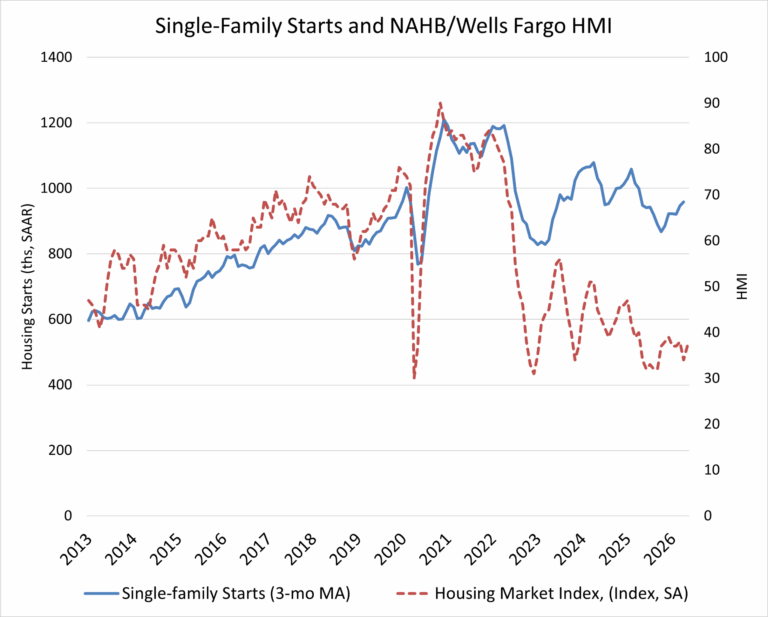

Over half of new single-family homes built in 2024 were two or more stories, according the recent release of the Census Bureau’s Survey of Construction (SOC). After declining in 2023, the share of homes started with two or more stories increased again in 2024, continuing the upward trend in place since 2020.

Nationwide, the share of new homes with two or more stories rose from 51.3% in 2023 to 52.5% in 2024, while the share of new homes with one story fell from 48.7% to 47.5%. Nationally, there were more multi-story homes built in 2024, however, this share varied significantly across the nation.

New homes started in the Midwest and South generally showed a stronger preference for single-story homes. In the Midwest (West North Central and East North Central), 58.8% and 50.7% of new homes started were one story, while in the South (East South Central and West South Central), the shares were 59.5% and 58.1%. However, the South Atlantic division was an exception, with one story homes falling to 44.4%, the lowest since 2019.

Although single story homes are more common in the Midwest and South, their shares declined in 2024 across the East North Central (Midwest), South Atlantic (South) and East South Central (South). This suggests a slow upward trend in two or more story homes across the South after COVID.

Following the national trend, five of the nine divisions saw a greater share of newly-built two or more story homes. The highest two or more story shares of new homes were concentrated in the Northeast and West, with Middle Atlantic and New England at 75.9% and 69.7%, while the Pacific and Mountain reached 57.9% and 56.8%, respectively. However, both Northeast divisions declined from 2023 levels, with New England dropping to its lowest two or more story share since NAHB started tracking in 2017. Meanwhile, new homes started with two or more stories in the Mountain and Pacific divisions both experienced increases in their two or more stories shares.

Discover more from Eye On Housing

Subscribe to get the latest posts sent to your email.


This article was originally published by a eyeonhousing.org . Read the Original article here. .
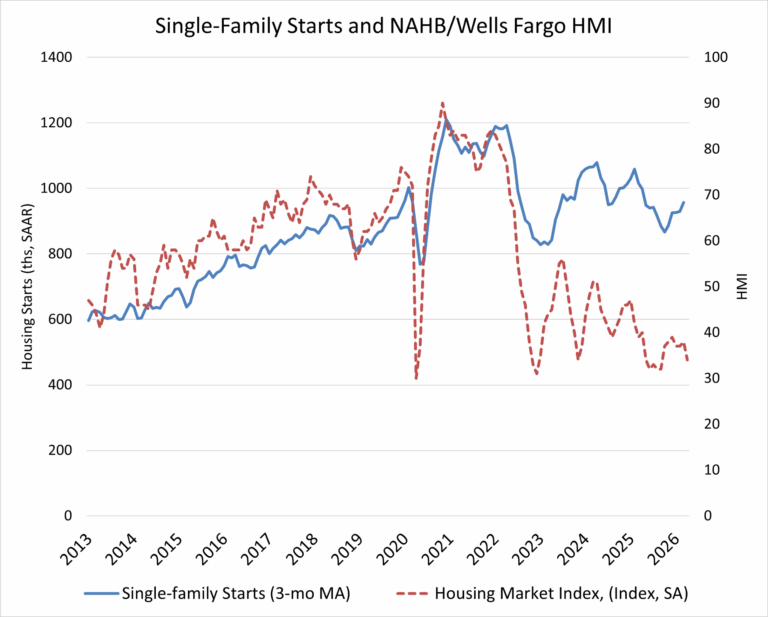

Despite persistently high mortgage rates, elevated financing costs for builders, and a shortage of buildable lots, single-family starts rebounded in 2024, following two straight years of declines. According to the National Association of Home Builders’ analysis of the 2024 Survey of Construction (SOC), a total of 1,009,315 new single-family units started construction nationwide. This is a 7% increase compared to 2023.

Among the nine Census divisions, the South Atlantic division led the nation with 344,313 starts in 2024, representing a 34% share. The second highest was the West South Central division at 187,690 starts, followed by the Mountain division with 125,911 starts. Collectively, these three divisions, covering 20 states and Washington, D.C., and representing approximately 41% of the United States, accounted for nearly two-thirds of the total new single-family housing starts in 2024.

Meanwhile, there were 99,166 new single-family units started in the Pacific division (10% of total starts) and 81,106 in the East North Central division (8%) in 2024. The other four divisions, including East South Central, West North Central, Middle Atlantic, and New England, accounted for the remaining 17% of the total new single-family housing starts.

In 2024, seven out of nine divisions experienced year-over-year growth in single-family starts. The Middle Atlantic division had the strongest performance among all regions, posting a 22% annual increase. In addition, five out of nine divisions surpassed the U.S. growth rate of 7%. Conversely, both the East South Central and West South Central divisions recorded declines in single-family housing starts.

Compared to the previous year, the New England and West South Central divisions experienced a deceleration in growth, while the East South Central division marked its second consecutive year of decreases. In contrast, the remaining six divisions reported an acceleration in growth. Despite regional disparities, the overall national trend in 2024 reflected a resilient housing market, even in the face of ongoing economic and supply-side challenges.

Discover more from Eye On Housing

Subscribe to get the latest posts sent to your email.


This article was originally published by a eyeonhousing.org . Read the Original article here. .
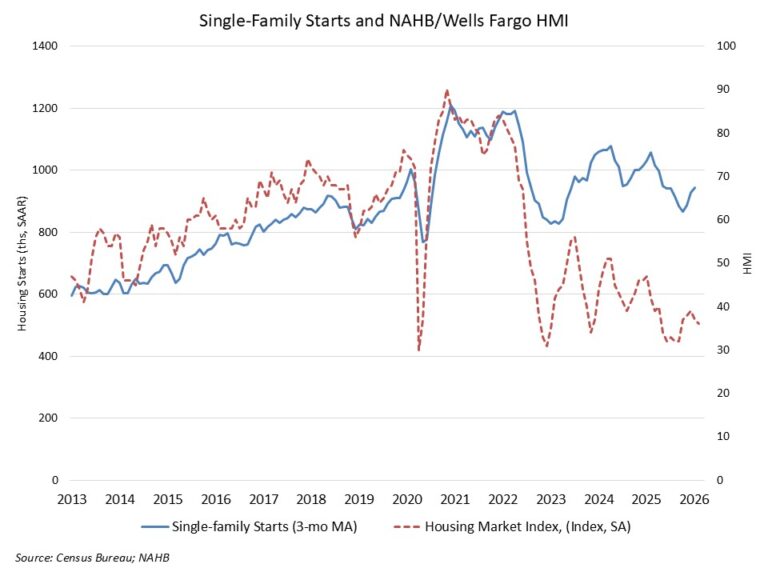

A sharp decline in multifamily production pushed overall housing starts down in May, while single-family output was essentially flat due to economic and tariff uncertainty along with elevated interest rates.

Overall housing starts decreased 9.8% in May to a seasonally adjusted annual rate of 1.26 million units, according to a report from the U.S. Department of Housing and Urban Development and the U.S. Census Bureau.

The May reading of 1.26 million starts is the number of housing units builders would begin if development kept this pace for the next 12 months. Within this overall number, single-family starts increased 0.4% to a 924,000 seasonally adjusted annual rate and are down 7.3% compared to May 2024. The volatile multifamily sector, which includes apartment buildings and condos, decreased 29.7% in May to an annualized 332,000 pace.

On a year-to-date basis, single-family starts are down 7.1%. In contrast, multifamily 5-plus unit starts are up 14.5% as more prospective home buyers remain on the sidelines helping rental demand.

Single-family permits and construction starts are down on a year-to-date basis for 2025 for what has been a disappointing spring housing market, given ongoing elevated mortgage interest rates, challenging housing affordability conditions led by higher construction costs, and macroeconomic uncertainty. NAHB is forecasting that 2025 will end with a decline for single-family housing starts.

The number of single-family homes currently under construction totaled 623,000 homes as of May. This is 1.3% lower than April, 7.6% lower than a year ago and 25% lower than the post-Great Recession peak level in June 2022. There were 752,000 apartments under construction in June, 4.6% lower than May and 18.2% lower than a year ago.

On a regional and year-to-date basis, combined single-family and multifamily starts were 21.1% higher in the Northeast, 10.8% higher in the Midwest, 6.8% lower in the South and 1.6% lower in the West.

Overall permits decreased 2% to a 1.39-million-unit annualized rate in May. Single-family permits decreased 2.7% to an 898,000-unit rate and are down 6.4% compared to May 2024. Multifamily permits decreased 0.8% to a 495,000 pace.

Looking at regional permit data on a year-to-date basis, permits were 17.2% lower in the Northeast, 6% higher in the Midwest, 5.4% lower in the South and 3.7% lower in the West.

Discover more from Eye On Housing

Subscribe to get the latest posts sent to your email.


This article was originally published by a eyeonhousing.org . Read the Original article here. .
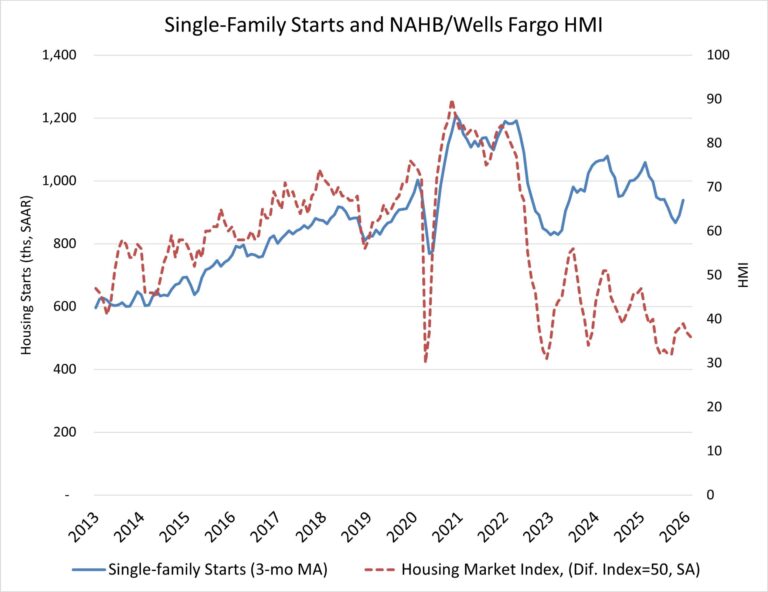

Economic uncertainty stemming from tariff issues, elevated mortgage rates and rising building material costs pushed single-family housing starts lower in April.

Overall housing starts increased 1.6% in April to a seasonally adjusted annual rate of 1.36 million units, according to a report from the U.S. Department of Housing and Urban Development and the U.S. Census Bureau.

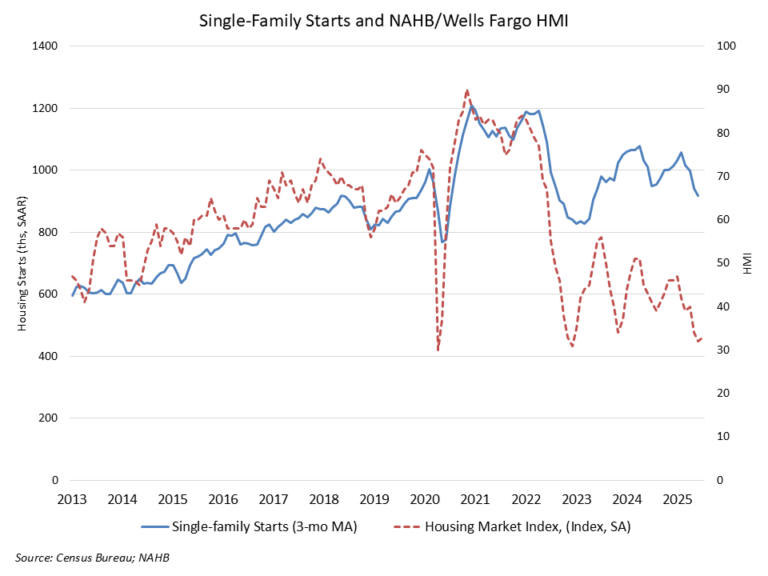
The April reading of 1.36 million starts is the number of housing units builders would begin if development kept this pace for the next 12 months. Within this overall number, single-family starts decreased 2.1% to a 927,000 seasonally adjusted annual rate and are down 12.0% compared to April 2024. On a year-to-date basis, single-family starts are down 7.1%. The three-month moving average (a useful gauge given recent volatility) is down to 991,000 units, as charted below.

The multifamily sector, which includes apartment buildings and condos, increased 10.7% to an annualized 434,000 pace. The three-month moving average for multifamily construction has trended upward to a 406,000-unit annual rate. On a year-over-year basis, multifamily construction is up 30.7%.

On a regional and year-to-date basis, combined single-family and multifamily starts were 19.8% higher in the Northeast, 4.4% higher in the Midwest, 3.4% higher in the West , and 7.4% lower in the South.

The total number of single-family homes and apartments under construction was 1.4 million units in April. This is the lowest total since June 2021. Total housing units now under construction are 14.3% lower than a year ago. Single-family units under construction fell to a count of 630,000—down 7.1% compared to a year ago. The number of multifamily units under construction has fallen to 788,000 units. This is down 15.6% compared to a year ago.

On a 3-month moving average basis, there are currently 1.3 apartments completing construction for every one that is beginning construction. While apartment construction starts are down, the number of completed units entering the market is rising due to prior elevated construction levels. Year-to-date, the pace of completions for apartments in buildings with five or more units is down 3.4% in 2025 compared to 2024. An elevated pace of completions in 2025 for multifamily construction will place some downward pressure on rent growth.

Overall permits decreased 4.7% to a 1.41-million-unit annualized rate in April. Single-family permits decreased 5.1% to a 922,000-unit rate and are down 6.2% compared to April 2024. Multifamily permits decreased 3.7% to a 490,000 pace but are up 2.9% compared to April 2024.

Looking at regional permit data on a year-to-date basis, permits were 5.1% higher in the Midwest, 3.5% lower in the West, 3.8% lower in the South, and 20.3% lower in the Northeast.

Discover more from Eye On Housing

Subscribe to get the latest posts sent to your email.


This article was originally published by a eyeonhousing.org . Read the Original article here. .
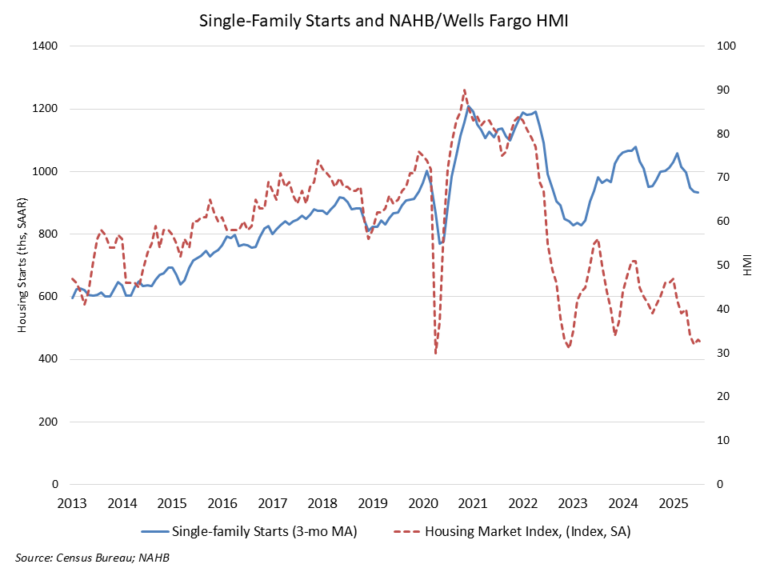

Constrained housing affordability conditions due to elevated interest rates, rising construction costs and labor shortages led to a reduction in housing production in March.

Overall housing starts decreased 11.4% in March to a seasonally adjusted annual rate of 1.32 million units, according to a report from the U.S. Department of Housing and Urban Development and the U.S. Census Bureau.

The March reading of 1.32 million starts is the number of housing units builders would begin if development kept this pace for the next 12 months. Within this overall number, single-family starts decreased 14.2% to a 940,000 seasonally adjusted annual rate over the month and are down 9.7% compared to March 2024. On a year-to-date basis, single-family starts are down 5.6%. The three-month moving average (a useful gauge given recent volatility) is down to 1.01 million units, as charted below.

The multifamily sector, which includes apartment buildings and condos, decreased 3.5% to an annualized 384,000 pace. The three-month moving average for multifamily construction has trended upward to a 381,000-unit annual rate. On a year-over-year basis, multifamily construction is up 48.8%.

On a regional and year-to-date basis, combined single-family and multifamily starts were 10.6% higher in the West, 8.6% higher in the Northeast, 3.3% higher in the Midwest, and 8.5% lower in the South.

The total number of single-family homes and apartments under construction was 1.4 million in March. This is the lowest total since July 2021. Total housing units now under construction are 15.2% lower than a year ago. Single-family units under construction fell to a count of 632,000—down 8.7% compared to a year ago. The number of multifamily units under construction has fallen to 759,000 units. This is down 20.0% compared to a year ago.

On a 3-month moving average basis, there are currently 1.5 apartments completing construction for every one that is beginning construction. While apartment construction starts are down, the number of completed units entering the market is rising due to prior elevated construction levels. Year-to-date, the pace of completions for apartments in buildings with five or more units is down 3.5% in 2025 compared to 2024. An elevated pace of completions in 2025 for multifamily construction will place some downward pressure on rent growth.

Overall permits increased 1.6% to a 1.48-million-unit annualized rate in March. Single-family permits decreased 2.0% to a 978,000-unit rate. Multifamily permits increased 9.3% to a 504,000 pace.

Looking at regional permit data on a year-to-date basis, permits were 4.7% higher in the Midwest, 0.4% higher in the South, 8.8% lower in the West and 24.7% lower in the Northeast.

Discover more from Eye On Housing

Subscribe to get the latest posts sent to your email.


This article was originally published by a eyeonhousing.org . Read the Original article here. .

Limited existing inventory helped single-family starts to post a solid gain in February, but builders are still grappling with elevated construction costs stemming from tariff issues and persistent shortages related to buildable lots and labor.

Overall housing starts increased 11.2% in February to a seasonally adjusted annual rate of 1.50 million units, according to a report from the U.S. Department of Housing and Urban Development and the U.S. Census Bureau. The February reading of 1.50 million starts is the number of housing units builders would begin if development kept this pace for the next 12 months.

Within this overall number, single-family starts increased 11.4% to a 1.11 million seasonally adjusted annual rate, the highest pace since February 2024. The multifamily sector, which includes apartment buildings and condos, increased 10.7% to an annualized 393,000 pace.

While solid demand and a lack of existing inventory provided a boost to single-family production in February, our latest builder survey shows that builders remain concerned about challenging housing affordability conditions, most notably elevated financing and construction costs as well as tariffs on key building materials.

On a regional and year-to-date basis, combined single-family and multifamily starts were 4.7% lower in the Northeast, 21.5% lower in the Midwest, 8.3% lower in the South and 20.2% higher in the West.

Overall permits decreased 1.2% to a 1.46-million-unit annualized rate in February and were down 6.8% compared to February 2024. Single-family permits decreased 0.2% to a 992,000-unit rate and were down 3.4% compared to the previous year. Multifamily permits decreased 3.1% to a 464,000 pace.

Looking at regional permit data on a year-to-date basis, permits were 30.1% lower in the Northeast, 2.3% higher in the Midwest, 2.1% lower in the South and 12.5% lower in the West.

The number of single-family homes under construction in February was down 6.7% from a year ago, at 640,000 homes. In February, the count of apartments under construction increased 0.3% to an annualized 772,000 pace. It marks the first gain after 18 months of consecutive declines but was still down 20% from a year ago.

There were 526,000 multifamily completions in February, down 15% from the previous year. For each apartment starting construction, there are 1.5 apartments completing the construction process.

Discover more from Eye On Housing

Subscribe to get the latest posts sent to your email.


This article was originally published by a eyeonhousing.org . Read the Original article here. .
Pin It