This article was originally published by a www.houzz.com . Read the Original article here. .
This article was originally published by a www.houzz.com . Read the Original article here. .
Despite historically low self-employment rates and the rising market share of top ten builders, residential construction remains an industry dominated by independent entrepreneurs, with nearly 80% of home builders and specialty trade contractor firms being self-employed independent contractors. Even among firms with paid employees, the industry continues to be dominated by small businesses, with 63% of homebuilders and two out of three specialty trade contractors generating less than one million dollars in total business receipts. The new estimates are based on the 2022 Economic Census and Nonemployer Statistics data.
The Economic Census covers several construction subsectors within the home building industry:
Residential Building Construction (RBC)
Single-family general contractors (excluding for-sale builders)
Multifamily general contractors (excluding for-sale builders)
For-sale new housing builders
Residential remodelers
Land Subdivision (or land developers)
Specialty Trade Contractors (STC)
The 2022 statistics show that the majority of residential construction businesses are self-employed independent contractors. There are over 813,000 nonemployer firms in residential building construction (RBC), accounting for close to 80% of all establishments. In land subdivision, more than 9,000 independent contractors account for 68% of land subdivision firms. Over 1.9 million specialty trade independent contractors make up 79% of all STC establishments. These nonemployer firms also account for almost half of the full-time employees (FTE) in residential building construction, 26% in land subdivision, and 28% in STC.
Most of these self-employed mom-and-pop firms are very small, with annual receipts averaging under $103,000 for residential building construction, and under $70,000 for specialty trade contractors. Self-employed independent contractors in land subdivision average around $288,000 in annual business receipts. As a result, these nonemployer firms make up only 12% of all sales and receipts generated by residential building construction and land subdivision, and 9% of specialty trade contractors’ revenue.
Among residential construction businesses with paid employees, remodeling, land subdivision, and specialty trade subcontractors (STC) companies tend to be smaller. Three out of four remodeling establishments, 63% of land developers, and 59% of STC companies generate under $1 million in receipts.
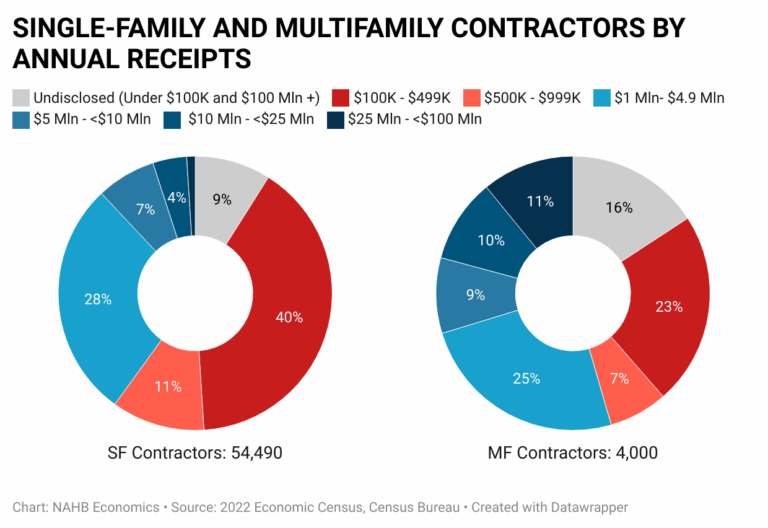
Home builders are typically somewhat larger, with about 45% of companies reporting annual sales over $1 million. Among homebuilders, multifamily general contractors tend to be the largest. However, the Census Bureau did not disclose the number of the largest (with revenue over $100 million) and smallest (with revenue under $100K) multifamily and single-family custom builders in 2022. As a result, the revenue spectrum for MF and SF contractors is incomplete and is presented in a separate chart.
Multifamily contractors are typically larger compared to single-family contractors and for-sale builders (who build on land they own and control). Ten percent of multifamily contractors reported annual sales between $10 million and 25 million, and an additional 11% earned between $25 million and $100 million in 2022.
Under the most recent U.S. Small Business Administration (SBA) size standards, the vast majority of residential construction companies qualify as small businesses. The most recent small business size limits for all types of builders are $45 million, $34 million for land subdivision, and $19 million for specialty trade contractors. By these standards, almost all remodelers and single-family contractors, and at least 98% of land developers, and 96% of specialty trade contractors, easily qualify as small businesses.
This article was originally published by a eyeonhousing.org . Read the Original article here. .
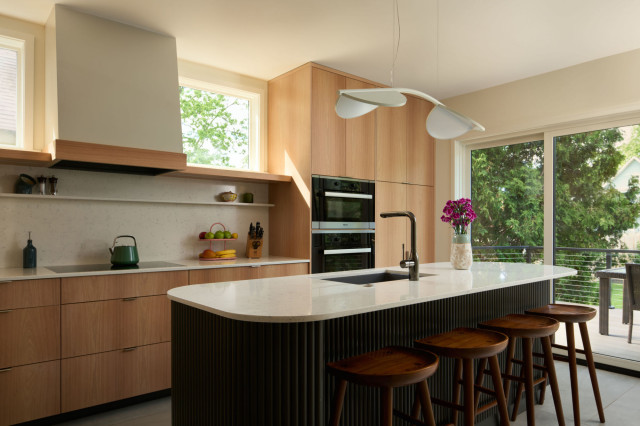
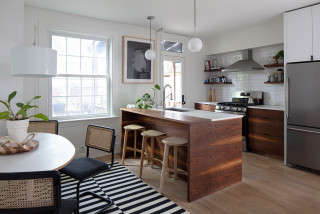
If your kitchen feels cramped, removing all or some of your upper cabinets might be the best option for you. This is a sure way to open up the visual space around the room, making the kitchen appear much larger than it is.
Plenty of light is important in a small space, and upper cabinets can sometimes cast a shadow over the countertops, making the workspace feel darker than necessary. So skipping those uppers can really open a space up. Running tile on the backsplash to the ceiling can also help visually heighten the look of the room.
If you’re worried about losing the storage from ditching upper cabinets, consider a hardworking island, if you have the space, or consult with a design pro to really maximize your lower cabinet storage with pullouts, drawers and other high-functioning components.
This article was originally published by a www.houzz.com . Read the Original article here. .
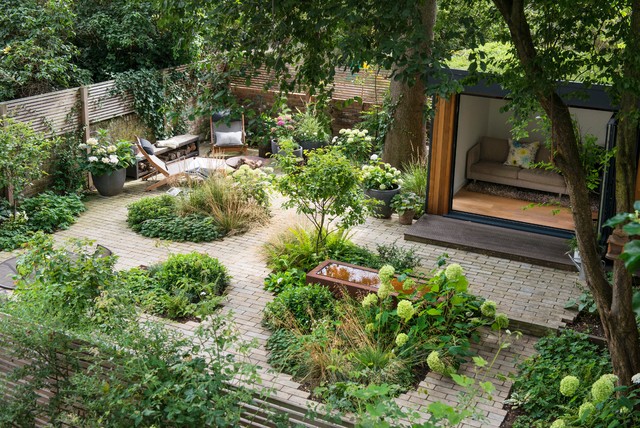
In many ways, renovating a small yard is no different than tackling a larger space — you’ll still collect inspiration photos, establish a budget and hire a professional, among many other things. However, given more limited square footage and the likelihood of closer neighbors, you’ll have to prioritize what you want, think about multiuse features and consider adding screening or noise-mitigating features.
If you’re ready renovate your outdoor space, read on to learn how to navigate the process through the planning and conceptual phases, and how to get from your current look to one that fits your life and style.
This article was originally published by a www.houzz.com . Read the Original article here. .
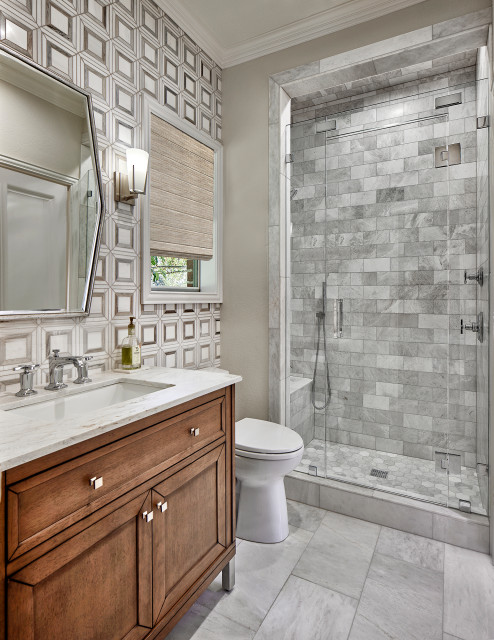
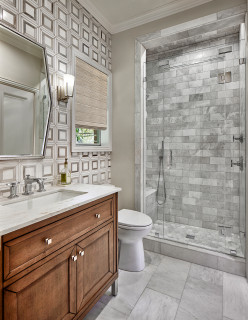
Homeowners’ request. “We started from scratch with this space because the original layout had just one bathroom downstairs,” designer Taylor Harrison says. “Since the homeowners love to entertain, they wanted to add a second bathroom that could double as a stylish guest spot. Our goal was to bring the wow factor with a bold splash of color. As the main guest bathroom downstairs, it had to be playful, eye-catching and full of personality from the moment you walk in.”
Low-curb shower details. “We chose a low shower curb to keep the space open and seamless, letting the other design details shine,” Harrison says. “A quartz slab matching the countertop creates a stunning transition from the hardwood floors into the shower pan tile, tying everything together beautifully.”
Other special features. “We knew we wanted this bathroom to have a fun monochromatic look, so we kicked things off by choosing the vibrant green tile for the shower walls. Then we matched it perfectly with Sherwin-Williams’ Retreat for the paint on the applied molding.”
Designer tip. “Sometimes less is more — but not in this bathroom,” Harrison says. “We packed as much personality as possible into just 45 square feet. From bold green tones and applied molding to playful countertops, floral wallpaper and rich green tile, every inch of this space was designed to make a statement.”
“Uh-oh” moment. “Lining up applied molding in a small space can be tricky,” Harrison says. “You’re working around mirrors, lighting, outlets and switches, which makes the layout a bit of a puzzle. But with careful planning and the right spacing, it all comes together beautifully and is totally worth the effort.”
Shower wall tile: Passion in Verde, 3 by 8 inches, Emser; wallpaper: Pure Honeysuckle & Tulip, Lulu and Georgia
This article was originally published by a www.houzz.com . Read the Original article here. .
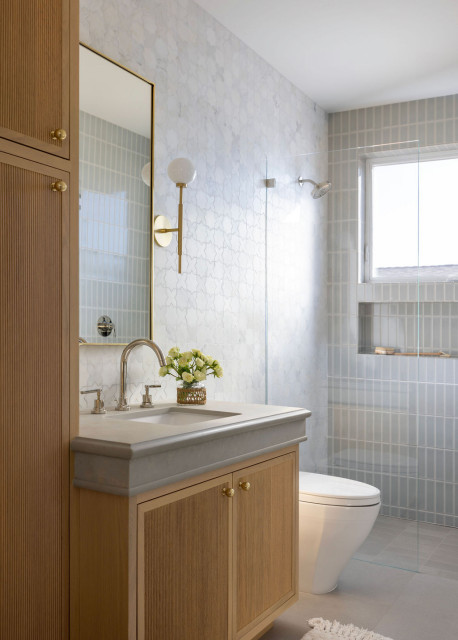
Designers: Naomi Dresser and Caitlin Carter of Fig St. Design
Location: Santa Cruz, California
Size: 55 square feet (5.1 square meters)
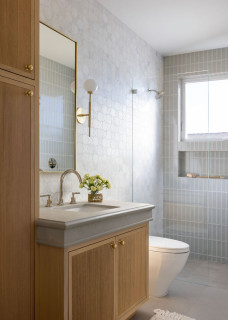
Homeowners’ request. “This space was designed to be a guest bathroom with serene beach vibes and maximize storage opportunities,” designer Naomi Dresser says. “This beach house is super tiny with very little closet space, so the bathroom needed to be able to accommodate space for extra linens, towels and cleaning supplies.”
Special features. “The color palette draws from the coast — muted ocean spray shower tile and warm wood tones with a splash of brass,” Dresser says. “To give the space an ultrasoft and custom vibe, we created custom countertop edges, fluted cabinet details and a full tile backsplash behind the vanity.”
Small-space strategies. The tiled backsplash extends from the vanity to the ceiling and into the shower, visually extending the space. Stacked rectangular tile in the shower emphasizes the height of the shower. Large-format floor tile runs into a curbless shower, lending a light and airy look and feel. “Custom cabinetry offered the opportunity to maximize storage and give added details like the fluting,” Dresser says. “We added a custom built-in full-height cabinet to the left of the vanity to capitalize on storage square footage.”
Dresser uses Houzz Pro software to manage projects, including for retainers, proposals, invoices and purchase orders. “Keeps us organized,” she says.
See why you should hire a professional who uses Houzz Pro software
This article was originally published by a www.houzz.com . Read the Original article here. .
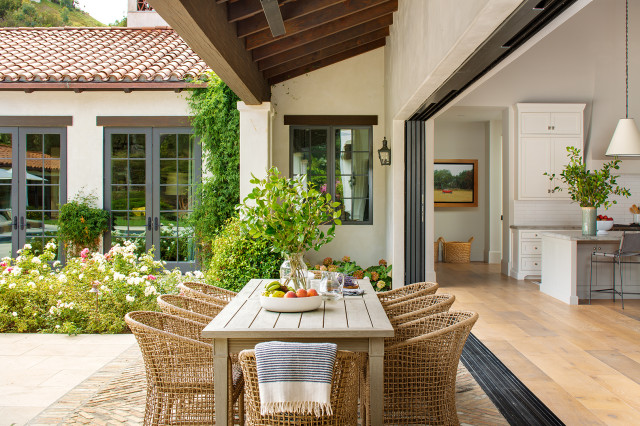

Adding a few plants to your yard is a great way to revitalize the space — and it doesn’t have to cost too much, says Wayne De Klijn, owner of AQL Landscape Design. When you’re choosing new plants, it’s important to pick a theme so the garden doesn’t look visually chaotic and disconnected, he says. De Klijn suggests choosing plants based on their region. “Or you might choose a theme based on color, such as all-white flowering plants,” he says.
It’s important to consider your region’s and backyard’s conditions when choosing plants. “The right plant in the right position will thrive,” Pezzimenti says. Soil preparation is also key. “Cultivate the soil before planting, and make sure it’s fluffy. This will give your new plants a great start,” he says.
The quality of plants you buy will also affect their success. “Be sure to purchase quality plants from a reputable nursery,” Pezzimenti says. “Check [that] the plant stock looks healthy and that roots are not pot-bound.” Prices for plants vary greatly; for an affordable option, purchase plants in seed form, cuttings, bulbs, tubes or small container sizes, he says.
Make Sure You Read This Before Buying New Plants
This article was originally published by a www.houzz.com . Read the Original article here. .

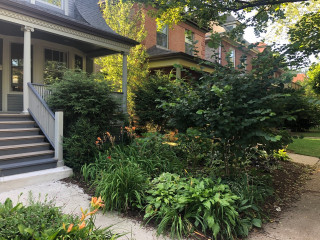
Himschoot planted the beds with a mix of perennials, grasses and shrubs for nearly year-round color and interest. Perennials include ‘Summer Beauty’ allium (Allium ‘Summer Beauty’, USDA zones 4 to 9; find your zone), ‘Visions’ astilbe (Astilbe chinensis ‘Visions’, zones 4 to 9), ‘Walker’s Low’ catmint (Nepeta racemosa ‘Walker’s Low’, zones 3 to 8), ‘Little Spire’ Russian sage (Perovskia atriplicifolia ‘Little Spire’, zones 5 to 9), ‘Blue Mouse Ears’ hosta (Hosta ‘Blue Mouse Ears’, zones 3 to 9) and ‘Petite Delight’ beebalm (Monarda didyma ‘Petite Delight’, zones 3 to 9).
The grasses are golden Japanese forest grass (Hakonechloa macra ‘Aureola’, zones 4 to 9), ‘Ice Dance’ Japanese sedge (Carex morrowii ‘Ice Dance’, zones 5 to 9) and ‘Bowles Golden’ sedge (Carex elata ‘Aurea’, zones 5 to 9).
The shrubs include ‘Ruby Slippers’ oakleaf hydrangea (Hydrangea quercifolia ‘Ruby Slippers’, zones 5 to 9), dwarf fothergilla (Fothergilla gardenii, zones 5 to 8), ‘Blue Star’ juniper (Juniperus squamata ‘Blue Star’, zones 4 to 8) and ‘Little Devil’ ninebark (Physocarpus opulifolius ‘Donna May’, zones 3 to 7).
This article was originally published by a www.houzz.com . Read the Original article here. .
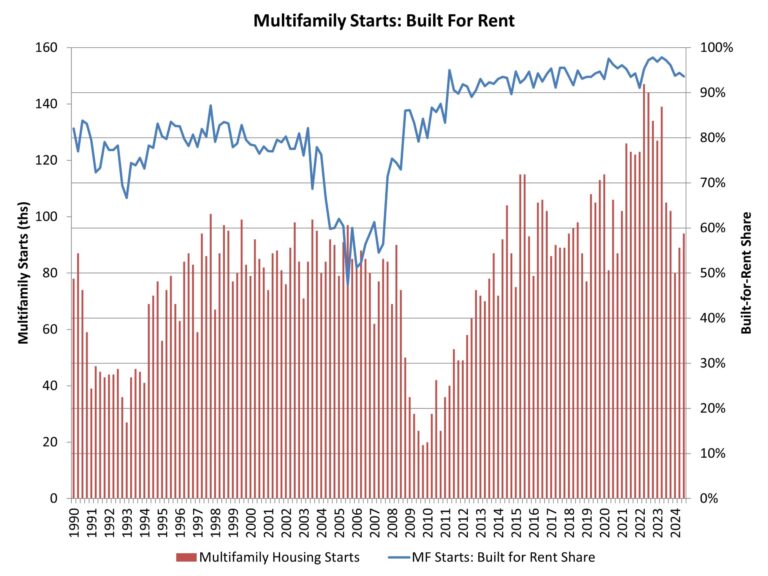
According to NAHB analysis of quarterly Census data, the count of multifamily, for-rent housing starts declined during the third quarter of 2024. For the quarter, 94,000 multifamily residences started construction. Of this total, 88,000 were built-for-rent. This was almost 14% lower than the third quarter of 2023.
The market share of rental units of multifamily construction starts declined to below 94% for the third quarter, as the built-for-sale, multifamily condo market experienced a gain. The historical low market share of 47% for bult-for-rent multifamily construction was set during the third quarter of 2005, during the condo building boom. An average share of 80% was registered during the 1980-2002 period.
For the third quarter, there were 6,000 multifamily condo unit construction starts, up from 3,000 a year ago. While still a small market, this was the highest quarterly count since mid-2022.
An elevated rental share of multifamily construction is holding typical apartment size below levels seen during the pre-Great Recession period. According to third quarter 2024 data, the average square footage of multifamily construction starts ticked higher to 1,061 square feet. The median edged up to 1,013 square feet. These estimates are near multidecade lows.
Discover more from Eye On Housing
Subscribe to get the latest posts sent to your email.
This article was originally published by a eyeonhousing.org . Read the Original article here. .

The majority of NAHB builder members are small businesses, according to the annual census of its members NAHB has been conducting since 2008. The most recent installment of the census was conducted at the end of 2023 and covered business activity through 2023.
The census shows that, on average, NAHB builders started 59.2 homes in 2023 (37.3 single-family and 21.9 multifamily). However, the median number of homes started was only six. Because the data include a small percentage of very large builders, the average number of starts is much higher than the median. For that reason, the median may better represent the experience of the typical NAHB builder.
Another, conventional way to evaluate the size of a business is by the annual revenue it generates. In the 2023 NAHB census, 14% of builders reported a dollar volume of less than $500,000, 12% reported between $500,000 and $999,999, 38% between $1.0 and $4.9 million, 15% between $5.0 and $9.9 million, 6% between $10.0 million and $14.9 million, and 14% reported $15.0 million or more. Only 1% reported no business activity at all in 2023. The median edged up to $3.4 million (from $3.3 million in 2021 and 2022). For comparison, the Small Business Administration’s size standards classify residential builders and remodelers as small if they have average annual receipts of $45.0 million or less ($34.0 million or less for land developers).
Historically, NAHB initiated the current version of its member census during the industry-wide downturn of 2008, when the median annual revenue of builder members was only around $1.0 million. Median annual revenue began rising in 2013, as the industry slowly recovered, plateauing at $2.6 to $2.7 million from 2017 through 2020, before jumping to $3.3 million in 2021 and 2022 and then edging up by another $0.1 million in 2023.
Due to their status as small businesses and extensive use of subcontractors, many builders carry relatively few employees on their payrolls. In NAHB’s 2023 census, builder members reported a median of six employees, including employees in both construction and non-construction jobs.
Whether based on the median of six employees, the median of six homes started, or the median annual revenue of $3.4 million, it is safe to conclude that the majority of NAHB’s builder members qualify as small businesses.
For more detail on the 2023 NAHB Builder Member Census, including a profile for each of the seven major categories of builder, please see the July 2024 Special Study.
Discover more from Eye On Housing
Subscribe to get the latest posts sent to your email.
This article was originally published by a eyeonhousing.org . Read the Original article here. .
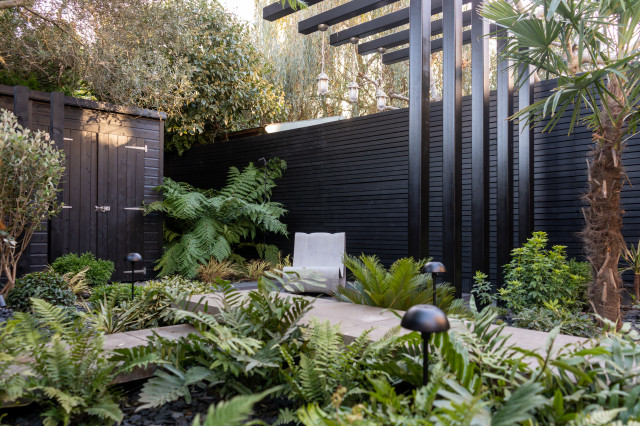
You can also see one of the ways she gave the small space depth, with the eye going from the black patio door frames to the steel pergola to the black wood posts attached to the shed.
Bejanaru also planted four new trees, placing the two tallest nearer to the house and the two shorter ones at the back. “The plants in front draw the eye upward, then the shorter ones — visually below the other two — draw your eye to the back of the [yard], so you have several focal points,” she says.
The new trees consist of two Tasmanian tree ferns (Dicksonia antarctica, USDA zones 9 to 10; find your zone) — one on the front left and the other at the back right; a tall windmill palm (Trachycarpus fortunei, zones 7 to 11) and a pineapple guava (Acca sellowiana, zones 8 to 10) in front of the shed.
The huge olive tree was already there. “We kept it, of course, because it’s beautiful and I also love the color of the bark, which stands out,” Bejanaru says.
9 Design Tips to Enhance Views of Your Garden From Indoors