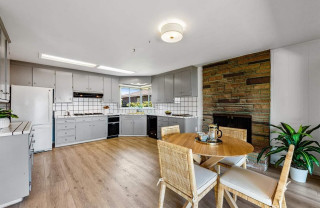
Before Photo
This article was originally published by a www.houzz.com . Read the Original article here. .
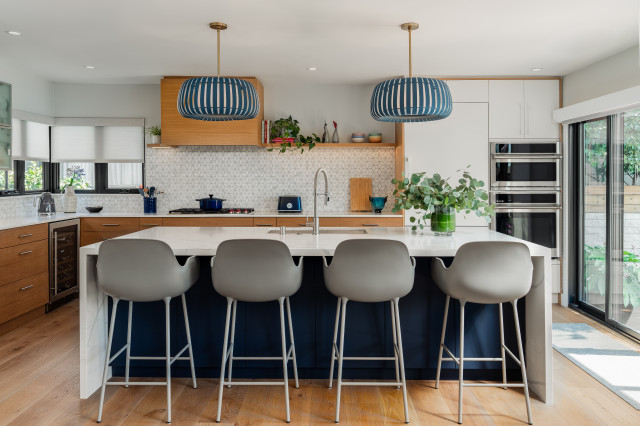
Before Photo
This article was originally published by a www.houzz.com . Read the Original article here. .
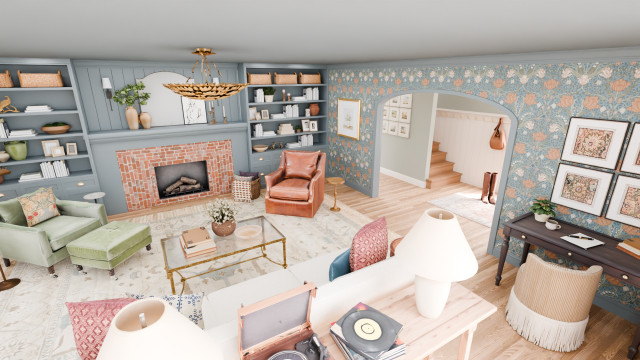
Fictional New York City cafe Central Perk was the primary hangout for the six twentysomethings on Friends, an era-defining sitcom that debuted in 1994, ran for 10 seasons and lives on in reruns worldwide. Relaxed and eclectic, the cafe, and especially its famous orange couch, served as a backdrop for some of the show’s most pivotal moments, as well as countless pointless conversations.
Allito Spaces combined the show’s vibe, Central Perk’s charm and the comfort of home in this colorful living room. “With this design, I wanted to capture the sense of togetherness that defined the series,” principal designer Allison Garrison says. Brick accents echo Central Perk’s walls, and a row of windows calls to mind the cafe’s view to the streets of New York. Comfy seating (including an orange-ish couch), a layered Oriental rug, fringe-trimmed upholstery and collected artwork and accessories create a homey, lived-in feel.
This article was originally published by a www.houzz.com . Read the Original article here. .
Kitchen at a Glance
Who lives here: A retired couple
Location: Alameda, California
Size: 285 square feet (26 square meters)
Designer: William Adams Design
Before: The former 165-square-foot kitchen felt dated and inefficient with aging gray cabinets, mismatched white and black appliances, wood-look vinyl flooring and no island. A corner sink beneath two front-yard-facing windows anchored the layout. “I just felt like that corner sink was dated,” Adams says. “It also took up so much space by the way it was positioned.”
Without an island, storage and prep space were limited and the center of the room felt like wasted territory. An eating area with a large fireplace sat just off the kitchen. “Having that giant fireplace inside the kitchen made no sense at all,” Adams says.
White ceramic tile with dark grout wrapped the countertops and backsplash, creating a dingy look and maintenance the couple didn’t want. Lighting was also a problem: A single ceiling fixture plus a couple of fluorescent task lights left the space poorly illuminated. “The lack of light was not conducive for working in the kitchen or doing everyday tasks,” Adams says. “They enjoy cooking and entertaining and there wasn’t enough space in that footprint to contain what they needed. The cleanliness with those countertops was also an issue.”