Tag

Pros

Browsing


Soloway Designs Inc | Architecture + Interiors AIASave Photo
Looking Beyond a Resume

“From the start, Soloway Designs has set one of its goals to create and grow an exciting professional work environment,” says Marc Soloway, architect, founder and principal at Soloway Designs in Tucson, Arizona. “The atmosphere is light, but quality work is produced, deadlines are met and client satisfaction is at the forefront. Our office is a giant family, and as we grow, and during interviews, we endeavor to make sure each new hire will be a good fit.”

Soloway describes reviewing hundreds of resumes to source a new employee. He says the company is seeking “a personality that fits with our team. A quality work ethic, knowledge of what the position requires, desire for further growth are a few of the critical success factors for a potential new employee.”

To find these attributes, Soloway looks beyond what’s written on the page in front of him. “Resumes offer only a glimpse of a potential candidate,” he says.

“The resume and the candidate all too often are not a close fit. For example, a great project in the presented portfolio may indeed be commendable, but deeper discussion may question just how much the candidate actually understands and had uniquely contributed.

“During in-house interviews, we look beyond stated assignments and accomplishments,” Soloway says. “Discussion issues include: Tell me about a particular challenge and how you worked it out. What frustrates you most in the work environment? What are your primary professional growth goals for the coming year? And where do you see yourself in five years?”

Pros Share the Best Business Advice They Ever Received


This article was originally published by a
www.houzz.com . Read the Original article here. .


Business activity softened across the residential construction and design industries at the start of 2026, but professionals are entering the second quarter with measured optimism, according to the Q2 2026 U.S. Houzz Pro Industry Barometer. Construction firms expect modest improvement driven by gains in newly committed projects, while architecture and design firms maintain positive expectations despite sharper declines in recent activity, particularly project inquiries.

The recently released Barometer provides timely insights into the residential renovation market, tracking expectations, project backlogs and recent business activity among construction and architectural and design services firms in the United States.

“After recent activity slowed in the first quarter compared with the end of 2025, construction and design pros are entering Q2 with cautious optimism, particularly in construction, where expectations for new projects are showing early signs of a rebound,” says Marine Sargsyan, head of economic research at Houzz. “At the same time, persistent cost pressures and client hesitation are reshaping how firms compete. We’re seeing pros adapt in real time, with construction firms investing in workforce development and more flexible pricing, while design professionals are doubling down on client experience and branding.”

Hopedale Builders, Inc.Save Photo

The U.S. Houzz Pro Industry Barometer tracks expected, current and recent business activity among businesses in the construction sector and the architectural and design services sector. The Q2 2026 Barometer was fielded March 17 through April 6, 2026, and garnered responses from nearly 1,000 home improvement firms on Houzz.

Here’s what construction and design industry professionals are reporting.

Blythe InteriorsSave Photo
A score higher than 50 indicates that more firms reported an increase in their business expectations than reported a decrease.

Construction Firms

1. Expectations improve modestly. The Expected Business Activity Indicator related to project inquiries and new committed projects increased 3 points to 58 for Q2 2026 (from 55 for Q1 2026). The quarter-over-quarter gain was driven by improved expectations for new committed projects, which rose to 59 (up from 53 for Q1), while project inquiries held steady at 57.

Trends diverge across firm types. Design-build remodelers report a strong rebound, with the indicator increasing 10 points to 66 (from 56 for Q1), supported by gains in both inquiries and newly committed projects. In contrast, build-only remodelers declined 5 points to 50 (from 55 for Q1), reflecting softer expectations across both components.

The indicator is based on survey questions about whether businesses expect the number of project inquiries and new committed projects to increase, decrease or remain unchanged in the coming three months compared with the previous three months.

See how Houzz Pro can help you find customers, manage projects and grow your business

Kimberley Kay InteriorsSave Photo
2. Project backlogs continue to ease year over year. The Project Backlog Indicator, which measures the average wait time before firms can begin new projects, declined to 5.6 weeks at the start of Q2 2026, down 0.8 weeks from 6.4 weeks a year earlier.

Build-only remodelers report a backlog of 4.6 weeks (down slightly from 4.8 weeks in Q2 2025), while design-build firms report 6.7 weeks, a more pronounced decline from 8.0 weeks last year and the primary driver of the overall contraction.

Although pipelines have shortened across both groups, design-build firms continue to report longer wait times than build-only remodelers. The trend suggests a gradual normalization following elevated backlog levels seen in prior years.

The Project Backlog Indicator is based on survey questions that ask businesses to report wait times (in weeks) to start work on a midsize project. Scores are computed as average wait times without seasonal adjustment.

J.P. Hoffman Design BuildSave Photo
A score higher than 50 indicates that more firms reported an increase in their recent business activity than reported a decrease.

3. Recent activity declines despite stabilizing inquiries. The Recent Business Activity Indicator fell to 48 in Q1 2026 (from 51 in Q4 2025), indicating that more firms reported declines than reported increases in activity. Project inquiries showed modest improvement, rising 2 points to 51, while new committed projects dropped sharply to 45 (from 52 for Q4), suggesting weaker conversion of demand into signed work.

Results again vary by firm type. Build-only remodelers reported an indicator reading of 50 (down from 59 for Q4), while design-build remodelers improved slightly to 46 (from 43 for Q4), reflecting gains in both inquiries and committed projects despite remaining below the 50-point threshold.

The Recent Business Activity Indicator looks at actual activity over the previous three months. In contrast with the Expected Business Activity and Project Backlog indicators, which look forward in time, the Recent Business Activity Indicator looks back. It’s based on survey questions about whether businesses observed an increase, a decrease or no change in the actual number of project inquiries and new committed projects over the previous three months relative to the three months prior.

Learn about Houzz Pro software

Innovative Design BuildSave Photo
A score higher than 50 indicates that more firms reported an increase in their business expectations than reported a decrease.

Architectural and Design Firms

1. Expectations remain positive but edge down slightly. The Expected Business Activity Indicator for architectural and design services firms decreased 1 point to 60 for Q2 2026 (from 61 for Q1), reflecting mixed forward-looking momentum.
Expectations for project inquiries declined to 60 (from 62 for Q1), while expectations for new committed projects increased slightly to 61 (from 60 for Q1).

Interior designers report growing optimism, with the indicator rising to 65 (from 61 for Q1), supported by gains across both inquiries and committed projects. Architects, meanwhile, saw expectations decline to 58 (from 61 for Q1), reflecting softer outlooks across both components.

Despite the modest dip, the index remains above the 50-point line, indicating that more firms anticipate improving business conditions than worsening ones.

2. Backlogs drop significantly across the sector. The Project Backlog Indicator declined to 4.0 weeks at the start of Q2 2026, down 1.7 weeks from 5.7 weeks one year earlier, signaling notably shorter pipelines. Architects experienced the largest contraction, with backlogs falling to 4.0 weeks from 6.3 weeks a year ago. Interior designers also reported declines, with wait times easing to 4.0 weeks from 4.8 weeks.

Backlog levels have now converged across both groups, suggesting a continued normalization of project pipelines after extended periods of elevated demand.

Charlie Allen Renovations, Inc.Save Photo
A score lower than 50 indicates that more firms reported a decrease in their recent business activity than reported an increase.

3. Recent business activity softens sharply. The Recent Business Activity Indicator declined to 48 in Q1 2026 (from 54 in Q4 2025), driven primarily by a drop in project inquiries.

Inquiry activity fell 9 points to 45, while new committed projects edged down slightly to 52 (from 53 for Q4), highlighting weaker near-term demand signals despite relatively stable project commitments.

Architects reported a more pronounced slowdown, with the indicator dropping to 45 (from 55 for Q4). Interior designers, however, posted modest improvement, rising to 53 (from 50 for Q4), supported by increases in both inquiries and newly committed projects.

Overall, results point to uneven performance across the design sector, with interior designers showing resilience while architects face more significant softening.

Bob Chatham Custom Home DesignSave Photo


This article was originally published by a
www.houzz.com . Read the Original article here. .


Anne Flynn DesignsSave Photo
2. Gorgeous Countertops

Counters help define an outdoor kitchen’s style. “Choose a stone [or other material] that ties the whole look together or provides a fun accent,” says Kara Gorski of Landed in Alexandria, Virginia.

Practical considerations. Add plenty of countertop area around the grill. “No matter how small an outdoor kitchen is, it needs to have adequate counter space,” says landscape designer Deborah Gliksman of Urban Oasis Landscape Design in Los Angeles. Douglass recommends leaving enough room for utensils as well as cooked and uncooked food.

Pros say you’ll probably need to seal the countertop when it’s installed and then reseal it every few years, as food spills and metal contact can stain it. If your counters are completely exposed to weather, the elements can also cause wear.

Finally, make good use of the cabinetry the counters sit on. It’s a prime space for storage as well as other amenities, such as an undercounter refrigerator.


This article was originally published by a
www.houzz.com . Read the Original article here. .


Agnieszka Jakubowicz PHOTOGRAPHYSave Photo
2. Unrealistic Expectations

Terry Vinn of Totus Construction says he finds clients can be influenced by television renovation shows. “This can result in a costly mistake as clients have often already paid fees for an architect’s drawings or planning,” he says. “They realize they’re way off in terms of their budget.”

Cat Hoad of Absolute Project Management agrees, saying she often finds a budget is too low for the client’s aspirations in terms of scope and finish.

Solution: “Showing clients the best options and the reality of these costs is the best we can do to inform their choices,” Spencer says. “We always let our clients know they can purchase suggested items over time to spread the cost too.”

Encouraging clients to consider phasing the work is another option — tackling phase one now with the initial budget, then phase two a year or so later when the budget has recovered.

Vinn underlines the value of getting clients to engage with the builder at the concept stage of the project. “Builders can explain the cost differences between various design options, preventing the need to go back to the drawing board at a later stage, which would equal additional architect’s fees.”

Hoad agrees with starting the conversation early. “One of the first bits of paid work is to set up an outline budget,” she says. Her outline will have headings with the approximate cost for the various professionals involved and estimated costs for each part of the second fix.

“The total can, of course, change dramatically, but it’s a means for the client to see clearly how their money is likely to be spent, and it helps them to make decisions and prioritize accordingly,” she says.


This article was originally published by a
www.houzz.com . Read the Original article here. .


Restructure StudioSave Photo
1. Comfortable Sofa

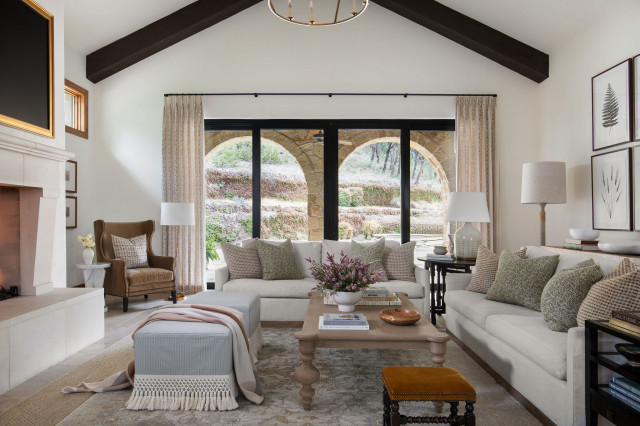
Alison Felstead, owner and interior designer at Naibu Design, says, “When designing a living room, I’d recommend you select the sofa first as it is generally the largest piece of furniture in the room. It needs to be proportionate to the space it’s going into, and very comfortable. I will often choose an easy-to-clean fabric in a neutral color that’s simple to update with cushions.”

Giulianna del Popolo, principal designer at GDP Interior Design, adds, “I’d recommend specifying custom-made upholstery pieces from local makers. Not only does this support local manufacturing, but it’s generally easier to customize pieces to your clients’ needs, you can easily follow the progress of the manufacture, there’s often more flexibility with timing, and you won’t have the hassle — or cost — of relying on overseas shipping.

“If you consider the quality and life span of custom pieces, they are not necessarily more expensive than imported retail pieces. Superior frames and fill types guarantee a long-life product. If you choose a piece with clean lines and comfortable proportions, it can last your clients for years, with the option to update the look and feel with new upholstery or filling down the track.”

Should You Go the Custom Route in Your Projects?


This article was originally published by a
www.houzz.com . Read the Original article here. .


Restructure StudioSave Photo
1. Comfortable Sofa

Alison Felstead, owner and interior designer at Naibu Design, says, “When designing a living room, I’d recommend you select the sofa first as it is generally the largest piece of furniture in the room. It needs to be proportionate to the space it’s going into, and very comfortable. I will often choose an easy-to-clean fabric in a neutral color that’s simple to update with cushions.”

Giulianna del Popolo, principal designer at GDP Interior Design, adds, “I’d recommend specifying custom-made upholstery pieces from local makers. Not only does this support local manufacturing, but it’s generally easier to customize pieces to your clients’ needs, you can easily follow the progress of the manufacture, there’s often more flexibility with timing, and you won’t have the hassle — or cost — of relying on overseas shipping.

“If you consider the quality and life span of custom pieces, they are not necessarily more expensive than imported retail pieces. Superior frames and fill types guarantee a long-life product. If you choose a piece with clean lines and comfortable proportions, it can last your clients for years, with the option to update the look and feel with new upholstery or filling down the track.”

Should You Go the Custom Route in Your Projects?


This article was originally published by a
www.houzz.com . Read the Original article here. .


Restructure StudioSave Photo
1. Comfortable Sofa

Alison Felstead, owner and interior designer at Naibu Design, says, “When designing a living room, I’d recommend you select the sofa first as it is generally the largest piece of furniture in the room. It needs to be proportionate to the space it’s going into, and very comfortable. I will often choose an easy-to-clean fabric in a neutral color that’s simple to update with cushions.”

Giulianna del Popolo, principal designer at GDP Interior Design, adds, “I’d recommend specifying custom-made upholstery pieces from local makers. Not only does this support local manufacturing, but it’s generally easier to customize pieces to your clients’ needs, you can easily follow the progress of the manufacture, there’s often more flexibility with timing, and you won’t have the hassle — or cost — of relying on overseas shipping.

“If you consider the quality and life span of custom pieces, they are not necessarily more expensive than imported retail pieces. Superior frames and fill types guarantee a long-life product. If you choose a piece with clean lines and comfortable proportions, it can last your clients for years, with the option to update the look and feel with new upholstery or filling down the track.”

Should You Go the Custom Route in Your Projects?


This article was originally published by a
www.houzz.com . Read the Original article here. .


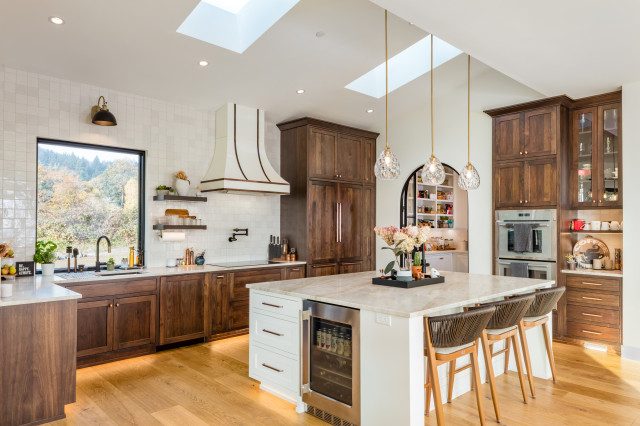
“Everyone wants an island in their kitchen — the bigger the better. It is the most requested kitchen must-have we receive,” says Chad Kahle, president of Kitchen Vision of the Carolinas in Denver, North Carolina. And islands are getting bigger than ever, according to the 2026 U.S. Houzz Kitchen Trends Study. Of the 1,780 homeowners Houzz surveyed about their recent or planned kitchen renovation projects, more than half (52%) were opting for islands longer than 7 feet. That’s up 10 percentage points from 2024.

As kitchen islands increase in size, so do the possibilities for customization. So what should homeowners be including to make the most of this popular kitchen feature? We canvassed kitchen design professionals to find out.


This article was originally published by a www.houzz.com . Read the Original article here. .


Debra Ackerbloom, Inc.Save Photo
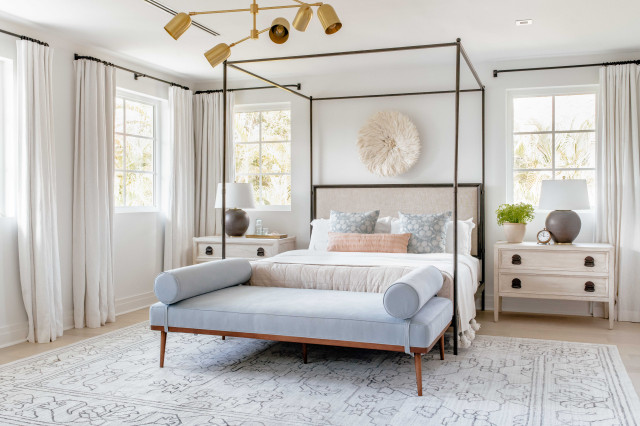
A statement headboard is another way to draw attention. “It serves as a focal point in the bedroom and can significantly impact the overall vibe of the space,” says design-build pro Michael Rezek of Chi Renovation & Design. “Whether it’s through intricate designs, bold colors or unique shapes and patterns, a statement headboard is a feature that can elevate the bedroom’s design, making it more visually stimulating and personalized.”

An upholstered headboard versus a hard, solid material will add function to your room. “I always recommend an upholstered headboard,” says designer Heather Hanley of The Tin Roof. “Not only is it an elegant look and timeless, but it’s functional for those of us that love to read in bed, watch TV or work in bed. I love to lean up against the headboard and spread out a project and work while sitting in bed. It’s cozy and seems somewhat like resting, even if it’s not.”

In this Tampa, Florida, bedroom by Debra Ackerbloom, a scalloped channel-tufted headboard elevates the serene style.


This article was originally published by a
www.houzz.com . Read the Original article here. .


Construction and design professionals are heading into 2026 with a cautiously optimistic perspective, according to the Q1 2026 U.S. Houzz Pro Industry Barometer. Many firms anticipate stable demand and growth opportunities for the year, but ongoing cost pressures, labor constraints and broader economic uncertainties are prompting businesses to adjust strategies to protect margins.

A majority (56%) of firms in the construction sector are expecting a good to very good year, 28% are anticipating stable conditions, and 16% foresee weaker performance than in 2025. In the architectural and design services sector, half (50%) expect a strong year, 35% report a neutral outlook and 15% anticipate declines in business performance.

Construction firms’ expectations are more subdued for the first quarter of 2026 — after a softening in late 2025 — than for the year overall. Architecture and design firms are on a stronger footing in the first quarter of 2026, buoyed by increased business activity in the fourth quarter of 2025.

“Construction and design businesses are heading into 2026 with a measured but resilient outlook,” says Marine Sargsyan, head of economic research at Houzz. “While expectations for the broader national economy remain subdued, and cost and labor pressures persist, many firms anticipate stable demand for their projects. To drive revenue growth in 2026, businesses are adjusting their strategies by raising prices, prioritizing larger and higher-value projects and investing in employee productivity, reflecting broader industry interest around AI-enabled software tools such as Houzz Pro.”


This article was originally published by a www.houzz.com . Read the Original article here. .
Pin It