This article was originally published by a www.houzz.com . Read the Original article here. .
This article was originally published by a www.houzz.com . Read the Original article here. .
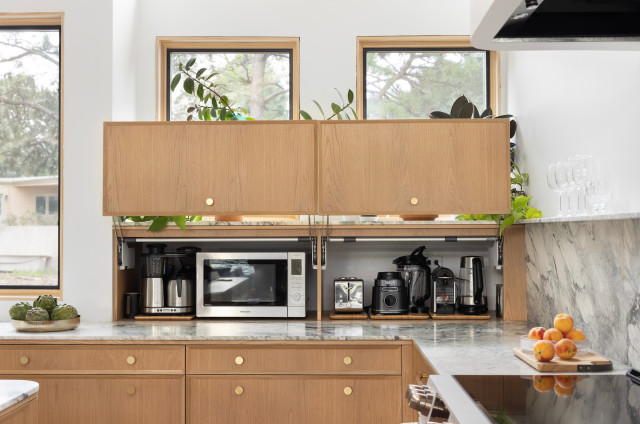
As long as you’re satisfied with your kitchen’s layout and your cabinets are sturdy and in good shape, having your cabinets professionally repainted or restained is a great way to update the look of the entire space. But if you’re not a fan of the cabinet style — for example, if you like Shaker but you currently have slab — paint can only go so far.
Having your cabinets refaced rather than replaced, as was the case in the kitchen pictured here, can help you achieve a new style for a fraction of the cost. Refacing experts remove doors and drawer fronts, add veneer to the boxes and sides of the cabinets and then replace the old doors and fronts with new ones. Hinges and hardware can be updated at the same time.
Refacing usually can’t change a partial-overlay cabinet door — in which the cabinet frame peeks out — into an inset cabinet or full-overlay style. But it might be able to create a more modern, upscale-looking partial overlay, with thinner reveals and sleeker doors.
This article was originally published by a www.houzz.com . Read the Original article here. .
It’s important to remember that potential clients don’t look at just the photos — they’re evaluating the total package. “Everything you put into the world about you and about your work has to be on brand,” Glaister says. “You need to clearly communicate who you are with the images you place on your Houzz profile and the language you use and the tone with which you write about your projects.”
Glaister makes her personality a key part of her brand, which has helped her to attract clients she’ll work well with. “Everything I put on my profile is personal,” she says. “The way that I like to work is woven into the story and shows that I value the family and what we put into the house as a solution. That is just me, and that works for me.”
The team at Bearded Builders follows a similar model, sharing on all its marketing channels the company’s values and what clients can expect during the remodeling process. “We even try to be vulnerable and transparent about the ugly side of remodeling. We want people to get to know us so they know who and what they are getting when they hire us,” Price says. “The brand we have created hopefully reflects our values and company culture, which should attract people who believe in the same things.”
Flavin Architects adds visual treats to its website and Houzz profile, including freehand, artistic design sketches, to reinforce its natural modern brand and to set it apart from other firms. “It’s a handmade quality. It’s approachable for people. It’s becoming a much rarer skill,” Flavin says. “The key is to attract work from clients who have bought into your vision. They naturally are going to allow you to lead the design process.”
For Flavin, attracting the right clients through a strong brand has brought not only a steady stream of leads, but also greater job satisfaction and a more rewarding career. “It sounds so obvious, but we spend so much of a career building a reputation,” he says. “There’s nothing more pleasing than having someone ask for one of your houses. To have that recognition by potential clients.”
This article was originally published by a www.houzz.com . Read the Original article here. .
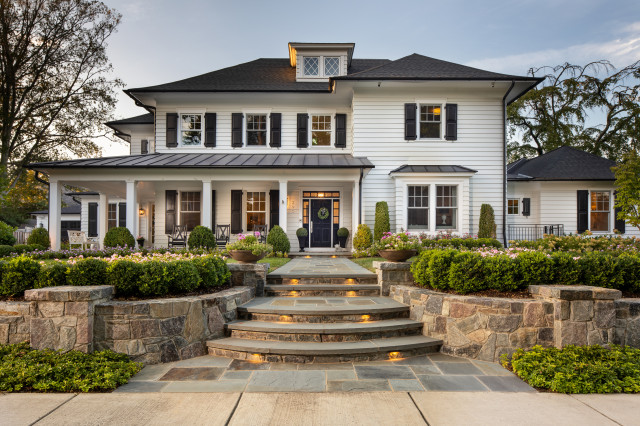
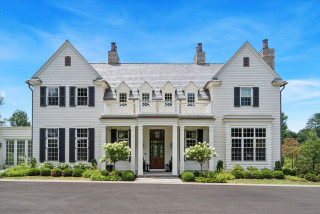
Changing wall surfaces is a bigger project, but the impact can also be big. Nearly 3 in 5 renovating homeowners (58%) upgrade their home’s exterior walls as part of their exterior projects. Natural wood is the leading wall surface material, chosen by 23% of those with an exterior wall surface project, but fiber cement (22%) and stucco (19%) are close behind. Among homeowners choosing natural wood, the format breakdown is: lap siding (53%), vertical siding (49%) and shakes or shingles (24%).
Among homeowners changing their exterior wall colors, neutrals are the top choice, specifically white (23%), gray (19%), beige (10%) and black (8%). But green is right up there with black, at 8%, and some bolder colors make an appearance too, such as blue (4%), red (3%), yellow (3%) and orange (1%).
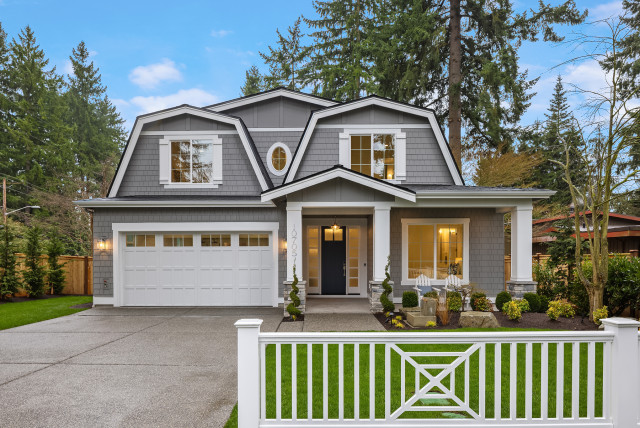
The majority of renovating homeowners (71%) choose a wall color that contrasts with the trim color, as exemplified by this Kirkland, Washington, home by Merit Homes.
10 Surefire Ways to Boost Curb Appeal
This article was originally published by a www.houzz.com . Read the Original article here. .
Changing wall surfaces is a bigger project, but the impact can also be big. Nearly 3 in 5 renovating homeowners (58%) upgrade their home’s exterior walls as part of their exterior projects. Natural wood is the leading wall surface material, chosen by 23% of those with an exterior wall surface project, but fiber cement (22%) and stucco (19%) are close behind. Among homeowners choosing natural wood, the format breakdown is: lap siding (53%), vertical siding (49%) and shakes or shingles (24%).
Among homeowners changing their exterior wall colors, neutrals are the top choice, specifically white (23%), gray (19%), beige (10%) and black (8%). But green is right up there with black, at 8%, and some bolder colors make an appearance too, such as blue (4%), red (3%), yellow (3%) and orange (1%).
The majority of renovating homeowners (71%) choose a wall color that contrasts with the trim color, as exemplified by this Kirkland, Washington, home by Merit Homes.
10 Surefire Ways to Boost Curb Appeal
This article was originally published by a www.houzz.com . Read the Original article here. .
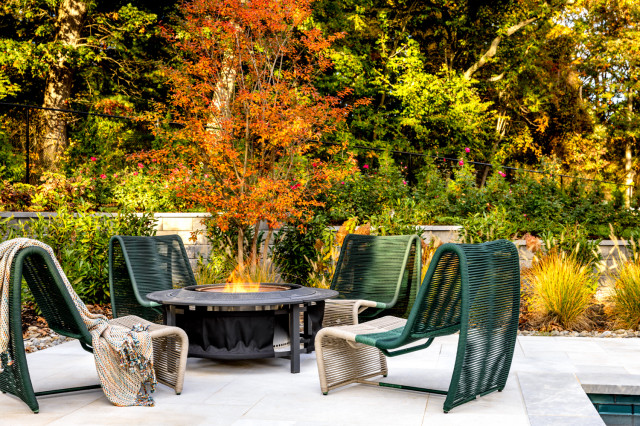
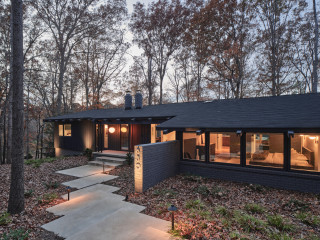
Some of these are fairly simple. Others might take more time and require help from professionals. If you’re looking at building projects, check first with local pros about availability and timelines, especially if cold weather will curtail further progress. You’ll also need to check local regulations and requirements for required permits, as they can vary widely for even small projects.
This article was originally published by a www.houzz.com . Read the Original article here. .
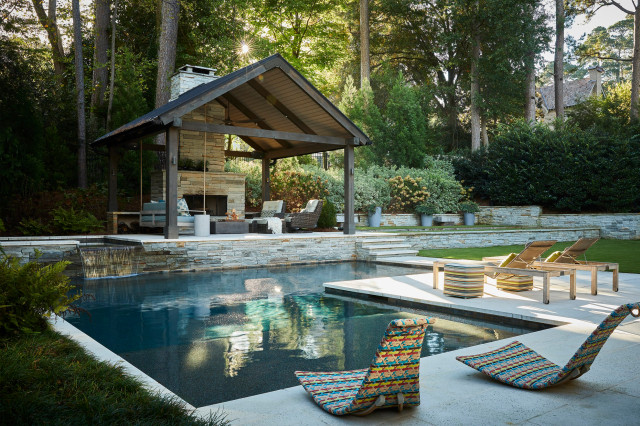
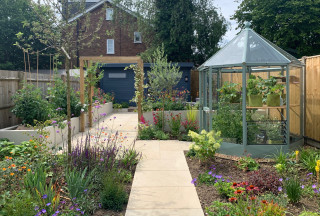
It’s tempting to run upstairs and take a photo of the yard from a top floor window. After all, an aerial shot will show the whole space clearly. However, this isn’t necessarily the best way to showcase your projects. Photographs taken at ground level look more attractive and will give an idea of how it feels to be in the space.
This image, taken by Fine House Photography, provides a potential client with the view they would have if they were walking along the gravel path, with the greenery either side of them. A photo like this can be much more evocative than a wider shot taken from higher up.
To get the best results, it’s a good idea to invest in professional photography. Someone with skill and experience with a camera knows how to achieve images that are framed beautifully.
Find a professional photographer near you
This article was originally published by a www.houzz.com . Read the Original article here. .
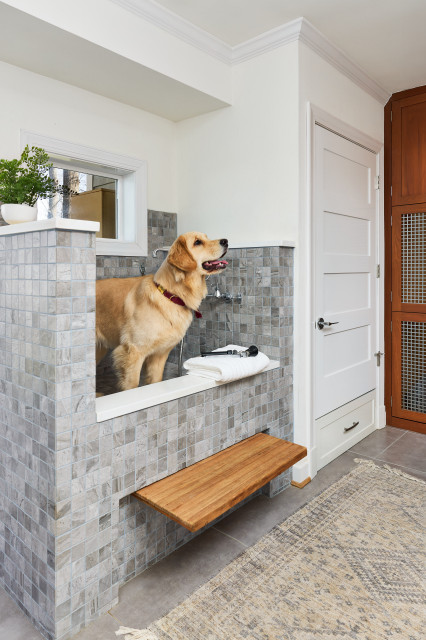
Houzz surveyed more than 1,000 pet owners and found that nearly half (48%) prioritize pets in their decision-making process when upgrading their home. Considerations include pet-friendly products and materials (34%) and choosing design or functionality specific to their pet, such as incorporating space for an animal’s bed or feeding station (22%). More than three-quarters (77%) of those surveyed are in the midst of, are planning or recently completed a home renovation.
Read on for paws-itively enlightening insights revealed in the 2024 U.S. Houzz Pets & the Home Study.
This article was originally published by a www.houzz.com . Read the Original article here. .

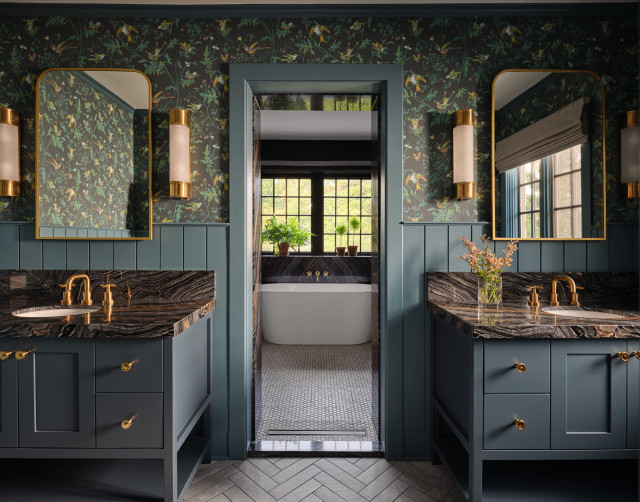
Repainting a neutral bathroom with a bold color is a relatively easy and low-budget way to refresh its style, whether you do it yourself or hire a painter. But for the greatest visual impact, consider having a wall treatment installed, such as paneling, tile, wallpaper or a combination of the three.
Wainscoting, for example, both protects the lower portion of your walls and adds architectural character. Panels are available in a range of styles, including beadboard and raised panel, and many options come in water-resistant materials, making them especially well suited to bathrooms. Tile can also be used for wainscoting, offering a durable, water-resistant finish with endless design options.
The wall area above the wainscoting can be painted or finished with wallpaper for extra pattern and depth. Near a tub or shower, opt for durable vinyl or vinyl-coated wallpaper, make sure the room has good ventilation and keep the paper out of the splash zone.