Tag

PCE

Browsing


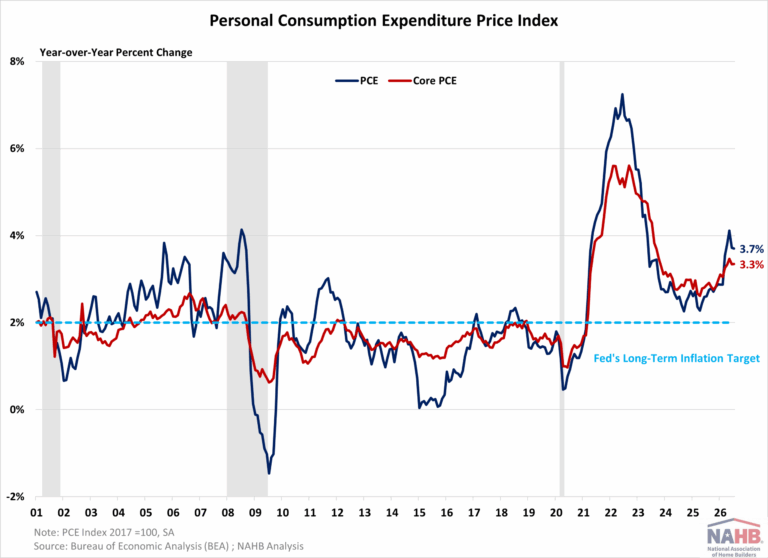
After reaching a three-year high last month, the Federal Reserve’s preferred inflation gauge eased in June following declines in energy prices amid a temporary truce with Iran. This marked the first monthly decline in six years. However, the resumption of conflict and a rebound in oil prices have reignited inflation concerns, suggesting this relief may be reversed in the coming months. This could challenge the Fed’s commitment to its price stability mandate.

The headline Personal Consumption Expenditure (PCE) Price Index increased 3.7% in June from a year ago, following a 4.1% increase in May, according to the Commerce Department’s Bureau of Economic Analysis. That marked the slowest annual pace in three months. The “core” PCE price index, which excludes food and energy, rose 3.3% over the past twelve months, down from 3.4% last month and matching March and April levels.

Despite the elevated inflation, consumer spending remained resilient as larger tax refunds and strong stock market gains provided a cushion for household finances. Consumer spending rose 0.3% in June, and real spending, adjusted to remove inflation, increased 0.4%.

Meanwhile, personal income rose 0.2% in June. This growth was led by increases in compensation, personal income receipts on assets, and government social benefits that were partly offset by a decrease in farm proprietors’ income. Real disposable income—income adjusted for taxes and inflation—was up 0.3% in June. On a year-over-year basis, personal income was 3.9% higher, and real (inflation-adjusted) disposable income was up 0.5%.

With spending growth outpacing income growth, the personal saving rate edged down to 2.7% in June, the lowest level since July 2022, when core CPI was near its peak. The saving rate has declined every month since January 2026. With inflation eroding compensation gains, households are dipping into savings to support spending, especially amid higher energy costs from the Iran war.


This article was originally published by a eyeonhousing.org . Read the Original article here. .
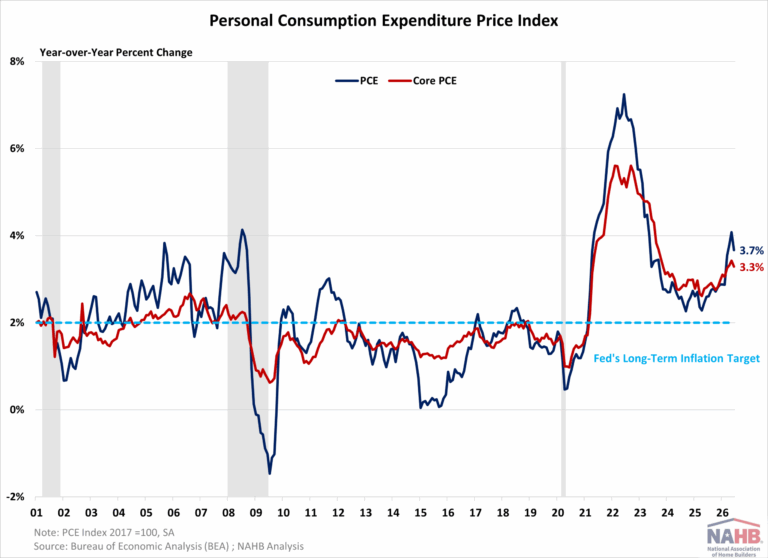

As the Iran conflict pushed up energy prices, the Personal Consumption Expenditures (PCE) Price Index—the Federal Reserve’s preferred inflation gauge—accelerated to a three-year high in May. While oil and gasoline prices have declined in recent weeks as planned Strait of Hormuz reopening reduced the risk of further energy price spikes, inflation may stay elevated in the coming months due to underlying price pressures. This could challenge the Fed’s recommitment to its price stability mandate.

The headline PCE price index increased 4.1% in May from a year ago, following a 3.8% increase in April, according to the Commerce Department’s Bureau of Economic Analysis. That was the highest level since April 2023. The “core” PCE price index, which excludes food and energy, rose 3.4% over the past twelve months, the highest since May 2023.

Despite the elevated inflation, consumer spending remained resilient as larger tax refunds and strong stock market gains provided a cushion for household finances. Consumer spending rose 0.7% in May, and real spending, adjusted to remove inflation, increased 0.3%.

Meanwhile, personal income rose 0.7% in May. Real disposable income— income adjusted for taxes and inflation —was up 0.3% in May, the first increase after three monthly declines. On a year-over-year basis, personal income was 3.8% higher, and real (inflation-adjusted) disposable income remained unchanged, following last month’s largest annual decline since November 2022.

With spending growth outpacing income growth, the personal saving rate held at 3.0% in May, unchanged from last month but matching the lowest level since July 2022, when core CPI was near its peak. With inflation eroding compensation gains, households are dipping into savings to support spending, especially amid higher energy costs following the start of the Iran war.


This article was originally published by a eyeonhousing.org . Read the Original article here. .

Pin It