This article was originally published by a www.houzz.com . Read the Original article here. .
This article was originally published by a www.houzz.com . Read the Original article here. .
Designer: Amy Leferink of Interior Impressions
Location: Minnesota
Size: 360 square feet (33 square meters); 18 by 20 feet
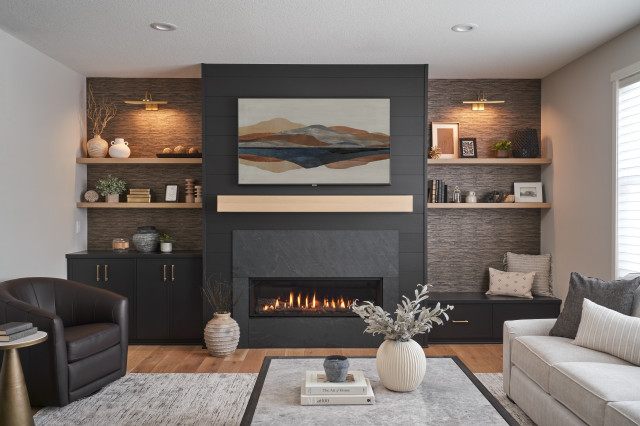
Homeowners’ request. “The homeowners wanted their living room to feel more intentional, cohesive and elevated while still being comfortable for everyday use,” says designer Amy Leferink. “The existing space felt a bit disjointed, with a traditional fireplace that didn’t align with their desired aesthetic, and lacked both visual impact and functional storage. Our goal was to create a strong focal point while adding warmth, texture and purpose. We reimagined the fireplace wall entirely, incorporating built-ins and layered materials to bring both beauty and functionality into the space.”
Built-in details. “The built-ins were designed as an extension of the architecture rather than feeling like added furniture,” Leferink says. “We incorporated custom cabinetry in a rich black painted finish (Caviar by Sherwin-Williams) to anchor the fireplace wall and provide concealed storage. Flanking the fireplace, rift-sawn white oak floating shelves add warmth and contrast, creating a balanced mix of light and dark tones.
“A substantial wood mantel ties the composition together, while the cabinetry and shelving provide both display space and everyday functionality. This approach was chosen over standalone furniture to create a more cohesive, built-in look that feels intentional and tailored to the home. It allows the entire wall to function as a unified design feature rather than a collection of separate pieces.”
Other special features. “The fireplace itself was updated to a sleek linear design, surrounded by a minimal black granite stone for a clean, modern look,” Leferink says. “The entire wall was wrapped in horizontal shiplap and painted in a deep black to create contrast and depth. To soften the darker elements, we introduced a textured grasscloth wallpaper on the adjacent walls, which adds subtle warmth and dimension without competing with the focal point. Throughout the space we layered warm wood tones, soft neutrals and aged brass accents to create a refined yet inviting palette. Updated lighting, including picture lights above the shelving, adds both function and a warm ambient glow.”
Designer tip. “Don’t be afraid to use contrast,” Leferink says. “Pairing darker architectural elements with warm wood tones and soft textures creates depth and balance, helping a space feel both grounded and inviting rather than flat or one-dimensional.”
“Uh-oh” moment. “One of the biggest challenges was balancing the scale of the fireplace wall,” Leferink says. “We knew we wanted it to feel impactful, but there was a moment during the design phase where we questioned if going dark and full height would overwhelm the room. Creating 3D renderings of the space helped us work through that hesitation. Seeing the proportions, materials and contrast come together digitally gave both us and the homeowners confidence to move forward — and ultimately it became the defining feature of the space.”
Leferink uses Houzz Pro software to manage projects. “We utilize features such as the 3D Floor Planner and renderings to help clients visualize their space early in the design process,” she says. “For this project, renderings of the fireplace wall were especially helpful in communicating scale, materiality and overall design intent, allowing the client to feel confident in their decisions before construction began.”
Wall paint: Drift of Mist, Sherwin-Williams
See why you should hire a professional who uses Houzz Pro software
This article was originally published by a www.houzz.com . Read the Original article here. .

The kitchen, casual eat-in area and family room are all open to one another. One major change was replacing three windows on the right with glass doors that lead to an existing screened-in porch. Having a casual eat-in area where the whole family can enjoy meals together was important to the homeowners.
Across the room, the color palette for the great room began with these drapes. “They were the jumping-off point for everything,” Kandrac says. “It’s kind of a chinoiserie pattern with lots of greens, and it also has camel tones that play off the stone fireplace and the floors.”
Because the three spaces form one open great room, the designers carefully considered how the light fixtures would work together. The family room’s vaulted ceiling required a large-scale chandelier, so they chose a two-tiered fixture that would not block the TV. For the dining area, they chose a 47-inch chandelier that’s proportionate to the 60-inch-diameter table below. The two chandeliers differ in style, but their black-and-gold finishes tie them together.
This article was originally published by a www.houzz.com . Read the Original article here. .

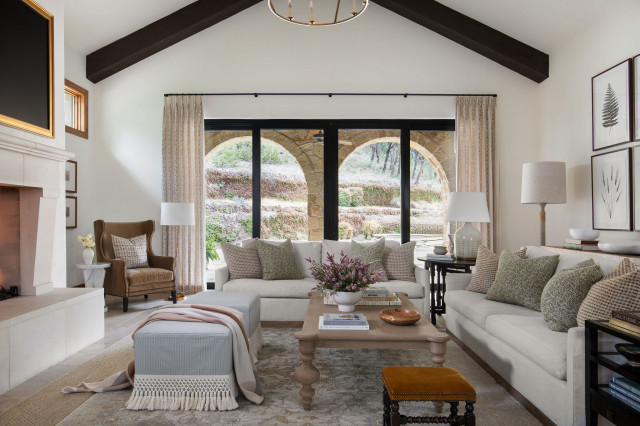
Alison Felstead, owner and interior designer at Naibu Design, says, “When designing a living room, I’d recommend you select the sofa first as it is generally the largest piece of furniture in the room. It needs to be proportionate to the space it’s going into, and very comfortable. I will often choose an easy-to-clean fabric in a neutral color that’s simple to update with cushions.”
Giulianna del Popolo, principal designer at GDP Interior Design, adds, “I’d recommend specifying custom-made upholstery pieces from local makers. Not only does this support local manufacturing, but it’s generally easier to customize pieces to your clients’ needs, you can easily follow the progress of the manufacture, there’s often more flexibility with timing, and you won’t have the hassle — or cost — of relying on overseas shipping.
“If you consider the quality and life span of custom pieces, they are not necessarily more expensive than imported retail pieces. Superior frames and fill types guarantee a long-life product. If you choose a piece with clean lines and comfortable proportions, it can last your clients for years, with the option to update the look and feel with new upholstery or filling down the track.”
Find an interior designer on Houzz
This article was originally published by a www.houzz.com . Read the Original article here. .

Alison Felstead, owner and interior designer at Naibu Design, says, “When designing a living room, I’d recommend you select the sofa first as it is generally the largest piece of furniture in the room. It needs to be proportionate to the space it’s going into, and very comfortable. I will often choose an easy-to-clean fabric in a neutral color that’s simple to update with cushions.”
Giulianna del Popolo, principal designer at GDP Interior Design, adds, “I’d recommend specifying custom-made upholstery pieces from local makers. Not only does this support local manufacturing, but it’s generally easier to customize pieces to your clients’ needs, you can easily follow the progress of the manufacture, there’s often more flexibility with timing, and you won’t have the hassle — or cost — of relying on overseas shipping.
“If you consider the quality and life span of custom pieces, they are not necessarily more expensive than imported retail pieces. Superior frames and fill types guarantee a long-life product. If you choose a piece with clean lines and comfortable proportions, it can last your clients for years, with the option to update the look and feel with new upholstery or filling down the track.”
Should You Go the Custom Route in Your Projects?
This article was originally published by a www.houzz.com . Read the Original article here. .
Alison Felstead, owner and interior designer at Naibu Design, says, “When designing a living room, I’d recommend you select the sofa first as it is generally the largest piece of furniture in the room. It needs to be proportionate to the space it’s going into, and very comfortable. I will often choose an easy-to-clean fabric in a neutral color that’s simple to update with cushions.”
Giulianna del Popolo, principal designer at GDP Interior Design, adds, “I’d recommend specifying custom-made upholstery pieces from local makers. Not only does this support local manufacturing, but it’s generally easier to customize pieces to your clients’ needs, you can easily follow the progress of the manufacture, there’s often more flexibility with timing, and you won’t have the hassle — or cost — of relying on overseas shipping.
“If you consider the quality and life span of custom pieces, they are not necessarily more expensive than imported retail pieces. Superior frames and fill types guarantee a long-life product. If you choose a piece with clean lines and comfortable proportions, it can last your clients for years, with the option to update the look and feel with new upholstery or filling down the track.”
Should You Go the Custom Route in Your Projects?
This article was originally published by a www.houzz.com . Read the Original article here. .

Alison Felstead, owner and interior designer at Naibu Design, says, “When designing a living room, I’d recommend you select the sofa first as it is generally the largest piece of furniture in the room. It needs to be proportionate to the space it’s going into, and very comfortable. I will often choose an easy-to-clean fabric in a neutral color that’s simple to update with cushions.”
Giulianna del Popolo, principal designer at GDP Interior Design, adds, “I’d recommend specifying custom-made upholstery pieces from local makers. Not only does this support local manufacturing, but it’s generally easier to customize pieces to your clients’ needs, you can easily follow the progress of the manufacture, there’s often more flexibility with timing, and you won’t have the hassle — or cost — of relying on overseas shipping.
“If you consider the quality and life span of custom pieces, they are not necessarily more expensive than imported retail pieces. Superior frames and fill types guarantee a long-life product. If you choose a piece with clean lines and comfortable proportions, it can last your clients for years, with the option to update the look and feel with new upholstery or filling down the track.”
Should You Go the Custom Route in Your Projects?
This article was originally published by a www.houzz.com . Read the Original article here. .

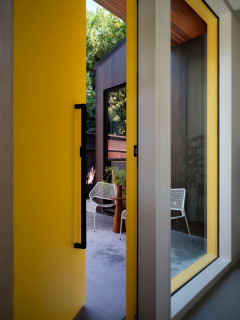
Constraints such as the locations of the main house and garage on the property, along with setback requirements, helped shape the design. The homeowner also had two must-haves: a separate bedroom and privacy between the main house and the ADU. After exploring numerous layout options, she ultimately chose a one-level ADU tucked into a corner behind the garage. The finished space supports both her current lifestyle and possible future plans. In fact, once construction was complete, she liked the ADU so much that she told the designers she planned to move into it herself.
This article was originally published by a www.houzz.com . Read the Original article here. .
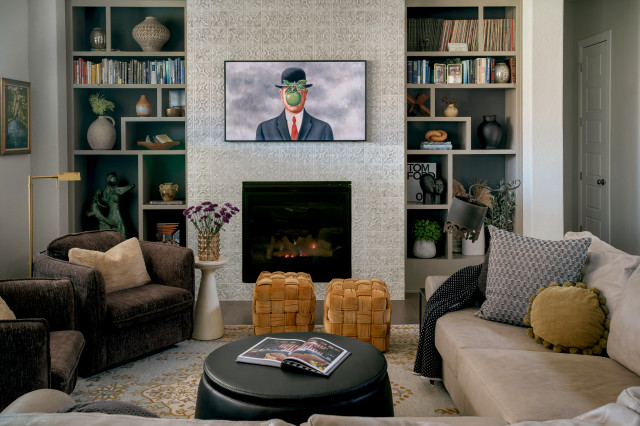
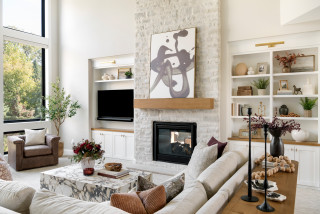
Homeowners’ request. “This was a special request from the clients — they wanted this room to evoke a subtle ‘Mad Men’ vibe,” says designer Janiece Lonvelin. “Not in a literal sense but in a way that felt a bit nostalgic, dramatic, fun and intentional. This room serves as a hangout space for the family, designed primarily for adults, especially with the bar located across the room.”
Special features. “We immediately fell in love with the walnut wall paneling and made it a priority to preserve and thoughtfully incorporate it into the new design,” Lonvelin says. “The existing beams were also kept to maintain character. To ground the space, we selected large-scale floor tile and layered in furnishings that play off one another, ultimately creating a room that feels moody, sexy and full of personality.
“We selected a striking art piece that felt contemporary yet carried a subtle retro influence. The olive sofa was an intentional choice, bringing in color, creating depth and standing out beautifully against the dark wood panelling. We layered in a rich mix of textures through the rug, bouclé chair and leather accent chairs to set the tone for the space. Thoughtful pops of color, along with glass and varied wood tones in the decor, helped tie everything together.”
Designer tip. “When working with dark walls, add contrast and texture in the pieces you bring in to prevent the space from feeling flat,” Lonvelin says. “Mix in different shapes like curved furniture or decor, especially if your room has a lot of squared-off corners. This creates balance, depth and visual interest throughout the space.”
“Uh-oh” moment. “The initial challenge was during the design process and getting the clients on board with the amount of color and texture in the space,” Lonvelin says. “While it wasn’t a lot overall, when you’re working primarily with neutrals, a large olive sofa becomes a significant pop of color. To help, we used 3D renders to showcase the completed look, showing how all colors worked together. This gave them a full sense of the space and helped ease their concerns.”
Wall paint: Swiss Coffee, Benjamin Moore
This article was originally published by a www.houzz.com . Read the Original article here. .
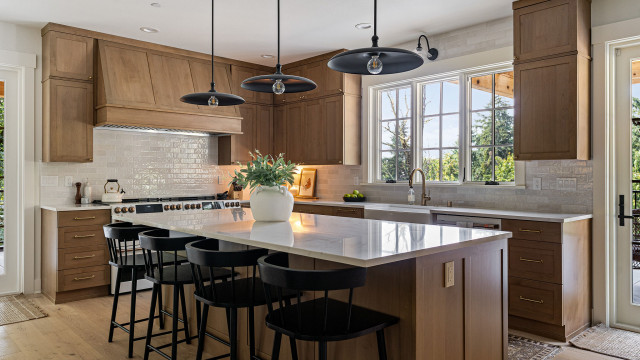
These Washington state homeowners — a couple with a baby and a toddler — hired architect Heidi Helgeson to create a family home closely connected to its wooded setting. Built into a hillside and surrounded by mature trees, the custom transitional house is designed to capture light and views at every turn. That approach shines in this open, welcoming kitchen, where soft neutral tones and natural light create an easygoing feel. A statement island with a continuous polished quartz top delivers ample prep space, seating, storage and a handy landing zone for groceries. Custom white oak Shaker-style cabinetry and European oak flooring create a warm foundation. Matte white appliances, a modern farmhouse sink and layered mixed-metal accents add polish without fuss.
Kitchen at a Glance
Who lives here: A couple with a baby and a toddler
Location: Bellevue, Washington
Size: 205 square feet (19 square meters)
Designer: Heidi Helgeson of H2D Architecture + Design
Nature and warm wood tones take center stage in the open kitchen. A generously sized island with seating and storage anchors the layout and keeps traffic flowing smoothly. “They were planning on doing quite a bit of entertaining and wanted a nice, big island,” Helgeson says.
Custom Shaker-style white oak cabinetry wraps the perimeter and the base of the island, finished in a natural stain and paired with knobs and pulls in a warm champagne tone. “We like to use white oak in homes because it’s a clean look and has a warm feeling without looking too orange,” Helgeson says. “It’s also a light wood with a rich grain to it. This area has lots of trees, and we wanted to try and do light and airy finishes in the space because of the shade from the trees.”
Polished quartz with a soft pearl undertone, hints of warm sand and an ivory marble pattern tops the island and perimeter counters. An engineered European oak floor in a light, wire-brushed finish adds another calming neutral. “We wanted to use actual wood for the floors,” Helgeson says. “But engineered wood gives them a sturdier finish because they have a dog. The light color was also a factor. The floor is a medium shade lighter than the cabinetry.”
Find a kitchen designer on Houzz
A large custom cabinetry hood houses a 40-inch liner with LED lighting and a powerful blower to keep smoke and odors in check. “We just wanted the hood to tie seamlessly into the cabinetry,” Helgeson says.
On an adjoining wall, a 33-inch white fireclay farmhouse sink offers a spacious single bowl for large pots, pans and dishes. Its single-handle pull-down faucet in champagne bronze features a magnetic docking system. “They wanted the island to be a big work surface, so the location of the sink was situated so they can look out the window and keep an eye on the kids outside,” Helgeson says. A 24-inch matte white dishwasher with brushed bronze hardware coordinates with the range. A paneled pullout trash and recycling center sits to its left.
Faucet: Trinsic in Champagne Bronze, Delta
See why you should hire a professional who uses Houzz Pro software
Durable fiberglass casement windows let in fresh air and frame close-up views of the surrounding nature. “The property is quite large and fully wooded on a hill,” Helgeson says. “There’s also a wetland, a stream and steep slope on the property.” LED ceiling lights on dimmers provide general illumination while undercabinet LEDs brighten task areas.
Backsplash: Cloe, Bedrosians Tile and Stone
10 Kitchen Projects That Deliver Big Results
Pendant lights: Agnes, Schoolhouse
25 Kitchen Storage Features Pros Swear By
A built-in microwave that matches the dishwasher and range sits in the island, alongside numerous drawers for easy access to kitchen essentials. A pocket door at the back left opens to a butler’s pantry with extra workspace and storage. “It’s almost like a hidden pantry because it’s tucked there behind the door,” Helgeson says.
New to home remodeling? Learn the basics
Wall paint: Pearly White, Sherwin-Williams
More on Houzz
Read more stories
Browse photos for ideas
Find home professionals
This article was originally published by a www.houzz.com . Read the Original article here. .
Fileppi suggests furniture that’s too large can lead to the room feeling cramped. “Conversely, furniture that’s too small for the scale of a larger room can make it feel cavernous and lack a sense of comfort, leading to it being underused,” she says.
Solution: Work with your designer to find a furniture arrangement that’s carefully scaled for the space. If your room is on the smaller size, consider different formations. Would it be better to have one or two armchairs instead of an L-shaped sofa, and a footstool that doubles up as a coffee table?
Shepherd prefers using side tables rather than a single coffee table in some spaces. “They don’t disrupt the floor space, rumple rugs or create vacuuming obstacles,” she says. “We love a solid, circular side table that can be moved around at whim, and even perched on should you need to.”
Fileppi and Arefi use the Houzz Pro Selection Boards tool to make it easier for their clients to choose the right furniture mix. “It’s an interactive tool that provides product images, descriptions and prices,” she says. “It allows clients to ask questions about products and to choose between items. It’s linked to the invoices so they can also receive images of items in the invoices, which clients have loved.”
See why you should hire a professional who uses Houzz Pro software