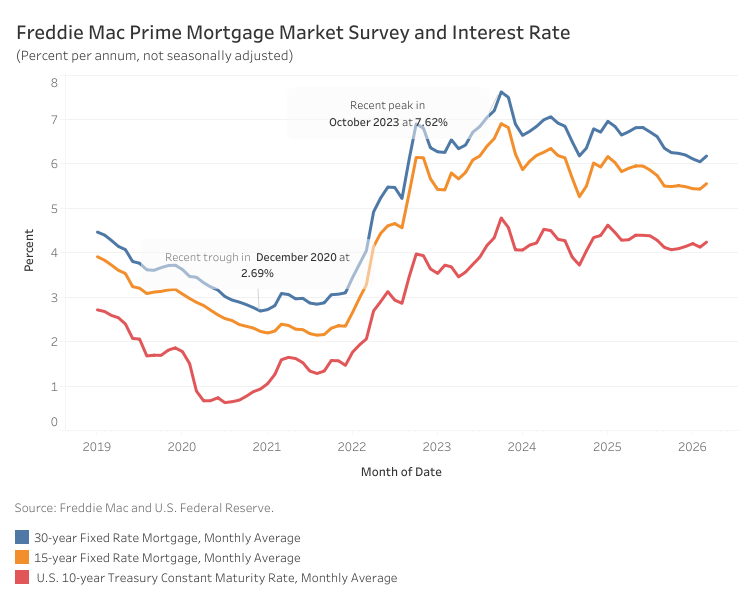
Re-escalation of the conflict in Iran pushed mortgage rates higher in July. According to Freddie Mac, the 30-year fixed-rate mortgage averaged 6.54% in July, up 5 basis points (bps) over June. Since the conflict in the Middle East began, the 30-year mortgage rate has climbed by almost 50 bps. The average 15-year rate averaged 5.91% in July, up 9 bps from June, and up 48 basis points since the end of February. Compared to a year ago, the 30-year rate remains lower by 18 bps, however, the 15-year rate is now higher by 5 bps.
The 10-year Treasury yield, a key benchmark for long-term borrowing, rose 10 bps to an average of 4.58% in July as renewed attacks in the Strait of Hormuz heightened concerns about energy supplies and inflation. The yield rose sharply, ending July at 4.67%, 23 bps above its June closing level.
With the conflict unresolved and global oil supply still constraint, inflation remained a key concern among policymakers. At its July meeting, the Federal Reserve (Fed) held the federal funds rate within its target range of 3.50% to 3.75%. However, three Fed officials dissented in favor of a quarter-point rate increase to curtail inflation. The July monetary policy hold marked the fifth consecutive hold, following 75 basis points of cuts at the end of 2025.
This article was originally published by a eyeonhousing.org . Read the Original article here. .