Tag

Inflation

Browsing


Inflation accelerated to a new three-year high in May, driven by continued increases in energy costs from the Iran war. Energy costs drove more than 60% of the monthly increase, with national gasoline prices jumping more than a dollar since the war began. Energy costs are straining household budgets and eroding purchasing power; inflation has now outpaced wage growth for the second straight month. As the ceasefire remains tenuous, energy prices are expected to remain elevated for months, continuing to put upward pressure on inflation and further complicating the Fed’s path toward its 2% target, especially given the recent strong job report.

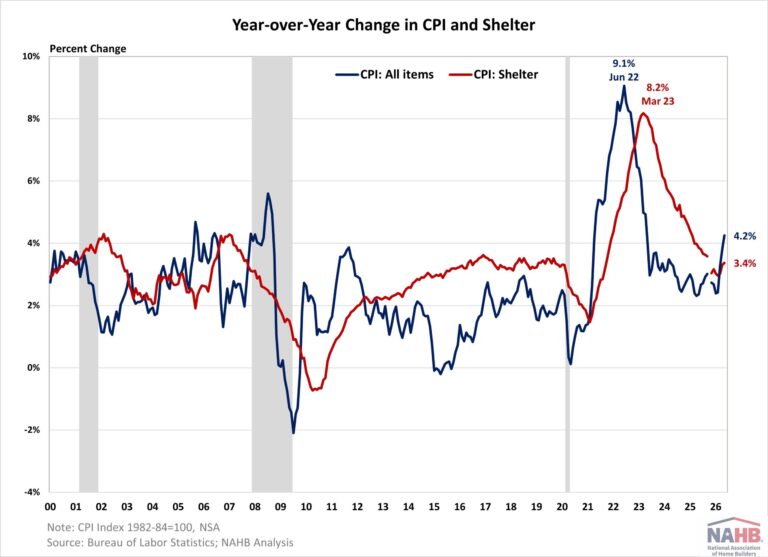
On a non-seasonally adjusted basis, the Consumer Price Index (CPI) rose by 4.2% in May from a year ago, following a 3.8% increase last month, according to the BLS latest report. This was the largest annual increase since April 2023.

The “core” CPI, excluding the volatile food and energy components, increased by 2.9% over the past twelve months, following a 2.8% increase in April. The housing shelter index, which makes up a large portion of “core” CPI, rose 3.4% over the year, following a 3.3% increase last month. Meanwhile, the component index for food rose by 3.1%, and the energy component index increased by 23.5%, the largest annual increase since September 2022.

On a monthly basis, the CPI rose by 0.5% in May (seasonally adjusted), and the “core” CPI increased by 0.2%.

The price index for a broad set of energy sources rose by 3.9% in May, with increases in gasoline (+7.0%), fuel oil (+3.8%), and electricity (+0.6%), with a minor decline in natural gas (-0.5%). Meanwhile, the food at home index rose by 0.1%, while the food away from home index increased by 0.3% in May.

Outside of energy, other top contributors that rose in May included indexes for communication (+1.3%), airline fares (+2.7%), personal care (+1.0%) and recreation (+0.3%). Meanwhile, the index for motor vehicle insurance (-1.7%), household furnishings and operations (-0.6%), and new vehicle (-0.3%) were among the few major indexes that decreased over the month.

The index for shelter, which makes up more than 40% of the “core” CPI, rose by 0.3% in May. The index for owners’ equivalent rent (OER) rose by 0.3%, while the index for rent of primary residence (RPR) increased by 0.4% over the month. NAHB constructs a “real” rent index to indicate whether inflation in rents is faster or slower than core inflation. It provides insight into the supply and demand conditions for rental housing. When inflation in rents is rising faster than core inflation, the real rent index rises and vice versa. The real rent index is calculated by dividing the price index for rent by the core CPI (to exclude the volatile food and energy components). In May, the Real Rent Index rose by 0.2%.


This article was originally published by a eyeonhousing.org . Read the Original article here. .

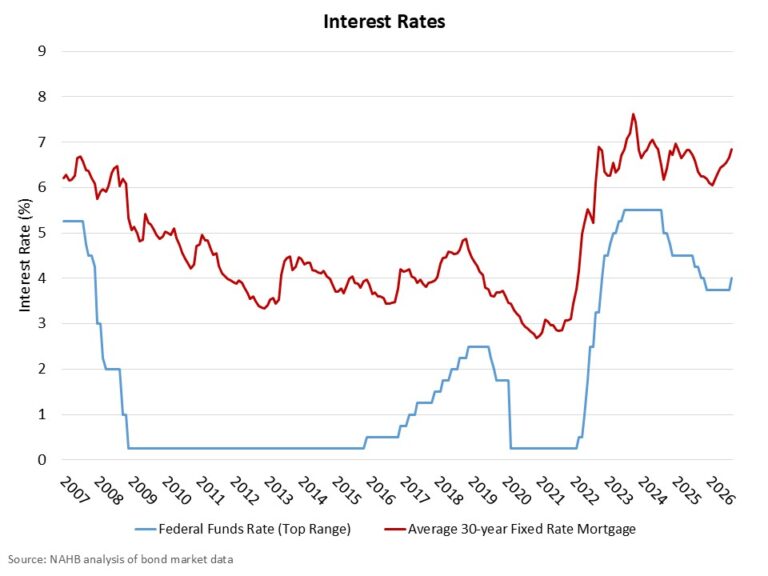
Mortgage rates continued to increase in May as inflation accelerated. According to Freddie Mac, the 30-year fixed-rate mortgage averaged 6.41% in May, up 7 basis points (bps) over April. Since the conflict in the Middle East began, the 30-year mortgage rate has increased by 36 basis points. The average 15-year rate averaged 5.76% in May, up 7 bps from April, and up 33 basis points since the end of February. Even so, both rates remain lower than a year ago by 41 bps and 19 bps, respectively.

The 10-year Treasury yield, a key benchmark for long-term borrowing, averaged 4.47% in May, 16 bps higher than the previous month. Stronger-than-expected inflation pushed yields upward, with the 10-year yield reaching as high as 4.6% during the month. Rising energy prices kept inflation high, as fuel oil prices increased 5.8% and gasoline prices rose 5.4%.

Persistently high inflation has also strained household budgets. As people used more of their disposable income or drew down on savings to cover everyday expenses, the personal saving rate fell to 2.6% in April. The rate was the lowest since June 2022 when CPI was at its peak.


This article was originally published by a eyeonhousing.org . Read the Original article here. .


Inflation accelerated to a nearly three-year high in April, driven by continued increases in energy costs from the Iran war. Energy costs drove more than 40% of the monthly increase, with national gasoline prices soaring above $4.50 in early May for the first time since July 2022. With energy costs straining household budgets and eroding purchasing power, this marks the first time inflation has outpaced wage growth since May 2023. As the ceasefire remains tenuous, energy prices are expected to remain elevated for months, continuing to put upward pressure on inflation and complicating the Fed’s path toward its 2% target.

Meanwhile, shelter inflation in April is likely elevated due to a statistical quirk from last October government shutdown. After missing normal collection in October, the Bureau of Labor Statistics (BLS) used a six-month panel carry-forward imputation method to calculate shelter inflation, resulting in lower readings from November through March. Shelter inflation should normalize in the coming months as the BLS has resumed regular collection.

On a non-seasonally adjusted basis, the Consumer Price Index (CPI) rose by 3.8% in April from a year ago, following a 3.3% increase last month, according to the BLS latest report. This was the largest annual increase since May 2023.

The “core” CPI, excluding the volatile food and energy components, increased by 2.8% over the past twelve months, following a 2.6% increase in March. The housing shelter index, which makes up a large portion of “core” CPI, rose 3.3% over the year, following a 3.0% increase last month. Meanwhile, the component index of food rose by 3.2%, and the energy component index increased by 17.9%, the largest annual increase since September 2022.

On a monthly basis, the CPI rose by 0.6% in April (seasonally adjusted), and the “core” CPI increased by 0.4%.

The price index for a broad set of energy sources rose by 3.8% in April, with increases in fuel oil (+5.8%), gasoline (+5.4%), and electricity (+2.1%), with a minor decline in natural gas (-0.1%). Meanwhile, the food at home index rose by 0.7%, while the food away from home index increased by 0.2% in April.

Outside of energy, other top contributors that rose in April included indexes for household furnishings and operations (+0.7%), airline fares (+2.8%), personal care (+0.7%), apparel (+0.6%), and education (+0.2%). Meanwhile, the index for new vehicles (-0.2%), communication (-0.2%) and medical care (-0.1%) were among the few major indexes that decreased over the month.

The index for shelter, which makes up more than 40% of the “core” CPI, rose by 0.6% in April. The index for owners’ equivalent rent (OER) rose by 0.5%, while the index for rent of primary residence (RPR) increased by 0.5% over the month.

NAHB constructs a “real” rent index to indicate whether inflation in rents is faster or slower than core inflation. It provides insight into the supply and demand conditions for rental housing. When inflation in rents is rising faster than core inflation, the real rent index rises and vice versa. The real rent index is calculated by dividing the price index for rent by the core CPI (to exclude the volatile food and energy components). In April, the Real Rent Index rose by 0.2%.


This article was originally published by a eyeonhousing.org . Read the Original article here. .


Mortgage rates continued to increase in April as ceasefire negotiations remain inconclusive. According to Freddie Mac, the 30-year fixed-rate mortgage averaged 6.34% in April, 16 basis points (bps) higher than March. The average 15-year rate also increased by 13 bps to 5.69%. Despite the recent increase, both rates remain lower than a year ago by 39 bps and 21 bps, respectively.

The 10-year Treasury yield, a key benchmark for long-term borrowing, averaged 4.31%, up 7 bps from the previous month. Ongoing blockades in the Strait of Hormuz have kept oil prices above $100 per barrel. This has passed through to inflation which climbed to 3.3%, nearing a two-year high. Energy components led the increase with fuel oil prices rising 30.7% and gasoline up 21.2% in March.

At its latest meeting, the Federal Reserve held the federal funds rates unchanged at 3.5% to 3.75% as inflation remains elevated alongside continued economic expansion. Jerome Powell’s term as Chair will end next month but has announced that he will remain on the Board of Governors. Kevin Warsh, President Trump’s pick as the next Fed Chair, indicated during a Senate Banking Committee hearing a preference for alternative inflation measures, including “trimmed averages”, which removes outliers above and below a certain threshold. For example, by stripping out outsized swings like a 50.8% annualized drop in telecom equipment and a 384.6% jump in moving and freight services, the Dallas Fed’s trimmed-mean measure last February registered 2.3%, below the 2.8% headline PCE and 3.0% core PCE.


This article was originally published by a eyeonhousing.org . Read the Original article here. .


Consumer prices surged to a nearly two-year high in March, driven by a spike in energy costs following the onset of the Iran war. This is the first CPI report to reflect the impact of the war, with inflation rising nearly a full percentage point from February. National gasoline average prices in March soared above $4 for the first time since August 2022, accounting for nearly three-quarters of the monthly gain in inflation and marking the largest monthly increase in the gasoline index since government began tracking in 1967. As the ceasefire remains tenuous, energy prices are expected to remain elevated for months, continuing to put upward pressure on inflation and complicating the Fed’s path toward its 2% target.

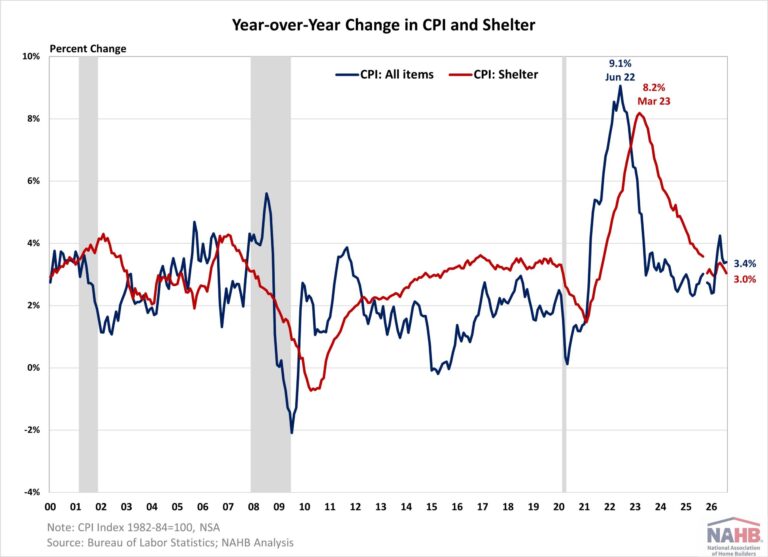
On a non-seasonally adjusted basis, the Consumer Price Index (CPI) rose by 3.3% in March from a year ago, following a 2.4% increase last month, according to the Bureau of Labor Statistics (BLS) latest report. This was the largest annual increase since May 2024. The “core” CPI, excluding the volatile food and energy components, increased by 2.6% over the past twelve months, following a 2.5% increase in February. The housing shelter index, which makes up a large portion of “core” CPI, rose 3.0% over the year, holding steady over the last two months. Meanwhile, the component index of food rose by 2.7%, and the energy component index increased by 12.5%, the largest annual increase since November 2022.

On a monthly basis, the CPI rose by 0.9% in March (seasonally adjusted), and the “core” CPI increased by 0.2%.

The price index for a broad set of energy sources rose by 10.9% in March, the largest monthly increase since September 2005, with increases in fuel oil (+30.7%), gasoline (+21.2%), and electricity (+0.8%), partially offset by a decline in natural gas (-0.9%). Fuel oil posted its largest monthly increase since February 2000. Meanwhile, the food at home index fell by 0.2%, while the food away from home index increased by 0.2% in March.

Outside of energy, the index for shelter was the largest contributor to the overall monthly increase in the all items index. Other top contributors that rose in March included indexes for airline fares (+2.7%), apparel (+1.0%), household furnishings and operations (+0.2%), education (+0.3%), and new vehicles (+0.1%). Meanwhile, the index for medical care (-0.2%), personal care (-0.5%) and used cars and trucks (-0.4%) were among the few major indexes that decreased over the month.

The index for shelter, which makes up more than 40% of the “core” CPI, rose by 0.3% in March. The index for owners’ equivalent rent (OER) rose by 0.3%, while the index for rent of primary residence (RPR) increased by 0.2% over the month.

NAHB constructs a “real” rent index to indicate whether inflation in rents is faster or slower than core inflation. It provides insight into the supply and demand conditions for rental housing. When inflation in rents is rising faster than core inflation, the real rent index rises and vice versa. The real rent index is calculated by dividing the price index for rent by the core CPI (to exclude the volatile food and energy components). In March, the Real Rent Index remained unchanged.


This article was originally published by a eyeonhousing.org . Read the Original article here. .
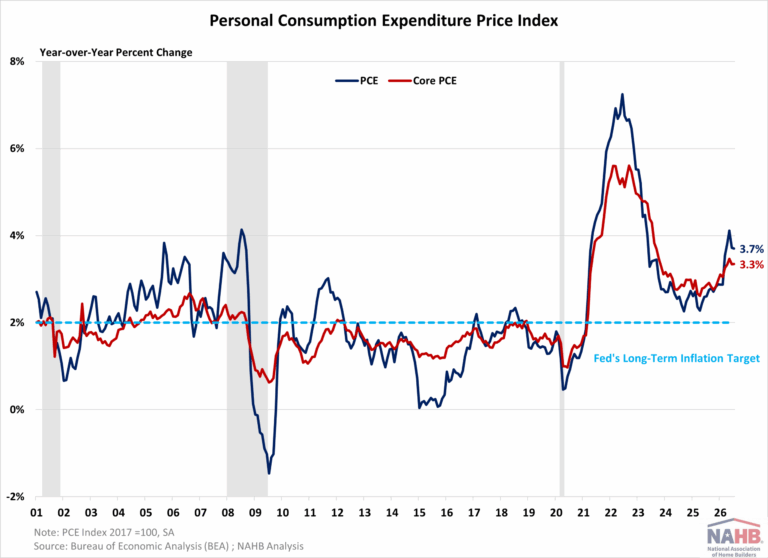

After months of downward trend, inflation held steady at an eight-month low in February. This report does not reflect the recent surge in oil prices due to Iran conflict beginning February 28. Higher oil prices will likely translate into higher gasoline costs and impact other sectors associated with transportation including airline tickets. This renewed inflation concern would complicate Fed policy especially given the recent weaker-than-expected job report. Additionally, lingering effects from government shutdown will continue to suppress the shelter index through April.

On a non-seasonally adjusted basis, the Consumer Price Index (CPI) rose by 2.4% in February from a year ago, unchanged from January and matching the lowest level since May 2025, according to the Bureau of Labor Statistics (BLS) latest report. The “core” CPI, excluding the volatile food and energy components, increased by 2.5% over the past twelve months, also unchanged from January. The housing shelter index, which makes up a large portion of “core” CPI, rose 3.0% over the year, holding steady from last month. Meanwhile, the component index of food rose by 3.1%, and the energy component index increased by 0.5%.

On a monthly basis, the CPI rose by 0.3% in February (seasonally adjusted), and the “core” CPI increased by 0.2%.

The price index for a broad set of energy sources rose by 0.6% in February, with the decline in electricity (-0.7%) offset by increases in gasoline (+0.8%), natural gas (+3.1%) and fuel oil (+11.1%). Meanwhile, the food at home index rose by 0.4%, while the food away from home index increased by 0.3% in February.

The index for shelter continued to be the largest contributor to the overall monthly increase in all items index. Other top contributors that rose in February included indexes for medical care (+0.5%), apparel (+1.3%), household furnishings and operations (+0.3%), airline fares (+1.4%), and education (+0.2%). Meanwhile, the index for communication (-0.5%), used cars and trucks (-0.4%), motor vehicle insurance (-0.3%) and personal care (-0.2%) were among the few major indexes that decreased over the month.

The index for shelter, which makes up more than 40% of the “core” CPI, rose by 0.2% in February. The index for owners’ equivalent rent (OER) rose by 0.2% while and the index for rent of primary residence (RPR) increased by 0.1% over the month. NAHB constructs a “real” rent index to indicate whether inflation in rents is faster or slower than core inflation. It provides insight into the supply and demand conditions for rental housing. When inflation in rents is rising faster than core inflation, the real rent index rises and vice versa. The real rent index is calculated by dividing the price index for rent by the core CPI (to exclude the volatile food and energy components). In February, the Real Rent Index fell by 0.1%, the first monthly decline after remaining virtually flat since August 2025, except for data quality issues in October and November.


This article was originally published by a eyeonhousing.org . Read the Original article here. .
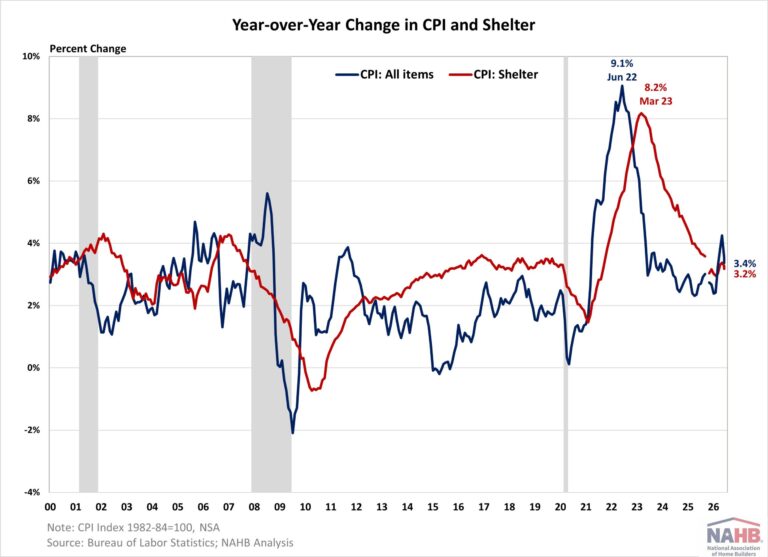

Inflation eased to an eight-month low in January, confirming a continued downward trend. Though most Consumer Price Index (CPI) components have resolved shutdown-related distortions from last fall, the shelter index will remain affected through April due to the imputation method used for housing costs. The shelter index is likely to show larger increases in the coming months.

While headline inflation moderated, underlying cost pressures from trade policy persist. In 2025, the average U.S. tariff rate rose from 2.6% to 13%. A recent New York Fed study found that 94% of tariff costs were passed through to U.S. companies and consumers during the first eight months of 2025. Households still face elevated costs for consumer goods even as the pace of price growth slows.

On a non-seasonally adjusted basis, the Consumer Price Index (CPI) rose by 2.4% in January compared to the year prior, according to the Bureau of Labor Statistics (BLS) latest report. That was the lowest level since May 2025. Excluding the volatile food and energy components, the “core” CPI increased by 2.5% over the past twelve months. A large portion of the “core” CPI is the housing shelter index, which increased 3.0% over the year. Meanwhile, the component index of food rose by 2.9%, and the energy component index fell by 0.1%.

On a monthly basis, the CPI rose by 0.2% in January (seasonally adjusted), and the “core” CPI increased by 0.3%.

The price index for a broad set of energy sources fell by 1.5% in January, with the increase in natural gas (+1.0%) offset by decreases in fuel oil (-5.7%), gasoline (-3.2%) and electricity (-0.1%). Meanwhile, the food at home index rose by 0.2%, while the food away from home index increased by 0.1% in January.

The index for shelter continued to be the largest contributor to the overall monthly increase in all items index. Other top contributors that rose in January included indexes for airline fares (+6.5%), personal care (+1.2%), recreation (+0.5%), medical care (+0.3%), and communication (+0.5%). Meanwhile, the index for used cars and trucks (-1.8%), household furnishings and operations (-0.1%), and motor vehicle insurance (-0.4%) were among the few major indexes that decreased over the month.

The index for shelter, which makes up more than 40% of the “core” CPI, rose by 0.2% in January. The index for owners’ equivalent rent (OER) and the index for rent of primary residence (RPR) both increased by 0.2% over the month. NAHB constructs a “real” rent index to indicate whether inflation in rents is faster or slower than core inflation. It provides insight into the supply and demand conditions for rental housing. When inflation in rents is rising faster than core inflation, the real rent index rises and vice versa. The real rent index is calculated by dividing the price index for rent by the core CPI (to exclude the volatile food and energy components).

In January, the Real Rent Index remained unchanged. The index has remained virtually flat since August 2025, except for data quality issues in October and November.


This article was originally published by a eyeonhousing.org . Read the Original article here. .
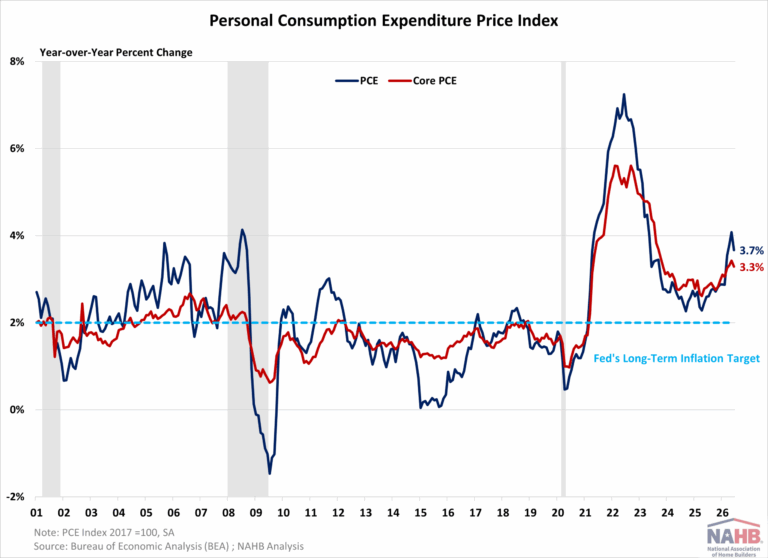

Inflation held steady in December, matching November’s reading, according to the Bureau of Labor Statistics (BLS) latest report. This December report was the first report to include a month-to-month figure since the government shutdown. However, the report should be read with caution as data distortions from the shutdown continue to affect key inflation measures, particularly housing.

First looking at annual data, on a non-seasonally adjusted basis, the Consumer Price Index (CPI) rose by 2.7% in December compared to the year prior. Excluding the volatile food and energy components, the “core” CPI increased by 2.6% over the past twelve months. A large portion of the “core” CPI is the housing shelter index, which increased 3.2% over the year. Meanwhile, the component index of food rose by 3.1%, and the energy component index increased by 2.3%.

Before noting monthly changes in the CPI, it is important to mention that the November’s CPI report was artificially depressed due to incomplete data collection and the imputation method used for key components including housing prices. BLS used ‘carry-forward imputation’ to calculate some of November’s data after the shutdown disrupted data collection. This method uses data from a previous month to estimate the missing figure, which potentially underestimates housing inflation.

Housing was one of the most impacted categories. Shelter accounts for 36.7 percent of the CPI and contributed approximately 58 percent of total inflation in 2024, making it the largest single component. Rent changes were unusually low due to BLS carrying forward imputation. This distortion is likely to cause housing inflation to look lower than reality for the next few months, with a catch-up effect expected in April.

On a monthly basis, the CPI rose by 0.3% in December (seasonally adjusted), and the “core” CPI increased by 0.2%.

The price index for a broad set of energy sources rose by 0.3% in December, with declines in fuel oil (-1.5%), gasoline (-0.5%) and electricity (-0.1%) were offset by increases in natural gas (+4.4%). Meanwhile, the food at home index and the food away from home index both increased by 0.7% in December.

The index for shelter was the largest contributor to the overall monthly increase in all items index. Other top contributors that rose in December included indexes for recreation (+1.2%), airline fares (+5.2%), medical care (+0.4%), apparel (+0.6%), personal care (+0.4%) as well as education (+0.2%). Meanwhile, the index for communication (-1.9%), used cars and trucks (-1.1%) and household furnishings and operations (-0.5%) were among the few major indexes that decreased over the month.

The index for shelter, which makes up more than 40% of the “core” CPI, rising rose by 0.4% in December. The index for owners’ equivalent rent (OER) and the index for rent of primary residence (RPR) both increased by 0.3% over the month.

NAHB constructs a “real” rent index to indicate whether inflation in rents is faster or slower than core inflation. It provides insight into the supply and demand conditions for rental housing. When inflation in rents is rising faster than core inflation, the real rent index rises and vice versa. The real rent index is calculated by dividing the price index for rent by the core CPI (to exclude the volatile food and energy components).

In December, the Real Rent Index remained unchanged. Due to the missing October data, the average monthly growth rate for 2025 cannot be directly compared to prior years.


This article was originally published by a eyeonhousing.org . Read the Original article here. .
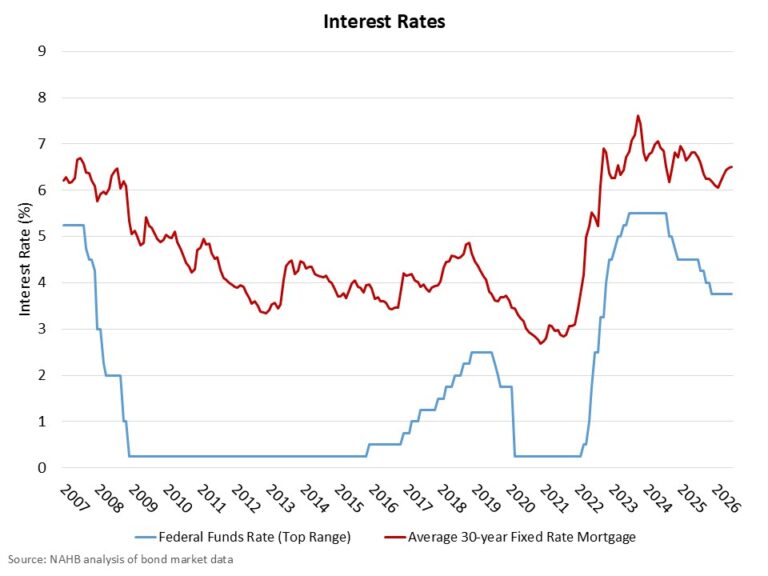

Inflation unexpectedly eased in November, according to the Bureau of Labor Statistics (BLS) latest report. This data release was originally scheduled for December 10 but was delayed due to the recent government shutdown. While most indexes showed deceleration, this report does not necessarily prove a downward trend in inflation due to missing October data and incomplete November collection. December’s report may be more pivotal for markets and the Fed.

The recent record-long government shutdown disrupted data collection for many macroeconomic indicators including the CPI. About two-thirds of price data is collected through personal visits to brick-and-mortar stores, with the remaining third collected online or via telephone. Since the government remained shut down throughout October, BLS cannot retroactively collect survey data for the month. While data collection resumed on November 14 following the November 13 reopening, this month’s report potentially has downward bias due to lower collection rates and holiday sales promotions. This also suggests higher likelihood for monthly volatility in the near term.

Though inflation is expected to peak in the first quarter of 2026, the Fed is likely to continue easing given signs of labor market weakening. The housing market’s sensitivity to interest rates suggests rate cuts could help ease the affordability crisis and support housing supply even as builders continue to face supply-side challenges.

During the past twelve months, on a non-seasonally adjusted basis, the Consumer Price Index (CPI) rose by 2.7% in November. Excluding the volatile food and energy components, the “core” CPI increased by 2.6% over the past twelve months, the lowest reading since April 2021. A large portion of the “core” CPI is the housing shelter index, which increased 3.0% over the year, the lowest reading since August 2021. Meanwhile, the component index of food rose by 2.6%, and the energy component index increased by 4.2%.

Given the notable shift in the November data, especially for the shelter inflation component, the November data are shown with data dot points (red for shelter, blue for overall CPI respectively) in the chart below. The December report will identify whether these data points are confirmed positive trends.

Due to the gap in data collection during the government shutdown, this report covers a two-month period instead of the standard one month. From September to November, the CPI rose by 0.2% (seasonally adjusted), down from a 0.7% increase over the two-month period ending in September. The “core” CPI increased by 0.2% over the two months ending in November, compared to 0.6% in the prior two-month period.

From September to November, the price index for a broad set of energy sources rose by 1.1% and the food index rose by 0.1%. The index for shelter, which makes up more than 40% of the “core” CPI, rose by 0.2% over the two-month period, down from 0.6% in the previous period. Other contributors that increased included indexes for household furnishings and operations, communication, as well as personal care.

NAHB constructs a “real” rent index to indicate whether inflation in rents is faster or slower than core inflation. It provides insight into the supply and demand conditions for rental housing. When inflation in rents is rising faster than core inflation, the real rent index rises and vice versa. The real rent index is calculated by dividing the price index for rent by the core CPI (to exclude the volatile food and energy components).

From September to November, the Real Rent Index remained unchanged over the two-month period. Due to the missing October data, the average monthly growth rate for 2025 cannot be directly compared to prior years.


This article was originally published by a eyeonhousing.org . Read the Original article here. .
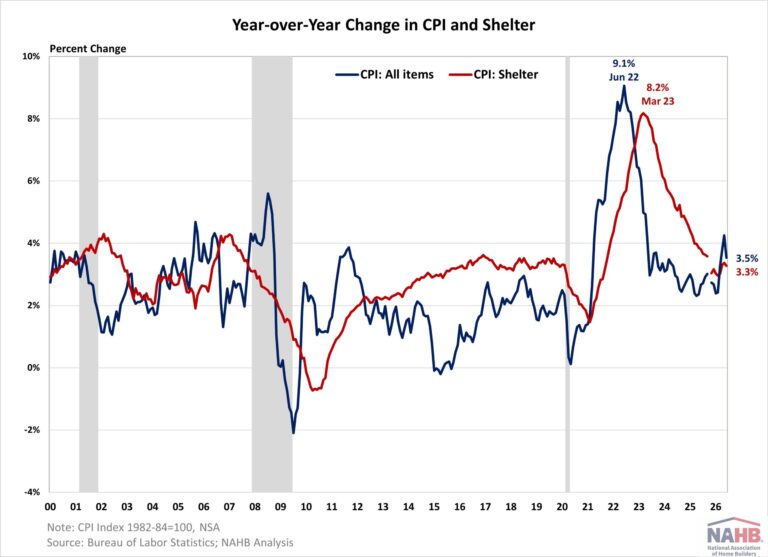

Inflation held steady at 2.7% in July as food an energy prices remained subdued and offset increases in service prices, according to the Bureau of Labor Statistics’ (BLS) latest report. Core inflation, which exclude volatile food and energy, picked up to its largest monthly increase since January and fastest annual pace since February. Meanwhile, housing inflation continued to show signs of cooling, matching the lowest level since October 2021.

Despite the modest overall increase, concerns over inflation data quality continue to grow as BLS revealed more details about data collection challenges. BLS reduced its CPI collection sample starting in April due to staffing shortages, suspending data collection in Lincoln (NE), Provo (UT), and Buffalo (NY). It also suspended collection on 15% of the sample in 72 other areas on average. When prices are unavailable, BLS uses different cell imputation, and this share jumped to 35% in June from 30% in May and just 8% in June 2024.

During the past twelve months, on a non-seasonally adjusted basis, the Consumer Price Index rose by 2.7% in July, unchanged from June and the highest since February 2025. Excluding the volatile food and energy components, the “core” CPI increased by 3.1% over the past twelve months. A large portion of the “core” CPI is the housing shelter index, which increased 3.7% over the year, the lowest reading since October 2021.  Meanwhile, the component index of food rose by 2.9%, and the energy component index fell by 1.6%.

On a monthly basis, the CPI rose by 0.2% in July (seasonally adjusted), after a 0.3% increase in June. The “core” CPI increased by 0.3% in July.

The price index for a broad set of energy sources fell by 1.1% in July, with increases in fuel oil (+1.8%) offset by declines in gasoline (-2.2%), natural gas (-0.9%) and electricity (-0.1%). Meanwhile, the food index was unchanged, after a 0.3% increase in June. The index for food away from home increased by 0.3% while the index for food at home fell by 0.1%.

The index for shelter (+0.2%) continued to be the largest contributor to the monthly increase in all items index. Other top contributors that rose in July include indexes for medical care (+3.5%), airline fares (+4.0%), recreation (+0.4%), household furnishings and operation (+3.4%), as well as used cars and trucks (+0.5%). Meanwhile, the index for lodging away from home (-1.0%) and communication (-0.3%) were among the few major indexes that decreased over the month. The index for shelter makes up more than 40% of the “core” CPI, rising by 0.2% in July, following the same increase last month. The index for owners’ equivalent rent (OER) and for rent of primary residence (RPR) both increased by 0.3% over the month. Despite the moderation, shelter costs remained the largest contributors to headline inflation.

NAHB constructs a “real” rent index to indicate whether inflation in rents is faster or slower than core inflation. It provides insight into the supply and demand conditions for rental housing. When inflation in rents is rising faster than core inflation, the real rent index rises and vice versa. The real rent index is calculated by dividing the price index for rent by the core CPI (to exclude the volatile food and energy components).

In July, the Real Rent Index fell by 0.1%. Over the first seven months of 2025, the average monthly growth rate held steady at 0.1%, unchanged from the same period in 2024.

Discover more from Eye On Housing

Subscribe to get the latest posts sent to your email.


This article was originally published by a eyeonhousing.org . Read the Original article here. .
Pin It