In 2024, the number of people experiencing homelessness increased to the highest estimate in the history of HUD’s Annual Point-in-Time (PIT) Count. Approximately 771,500 people were recorded as living in an emergency shelter, a transitional housing program, or in unsheltered locations across the country. This count increased 18% compared to 2023, a notable increase compared to previous years as shown in graph below.
Demographics
Nearly every demographic increased to record levels of homelessness in 2024. Individuals, who represent about two-thirds of people experiencing homelessness, increased 10% from 2023. Meanwhile, families with children experienced the largest jump, rising 39% to over 259,000 people. Unaccompanied youth (those under 24) also increased 10% to roughly 38,000 people.
Other special populations, such as people experiencing chronic homelessness, increased 7% to 153,000, accounting for one in five people experiencing homelessness nationwide. Veterans, however, were the only population to decrease, declining by 8% to 33,000.
Notably, nearly all populations have increased since 2007, with people experiencing chronic patterns of homelessness increasing the most by 27%. However, veterans remain the only group to post a long-term decline of 55% since 2009.
By State
Geographically, California had the highest number of people experiencing homelessness in 2024 at 187,000 people, nearly a quarter of the national total. New York followed at 158,000 people or 20% of the total. However, when adjusted to account for population size, Hawaii, and New York were the states with the highest homelessness rate at around 80 per 10,000 people. Twelve states and territories, including D.C. and Guam, exceeded the national rate of 23 per 10,000 people.
Compared to 2023, only seven states and Puerto Rico showed declines in the number of people experiencing homelessness including Maine (-36.5%), Tennessee (-10.1%), New Hampshire (-8.0%), Montana (-7.8%), Puerto Rico (-6.5%), Wyoming (-5.8%), Iowa (-0.8%), and Georgia (-.03%). Every other state and D.C. experienced increases, led by Illinois (116.2%), Hawaii (87.0%), Massachusetts (53.4%), and New York (53.2%).
In terms of market area, more than half (54%) of people experiencing homelessness live in major cities. This is followed by 24% in suburban areas, 16% in rural areas, and 6% in other urban areas
Shelter vs. Unsheltered
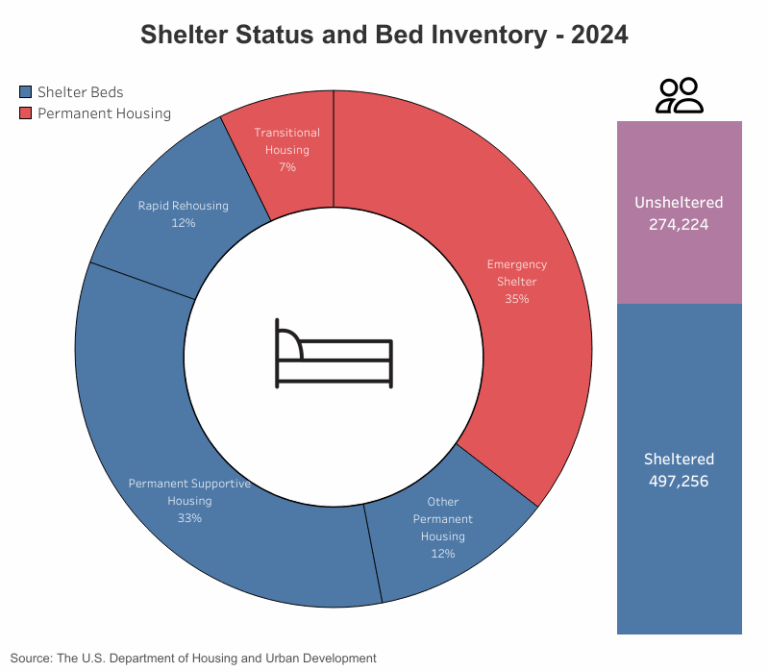
It is important to note that the point-in-time count for this report is recorded at the end of January, one of the coldest times of the year. In 2024, 64% of the 771,500 people were considered sheltered. Sheltered homelessness rose by 25% compared to 2023, while unsheltered increased by 7%.
Sheltered people are counted in two main types of programs, emergency shelters (shorter-term) and transitional housing (longer and more intensive care). People on other types of housing assistance considered permanent housing such as rapid rehousing (short-term subsidy) and permanent supportive housing (long-term subsidy) are not included in this count.
In 2024, there were an estimated 510,000 shelter beds (including emergency shelters and transitional housing), representing 43% of the total inventory of all housing assistance. Since 2007, shelter beds have increased by 21%, whereas the number of permanent housings has increased by 261%.
Housing Affordability
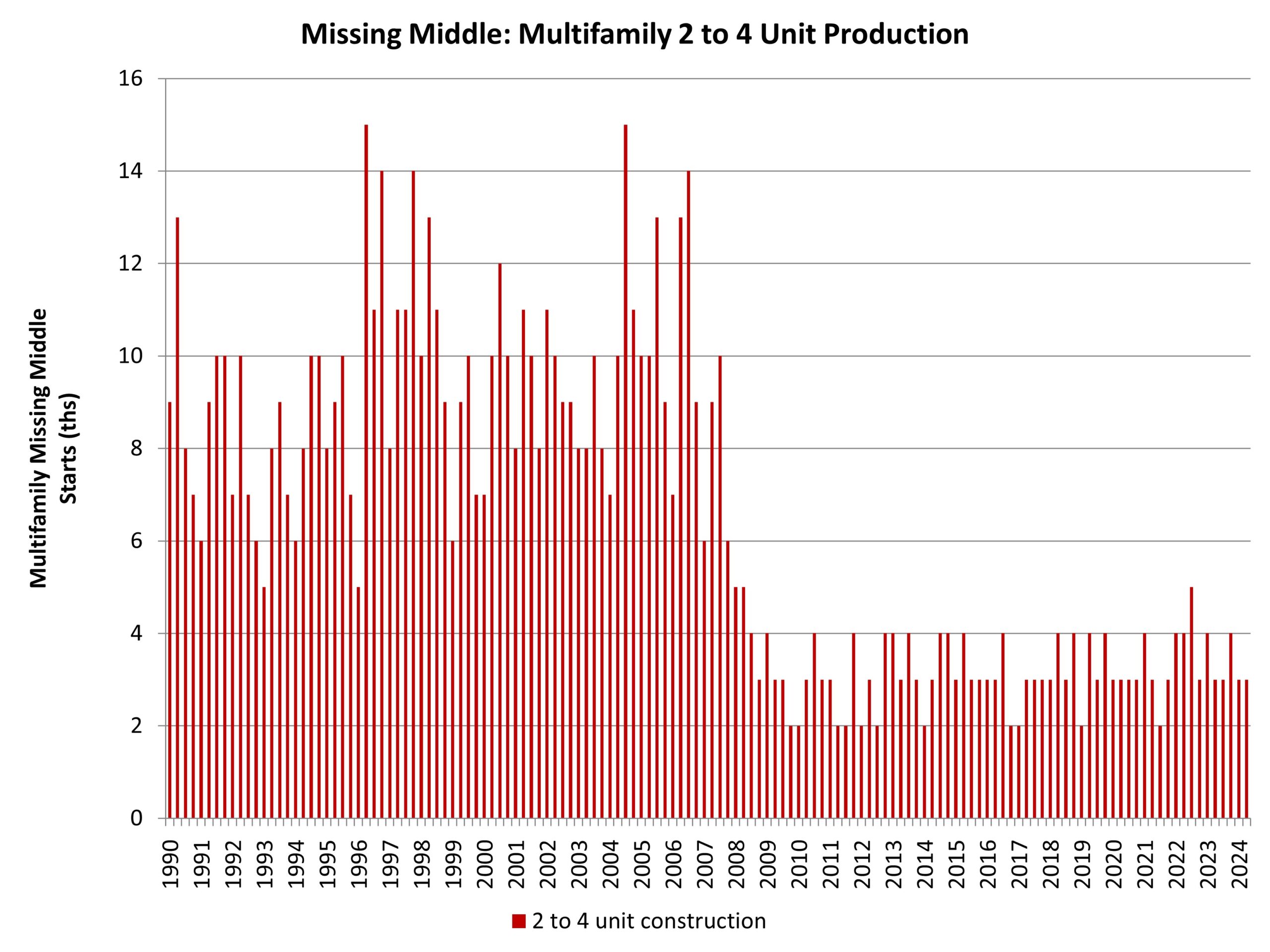
Homelessness is a complex issue with various factors, but the steep increase in 2024 coincides with the broader housing affordability challenges the entire market is facing. More than half of renter households are cost-burdened, paying 30% or more of their income on rent and utilities. At the same time, three-quarters of Americans are unable to afford a median-priced home, reflecting high demand, high mortgage rates, as well as limited supply following a decade of underbuilding after The Great Recession.
Over the long-term, supply side growth is essential to taming housing costs. In a well-functioning housing market, as multifamily completions increase, vacancy rates should rise and rent growth should slow. However, because new units are typically delivered at higher price points, households on the lower end of the income distribution rely on the ‘trickle-down’ effect. As new single-family and multifamily homes are built, some renters become first-time buyers, freeing up older, and more affordable rental units in the process.
In the short-term, expanding the supply of affordable units is essential for serving the needs of people currently experiencing homelessness. This means making it easier and less costly to build. Eliminating excessive regulations, overturning inefficient local zoning rules, supporting federal tax legislation such as the Low-Income Housing Tax Credit will make it more feasible for builders to deliver units at lower price points.
Ultimately, homelessness is both an economic and humanitarian challenge, and there is no single solution. What remains clear is that building homes is essential to easing cost burdens and a step toward the American dream of housing opportunities for all.
This article was originally published by a eyeonhousing.org . Read the Original article here. .