Tag

home

Browsing


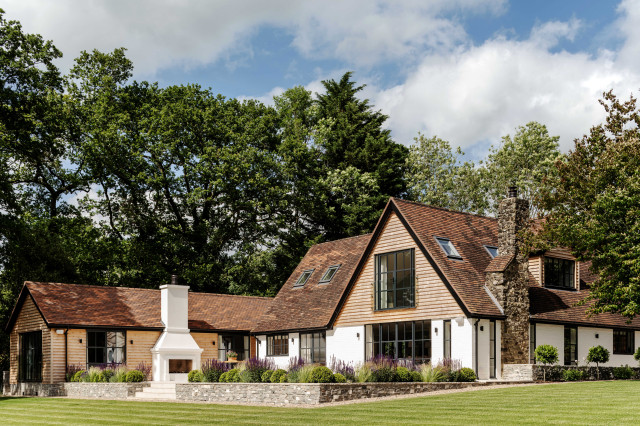
This is the project that grew and grew. What started out as a simple refurbishment of a rural cottage in West Sussex, England, became a comprehensive renovation, an addition and a landscaping job. “It was an absolute joy,” says Paul Duffy, the architect responsible for the transformation. “It evolved to become this genuinely amazing project.”

The property sits within the South Downs National Park, on a beautiful plot with long, unspoiled views. “I really enjoy it every time I go,” Duffy says. All the construction and design ideas he suggested had to respect this landscape and were subject to stringent planning constraints. Read on to see how the project evolved while staying in harmony with its special surroundings.


This article was originally published by a www.houzz.com . Read the Original article here. .


This Trending Now story features the most-saved home office photos uploaded to Houzz between March 15 and June 15, 2025.

No matter how you like to work from home, this countdown of the most-saved new home offices on Houzz offers inspiration. Whether tucked into a compact alcove or spread throughout a spacious room, these setups reflect a range of design approaches — each tailored to support productivity, creativity and comfort.

10. Olive and Organized

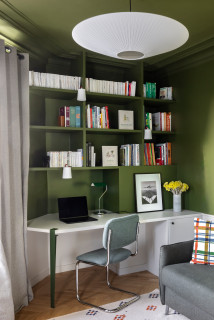
In this Paris home office, Poësis Studio created a serene atmosphere by painting the walls, trim, built-in shelves and ceiling a deep olive green. The color provides a calm backdrop, allowing the crisp white desk and pleated cotton pendant light to stand out.

Paint color: Bancha, Farrow & Ball

Find a local interior designer on Houzz

Rosen+Co Design StudioSave Photo
9. Arched Alcove

An elegant arch frames this sophisticated office nook in Toronto. Rosen+Co Design Studio integrated the desk area into sleek built-ins that discreetly hide office equipment and documents. This smart space planning allowed for a comfortable sofa alcove on the opposite side of the room and a prime location for the TV.

Shop for home office furniture

8. Light-Filled Corner

In this Sonoma County, California, home office, Studio CM maximized natural light by wrapping two desks around a corner flanked by tall windows overlooking the front garden. To ensure the space stays bright even on overcast days, the designers incorporated desk lamps and discreet track lighting that align with the home’s classic midcentury modern style.

How to Set Up Your Home Office on Nearly Any Budget

CHRISTOPHER STROM ARCHITECTSSave Photo
7. Streamlined and Airy

A 14-foot addition and full remodel of this St. Louis Park, Minnesota, home was designed with aging in place in mind. In the new office, Christopher Strom Architects extended the desk along two walls, seamlessly integrating it with built-in shelves and cabinets. The cohesive design draws the eye to the outdoor view and helps the long, narrow room feel more spacious and intentional.

6. Timeless Library Charm

Dovetail Group curated furnishings that thoughtfully complement the refined character of this Zionsville, Indiana, home office. Rich built-ins, a tufted leather chair, an antique desk, a vintage map and classic light fixtures come together to evoke the timeless elegance of a stately library.

Key Measurements to Help You Design the Perfect Home Office

5. Tidy and Moody

Trim Team NJ masterfully blended traditional and modern styles, along with light and dark elements, in this northern New Jersey office. Integrated lighting and brass accents provide striking contrast against the dark, moody built-ins. The lower cabinets feature classic Shaker-style profiles, while the shelves above maintain a clean-lined, unfussy aesthetic.

Southern Hills ConstructionSave Photo
4. Strumming Over Spreadsheets

Sometimes a home office calls for guitar hooks and cozy seating for strumming, rather than laptops and ergonomic chairs. That was the case in this Nashville, Tennessee-area workspace. Southern Hills Construction enveloped the room in a rich, warm gray paint and installed white oak pocket doors within the arched doorway. No matter the use, soundproofing remains essential in this versatile office.

New to home remodeling? Learn the basics

Cruz Interiors Inc.Save Photo
2. Light Meets Dark

Designer Carly Zuba of CM Studio achieved a striking balance of light and dark in her own Evanston, Illinois, home office. Light wood floors contrast with black architectural elements in the space. A light-colored desk, chair, rug and chandelier form a bright focal point, while large windows flood the room with natural light.

New Leaf Custom HomesSave Photo


This article was originally published by a
www.houzz.com . Read the Original article here. .


Vandervort ArchitectsSave Photo
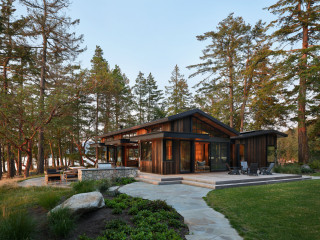
The house has the appearance of two small cabins. “We knew early on that these two forms would be connected by a spine down the middle,” Butrim says. The west wing, on the left, contains the family room, dining room and kitchen in one large open space. The east wing contains three bedrooms and 2½ bathrooms. The large window between the two wings marks the structure’s spine, a long corridor between them.

Creating the two asymmetrical forms broke up the scale of the house and gave it a San Juan Islands cabin feel. Butrim also looked to agricultural and maritime buildings, as well as Native American longhouses, for architectural inspiration. The materials, which include weathered cedar at random widths, tinted concrete and dark metal roofing, accomplish two goals. They nod to the history of cabins built on this island, and they help the building blend into the wooded site.

“Originally, the front entry led directly into the corridor,” Butrim says. “However, our clients thought that would feel too formal and they wanted this to be a more casual house. It also felt like an entrance you’d have if you’d driven from the road and down the driveway, which doesn’t happen here. Instead, we thought about them entering the house from the approach from the dock.” The front entry is located on the left side of the house. (The door is open in this photo.)


This article was originally published by a
www.houzz.com . Read the Original article here. .


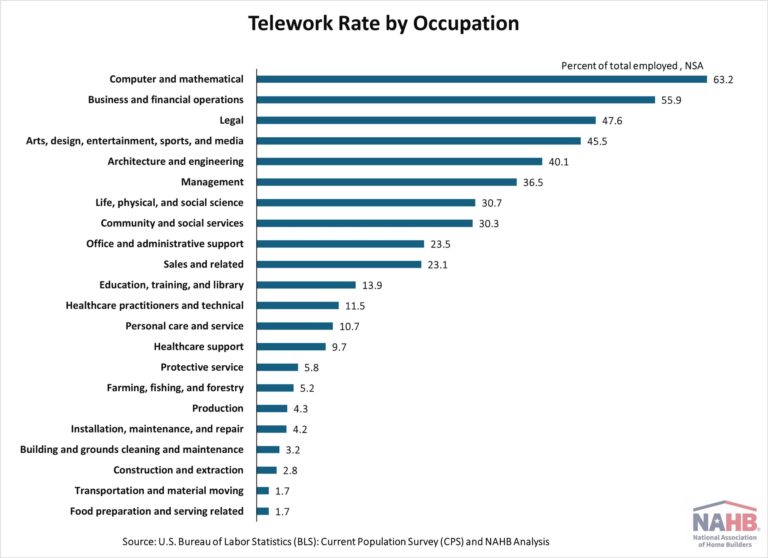
Remote work may no longer dominate the U.S. labor force as it did during the height of the pandemic in 2020, but it still represents a substantial share of employment today. According to the latest data from the Current Population Survey (CPS), approximately 34.3 million employed people teleworked or worked at home for pay in April 2025. The telework rate, which represents the number of people who teleworked as a percentage of people who were working, was 21.6% in April, and it has consistently ranged between 17.9% and 23.8% between October 2022 and April 2025.

Of those who teleworked in April, more than half teleworked for all their working hours, while the remaining teleworked for some, but not all, of their work hours.

The distribution of telework across the U.S. workforce continues to reflect deeper patterns shaped by gender, age, education, occupation, and industry. The following insights are based on an analysis of monthly CPS data.

Gender: Women Lead in Telework

Women continue to outpace men in remote work participation.

Nearly 25% of employed women worked from home in April 2025.

In contrast, about 19% of employed men teleworked.

This gender gap reflects employment trends. Many women are employed in professional, administrative, or office-based roles. These fields transitioned smoothly to remote work during the pandemic and have largely maintained hybrid or fully remote options. Additionally, the growing rate of college completion among women1 has pushed more women into positions that are structurally suited to telework. Flexibility remains a priority, especially for women balancing work and caregiving responsibilities, further reinforcing the demand for work-from-home arrangements.

Age: Older Workers Are More Likely to Telework

Age also plays a major role in who works remotely. Workers aged 25 and older are more likely to telework than their younger counterparts.

Ages 16–24: Only 6.2% worked from home.

Ages 25–54: About 24% reported teleworking.

Ages 55+: Around 23% worked remotely.

Younger workers tend to fill entry-level roles in retail, hospitality, and service sectors that require in-person attendance. Meanwhile, older workers are more likely to have progressed in their careers into managerial or specialized roles where remote work is feasible or even expected.

Education: Higher Degrees, Higher Telework Rates

Education remains one of the strongest indicators of telework status. Higher educational attainment is positively associated with a higher telework rate.

No high school diploma: Just 3.1% worked remotely.

High school graduates, no college: 8.4% teleworked.

Some college or associate degree: 17.3% reported working from home.

Bachelor’s degree or higher: 38.3% worked remotely.

Higher educational attainment often leads to employment in knowledge-based sectors such as finance, information technology, consulting, and research. These roles often depend on digital communication tools and independent project-based tasks, making them well-suited for remote settings.

Occupation: Business and Financial Operations, and Professionals Dominate Remote Work

Not surprisingly, occupation heavily influences access to teleworking. Jobs that require physical presence, such as those in food service, transportation, manufacturing, and construction, naturally offer limited remote opportunities. In contrast, people employed in professional and technical fields report the highest telework rate, especially those working in computer and mathematical roles.

Industry trends mirror these occupational divisions. Certain sectors have fully embraced telework, particularly finance, information services, and professional and business services. These industries often prioritize flexibility and are structured in ways that make remote work not only possible but efficient. On the other hand, industries like construction, leisure and hospitality remain firmly grounded in physical spaces and in-person involvement. In these fields, work is inherently tied to locations and equipment that cannot be replicated remotely. The construction industry had a telework rate of just 9.8% in April, and leisure and hospitality reported an even lower rate of 8.1%.

Looking Ahead:

Remote work is not disappearing; it is evolving. The opportunity to work from home is increasingly concentrated among individuals with higher education levels, white-collar job titles, and positions in tech-driven or office-based industries. Meanwhile, those who are younger, have less educational attainments, or work in manual or service-based roles remain largely tied to traditional, in-person work.

For the future, we don’t know if telework will expand to become more inclusive or continue reinforcing existing divides in education and job roles. For now, the data suggests that remote work is here to stay, but only for some.

Note:

“U.S. women are outpacing men in college completion, including in every major racial and ethnic group”, Pew Research Center.

Connor Borkowski and Rifat Kaynas, “Telework trends,” Beyond the Numbers: Employment & Unemployment, vol. 14, no. 2 (U.S. Bureau of Labor Statistics, March 2025),

Discover more from Eye On Housing

Subscribe to get the latest posts sent to your email.


This article was originally published by a eyeonhousing.org . Read the Original article here. .


This Trending Now story features the most-saved entry photos uploaded to Houzz between March 15 and June 15, 2025.

A home entryway works hard — corralling shoes, keys, bags and more — all while offering a warm welcome and setting the tone for the rest of the home. For ideas on creating a stylish and practical drop zone that leaves a lasting impression, check out this countdown of the 10 most-saved new entry photos on Houzz right now.

10. Beachy and Bright

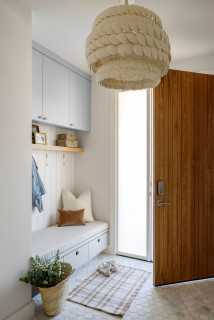
Fig St. Design gave this Santa Cruz, California, entry a breezy coastal feel. A wood-paneled door with a translucent sidelight opens to a light-filled space anchored by a cushioned storage bench set against a bright white shiplap wall with convenient hooks. Above, a pale blue cabinet offers additional storage, while a coordinating wood display shelf ties in with the door. Durable hexagonal tile flooring stands ready to handle sandy feet, shoes and flip-flops fresh from the beach.

love schack architectureSave Photo
9. All-Weather Style

In designing this Alta, Wyoming, home, Lindsay Schack and Kluane Gorsuch of Love Schack Architecture followed Passive House principles, prioritizing energy efficiency and a deep connection to nature. That meant the front entry needed to support thermal comfort and indoor air quality while framing expansive landscape views and welcoming in natural light, all without compromising protection from wind, snow and intense sun. A separate mudroom down the hall keeps shoes and outerwear out of sight, allowing the entry to remain open and uncluttered. Large-format decorative floor tile and thoughtfully selected furnishings complete the warm, modern look.

Shop for entryway products

8. Refreshed Vintage Design

Marble floors, high-gloss blue walls and vintage-inspired floral wallpaper turned this once-blank San Francisco entry into a bold and welcoming jewel box. Designer Marcy Duque of IDF Studio aimed to make a dramatic statement in the small space, pairing eye-catching style with everyday function — providing just enough room to drop your keys and slip off your shoes — without sacrificing impact.

Key Entryway Dimensions for Homes Large and Small

Michele Bitter DesignsSave Photo
7. Bespoke Glamour

The homeowners of this newly renovated New York duplex wanted an entryway as distinctive as the bespoke details found throughout their home. Designer Michele Bitter responded with a sophisticated makeover that includes a sleek console for keys and mail, a compact pouf for slipping off shoes and a showstopping custom chandelier. Herringbone flooring, Armani Casa wallpaper and custom brass stair railings elevate the space. Bitter also transformed a former bar under the stairs into enclosed storage.

Audrey Scheck DesignSave Photo
6. Traditional Tailoring

In this spacious West Lake Hills entry, just outside Austin, Texas, designer Audrey Scheck embraced a modern farmhouse sensibility with warm, traditional touches. A wall of built-in cabinetry and a bench provide ample storage and seating, while a generous doorway and dedicated closet enhance the home’s functionality. The wood-and-glass front door, along with its transom and sidelights, frames serene outdoor views. Wood-beamed ceilings and crisp molding add architectural character, giving the entry a relaxed yet refined presence.

4 Designer Tips for a Fashionable Entry

Collective DesignSave Photo
5. Modern Mountain Style

High mountain style sets the tone in this Breckenridge, Colorado, entry, offering a striking preview of the modern mountain home beyond. The space, by Collective Design, celebrates nature with expansive sidelights, a transom and a vertical window that frame the outdoors while supporting the home’s passive solar strategy. A slatted wood ceiling with recessed lighting echoes the clean lines of the front door and highlights the fringed chandelier. Textural elements — including rugged stone walls, a sleek metal bench and a natural jute rug — add warmth and depth, mirroring the surrounding landscape.

Emily LaMarque Design StudioSave Photo
4. Rustic Meets Eclectic

A mix of modern and rustic elements defines the entry of this new-construction getaway at Suncadia Resort in Cle Elum, Washington. Designer Emily LaMarque, who uses Houzz Pro software, curated furnishings and decor with an earthy, grounded feel that nods to the landscape while maintaining the home’s sleek, contemporary aesthetic. A durable rug stands up to damp feet and muddy paws, and a pair of playful ottomans offer a stylish spot to sit while slipping shoes on or off.

New to home remodeling? Learn the basics

3. Let the Light In

With no formal foyer to work with, designer Kristen Ekeland and general contracting firm Risher Martin transformed a spacious covered exterior entry into an inviting interior space for this West Lake Hills home near Austin, Texas. A heavy wood door was replaced with a custom steel-and-glass design that ushers in natural light and lends an airy, open feel. Ekeland elevated the new entry with bold, curated elements, including a custom high-gloss lacquered console, custom-commissioned artwork and a striking statement light fixture.

Interior ImpressionsSave Photo
2. Coastal Charm

The owners of this Fort Myers, Florida, residence sought a front entry that felt breezy and welcoming, striking the right balance between casual comfort and tailored style. Designer Amy Leferink of Interior Impressions captured the essence of Florida living with a clean, coastal-inspired space that’s as inviting as it is practical. Sleek-lined wood console tables with baskets offer smart storage, while double doors with translucent glass maintain privacy and invite natural light through a glass transom. Textured wallpaper and a soft, light-hued rug enhance the serene, laid-back feel.

Leferink uses Houzz Pro software to manage her business, including for 3D Floor Plans, Mood Boards and “invoice tracking to communicate with clients more clearly during the design process,” she says.

See why you should hire a professional who uses Houzz Pro software

1. Inviting Lakeside Style

The most-saved new entry photo on Houzz comes from a serene lakeside home in Orono, Minnesota. During the remodel, builder Sven Gustafson of Revision set out to create an entry that told a story with natural materials, abundant sunlight and a strong sense of place. A handsome wood door, flanked by sidelights and topped with a transom, floods the space with light and sets a warm, welcoming tone. Thoughtfully chosen details — a hand-woven console, carved lamps, a porthole-style mirror and nautical artwork — subtly nod to life on the lake and complete the inviting narrative.

Gustafson and his company Revision use Houzz Pro software. “We used Houzz to help the client visualize the transformation of key areas, including the front entry,” Gustafson says. “The homeowner appreciated the real-time feedback tools and product tagging for sourcing.” His clients also found him on Houzz. “Our profile helped them discover our portfolio and connect with us initially,” Gustafson says.

More on Houzz
Read more entryway stories
Browse more entryway photos
Find a home professional
Shop for entryway products


This article was originally published by a
www.houzz.com . Read the Original article here. .


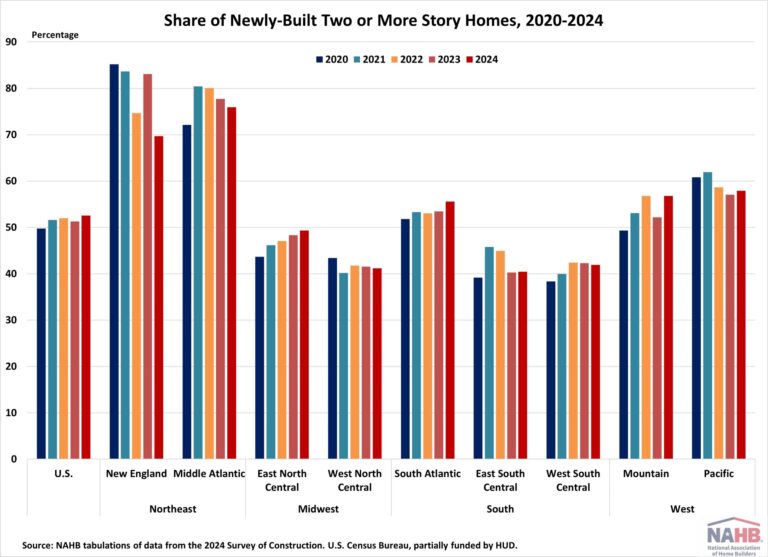
Over half of new single-family homes built in 2024 were two or more stories, according the recent release of the Census Bureau’s Survey of Construction (SOC). After declining in 2023, the share of homes started with two or more stories increased again in 2024, continuing the upward trend in place since 2020.

Nationwide, the share of new homes with two or more stories rose from 51.3% in 2023 to 52.5% in 2024, while the share of new homes with one story fell from 48.7% to 47.5%. Nationally, there were more multi-story homes built in 2024, however, this share varied significantly across the nation.

New homes started in the Midwest and South generally showed a stronger preference for single-story homes. In the Midwest (West North Central and East North Central), 58.8% and 50.7% of new homes started were one story, while in the South (East South Central and West South Central), the shares were 59.5% and 58.1%. However, the South Atlantic division was an exception, with one story homes falling to 44.4%, the lowest since 2019.

Although single story homes are more common in the Midwest and South, their shares declined in 2024 across the East North Central (Midwest), South Atlantic (South) and East South Central (South). This suggests a slow upward trend in two or more story homes across the South after COVID.

Following the national trend, five of the nine divisions saw a greater share of newly-built two or more story homes. The highest two or more story shares of new homes were concentrated in the Northeast and West, with Middle Atlantic and New England at 75.9% and 69.7%, while the Pacific and Mountain reached 57.9% and 56.8%, respectively. However, both Northeast divisions declined from 2023 levels, with New England dropping to its lowest two or more story share since NAHB started tracking in 2017. Meanwhile, new homes started with two or more stories in the Mountain and Pacific divisions both experienced increases in their two or more stories shares.

Discover more from Eye On Housing

Subscribe to get the latest posts sent to your email.


This article was originally published by a eyeonhousing.org . Read the Original article here. .


Elevated interest rates and economic uncertainty sent more home buyers to the sidelines in May as housing affordability conditions remain challenging.

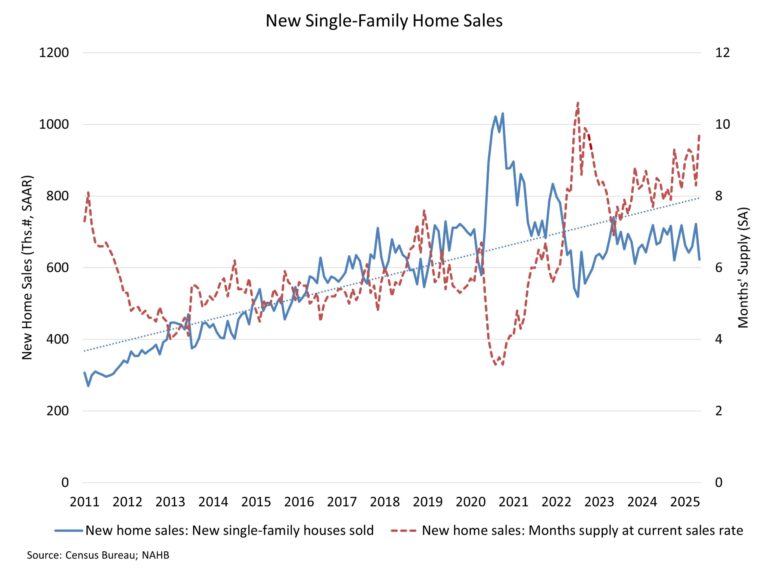
Sales of newly built single-family homes declined 13.7% in May, falling back to a seasonally adjusted annual rate of 623,000 according to newly released data from the U.S. Department of Housing and Urban Development and the U.S. Census Bureau. This was the slowest pace since October of last year, as mortgage rates averaged 6.83% in May. Sales were particularly slow in the South, with the pace of sales down 21% in May.

The slowing of the housing market has occurred despite the growing use of of builder sales incentives, including 37% of home builders reporting cutting prices in the June NAHB/Wells Fargo Housing Market Index survey.

On a year-to-date basis, new home sales are 3.2% lower thus far in 2025. As a result of slowing home sales conditions, inventory continues to rise, marking an elevated 9.8 months’ supply in May.

As estimated by NAHB, total months’ supply, defined as a combination of current new and resale single-family inventory, now stands at 5.2. This is the highest sales-adjusted inventory level since 2015 and will place downward pressure on housing construction starts in the months ahead.

A new home sale occurs when a sales contract is signed, or a deposit is accepted. The home can be in any stage of construction: not yet started, under construction or completed. In addition to adjusting for seasonal effects, the May reading of 623,000 units is the number of homes that would sell if this pace continued for the next 12 months.

New single-family home inventory continued to rise with 507,000 residences marketed for sale as of May. This is 1.4% higher than the previous month and 8.1% higher than a year ago. At the current sales pace, the months’ supply for new homes stands at 9.8 compared to 8.5 a year ago. Completed, ready-to-occupy new home inventory stood at 115,000 in May, up 29% compared to a year ago on a non-seasonally adjusted basis. However, this measure was higher at the end of 2024.

The median new home sale price in May was $426,600, compared to $414,300 a year ago. This measure reflects the fact that higher income borrowers face fewer budget constraints than lower income prospective home buyers. New home sales priced below $500,000 were down 15% in May of 2025 compared to the May 2024.

Regionally, on a year-to-date basis, new home sales are down 20.7% in the Northeast, 11.9% in the Midwest and 1.8% in the South. Sales are up 2.1% in the West.

Discover more from Eye On Housing

Subscribe to get the latest posts sent to your email.


This article was originally published by a eyeonhousing.org . Read the Original article here. .


Existing home sales rose 0.8% in May but remained near historical lows, according to the National Association of Realtors (NAR). Despite the modest increase, this marks the slowest pace for May since 2009. The sluggish sales suggest higher mortgage rates and elevated home prices continue to sideline buyers even with improved inventory conditions.

Mortgage rates have hovered between 6.5% and 7% due to ongoing economic and tariff uncertainty this year, prompting the Fed to pause interest rate cuts. With mortgage rates expected to stay above 6% for longer due to an anticipated slower easing pace in 2025, these prolonged higher rates and high home prices would continue to weigh on the market. As such, sales are likely to remain limited in the coming months.

Total existing home sales, including single-family homes, townhomes, condominiums, and co-ops, rose 0.8% to a seasonally adjusted annual rate of 4.03 million in May. On a year-over-year basis, sales were 0.7% lower than a year ago.

The first-time buyer share was 30% in May, down from 34% in April and 31% from a year ago.

The existing home inventory level was 1.54 million units in May, up 6.2% from April, and up 20.3% from a year ago. At the current sales rate, May unsold inventory sits at a 4.6-months’ supply, up from 4.4-months in April and 3.8-months in May 2024. Inventory between 4.5 to 6 month’s supply is generally considered a balanced market.

Homes stayed on the market for an average of 27 days in May, down from 29 days in April but up from 24 days in May 2024.

The May all-cash sales share was 27% of transactions, up from 25% in April but down from 28% a year ago. All-cash buyers are less affected by changes in interest rates.

The May median sales price of all existing homes was $422,800, up 1.3% from last year. This marked an all-time high for the month of May and the 23rd consecutive month of year-over-year increases. The median condominium/co-op price in May was up 0.7% from a year ago at $371,300.  Recent gains for home inventory will put downward pressure on resale home prices in most markets in 2025.

Geographically, three of the four regions saw an increase in existing home sales in May, with an increase of 1.7% in the South, 1.0% in the Midwest, and 4.2% in the Northeast. Meanwhile, sales in the West fell 5.4%. On a year-over-year basis, sales were up in the Northeast (4.2%) and the Midwest (1.0%), while sales were down in the South (-0.5%) and the West (-6.7%).

The Pending Home Sales Index (PHSI) is a forward-looking indicator based on signed contracts. The PHSI fell from 76.1 to 71.3 in April, suggesting buyers remained constrained by higher mortgage rates. On a year-over-year basis, pending sales were 2.5% lower than a year ago, per National Association of Realtors data.

Discover more from Eye On Housing

Subscribe to get the latest posts sent to your email.


This article was originally published by a eyeonhousing.org . Read the Original article here. .


Bradford & Kent Home RemodelingSave Photo
Inspect kitchen and bath fixtures. Keeping an eye on sinks and tile surrounds can help prevent costly water damage and repairs down the road. Make note of areas in need of new grout or caulk, as well as any slow leaks to repair. While you’re at it, freshen the kitchen drain by grinding a few ice cubes along with a few tablespoons of salt in the garbage disposal.

Check safety devices. Smoke alarms and carbon monoxide detectors should be tested at least once a month and replaced every 10 years, according to the U.S. Fire Administration. Test smoke detectors and carbon monoxide detectors by pressing the test button; replace batteries as needed. Also, take a moment to check the expiration date on any fire extinguishers in the house and replace them if needed.

Find a general contractor on Houzz


This article was originally published by a
www.houzz.com . Read the Original article here. .


Jennifer Radakovic DesignSave Photo
Floating Desks

Consider your desk first. Think about whether the desk should float in the room, as here, be placed against a wall or be built in. The standard desk height is 29 to 30 inches (74 to 76 centimeters).

Freestanding desks range in size, but common dimensions are 48, 60 and 72 in. (122, 152 and 183 cm) wide and 24, 30 and 36 in. (61, 76 and 91 cm) deep. Get the largest desk that fits comfortably in your space, as you can never have enough work surface.

If you float your desk, leave at least 30 in. (76 cm) between your desk and wall or shelves behind it. On the other side of the desk, allow 48 to 60 in. (122 to 152 cm) for additional chairs and tables, if needed.

Note: Conversions to metric dimensions are approximately translated from standard U.S. dimensions. Each country can be unique in its standards. Investigate the customs in your locale or work with a design pro before committing to a plan.


This article was originally published by a
www.houzz.com . Read the Original article here. .

Pin It