This article was originally published by a www.houzz.com . Read the Original article here. .
This article was originally published by a www.houzz.com . Read the Original article here. .

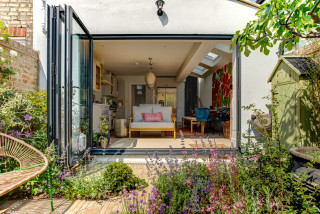
In addition to it being a sustainable choice, there are advantages to keeping existing plants where possible. “You get that maturity, and it brings the cost down, as mature plants are expensive,” she says. “Plus they’re plants [the client] recognizes, so it still feels like her [yard].”
Many of the pots themselves were reused too, with the largest now home to a fig tree (Ficus carica, zones 6 to 9) in the “hero” bed (seen here). The owner enjoys having birds visit the yard and wanted to encourage them to keep coming. They’re drawn by the fruit and the feeders she now hangs from the tree’s branches.
Apart from a simple lantern above the bifold doors, there’s no lighting in the yard. “Because it’s so small, there’s enough ambient light coming from the interior. [The client] is mostly planning to use it during the day, and the sun goes down late in summer,” Cox says. “It also makes it more wildlife friendly.”
Create a Lovely Wildlife-Friendly Garden in a Yard of Any Size
This article was originally published by a www.houzz.com . Read the Original article here. .

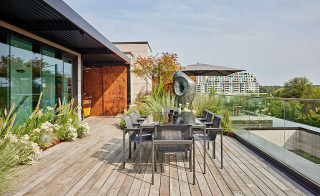
Designing a rooftop garden came with many challenges, including strict weight limitations that influenced everything from the soil and plantings to the sculptures and built elements. No new structures could be attached to the building, and heavier pieces had to be delivered to the roof by crane. Ultimately, the layered plantings, sculptural potted trees, site-specific sculptures, custom Cor-Ten steel screens and inviting areas for lounging and dining made the effort worthwhile.
This article was originally published by a www.houzz.com . Read the Original article here. .
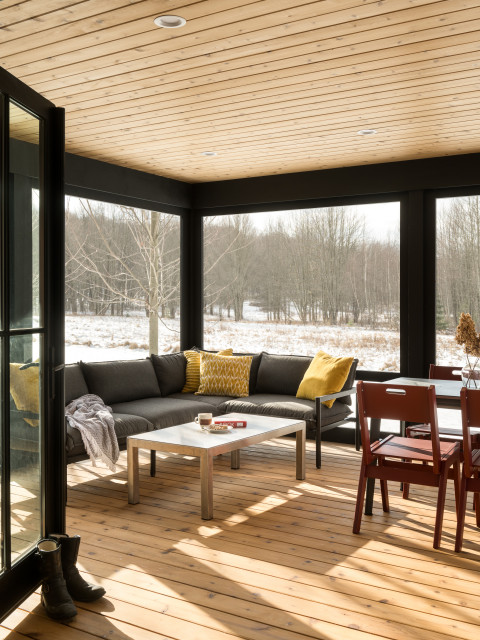
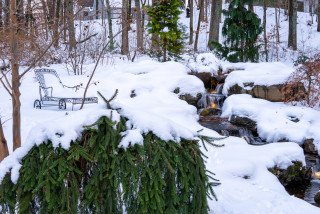
In temperate climates, refresh tired garden borders with winter-flowering bedding plants such as red and white cyclamens, pastel-colored violas, and pale green and white hellebores. Near the front door, plant winter-blooming shrubs like holiday-favorite ‘Yuletide’ sasanqua camellia (Camellia sasanqua ‘Yuletide’, USDA zones 7 to 10; find your zone), which produces crimson blooms from late fall through early January.
In colder climates, turn to white-flowering ‘Winter’s Snowman’ camellia (C. x ‘Winter’s Snowman’, zones 6 to 10) or red-flowering ‘Spring’s Promise’ camellia (C. japonica ‘Spring’s Promise’, zones 6 to 10), both of which are hardy to minus 10 degrees Fahrenheit, or minus 23.3 degrees Celsius.
Discover why you should hire a professional who uses Houzz Pro software
This article was originally published by a www.houzz.com . Read the Original article here. .
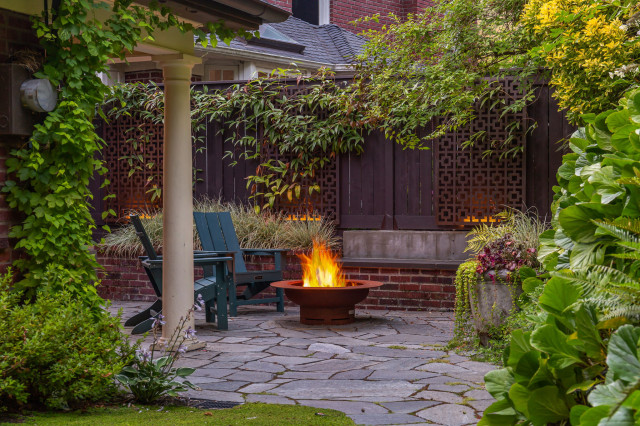
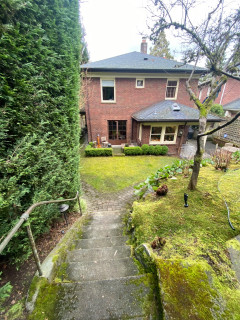
The vine growing up the corner of the house and along the entry overhang was another priority within the design. “This is a hop vine [Humulus lupulus, zones 4 to 8] that the homeowner has been growing for many years. He had trained it across the overhang, and it was important to him that we protect it,” Galante says.
Galante reports that the homeowners love their pots and planters. She filled the built-in brick planters around the patio with ‘EverColor Everest’ Japanese sedge (Carex oshimensis EverColor Everest ’Carfit01’, zones 5 to 9), which adds soft color and texture against the fence. The pot on the right has autumn fern (Dryopteris erythrosora, zones 5 to 8) and creeping jenny (Lysimachia nummularia, zones 3 to 9).
This article was originally published by a www.houzz.com . Read the Original article here. .
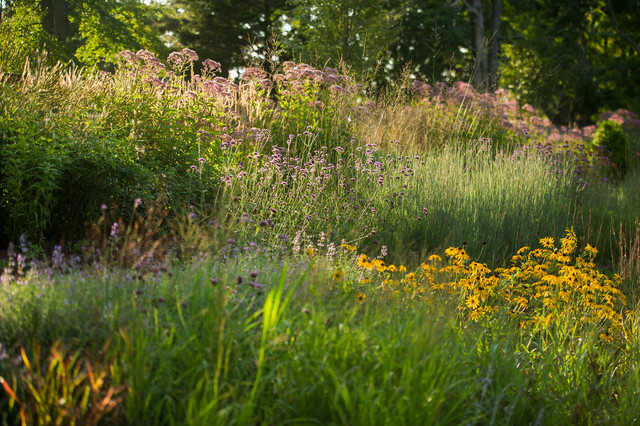
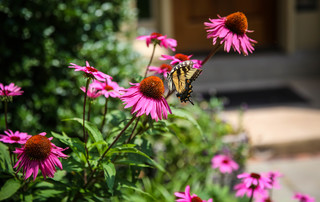
4. Pollinators Need More Than Just Flowers
Without foliage to eat, many youngsters and future butterflies, moths, flies and beetles would starve. The same can be said about pollen, which a lot of native bee species use to feed their young. Shallow flowers like asters (Symphyotrichum spp., zones 3 to 8, depending on sepcies) and sunflowers (Helianthus annuus, zones 2 to 11, depending on species) tend to attract a greater diversity of adult pollinators, but that doesn’t mean you should stick to that one form.
Additionally, try to use straight species where you can. These are native plants that have not been crossed or bred with others to produce new leaf colors or new flower colors and shapes. When plants are altered, the chemical makeup of their leaves may change and be unable to support as many caterpillars.
This article was originally published by a www.houzz.com . Read the Original article here. .
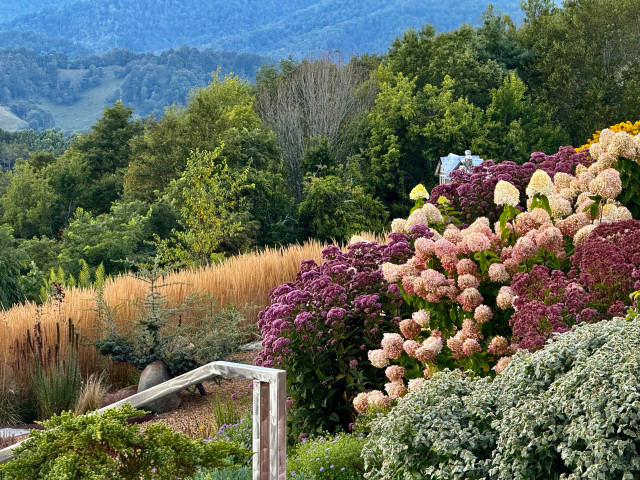
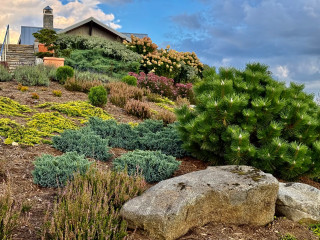
“The biggest challenge was balance. I didn’t want the garden to compete with the mountains. But the garden needed to speak to the mountains and hold its own against them without overpowering them,” Sifford says. The tectonic plates that formed the mountains hundreds of millions of years ago inspired his design, which is composed of stunning mounds of plants, including grasses, shrubs, ground covers, evergreens and perennials.
This article was originally published by a www.houzz.com . Read the Original article here. .
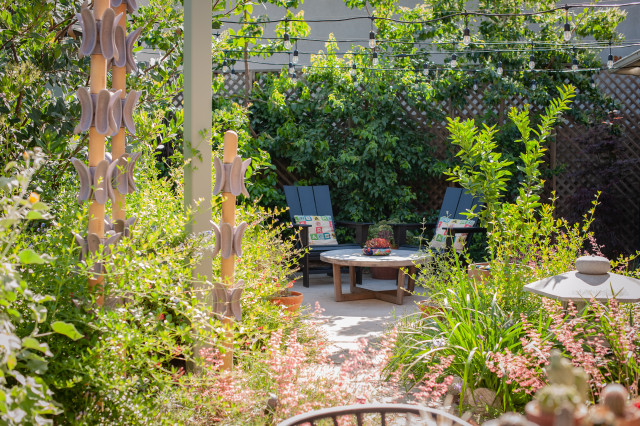
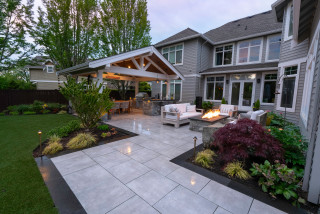
Przygoda-Montgomery, who designed the shaded patio in Oro Valley, Arizona, seen here, says that a way to assess whether your yard is guest-ready is to actually host something. “If people are left standing awkwardly or are unsure where to gather, it’s a sign that the space needs better flow and a better furniture arrangement,” she says.
How to Create an Inviting Outdoor Seating Area
This article was originally published by a www.houzz.com . Read the Original article here. .

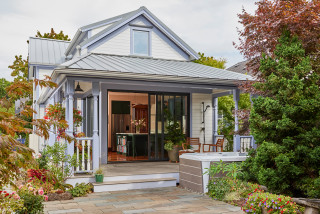
One of the homeowners loves to cook and bake. The other’s interest in the culinary arts lies primarily in enjoying food. “The cook had a lot of specialty tools and gadgets he wanted to use,” Rachaman says. “He cooks Asian food a lot and wanted specific places to put things like the small bowls he likes to serve it in.” The designers planned storage to house items like this, as well as spices, mixing bowls, baking sheets and cutting boards. The homeowner also has a large cookbook collection, and the designers tailored the island to house them.
One quirky part of the renovation involved one of the homeowners’ cold morning swims in Lake Washington. “He hangs his wetsuit to dry in the coat closet,” Emhoff says. “He wanted the fridge to back up to this closet so the heat coming off it would help dry the wetsuit.” There’s a vented wall between the back of the fridge and the coat closet.
Cabinetry: Bellmont Cabinet; cabinet paint: Olympic Range, Sherwin-Williams; wall paint: Pink Ground, Farrow & Ball
Browse kitchen and dining furniture in the Houzz Shop
This article was originally published by a www.houzz.com . Read the Original article here. .
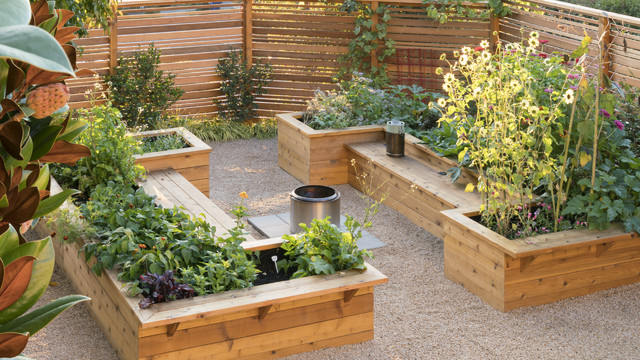

Automate as many maintenance chores as you can. A good place to start is with your irrigation systems. You can add timers to in-ground systems, drip systems and soaker hoses. These systems allow for watering all parts of a garden without having to drag a hose from place to place. In-ground systems with a timer also reduce the possibility of tripping over a garden hose. You can set the timers for the times that are best for both you and your garden, such as during the night.
Take it a step further by adding other automated features, such as motion-activated lights that come on when you step out at night or lights that turn on and off on a regular schedule.
New smart and automated garden products and features are rapidly coming on the market as well. Look through gardening magazines and websites, and talk to the staff at nurseries and hardware stores about what automated features they would recommend.
Bonus: An automated watering system, particularly one with smart features, ensures that your garden will get the water it needs when it needs it, and often results in using less water.
Plus, automating both your irrigation and your lighting will allow you to go on vacation without scouring the neighborhood for someone to tend to your plants or, if it’s in a front yard, worrying that your home will look empty.
This article was originally published by a www.houzz.com . Read the Original article here. .
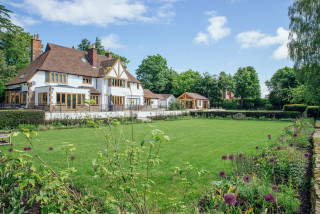
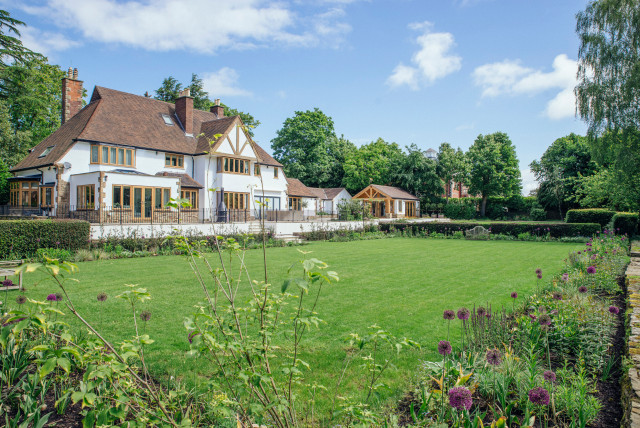
“I’d call my style naturalistic and quite romantic — I like to use lots of perennials and have softness in my planting,” she says. “Here, I went for a really soft feel, because when you cross the lawn and go down stone steps [on the left], you enter a more naturalistic area. I wanted to create a transition from formal planting to that wilder feel as you move away from the house.”
The Arts and Crafts-inspired plantings around the lawn include ‘Twilight’ purple asters (Eurybia x herveyi ‘Twilight’, USDA zones 3 to 9; find your zone) and white fireweed (Chamerion angustifolium ‘Album’, zones 3 to 7). “It’s often considered a weed because it gets everywhere, but this is a cultivated variety. It does self seed, but it’s actually clumped up very quickly,” Philpott says. “It’s a good choice when you’re establishing planting and you have gaps, as it fills out the space and gives the soft, romantic feel I was going for.”
Also seen growing here are purple ‘Caradonna’ sage (Salvia nemorosa ‘Caradonna’, zones 4 to 9), white ‘Madame Emile Mouillère’ bigleaf hydrangeas (Hydrangea macrophylla ‘Madame Emile Mouillère’, zones 5 to 9) and burgundy ‘Raven’ beardtongue (Penstemon ‘Raven’, zones 5 to 9). The dense holly hedges at either side were existing. “They provide a fantastic evergreen backdrop for planting: the purple asters look almost luminous against them,” Philpott says.
Retaining existing plants, such as these hedges, is important to Philpott. “I never want to go in, especially with a garden like this that’s been here since the early 20th century, and rip everything out, because it’s unnecessary,” she says. “It’s about seeing what’s there and what’s worth keeping and maybe reshaping it if necessary, but it would take decades to get new hedges to look like these because they’re so thick.”