Tag

Features

Browsing


The value of a single-family home is shaped by many factors, but its physical features remain among one of the most influential. Using the latest 2023 American Housing Survey (AHS), this study focuses on which home features genuinely boost single-family detached home values and by how much. Key findings show that the overall square footage of the home and the number of bathrooms stand out as especially strong value drivers, while other features such as the number of bedrooms and the presence of amenities also play a role.

In this first part of our two-part blog series, we focus on the physical features of single-family homes. The second part will explore how location and neighborhood quality further influence home values across the United States.

Home size is one of the strongest value drivers in today’s housing market, as shown in Figure 1. Compared with smaller homes under 1,000 sq. ft., homes between 1,000 and 2,000 sq. ft. are valued about 17% higher. Moving up to homes between 2,000-3,000 sq. ft. increases value by around 30%, while homes with 3,000 sq. ft. or more adds 55% more to the market value.  These effects are measured after accounting for differences in region, age of structure, and other key features.

While both the number of bathrooms and bedrooms contribute to single-family home values, the number of bathrooms has a larger impact. Each additional full bathroom increases home value by approximately 32%, compared to about 5% for an additional bedroom, holding the square footage and other features constant. Even a half bathroom brings meaningful returns, adding an estimated 15%.

The age of the home is also a contributing factor to the final market value, even after accounting for other features and neighborhood conditions. Compared to homes built before 2010, homes built between 2010 and 2019 have 13% higher values, and homes built after 2020 are valued 19% higher. These premiums likely reflect improvements in energy efficiency, insulation, and modern building systems that are appealing to more buyers.

Other amenities also bring solid returns, like garages, fireplaces, and centralized air conditioning. Garages add around 10% to home value; Besides a protected parking space, garages offer the flexibility for additional storage or turning it into a workshop/hobby space.  Having a fireplace can add value to a home, increasing its value by around 10%. It is appealing to some home buyers, as it not only provides a cozy ambiance, but also could reduce heating costs in some regions. Centralized AC adds about 7% to home value nationwide, but its impact varies across the divisions. In the South, including the South Atlantic, East South Central, and West South divisions, centralized AC adds 23%, 40%, and 48% more values, respectively.

Please click here to be redirected to the full special study.


This article was originally published by a eyeonhousing.org . Read the Original article here. .


fuse57 llc architectureSave Photo
2. Open Shelves

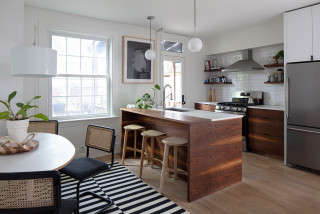
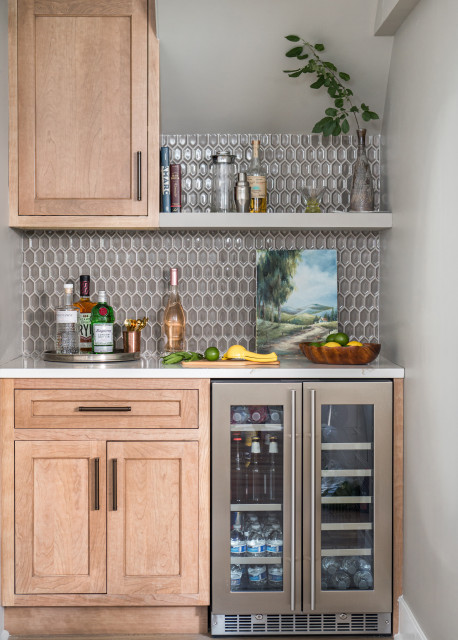
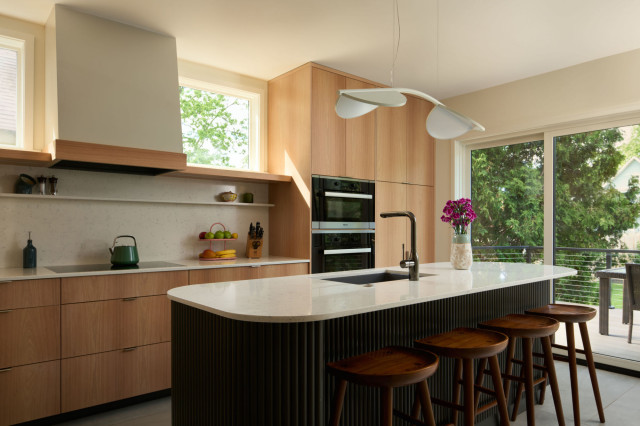
If your kitchen feels cramped, removing all or some of your upper cabinets might be the best option for you. This is a sure way to open up the visual space around the room, making the kitchen appear much larger than it is.

Plenty of light is important in a small space, and upper cabinets can sometimes cast a shadow over the countertops, making the workspace feel darker than necessary. So skipping those uppers can really open a space up. Running tile on the backsplash to the ceiling can also help visually heighten the look of the room.

If you’re worried about losing the storage from ditching upper cabinets, consider a hardworking island, if you have the space, or consult with a design pro to really maximize your lower cabinet storage with pullouts, drawers and other high-functioning components.


This article was originally published by a
www.houzz.com . Read the Original article here. .


6. Bathtubs

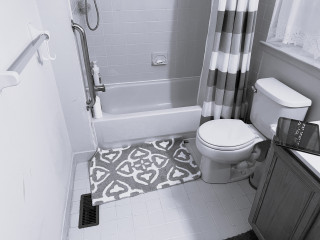
More than a third of homeowners (34%) upgrade their bathtub during a remodel. Among the rest, 9% keep the tub, 26% remove it, and 25% never had one to begin with.

When tubs come out, most homeowners make a splash with the extra space: 82% enlarge their shower and 20% relocate it. Others use the space to expand cabinetry (9%) or move their vanity or cabinets (6% each), while 5% enlarge their vanity or sink.

Styles. Freestanding flat-bottom tubs remain the most popular choice, selected by 45% of homeowners remodeling their bathrooms, with alcove tubs close behind at 40%. Deck-mounted tubs slipped from 10% to 6% this year, while freestanding claw-foot (4%), corner (2%) and other (3%) styles account for only a small share of upgrades.

Specialty features. More than half of homeowners (55%) add specialty features when upgrading their tubs, showing that comfort and safety are top priorities. Nonslip flooring (24%) and grab bars (23%) are the most popular, while space for two and whirlpool or jets each appeal to 12%. Built-in seating and lighting appear in 7% of tubs, with heated backrests (4%) and smart-fill tech (1%) rounding out the list.


This article was originally published by a www.houzz.com . Read the Original article here. .


This article was originally published by a
www.houzz.com . Read the Original article here. .
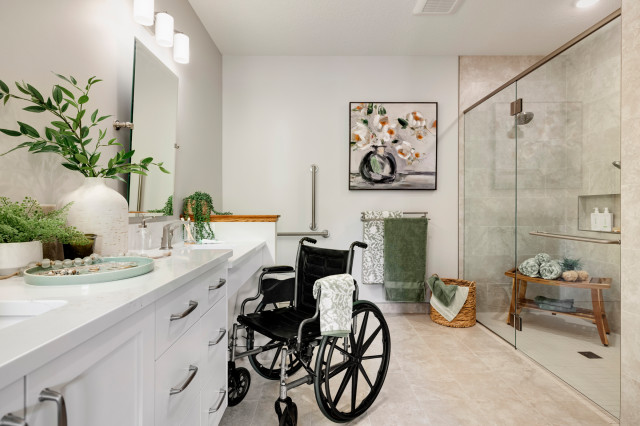


They’re often called aging-in-place features, but things like curbless showers, nonslip flooring and wide walkways and doorways can benefit everyone, no matter their age or ability. “Regardless of aging in place, there is a place for these in day-to-day life, whether it be a teenager on crutches, a family member having had surgery, active kids etc.,” designer Dana Bass says. “It’s not just about aging in place. We’ve got to account for unplanned life emergencies.”

Designer Tammy Battistessa of Ellaire Kitchen & Bath Design agrees. “Whenever possible, I include aging-in-place and universal design features in every project, as I believe many of these features benefit clients of all ages and abilities, in addition to allowing a client to safely remain in their home for a longer period of time,” she says.

Creating a home that can adapt also makes it more sustainable. “Aging in place is a key element to making legacy homes that can evolve over time,” architect Tim Barber says. With all that in mind, we asked more than 50 home design and construction professionals to share the aging-in-place features they always recommend. Here are the 10 that came up again and again.


This article was originally published by a www.houzz.com . Read the Original article here. .


This article was originally published by a
www.houzz.com . Read the Original article here. .


SKS invisible induction island

7. Invisible Induction Cooktops

SKS — formerly known as Signature Kitchen Suite — made a splash at KBIS with this kitchen island with a hidden induction cooktop and pop-up downdraft ventilation system. When not in use, the vent is flush with the countertop and the cooktop blends in with the counter’s wood grain finish, leaving a nearly seamless expanse of functional prep space.

This island is still in development, but invisible induction technology is already available to consumers. For example, the already-available outdoor Cosmopolitan kitchen from Danver, which was also on display at KBIS, is prepped to fit Invisacook induction burners.

While invisible induction admittedly is more niche and high-tech than some of the simple features mentioned previously, as it becomes more widespread, it could be a game changer — particularly in compact kitchens, since it effectively reclaims a cooktop’s width of countertop.

More on Houzz
Read more home design stories
Browse thousands of home design photos
Find a home professional
Shop for your home


This article was originally published by a www.houzz.com . Read the Original article here. .


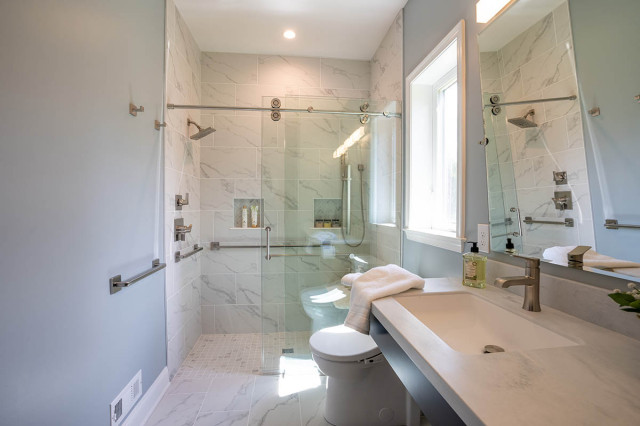
This retired couple wanted to ensure their home could address any future needs for themselves or family members, including an adult live-in son with special needs. They turned their attention to an in-law-suite bathroom that they felt could best benefit from universal design updates.

For help, they brought on designer Grace Arndt, who was helping them remodel their kitchen with similar principles. Arndt ditched a shower-tub combo in favor of a curbless shower that’s easy to enter for someone with mobility issues. A sliding glass door can easily be removed and replaced with a shower curtain that allows access for a wheelchair and a caregiver. A new double vanity has room under the sink to accommodate a wheelchair; tilted mirrors can be used by someone seated as well. Grab bars and rounded countertop corners also support aging in place. Meanwhile, light blue walls, a dark blue vanity and marble-look porcelain tiles in various sizes make the space as stylish as it is functional.


This article was originally published by a www.houzz.com . Read the Original article here. .


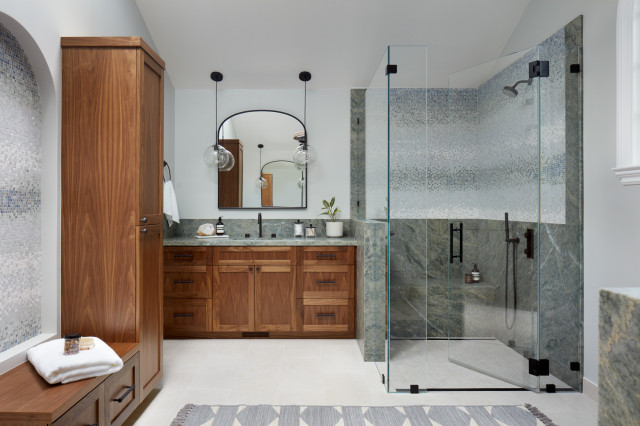
Heavy elements like a built-in jetted tub, a water closet and a pony-walled corner shower ate up much of this couple’s 166-square-foot bathroom. Looking to loosen up the layout and add stylish aging-in-place features, they reached out to designer and project manager Amanda Davis.

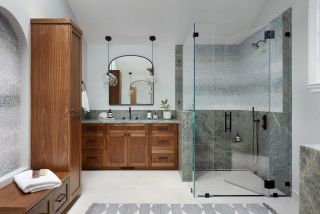
Davis removed the bathtub, walls around the water closet and pony walls around a portion of the shower to create an airier footprint with more room for maneuvering. A curbless shower with a wide ADA-compliant entry and grab bars inside (and beside the toilet) add future-proof features. Noticing that much of the home’s art was inspired by the ocean, Davis added a custom mural made from mosaic marble pieces that gives the impression of coastal fog wrapping the shower walls. A similar mosaic adorns an arched niche area that contains a walnut bench and storage cabinet. Soothing sea green granite slabs form the countertops and wrap the lower portion of the shower and pony walls. Walnut vanities add warmth visually, while heated flooring does it literally.


This article was originally published by a www.houzz.com . Read the Original article here. .


Delaney’s DesignSave Photo
7. Multiple Seating Areas and Furniture Pieces

Giving guests options for gathering and relaxing is important for facilitating an engaging party atmosphere. So pros recommend creating multiple seating areas that allow for intimate conversations or larger chats, both inside and out.

Mixing seating pieces like sofas, love seats, chaise lounges, accent chairs, swivel chairs and movable footstools can make numerous arrangements possible.

“We like to provide multifunctional pieces to our clients who love to entertain,” designer Robin Violandi of Violandi + Warner Interiors says. “It might be occasional chairs or upholstered cubes that are easy to move to different rooms to provide additional seating. Multiple small side tables are great for providing a place to put a drink or a small tray for guests. All of these items are easy to move from room to room and can serve double duty.”

This Dallas living room by Delaney’s Design is a great example. It features a casual seating area near a limestone fireplace with a sofa and two armchairs. The armchairs can swivel around to face a second seating area with a sectional sofa and two movable ottomans in front of a large-screen TV.


This article was originally published by a
www.houzz.com . Read the Original article here. .
Pin It