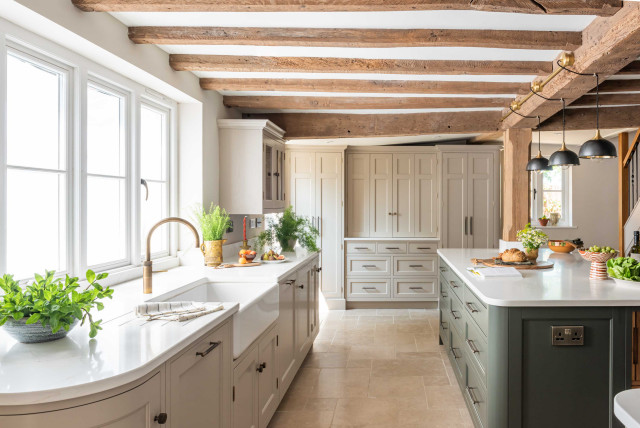
The low, beamed ceiling in this room presented a challenge for kitchen specialist Chisholm Design: how to incorporate plentiful storage without the space feeling cramped. This was especially important because the front of the English house is Georgian architecture, with high ceilings and big windows, and the back of the house, where the kitchen is located, is 16th century, with low ceilings.
“There’s quite a mismatch in the feel of the house as you go through it, so it was important the spaces flowed together,” designer Joanna Chisholm says. She did this by keeping the kitchen light and open, so the low ceiling and reduced light is less apparent, and building storage neatly into all the available space, including under the stairs and within the fireplace.
This article was originally published by a www.houzz.com . Read the Original article here. .
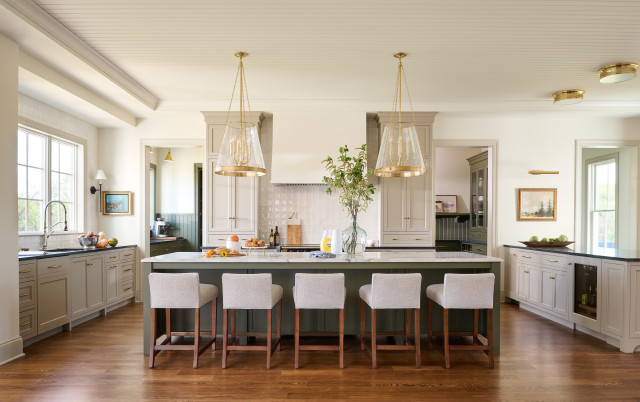

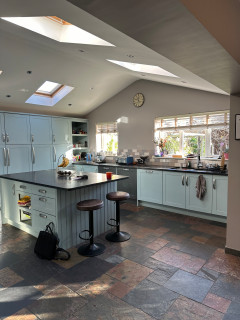
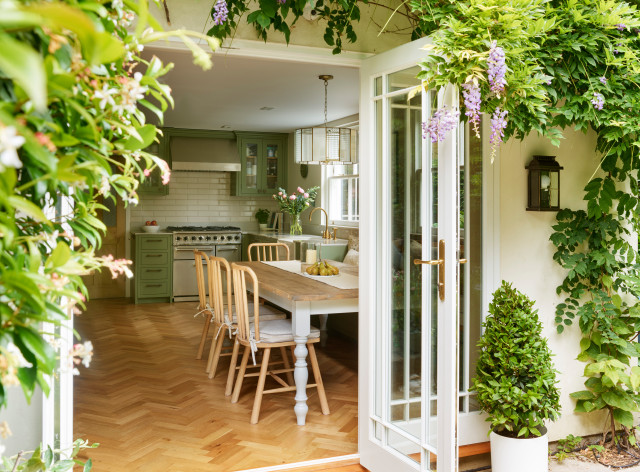

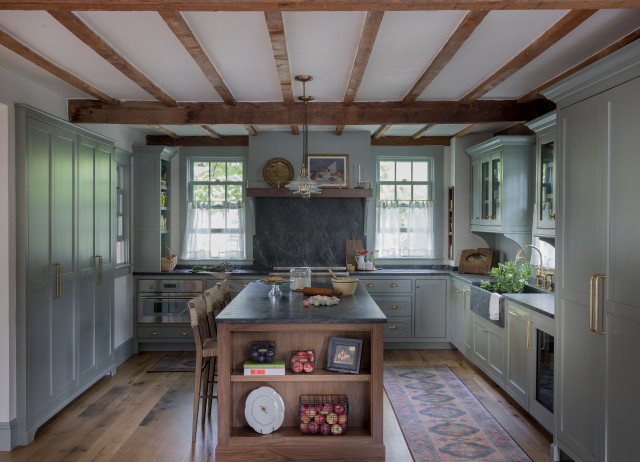
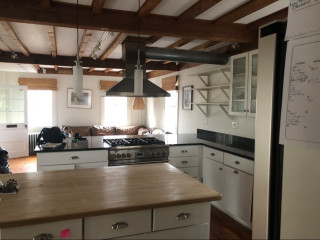
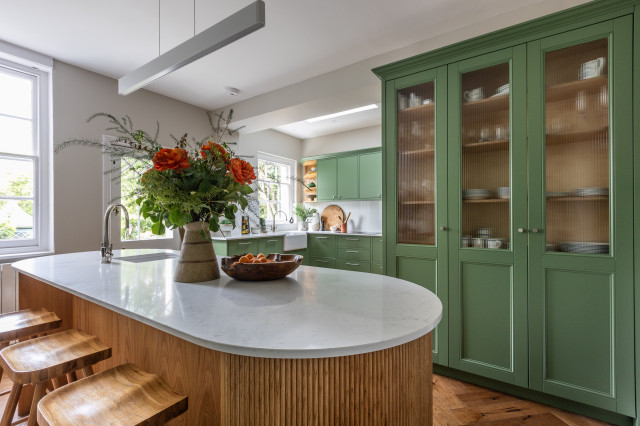

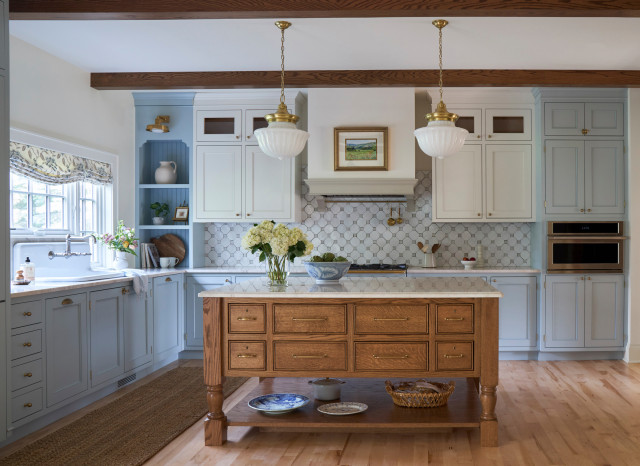
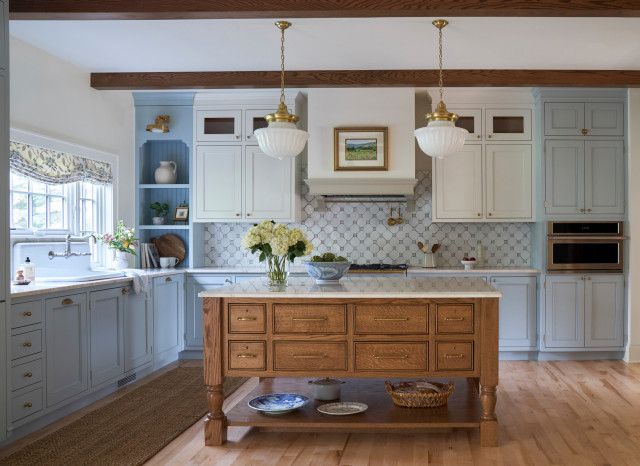
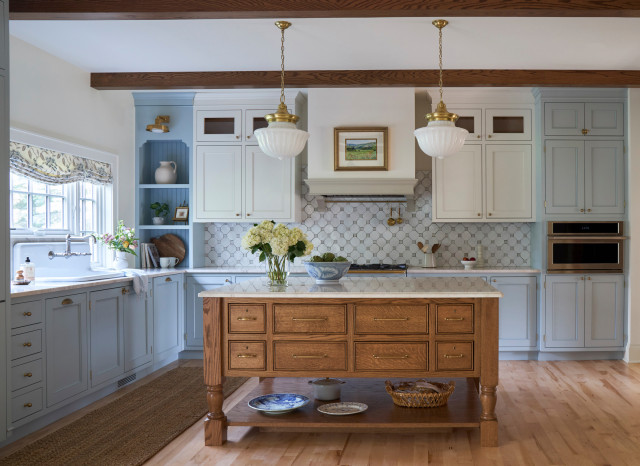
An 11-by-3½-foot island serves as the center of the kitchen and its English-kitchen-inspired green paint, marble countertop with an ogee edge and oversize glass pendant lights make it stand out. The seeded glass and knurled brass on the lights add texture and dimension, while their transparency keeps them from overwhelming the space. “I’d always rather have lights be oversized than anything that looks the slightest bit undersized,” Wunder says.
Beyond the island, a range alcove serves as the focal point. The range hood has a subtle curve to it and is flanked by countertop cabinets that provide storage for everyday dishes and glassware.
The homeowners wanted a scullery, or back kitchen, to hold additional prep space, the fridge, a second sink and dishwasher for hiding pots and pans when entertaining, small appliances, a second oven and storage for pantry items, wine, glassware, serving pieces and more. “The main kitchen laid out really nicely because we knew how much the back kitchen would be supporting it,” Wunder says. “It allowed the kitchen to become more of an entertaining kitchen.”
Find an interior designer on Houzz