This article was originally published by a www.houzz.com . Read the Original article here. .
This article was originally published by a www.houzz.com . Read the Original article here. .
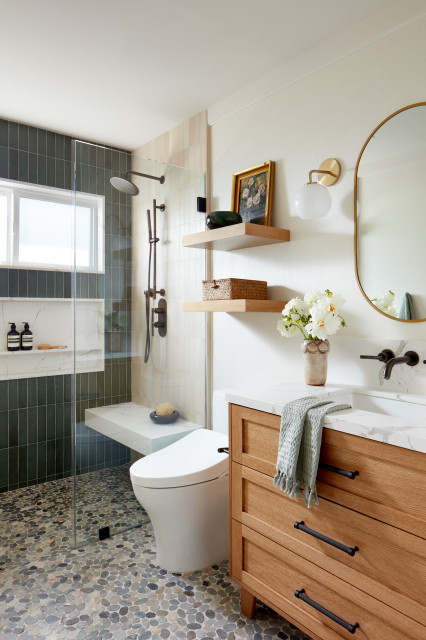
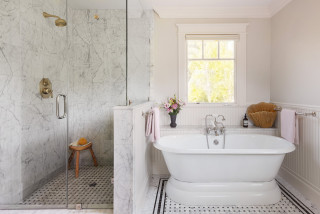
Where would you like your shower to stand? A corner is the most common spot, but the center of a room or a separate enclosed area like a water closet might be best for your layout or lifestyle.
Keep in mind that moving or adding plumbing costs money, sometimes a lot of money. So if that’s not in your budget, try to keep your updated shower in the same location as your previous one.
If you’re wondering how much space you’ll need, consider that the most popular shower widths are 32, 36 and 60 inches. (Lengths will vary.) Shower dimensions can be as small as 32 by 32 inches, but most people prefer a shower that’s at least 36 by 48 inches. Shower ceiling heights typically fall between 84 and 120 inches, depending on the space and the design.
You’ll also want to consider the dimensions of other elements in your bathroom before deciding on your shower size. For example, the size of your planned vanity might require a reduced shower space, so you might want to consider going for a smaller vanity to get a larger shower.
Another thing to consider is increasing the size of your bathroom to get the shower size you want. Talk with your design pro about opportunities to steal space from an adjacent closet or bedroom or even whether relocating the bathroom to another room in the house is the best move.
Find a bathroom designer near you
This article was originally published by a www.houzz.com . Read the Original article here. .
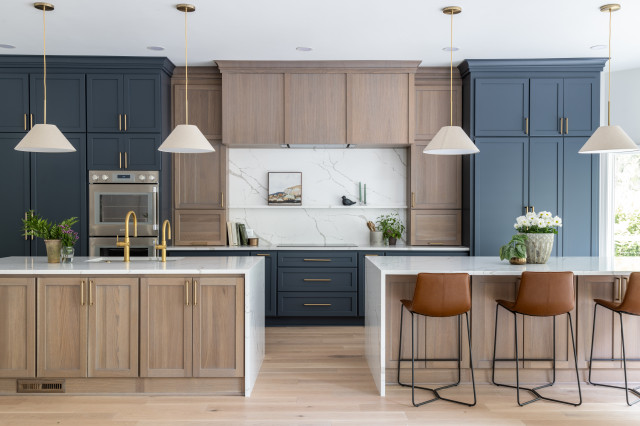

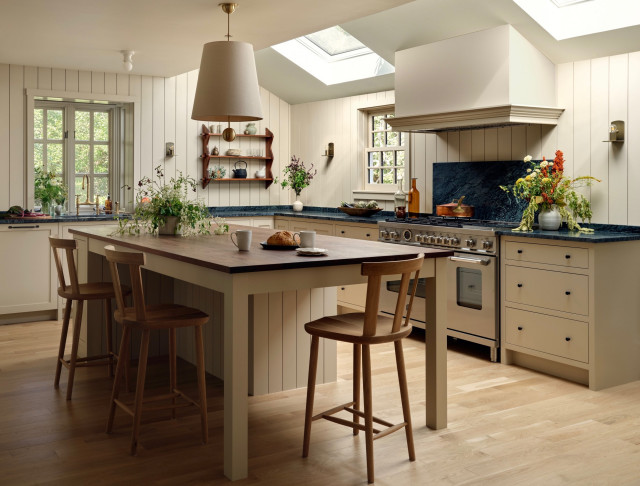
“We are frequently considering how things will work in 20 years’ time and all that’s in between,” says designer Steve Root of Roots Kitchens, Bedrooms and Bathrooms. “That means thinking about how the homeowners’ needs might change, how lifestyles may develop, how things will wear and break and, thus, how they can be maintained.”
But that doesn’t means a kitchen without character. Because when form and function work hand in hand, you’re winning at design.
This article was originally published by a www.houzz.com . Read the Original article here. .
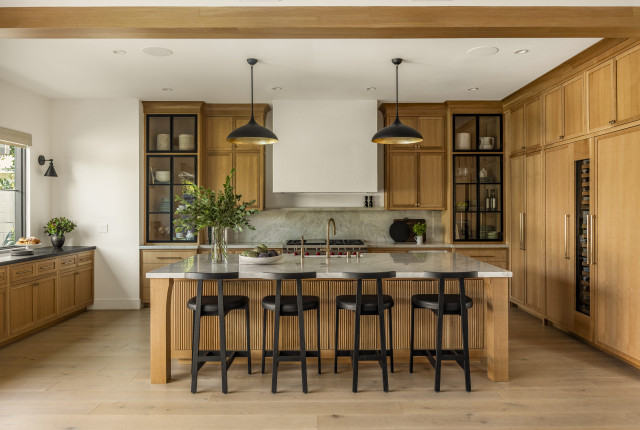
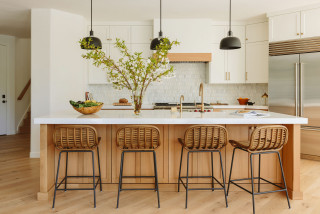
Slabs of stone come in a range of lengths, but if your kitchen is big enough for one measuring about 118 inches by about 36 inches, you’ll have the perfect-size island for preparing food and entertaining, says Blake Riley, director at Improva (formerly Blakes of Sydney).
The maximum length of some brands and materials is 118 inches, so if you choose such a brand or material, keep the length at 118 inches or less, so the countertop can be made in one piece without a seam. Seams on islands are not aesthetically pleasing, so avoid this if you can.
A minimum width of about 36 inches will enable you to have bar stools at the back of the island, so your family and friends can perch there to eat or marvel at your cooking.
This article was originally published by a www.houzz.com . Read the Original article here. .
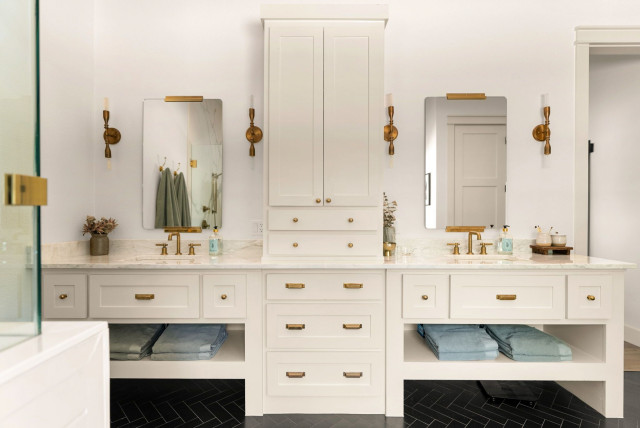
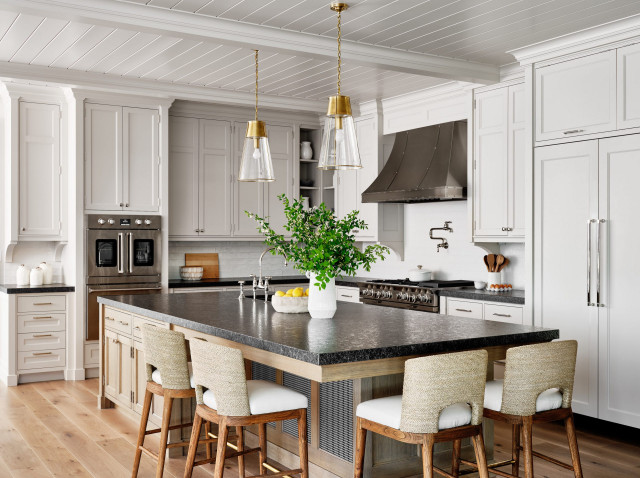
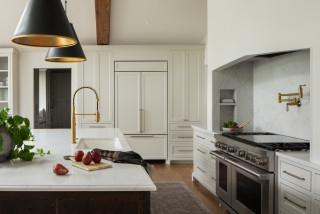
In most kitchens, the dishwasher is conveniently located next to the sink to simplify loading. When laying out your space, also think about the ease of unloading clean dishes and flatware. Consider where you’ll be standing when the dishwasher door is open and how easily you’ll be able to access drawers and storage.
Since emptying the dishwasher is a frequent task, convenient access to storage should be a priority. I have seen several kitchens where an open dishwasher door blocks access to storage for dinnerware and flatware. Other kitchen layouts require walking across the room to put away dishes. Also make sure there’s plenty of space to stand at the sink when loading the dishwasher.
This article was originally published by a www.houzz.com . Read the Original article here. .
If you like entertaining or eating everyday meals at a breakfast bar, then an island with more overhanging area and less cabinetry or storage underneath might be for you.
Think about how you imagine using the bar both every day and on special occasions. We’re realistic with many clients who have families in pointing out that children will often sit there and talk with parents, complete homework, use devices and eat (sometimes all at the same time) — I call this the “mission control” island breakfast bar.
Think about whether the sitting area needs to be closer to the fridge and pantry. This is another way of managing who is walking in and out of the kitchen, and who can be kept on the outside edges of the island — for safety as well as to avoid overcrowding in the kitchen.
Some people like to drop down part of the island to table height (around 29 inches) rather than the standard 36-inch-high countertop. This can work really well in some kitchens, but do be careful that you don’t inadvertently limit your storage and appliance options by having a really large table section on the island.