Tag

Activity

Browsing


Mortgage application activity decreased month-over-month as the 30-year fixed mortgage rate rose. The Mortgage Bankers Association’s (MBA) Market Composite Index, a measure of total mortgage application volume, declined 4.3% from February on a seasonally adjusted basis but remained 30.8% higher than a year earlier. Applications for adjustable-rate mortgages (ARM) also decreased 4.5% month-over-month, while their share of total applications was unchanged at 8.3%.

The average contract rate for a 30-year fixed-rate mortgage increased 13 basis points (bps) to 6.37%, setting back the improvement seen over the last five months. Nonetheless, the rate remained 33 bps lower than its level a year ago. The increase in mortgage rates diminished refinance activity, which fell 11.4%. Purchase applications, on the other hand, increased 6.4%, driven by growth in both FHA and VA segments. Relative to March 2025, refinance and purchase activities were up 60.4% and 6.4%, respectively.

By loan type, applications for both adjustable-rate mortgages (ARMs) and fixed-rate mortgages (FRMs) both decreased 4.5% month-over-month. On a year-over-year basis, FRM applications were up 28.6%, while ARM applications rose 62.4%. As of March 2026, ARMs applications–including both purchase and refinance loans–accounted for 8.3% of total applications on a non-seasonally adjusted basis, unchanged from last month and 1.6 percentage points higher than a year earlier. The average contract interest rate for 5/1 ARMs was 5.6% in March.

Loan sizes declined across all categories except purchase loans in March, pulling the overall average loan size down 3.3% to $401,300. The average purchase loan size rose 1.0% to $450,800, while the average refinance loan size fell 10.4% to $351,000. The average ARM loan size declined 4.0% to $929,500.


This article was originally published by a eyeonhousing.org . Read the Original article here. .


Residential demolition activity in 2025 declined 0.1% year-over-year but remained above pre-pandemic levels. According to NAHB analysis of data from Construction Monitor, permits pulled for residential demolition have been increasing since 2018, with the exception of 2020, when building-related activities broadly stalled. Demolition activity rebounded sharply in 2021 and 2022 but has since plateaued. Even with the recent stall, demolition permits in 2025 were still 34.2% higher than in 2018, underscoring the extent to which activity remains elevated relative to pre-pandemic norms.

While the data do not differentiate between partial or full demolitions, teardowns are often an indicator of redevelopment and neighborhood reinvestment, and thus, signals future construction. Previous NAHB survey analysis indicated that teardown-related construction projects made up approximately 7% of single-family starts in 2024.

At the state level, demolition activity is highly concentrated, with California, Texas, and Florida—the three most populous states—usually leading the nation in demolition permits. However, from 2023 through 2025, New Jersey ranked third in total demolition permits, surpassing Texas. New Jersey’s elevated demolition activity reflects the age of its housing stock. Approximately 73% of homes in the state were built before 1980, out of which 18% were built before 1939, leaving many properties functionally obsolete or in need of replacement. In response, several municipalities have pursued targeted redevelopment and blight reduction initiatives. For example, Trenton, the capital city, launched one of its largest blight reduction projects in 2023, aimed at revitalizing distressed neighborhoods and expanding the supply of quality housing.

In 2025, New Jersey accounted for approximately 10.4% of all residential demolition permits nationwide. Florida recorded the largest share at 14.6%, followed by California at 13.3%. Texas remained a significant contributor at 7.2%, while New York ranked fifth with about 4.1% of total activity. Collectively, the top five states accounted for nearly half of all residential demolition permits issued in 2025, highlighting the high degree of geographic concentration at the state level.

At a smaller geographic scale, the year-to-year variability is substantially higher. To account for this volatility, examining cumulative demolition permitting since 2018 provides insight into where demolition activity has been persistently concentrated over the current cycle. On this basis, Los Angeles County, CA accounted for the largest share of cumulative demolition permits (4.8%), followed by Harris County, TX (3.1%), Cuyahoga County, OH (2.6%), King County, WA (2.0%), and Miami-Dade County, FL (1.8%). Together, these five counties accounted for nearly 15% of all demolition activity nationwide over the period.


This article was originally published by a eyeonhousing.org . Read the Original article here. .
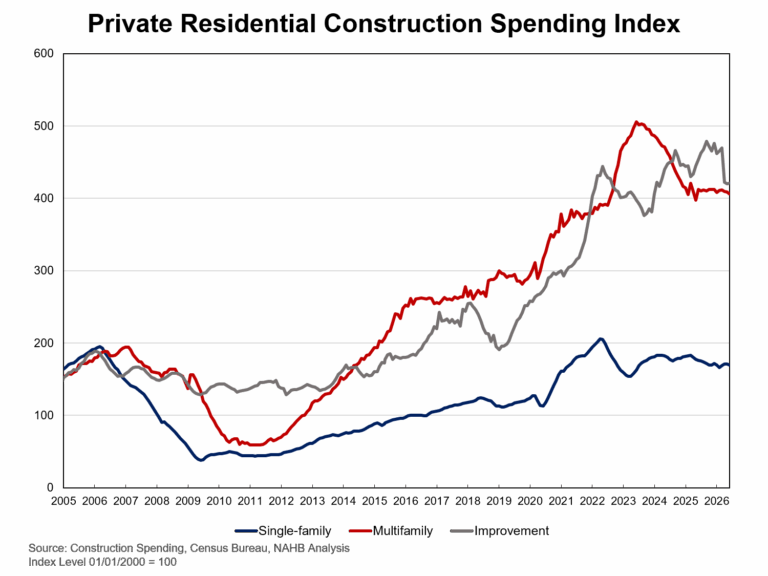

Mortgage application activity increased month-over-month as the 30-year fixed mortgage rates reached a three-year low. The Mortgage Bankers Association’s (MBA) Market Composite Index, a measure of total mortgage application volume, increased 1.5% from January on a seasonally adjusted basis and was 56.3% higher than a year earlier.  The data also indicated a rising adjustable-rate mortgage (ARM) share, increasing from 5.7% of mortgages to 8.3% over the past year.

The average contract interest rate for 30-year fixed mortgage rates declined a further seven basis points (bps) to 6.14%, tracking the decline in the 10-year treasury yield. Compared with February 2025, the 30-year fixed mortgage rate was 73 bps lower. The decline in mortgage rates supported the continued strength in refinancing activity, which increased 11.3%. On the other hand, purchase applications decreased 12.3% as tight existing-home inventory and winter storms dampened home-buying activity. Relative to February 2025, refinance and purchase activities are up 121.1% and 9.0%, respectively.

By loan type, applications for adjustable-rate mortgages (ARMs) increased 18.0% month-over-month while fixed-rate mortgages (FRMs) held steady. On a year-over-year basis, FRM applications were up 51.8%, while ARM applications more than doubled, rising 129.9%. As of February 2026, ARMs accounted for an average of 8.3% of total applications on a non-seasonally adjusted basis, up 1.2 percentage points from January and 2.6 percentage points higher than a year earlier.

Loan sizes across all loan types increased in February with the total market increasing by 3.2% to $414,800. Average purchase loan sizes increased 2.5% to $446,300, while the refinance loan size increased by 3.7% to $391,800. The average ARM loan size climbed 4.6% to $968,300.


This article was originally published by a eyeonhousing.org . Read the Original article here. .
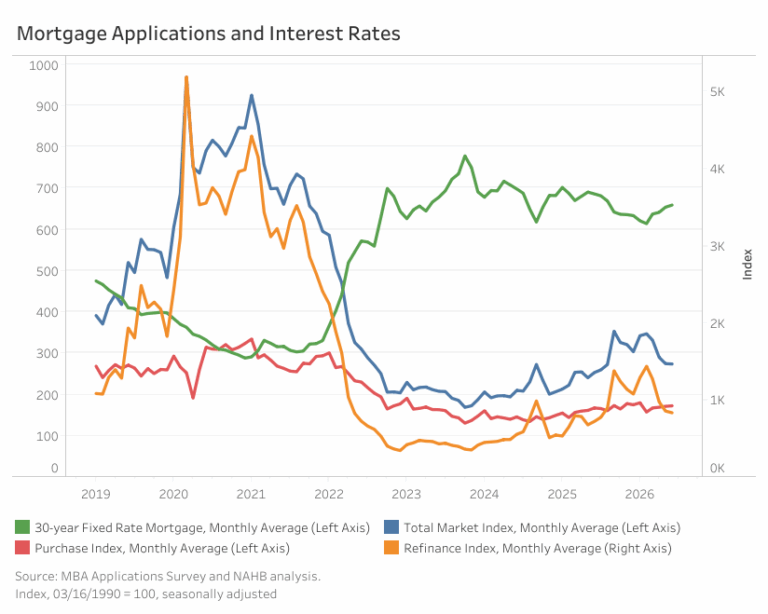

Wage growth for residential building workers moderated notably in 2025, reflecting a broader cooling in housing activity and construction labor demand. According to the latest data from the U.S. Bureau of Labor Statistics (BLS), both nominal and real wages remained modest during the fourth quarter, signaling a shift from the rapid post-pandemic expansion to a slower-growth phase.

In nominal terms, average hourly earnings (AHE) for residential building workers rose to $39.63 in December 2025, up 3.3% from $38.37 a year ago. While this marked a modest acceleration from November’s 2.0% year-over-year gain, wage growth has slowed considerably from the peak of 9.4% recorded in June 2024. Elevated mortgage rates, ongoing affordability challenges, and persistently high construction costs constrained home building activity over the past year. As a result, labor demand eased accordingly. Meanwhile, the number of open, and unfilled construction sector jobs continued to trend downward, consistent with the overall slowdown in housing activity.

Despite the slowdown in wage growth, residential building workers’ wages remain competitive relative to other industries:

9.9% higher than the manufacturing sector ($36.07 per hour)

23.3% higher than the transportation and warehousing sector ($32.14 per hour)

2.6% lower than the mining and logging sector ($40.69 per hour)

Note:

Data used in this post relate to all employees in the residential building industry. This group includes both new single-family housing construction (excluding for-sale builders) and residential remodelers but does not include specialty trade contractors.


This article was originally published by a eyeonhousing.org . Read the Original article here. .


Mortgage application activity rose sharply in January, driven primarily by a surge in refinancing activity as mortgage rates declined to a new low. The Mortgage Bankers Association’s (MBA) Market Composite Index, a measure of total mortgage application volume, increased 12.9% from December on a seasonally adjusted basis and was 61.3% higher than a year earlier.

The average contract interest rate for 30-year fixed mortgages dropped 13 basis points (bps) to 6.2% following the announcement of $200 billion in mortgage-backed securities (MBS) buybacks by the GSEs. Compared with January 2025, the 30-year fixed mortgage rate was 81 bps lower. The decline in rates supported month-over-month gains in both purchase and refinance activity. Purchase applications increased 2.9%, while refinance applications surged 19.8%. Relative to January 2025, purchase activity increased 16.2%, while refinance applications jumped 143.8%.

By loan type, applications for fixed-rate mortgages (FRMs) and adjustable-rate mortgages (ARMs) increased 12.9% and 7.9% month-over-month, respectively. On a year-over-year basis, FRM applications were up 57.8%, while ARM applications more than doubled, rising 113.1%. As of January 2026, ARMs accounted for an average of 7.1% of total applications on a non-seasonally adjusted basis, down 0.4 percentage points from December but 1.7 percentage points higher than a year earlier.

For loan sizes, the average loan amount across the total market increased by 1.1% to $402,000. Average purchase loan sizes increased 2.5% to $435,400, while the refinance loan size increased modestly by 0.2% to $378,000. In contrast, the average ARM loan size continued to decline, falling 4.4% to $925,600.


This article was originally published by a eyeonhousing.org . Read the Original article here. .


Mortgage application activity declined in December despite a modest easing in mortgage rates. The Mortgage Bankers Association’s (MBA) Market Composite Index, a measure of total mortgage application volume, fell 5.3% from November on a seasonally adjusted basis, though it remained 47.1% higher than a year ago.

The average contract interest rate for 30-year fixed mortgages edged down 2 basis points to 6.3%, the lowest level of 2025. Nonetheless, both purchase and refinance applications declined month-over-month, down 1.6% and 5.3%, respectively. Relative to December 2024, purchase activity increased 16.8%, while refinance applications were up 98.6%.

By loan type, applications for both fixed-rate mortgages (FRMs) and adjustable-rate mortgages (ARMs) declined from November, decreasing 4.8% and 13.6%, respectively. On a year-over-year basis, FRM applications were up by 43.9%, while ARM applications have more than doubled, rising 105.1%. As of December 2025, ARMs accounted for an average 7.5% of total applications on a non-seasonally adjusted basis, down 0.3 percentage points from November but 2.2 percentage points higher than a year earlier.

For loan sizes, the average loan amount across all loan types increased marginally by 0.6% to $397,500. Average purchase loan sizes declined 0.8% to $424,800, while the refinance loan size increased 2.5% to $377,300. The average size of ARM loans edged down 0.1% to $968,000.


This article was originally published by a eyeonhousing.org . Read the Original article here. .


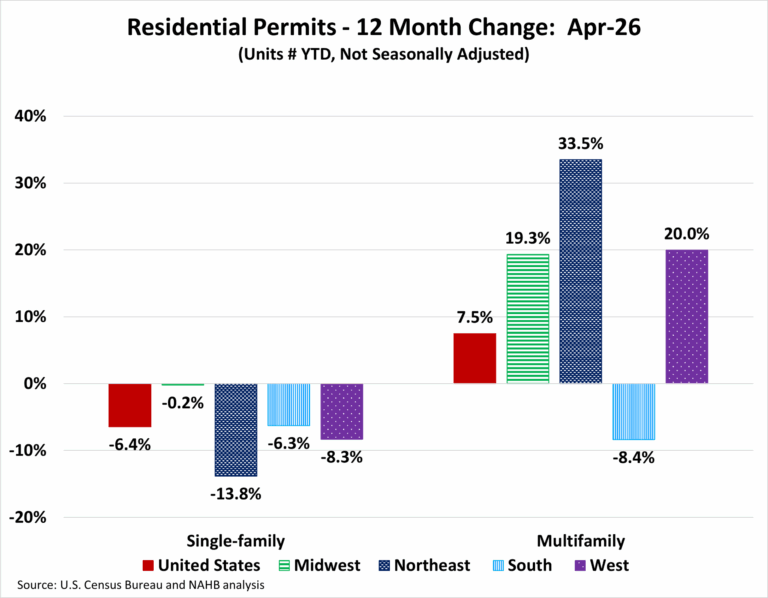
Business sentiment across the home construction and design industry has declined, marking the second consecutive quarter of reduced optimism as business activity wanes, according to the Q3 2025 U.S. Houzz Renovation Barometer. The outlook among firms is significantly lower than it was at the start of the year, although many professionals still expect an improved third-quarter performance.

The recently released Barometer report provides timely insights into the residential renovation industry, including expectations, project backlogs and recent activity among businesses in the construction sector and the architectural and design services sector.

“Expectations have become increasingly cautious among construction and design professionals as they navigate ongoing economic challenges and reduced business activity,” Houzz staff economist Marine Sargsyan says. “That said, stable backlogs and gradual adjustments in response to market conditions indicate some resilience. Most are hopeful for improved momentum through the second half of the year.”


This article was originally published by a www.houzz.com . Read the Original article here. .


Housing permits continued a downhill trend for the fourth month in a row, pointing to a broader residential construction slowdown for 2025. Over the first four months of 2025, the total number of single-family permits issued year-to-date (YTD) nationwide reached 320,259. On a year-over-year (YoY) basis, this is a decline of 4.7% over the April 2024 level of 336,124. For multifamily, the total number of permits issued nationwide reached 154,668. This is 1.5% below the April 2024 level of 157,076.

Year-to-date ending in April, single-family permits were down in three out of the four regions. The Northeast posted an increase of 5.7%. The Midwest was down by 0.6%, the West was down by 5.6%, and the South was down by 6.1% in single-family permits during this time. For multifamily permits, three out of the four regions posted increases. The Midwest was up by 16.7%, the South was up by 6.2%, and the West was up by 3.7%. Meanwhile, the Northeast declined steeply by 37.7%.

Between April 2025 YTD and April 2024 YTD, 18 states posted an increase in single-family permits. The range of increases spanned 27.0% in Hawaii to 0.2% in Maine. The remaining 32 states and the District of Columbia reported declines in single-family permits with New Mexico reporting the steepest decline of 27.5%.

The ten states issuing the highest number of single-family permits combined accounted for 63.6% of the total single-family permits issued. Texas, the state with the highest number of single-family permits, issued 52,654 permits over the first four months of 2025; This is a decline of 7.4% compared to the same period last year. The second highest state, Florida, decreased by 9.3%, while the third highest, North Carolina, posted a decline of 1.5%.

Between April 2025 YTD and April 2024 YTD, 26 states recorded growth in multifamily permits, while 24 states and the District of Columbia recorded a decline. Alaska (+312.5%) led the way with a sharp rise in multifamily permits from 24 to 99, while New York had the biggest decline of 58.7% from 14,389 to 5,946.

The ten states issuing the highest number of multifamily permits combined accounted for 61.1% of the multifamily permits issued. Over the first four months of 2025, Florida, the state with the highest number of multifamily permits issued, experienced an increase of 18.7%. Texas, the second-highest state in multifamily permits, saw an increase of 6.8%. California, the third largest multifamily issuing state, increased by 0.2%.

At the local level, below are the top ten metro areas that issued the highest number of single-family permits.

For multifamily permits, below are the top ten local areas that issued the highest number of permits.

Discover more from Eye On Housing

Subscribe to get the latest posts sent to your email.


This article was originally published by a eyeonhousing.org . Read the Original article here. .
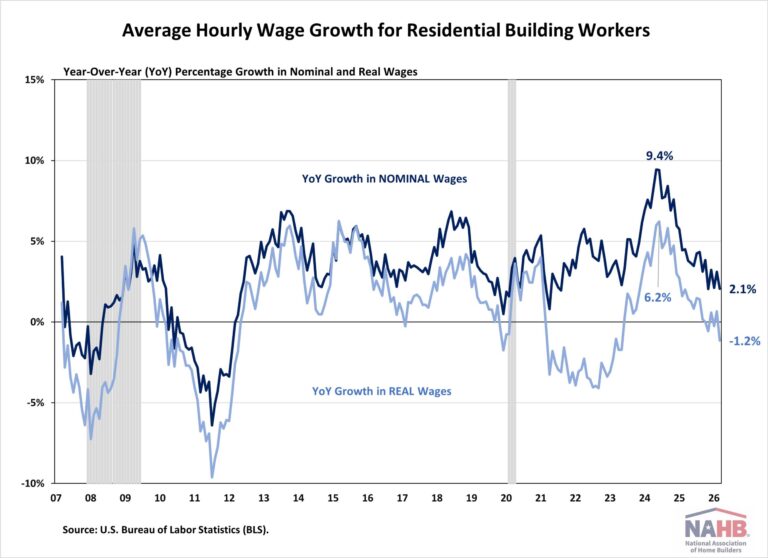

Permits continue a downhill trend for the third month in a row. Over the first three months of 2025, the total number of single-family permits issued year-to-date (YTD) nationwide reached 232,221. On a year-over-year (YoY) basis, this is a decline of 3.8% over the March 2024 level of 241311. For multifamily, the total number of permits issued nationwide reached 113,344. This is 3.7% below the March 2024 level of 117,695.

Year-to-date ending in March, single-family permits were down in three out of the four regions. The Northeast posted an increase of 9.2%. The Midwest was down by 1.9%, the South was down by 4.8%, and the West was down by 5.0% in single-family permits during this time. For multifamily permits, two out of the four regions posted increases. The South was up by 14.6% and the Midwest was up by 12.9%. Meanwhile, the West posted a decline of 13.0% and the Northeast declined steeply by 42.8%.

Between March 2025 YTD and March 2024 YTD, 20 states posted an increase in single-family permits. The range of increases spanned 29.6% in Alaska to 0.2% in Utah. The remaining 30 states and the District of Columbia reported declines in single-family permits with New Mexico reporting the steepest decline of 32.7%.

The ten states issuing the highest number of single-family permits combined accounted for 64.3% of the total single-family permits issued. Texas, the state with the highest number of single-family permits, issued 38,425 permits over the first three months 2025, which is a decline of 5.5% compared to the same period last year. The second highest state, Florida, was down by 8.8%, while the third highest, North Carolina, posted a decline of 0.1%.

Between March 2025 YTD and March 2024 YTD, 23 states and the District of Columbia recorded growth in multifamily permits, while 27 states recorded a decline. Alaska (+533.3%) led the way with a sharp rise in multifamily permits from 12 to 76, while New York had the biggest decline of 64.8% from 11,316 to 3,984.

The ten states issuing the highest number of multifamily permits combined accounted for 61.7% of the multifamily permits issued. Over the first three months of 2025, Florida, the state with the highest number of multifamily permits issued, experienced an increase of 48.8%. Texas, the second-highest state in multifamily permits, saw a decline of 0.5%. California, the third largest multifamily issuing state, decreased by 22.7%.

At the local level, below are the top ten metro areas that issued the highest number of single-family permits.

For multifamily permits, below are the top ten local areas that issued the highest number of permits.

Discover more from Eye On Housing

Subscribe to get the latest posts sent to your email.


This article was originally published by a eyeonhousing.org . Read the Original article here. .
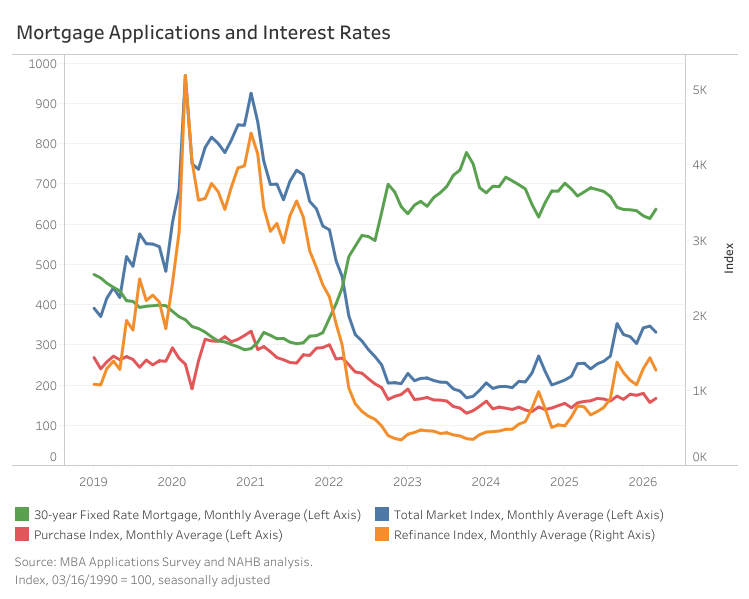

Mortgage loan applications saw little change in April, as refinancing activity decreased. The Market Composite Index, which measures mortgage loan application volume based on the Mortgage Bankers Association (MBA) weekly survey, experienced a 0.4% month-over month increase on a seasonally adjusted (SA) basis. However, year-over-year, the index is up 29.3% compared to April 2024.

The average rate for a 30-year fixed mortgage climbed 10 basis points in April, reaching 6.8%, according to the MBA survey. As rates edged higher, purchase activity posted a modest 1.9% month-over-month gain (SA), while the Refinance Index declined by 1.4% (SA). Compared to a year ago, mortgage rates are down 37 bps, and thus, purchase applications are higher by 11.2%, while refinance activity has jumped 62.0%.

Loan sizes remained relatively stable. In April, the average loan size across the total market (including purchases and refinances) held steady at $403,500, month-over-month, on a non-seasonally adjusted basis (NSA). Purchase loans sizes edged down 1.3% to $444,000, while refinance loan sizes increased 0.5% to $339,300. Notably, the average loan size for adjustable-rate mortgages (ARMs) fell 7.8%, from $1.14 million to $1.05 million.

Discover more from Eye On Housing

Subscribe to get the latest posts sent to your email.


This article was originally published by a eyeonhousing.org . Read the Original article here. .

Pin It