Author

realtykast_fmyriy

Browsing


When a property reaches the REO stage—Real Estate Owned—it signals the final step of the foreclosure cycle. The homeowner is out, the auction has been completed (often unsuccessfully), and the lender now holds title. 

For investors, the REO category can represent a unique opportunity: properties priced below market value, homes needing renovation, and inventory that banks often prefer to liquidate efficiently.

November’s REO data reveals a continued rise in completed foreclosures compared to last year, even as early-stage filings pulled back. That combination—fewer new filings, more completed cases—is a hallmark of a maturing foreclosure pipeline. It means the early distress we saw in spring and summer 2025 is now materializing into real, actionable inventory.

This month, the numbers also revealed fascinating regional and county-level differences. Some states saw REOs surge sharply, others cooled, and several counties experienced dramatic shifts in how quickly properties moved from auction to bank-owned status.

If you’re an investor looking to understand where real distressed inventory is emerging—and how to position your strategy—November’s REO story is essential reading.

National REO Activity Climbs Again

In November 2025, the U.S. recorded 3,884 REOs (bank-owned properties), down just 0.15% month over month, and up 25.74% year over year.

This slight monthly dip is negligible—REO activity remains substantially higher than one year ago. Nationwide, more properties are completing the foreclosure process and returning to lenders’ inventories.

Remember: REOs lag Starts and Notice of Sale by several months. So this year-over-year jump reflects the elevated Starts we tracked throughout 2025, especially in fast-moving states like Texas and judicial states like Florida and Ohio.

State-Level Breakdown: A Tale of Diverging Markets

Let’s take a look at the five core states driving national REO activity.

1. Florida

  • 311 REOs
  • +27.98% MoM
  • +132.09% YoY

Florida saw one of the most dramatic increases nationally. Even with a steep decline in new filings this month, the state’s backlog of distressed properties continues to clear.

2. California

  • 314 REOs
  • 6.55% MoM
  • -21.89% YoY

California bucked the national trend, posting both monthly and annual declines. This suggests that, while distress exists, cases here are dragging longer through the legal process.

3. Ohio

  • 130 REOs
  • +7.44% MoM
  • -11.56% YoY

Ohio’s REO activity is steady but slightly lower than last year. This reflects a more normalized cycle after elevated filings earlier in the year.

4. North Carolina

  • 122 REOs
  • -20.26% MoM
  • +40.23% YoY

North Carolina continues to be one of the nation’s fastest-moving foreclosure states. Even with a monthly dip, REOs remain far higher than in 2024.

5. Texas

  • 546 REOs
  • +52.51% MoM
  • +135.34% YoY

Texas delivered the biggest REO spike of any major state—both month over month and year over year. The state’s fast nonjudicial process continues to push properties from Start to auction to REO faster than any judicial state.

Why the REO Stage Matters for Investors

For investors, REOs offer a powerful mix of opportunities and advantages.

1. Banks become motivated sellers

When lenders take possession, maintaining the property becomes an expense, not an asset. They often want these properties sold efficiently and may price them below comparable retail listings.

2. Due diligence is easier than at auction

Unlike at a courthouse sale:

  • Investors can inspect the property.
  • They can order an appraisal.
  • Title issues can be addressed before closing.
  • Financing—including non-recourse loans inside a self-directed IRA—is possible.

This makes REOs an accessible entry point for new and experienced investors alike.

3. REOs reveal the end-point of market distress

As REO levels rise, it signals that:

  • More homeowners have exited their homes.
  • More auctions went unsold.
  • Lenders are about to release inventory to the public market.

This can create opportunity in both acquisition pricing and volume.

4. IRA and Solo 401(k) investors benefit from timing

Because REOs move slower than auctions, investors using tax-advantaged retirement accounts can:

  • Perform deeper due diligence.
  • Arrange non-recourse financing.
  • Structure long-term buy-and-hold strategies.

Compared to the fast pace of trustee sales, REOs fit comfortably within retirement account rules and timelines.

County-Level REO Insights: Where Distress Is Converting Fastest

Using Option C (only the most meaningful changes), here are the county-level standouts for November:

Florida: Gulf Coast and Central Florida lead REO growth

  • Lee County saw one of the largest MoM REO increases in the state.
  • Orange County (Orlando) also posted a meaningful rise, indicating steady conversion from earlier filings.
  • Miami-Dade and Broward stayed elevated, but moved more modestly this month.

Investor insight

Florida’s REO growth is real—and geographically diverse. Expect new inventory across both coasts heading into 2026.

California: Inland Empire slows, LA stabilizes

REO declines this month were driven by:

  • San Bernardino: One of the sharpest MoM pullbacks
  • Riverside: Slowing REO conversion despite persistent distress
  • Los Angeles: Stabilized, showing neither a surge nor collapse

Investor insight

California’s REOs are cooling, suggesting longer foreclosure timelines and fewer quick-turn opportunities.

Ohio: Columbus and Cincinnati shift

  • Franklin County (Columbus) posted a surprise increase—one of the few counties to rise this month.
  • Cuyahoga County (Cleveland) dropped, reflecting fewer auctions converting to REO.
  • Hamilton County (Cincinnati) remained steady.

Investor insight

Columbus continues to emerge as Ohio’s most dynamic foreclosure market.

North Carolina: Volatility across major metros

  • Mecklenburg County (Charlotte) saw a meaningful MoM REO decline.
  • Wake County (Raleigh) followed the same pattern.
  • Cumberland County (Fayetteville) experienced the steepest drop.

Investor insight

North Carolina is still growing YoY, but November marks a clear slowdown in REO conversion.

Texas: The biggest REO story in America

Texas delivered one of the most dramatic county-level stories of the month:

  • Harris County (Houston) saw REO volume surge sharply MoM.
  • Dallas and Tarrant Counties (DFW) also reported substantial increases.
  • Bexar County (San Antonio) posted a strong jump, consistent with its rising auction activity.

Investor insight

Texas continues to convert distress into REO at record speed—ideal for investors seeking bank-owned opportunities.

How Investors Can Use REO Data to Advance Their Strategy

1. Identify markets where inventory is increasing

Rising REOs often lead to:

  • More distressed listings.
  • Increased negotiation leverage.
  • Expanded buying opportunities.

2. Target counties where conversion is fastest

Counties with rapid Start > NOS > REO progression are ideal for:

3. Track lender behavior

Banks with growing REO portfolios may:

  • Price listings more aggressively.
  • Offer incentives.
  • Prioritize faster closings.

4. Use REOs to build a tax-advantaged portfolio

Inside a Self-Directed IRA or Solo 401(k), REO investing may offer:

  • Potential tax-deferred or tax-free rental income.
  • Long-term appreciation.
  • Structured loan strategies using non-recourse financing.

Take Control of Your Investment Strategy

REOs represent the end of the foreclosure cycle—but for investors, they can represent the beginning of opportunity. With clear inventory trends emerging across key states and counties, now is the time to study local patterns, evaluate property conditions, and be ready for new listings as they hit the market.

To learn how to invest in real estate using a Self-Directed IRA or Solo 401(k), visit: www.TrustETC.com/RealEstate

Equity Trust Company is a directed custodian and does not provide tax, legal, or investment advice. Any information communicated by Equity Trust is for educational purposes only, and should not be construed as tax, legal, or investment advice. Whenever making an investment decision, please consult with your tax attorney or financial professional.

BiggerPockets/PassivePockets is not affiliated in any way with Equity Trust Company or any of Equity’s family of companies. Opinions or ideas expressed by BiggerPockets/PassivePockets are not necessarily those of Equity Trust Company, nor do they reflect their views or endorsement. The information provided by Equity Trust Company is for educational purposes only. Equity Trust Company and their affiliates, representatives, and officers do not provide legal or tax advice. Investing involves risk, including possible loss of principal. Please consult your tax and legal advisors before making investment decisions. Equity Trust and BiggerPockets/PassivePockets may receive referral fees for any services performed as a result of being referred opportunities


Source link


Real estate investing is about to get easier…much easier. And this could be the average American’s first opportunity in years to get in the game. Small investors are more optimistic, planning to buy—not pause—in 2026 as home prices stall, rents get ready to rise again, and affordability slowly trickles back.

This is the State of Real Estate Investing in 2026, and the opportunities are growing.

We’ve turned a corner in the housing market. Buyers have control, prices can be negotiated, and mortgage rates are coming down—this is what we’ve been asking for. Cash flow is even making a comeback after many investors thought it was gone for good. So, what strategies will work especially well in 2026, what are the pitfalls investors should look out for, and what is Dave buying in the next 12 months?

Today, we’re sharing it all. Strategies. Tactics. Risks. Rewards. We’re cracking open the expert investor playbook, and even sharing brand-new insights from investors that contradict what major media networks have been telling you about the housing market.

Dave:
Real estate investing is about to get easier, much easier in 2026. Deals are getting easier to find. Homes are sitting on the market longer. Rates are actually starting to come down and buyers finally have more choices. But the average American may miss this. Many people are looking at the housing market and they don’t like what they see. Meanwhile, small investors, they’re buying, they’re building wealth, and they’re more optimistic about 2026 than ever. So what do they know that the average American doesn’t? What opportunities are appearing in the market that you don’t want to miss? We’re breaking it all down today in the 2026 state of real estate investing. I’m going to give you the exact strategies that are primed to work in 2026. I’ll share my vision of the housing market and where we’re heading, and I’ll explain why waiting for a crash may be the single most expensive mistake that you can make.
The 2026 state of real estate investing starts now.
Hey, everyone. Welcome to the BiggerPockets Podcast and happy new year. I’m Dave Meyer, investor, analyst, and head of real estate investing at BiggerPockets. It is so great to start a new year here on the BiggerPockets Podcast with all of you. This is an exciting time of year. It’s time to set ambitious goals, to map out your plans for the year and to put yourself on track towards the life you want for yourself and for your family. But I want to just start by saying, I think there are good opportunities coming for real estate investors in 2026. These are better opportunities that I’ve seen honestly in years, and it just gets me excited in general to be in this industry at this time. So in our show today, that’s what we’re going to be covering. I’m going to run through my state of real estate investing report as I do every year.
It’s basically my outlook for the housing market and investing conditions for the year. I’ll share my personal strategy that I am working on for 2026. We’re going to talk about better inventory that’s on the market, better deal flow, better cash flow possibilities out there. Yes, that is absolutely happening. We’ll talk about improving affordability, the outlook for housing prices and mortgage rates, whether you should wait for a crash and more. We do have a packed episode today and I want to get right into it, but first, I just have a little bit of a teaser for you because on Wednesday show, the next show that comes out, we have a fun announcement to make. I personally could not be more excited about this announcement. It is a huge win for this show and the BiggerPockets community, but I will say no more. You got to tune in on Wednesday.
So with that, let’s get into our 2026 state of real estate investing. So what is the state of real estate investing in 2026? If I had to pick just one word for it, I always try and just narrow it down to one word. And my word for 2026 is improving. Things are getting better for real estate investors after several tough years. I doubt I need to tell any of you this, but deals over the last couple years, they’ve been pretty hard to find. Cash flow has been tough. Financing is hard. Uncertainty has been super high and nothing is perfect. We still have a long way to go in the housing market to get back to normal, to get back to healthy, but it does in many ways feel like we’ve turned a corner, at least from my perspective. I am personally not super bothered by a modest correction in the housing market like the one I think we’re in.
I actually think this is a step in the right direction to a more affordable, a more predictable, a more productive housing market. And at the same time, those changes makes investing easier for real estate investors because every single market has its trade-offs. When things are going up like crazy, like it was during the pandemic, yeah, it can boost returns. That is the benefit of that kind of market. But there’s also a downside to those kinds of market where deal flow was hard. Cashflow was harder to find. Now we’re transitioning and we’re sort of getting the opposite, right? Maybe appreciation is not going to be great over the next couple years, and we’ll talk about that. But that means at the same time, there’s better inventory. Great assets are on sale right now. There’s less competition. So let’s look a little bit at some of these specific things that are improving for real estate investors.
The first one, like I said, is deal flow. I think this is the thing that gets me really excited right now because it has been a slog looking for deals since at least 2022, maybe even earlier. Even during 2020 and 2021, it was hard to find good deals. But right now, inventory is getting better. That means there are more homes for sale on the market. It’s not crazy. It’s not like we’re seeing some flood of inventory that’s going to lead to a crash, but it’s getting better. That means there are more options for us as real estate investors to choose from. Affordability is going up. This one just honestly, it warms my heart. We have had years and years of declining affordability. You’ve probably heard me say this on the show, but housing affordability the last couple years have been near 40 year lows. And although we still have a long way to go, don’t get me wrong, housing is not affordable yet.
Just this last data that we have from October of 2025, it is the best affordability we’ve seen in three years. As investors, this really helps. We’re also seeing days on market go up. This leads to better negotiating leverage. When sellers are seeing their properties sit on the market longer and longer, it makes them more likely, more willing to cut a deal that also benefits us as real estate investors. The next one might surprise you, but cashflow is actually getting better. If you think about a correcting market like the one that we’re in, even if home prices in your local market are staying stagnant, but rents are continuing to grow, which on a national level they are. Most of the forecasts I’ve seen for rent expect modest rent growth in the next year. That means that cashflow prospects are getting better. Now, I’m not saying it’s back to 2019 levels.
It’s slow, but they’re starting to get better. And competition is going down because there’s just more homes on the market. Demand actually hasn’t come down that much, but since there is more supply on the market, that means relatively there is less competition. All these things combined, these are things that we can and should be celebrating. It is a reason, in my opinion, for optimism. And I am not the only one here. I look at these things and I don’t see, oh man, the housing market might be flat. Maybe it will decline a couple years and think, “Oh, this is risky.” I don’t see this so much as risk as I see it as opportunity, reason for optimism. Now, again, not everything’s great. Like with any market, there are trade-offs and this market is no exception. Prices are pretty stagnant. Prices might fall in some places.
So appreciation is going to be lower. I personally think the risk of a crash is relatively low. Affordability, even though it’s getting a little bit better, it’s still pretty rough out there. And rent growth, although I think most forecasters are saying it will go up a little bit, probably not going to be a banner year for rent growth in 2026. So given these trade-offs, the fact that deal flow is getting better, but there are some downsides to the market. How do we invest? How do we move forward in a market where there is both opportunity and there is risk? What do we do? Should we wait to get more clarity? Some people might advocate for that, but personally, I don’t think that’s the right strategy. First of all, and this is kind of always true, no market is without risk. That’s just not how it works.
That’s not how investing works. There is always risk. So just remember that you can’t wait for a perfect market because it’s never going to happen. And the second thing is that financial freedom isn’t going to find you. It’s not going to present itself all wrapped up in a perfect package. You have to go out and get it. And in my opinion, now is as good a time as any. So waiting, especially because I don’t personally think there’s going to be a crash, is not really going to help you. Instead, what you got to do is focus on what tactics and what strategies are going to work well in 2026. So we’re going to pivot our conversation to that, what works well in 2026, but we do need to take a quick break. We’ll be right back. As a real estate investor, the last thing I want to do, or the last thing I have time for is playing accountant, banker, and debt collector all at once.
But that’s what I was doing every weekend, flipping between a bunch of apps, bank statements and receipts, trying to sort it all out by property, figure out who’s late on rent. But then I found Baseline and it takes all of that off my plate. It’s BiggerPocket’s official banking platform that automatically sorts my transactions, matches receipts, and collects rent for every property. My tax prep is done, and my weekends are mine again. Plus, I’m saving a lot of money on banking fees and apps that I just don’t need anymore. Get a $100 bonus when you sign up today at baselane.com/bp.
Welcome back to the BiggerPockets Podcast. I’m Dave Meyer delivering the state of real estate investing for 2026. Before the break, I talked about why I feel like real estate investing is getting a bit easier. Deal flow is better. There are opportunities out there for investors who are willing to study the market, to learn from what has worked historically and to apply that to their own investing decisions and portfolios here in 2026. So let’s do that. Let’s talk about what’s going to work. Now, you’ve probably heard me say this before, but I think the housing market is in what I call the great stall. Affordability, although it’s getting a little bit better, is still pretty low. And to me, this is the major thing that drives the housing market. I talk about this all the time, but affordability is the big thing driving what happens in the housing market.
Now, some people point to low affordability and say, “Oh, this is the reason the market is going to crash.” That hasn’t happened yet. Affordability been low for three years now, and that hasn’t happened yet because there is an alternate way that affordability gets back to the market, and that’s what I call the great stall. Rather than seeing something dramatic or crazy like a crash in housing prices, you actually see a slower restoration of affordability through a combination of things happen. Number one, prices remain kind of flat for the next couple years. Now, they could be up 1%, they could be down 1% in the next year, but that’s, I call all of that relatively flat. I think the main thing that we need to look at here is whether on paper they go up 1% or down 1%, they are going up slower than wage growth.
And that is happening in the market right now. Wages are growing faster than the prices of homes. And that brings back affordability, right? Because if prices stay flat, but people are making more money, that slowly brings back affordability. That’s not something that’s going to happen super quickly because wage growth is something that happens relatively slowly, but that is going on right now. And hopefully that’s what’s going to continue into next year. On top of that, we’ve seen mortgage rates come down. I know not everyone’s super excited about it, but one year ago in January of 2025, rates were at seven and a quarter. They’re 1% lower now at six and a quarter. And that’s obviously way higher than they were during the pandemic, but that is a significant improvement. That brings millions of people back into the housing market. And this dynamic of slowly improving affordability in the housing market is what I think we are in for in the next year or two.
This is why I call it the great stall because I don’t think it’s quick and I don’t think it’s going to be dramatic. I think prices are kind of just going to stall out for another year or two, might be even three. I can’t predict that far out, but I wouldn’t be surprised. Let’s just put it that way. I wouldn’t be surprised if we saw real home prices, inflation adjusted home prices kind of be slow, kind of be flat for the next couple of years. Now, what is happening, this great stall could be called a correction. I have often called it that because when real home prices are down and have been for a few years, I think that’s a correction. But before we get into what strategies work in the Great Stall, because there are tons of strategies that work in the Great Stall, I think we have more options now as investors that we have.
This market actually works for a lot of different strategies, and we’ll talk about that in a minute. But I do want to address the crash fear because this narrative is just constantly out there. So I understand this narrative because the last time we had a correction in the housing market, it was a crash.That’s what happened in 2008, but that is not normal. And since the Great Depression, we have had one time where the market has really crashed, that’s in 2008, but corrections where real home prices go flat for long periods of time, that is not just something that’s possible. It’s actually quite normal. You can Google this, but you can go look at real home prices over time. Seeing periods of flat home prices is the normal way where affordability is restored to the market. So I just want to say that there is precedence for this.
The other thing I want to say is that there is just no evidence right now that a crash is going to happen. If you look at inventory levels, they were rising last year, they’ve kind of leveled out for right now. New listings, those have leveled out. They’re about even year over year. Delinquencies, a crucial predictor of a crash, remain below pre-pandemic levels. Foreclosures remain below pre-pandemic levels. Credit quality for the average American homeowner is high right now. People are paying their mortgage and demand is actually resilient. The last reading we have for, it’s back into 2025, showed that demand for housing is actually up year over year. I know people say, “Oh, there’s a crash no one’s buying.” That’s not true. We actually had an increase in home sales in 2025 over 2024. The reason I’m telling you this is that the fundamentals of the market are holding up.
They’re not supporting rapid appreciation. I’m not saying that, but the idea that the bottom is going to fall out of the market is not supported by any data. It’s not supported by any information. It is fear that is driving those ideas. And as investors, we can’t make our decisions based on fear. We have to base it on data and information and experience, and that’s what we’re going to do. So we are in a correction, and yeah, some people might see that as negative, but I don’t. I think it means we’re getting assets at better prices, right? And although the risk of a crash is not zero, it’s pretty low and prices will eventually recover. And that’s why I see this as a buying opportunity. I think we’re in a good time to start acquiring assets if you are a long-term buy and hold investor. If you’re a flipper, there’s going to be some risks because selling right now is a little bit hard.
But if you are a buy and hold investor, I see this as a good time and I am not the only one here. So if you’re sitting there thinking about 2026, feeling optimistic, feeling like it’s the time to buy, that it’s a great time to get into real estate, you’re not alone. The aggregate BiggerPockets community is feeling the same way. I am feeling the same way. I get to talk to professional real estate investors all the time and they are feeling the same way. But we got to talk about how you do this right. How do you grow in 2026 in a way that moves you towards those goals that takes advantage of these opportunities, but while still respecting and recognizing some of the risks that are out there, because you got to respect the current market and you got to take what it’s giving you.
And here’s what I think that looks like. I’ve been using a framework or a playbook that I’ve been talking about for a little while now, and I want to share it with you. It basically combines four basic principles. It’s what I’ve been doing since 2025, and it worked for me in 2025, and I think it’s going to work for me in 2026, so I’m going to keep doing the same thing. No need to change it up if it’s already working. Number one is, yes, the market is uncertain. There is chance that it will decline a little bit. There’s chance that we’ll have a melt up, but I think the most prudent decision right now is to plan for the great stall. You got to plan for slow or no appreciation and rank growth in the next few years. Now, I know that doesn’t sound exciting, but if you plan for it, it’s totally fine.
The worst thing you can do is go out and invest, assuming that we’re going to have amazing appreciation and rent growth and basing your underwriting and investing decisions on that. Maybe I’m wrong. Maybe that will happen, but basing your decisions on that optimism is not what I would do. I’m optimistic about the market because I think there’s better deal flow, but I am not particularly optimistic about appreciation or rent growth in the next couple of years, and that’s totally okay. We have to mitigate that risk. We do it upfront. We do it as we’re looking for deals. We do it in our underwriting. If you address it right up here and say, “Hey, appreciation’s probably going to be slow,” then it’s okay. You just don’t want to be caught flatfooted in a year or two and say, “Oh my God, I bought this deal, assuming there was going to be appreciation and there isn’t, and now I’m in a bad spot.” You can avoid that.
You don’t need to take on that risk by planning for the great stall and assuming that appreciation and rent growth are going to be slow. We can absolutely invest around that. That’s what we’re talking about right now. So that’s pillar number one, plan for the great stall. The next pillar of investing in 2026, the framework I’m using is to have modest short-term expectations. I personally think that even in the last couple of years before things started to get better, the biggest challenge in real estate has not been the market or deal flow or high mortgage rates. It has been expectations. People have been chasing returns that are not coming back. Sorry to say it, but the deal you can do in 2018 or 2021, it’s probably not coming back and that’s fine, right? That was a magical time. I call it the Goldilocks era because everything was perfect during that time.
And just because we’ve moved from perfect to normal does not mean that you can’t invest. So what I want people to remember is that having modest cashflow in the first year of your portfolio, that’s normal. Having modest appreciation on an average year, that’s normal. The average appreciation rate in the United States is 3.5%, whereas inflation is two, 2.5%. So when you look at the average of appreciation compared to inflation of long-term, it’s like 1%. That is normal. And these are the expectations that we need to have. And if you’re thinking that’s not good enough, well, real estate investing has worked for decades, for centuries with exactly these kinds of conditions. And even with these modest short-term expectations for returns, they’re still going to beat the stock market. They’re probably still going to beat what else you can do with your money. It’s still the best way to pursue financial freedom.
So I encourage people to adjust their expectations in the short-term, but keep your long-term expectations high. So those are the first two parts of the framework, probably for the great stall, and have modest short-term expectations, but keep your long-term expectations high because that’s the game. That’s what we’re actually going for. The third pillar here is to underwrite conservatively. I’ve been saying this a lot recently, but I know a lot of people say you shouldn’t play scared. I think you should right now. I think that it makes a lot of sense to be very, very picky. This is part of planning for the great stall, but I am underwriting with no appreciation next year. I’m going to underwrite for probably no rent growth, no market rent growth. If I do a renovation and bring markets up to market rent, that’s a different story, but I am not assuming that there are going to be macroeconomic conditions that are going to give me this tailwind to boost my rent, and that’s okay.
There are deals that work with these conservatively underwritten ideas, and those are the ones you want to buy. For me, that’s what gives me confidence in this kind of market, because we’re in a market that’s correcting. Prices could go down next year. They could go down one or 2%. Vacancies could go up this year. Rents might not grow. And again, all of those things are okay if you bake them into your assumptions. If you go into that and say, “My business plan is to buy a great asset, and even if rents don’t grow for a year or two, I’m okay because I’m still getting cashflow and it’s going to be a great asset in five to 10 years,” that’s the right mindset. This is not the market to go in and have rose tinted glasses. You don’t want to go into this and say, “Oh my God, there was this one comp that’s getting $2,600 a month.
I think I can get 2,600 a month too.” No, don’t do that. If everyone else is renting at 23 or 24, put your expenses underwrite at 23 and 24. Be conservative in your underwriting. This is the way that you protect yourself against downside risk that is in the market, but still take advantage of the inventory, the deal flow, the negotiating leverage that’s going to give you good deals this year. That to me is absolutely crucial. The last pillar of my strategy is to focus on upsides, right? I’m not just doing this to get average deals with conservative numbers, right? I am comfortable with those deals because they still make me money. If I underwrite conservatively and I’m doing this right, even in a bad year, quote unquote, bad year in the housing market, I’m still earning a positive return with those conservative deals. That’s awesome.
But I want to give myself a chance to take this from a single or a double to a home run, and that’s where the upsides come in. Those I’ve talked about on the show, I’ve put out multiple shows about what I consider the upside era. These are things like looking for areas where you can build in the path of progress. This is things like areas where you can bring up rents to market rents. That’s a really good upside. These are things like zoning upsides, or my personal favorite right now, which is really buying below market comps. I think this is a real key, a real hack for buying in this kind of market, because if you’re concerned that prices are going to go down two or 3% year over year, reasonable concern, then buy two to 3%, at least by 5%, buy 6% below market comps right now.
This might sound pie in the sky like, sure, everyone wants to buy under market comps, but it’s possible right now. This is the benefit of the great stall. Things are sitting on the market longer. You get to negotiate. Not every seller’s going to do it, but some of them are. And I want to call out, I’m not saying that you should focus on buying below list price because people can list their property for anything they want. You need to do your own analysis, figure out what a property is worth, and buy 5% below.That’s a great hack. And if prices don’t come down 5%, you’re walking into equity. That’s an upside. This is a way both of mitigating risk and gathering upside. But there are plenty of different upsides that you can look at, adding capacity, like I said, path of progress, rent growth, zoning upside, owner-occupied strategies to save on living costs.
These are all ways to take your deals that you underwrite conservatively that have modest short-term expectations and give you that opportunity to hit a home run in the long run. Our long-term expectations stay high. And the way you get a deal that works now in this era, low risk, but you hit those long-term expectations is by focusing on the upsides. So this is the framework that I’ve been using. It’s been working for me for a while, and I’m sticking with it. But within this framework, there’s a lot of different things that you can do. Notice that I didn’t say you got to do Burr or you can’t flip or you can’t do short-term rentals. Many of these strategies are possible. Many of these strategies can work, but some of them may not. So let’s talk about which tactics and which strategies actually fit within this framework because there might be more than you actually think, but we do have to take one more quick break.
We’ll be right back. The Cashflow Roadshow is back. Me, Henry, and other BiggerPockets personalities are coming to the Texas area from January 13th to 16th. We’re going to be in Dallas. We’re going to be in Austin. We’re going to Houston and we have a whole slate of events. We’re definitely going to have meetups. We’re doing our first ever live podcast recording of the BiggerPockets Podcast. And we’re also doing our first ever one-day workshop where Henry and I and other experts are going to be giving you hands-on advice on your personalized strategy. So if you want to join us, which I hope you will, go to biggerpockets.com/texas. You can get all the information and tickets there. Welcome back to the BiggerPockets Podcast. I’m Dave Meyer talking about the state of real estate investing here in 2026. And as you know, since you’ve been listening, I am optimistic about it.
I’ve shared with you my outlook for the market, which is the great stall and my framework for investing in the great stall, which is to plan for it, to have modest short-term expectations, but high long-term expectations, to underwrite conservatively and to focus on upsides. Now, within that framework, there are a lot of tactics that could work, and I want to talk about which ones I think are going to work the best. These are in no particular order, but I’m just going to give you some tactics that I think you should consider in 2026. Number one is value add investing is going to continue to be important. Value add, which some people call sweat equity, some people called it forced appreciation, but it’s basically just the idea of buying something that is below its highest and best use. It’s not optimized and optimizing it yourself. And usually, if you’re doing it right, you can optimize it in a way that you are building more equity than it costs you to make that optimization, right?
This is the entire idea of flipping. You buy a house that needs work, you renovate it, and you drive up the equity buy more than what it costs. And I just think generally speaking, value add investing is going to be important during this year. Now, this can take different forms. This can be in the form of Burr. This could be for flipping. We’ll talk about that a little bit because there are risks in flipping, but I think the Burr is going to be really good strategy here in 2026, but it’s also true for existing portfolios too. If you have properties that you own and you want to optimize them, value add is still a great way to drive up equity and increase your rents for rental property investors. Value add works, I think, in almost any market conditions, but one thing that happens in a correction in a great stall is that properties that aren’t up to their higher and best use, those prices tend to fall.
But the properties that are really good, that are really nice, tend to maintain their value better. And that creates a bigger spread, right? Bigger spread between what you can buy properties for and what you can sell them for or rent them out for. That’s a great tactic for 2026. I think it fits well into my framework. A second strategy that works is some of these cashflow accelerants. Now, cashflow has been hard to come by. I think it’s going to get better for long-term rentals, but that’s going to come slowly. There are some ways that you can sort of supercharge that from co-living and midterm rentals. I think these are interesting ideas right now. The midterm rental market is a little saturated in some places, but there are definitely still markets where this can work. And if you want to be a little bit more active in managing your portfolio, midterm rentals can work.
The other one is either co-living or rent by the room. They’re the same kind of thing, but basically you take a single family home, for example, has four or five bedrooms, and rather than leasing it to one tenant, you lease it to four tenants. They each rent their own bedroom. And this is a way that you can generate more cash, more rental income for your properties and boost your cash flow. This just definitely works. Doesn’t work in every market. You have to find markets where there is demand for this kind of housing, usually big, more expensive markets. You have to be willing to take on a little bit of a management premium. It’s going to be a little bit harder to manage these kinds of properties, but if you want to boost your cashflow, this could definitely work in 2026. Another tactic I really like is looking for zoning upside.
You’ve heard me talk about this before, but I think DADUs, adding ADUs are a great way to go. Here in Seattle, there’s a lot of split level homes. You can take split levels and section them off into two different units. That’s a great way to add value to boost your cash flow, or a lot of cities are completely rewriting their zoning code to allow for more density in their cities, and these are great upsides. If you can buy a property that is cash flowing in day one, but has the potential next year, even five years, 10 years down the road to add another building, to add more units onto it, that’s a great way to take a good deal today and turn it into a home run in the long run. I love that. I mentioned this earlier, but I I personally still think burrs are great.
I think this is just 101 real estate investing. Buy a rental property, fix it up, rent it out, and then refinance it. You know this. If you listen, I love the idea of a slow bur. I do not have the expectation that I’m going to be able to refinance 100% of my capital out of these deals. I’m not even in a hurry to do it. I buy deals where there are tenants in place and I let them live there as long as they want. And when they leave, I will renovate it and bring market rents up to market rate. I might do some structural rehab to make it a better quality property for tenants who want to stay a long time. But it might take me a year or two years to fully stabilize this property, but it takes so much risk off the table.
I can buy these properties using conventional financing. That is such a big advantage. If you do a Burr, there’s no tenants in place. It’s really structurally unsound. It needs a lot of work. You might need to get hard money for that. That’s a 12%, 13% interest rate. You’re going to need to pay two points upfront. You’re paying a lot of money in holding costs. When I buy one of these BERS, I’m getting a conventional mortgage on it. I’m paying six and a half percent. That saves me so much money. It allows me to get cashflow and allows me to take my time because I’m making cash flow. I’m amortizing. I’m getting tax benefits. I’m getting all of that in the meantime while I’m opportunistic about when I do my BER. So if I had to pick one strategy for 2026, that would be it, the slow BER.
So just as a mindset, value add, BERS, midterm rentals, co-living, I like all of these tactics. Other tactics can still work, but I do want to be honest that there is a little bit more risk here. Short-term rentals, people still do it. People are still successful with them, but the short-term rental industry is struggling right now. I think we’ve all seen this. There is a lot of supply on the market right now. It is pushing down occupancy, is pushing down average daily rents. I have a short-term rental. I’ll tell you that in 2025, it did not perform as well as it did in 2024. And I expect that to continue. You also see markets that are saturated in short-term rentals seeing the steepest corrections. Now, if you are a long-term investor, that could mean opportunity, but you have to be careful. So I think short-term rentals can work, but I would really stick to those principles that I said before about underwriting very conservatively.
If I were buying a short-term rental right now, I wouldn’t even count on my occupancy rate being the same from 2025 to 2026. I would assume a decrease in occupancy rate. I would assume a decrease in average daily rents just to be safe. This is an industry that has risk in it. Doesn’t mean there’s not opportunity. Those things go together. Risk and reward go together. But I would be very careful about short-term rentals. The second thing is commercial real estate. We’ve seen crashes here. Prices are good in commercial real estate, right? But there is still risk. We don’t know where the bottom is coming in commercial. And unlike the housing market, which I think has a solid floor, I’d be surprised if we saw national home prices go down more than three or 4% next year. I’d be surprised. But commercial just has more to fall.
There’s more upside here too because it could rebound. So I’m actually personally kind of excited about commercial real estate. I’m going to be looking at bigger multifamilies in the next year, but I am going to be very careful about it. And I recommend people do that as well because there are some really bad deals out there. There are really overpriced commercial real estate properties right now, but I think there will be more and more good deals. So this is something you can consider, but with caution. Same thing for the last strategy here, which is flipping. I flipped two houses last year. I actually knew it was going to be a rough market and I did it anyway because I wanted to learn how to do it. Managed to make some money off of those, so I’m happy about that. But the market is weird right now.
People’s buying demand is up and down every single week. And it’s hard in flipping because you need to be able to sell into a correcting market. And even though I’ve been optimistic this year, the reason I like 2026 and say it’s getting easier is because it’s getting easier to buy. It is not getting easier to sell. It is getting harder to sell. And so that is a consideration that you need to think about if you’re flipping a home. You need to be able to take advantage of what the market’s giving you and buy lower than you have in the last couple of years because when you go to sell it, it could take longer. You might not get the ARV that you were expecting. And so flipping still works, but do it cautiously and again, be really picky about those things. So those are the tactics that I think will work, some that I think are going to be a little bit riskier, but I also wanted to add just a couple other things here too that don’t fall under the traditional buckets of strategy that we talk about.
And that’s just kind of mindset. I really encourage people. What’s going to work right now is a long-term mindset. Thinking about buying assets that you want to hold onto for a long time is great. I’ve sold some assets in the last year that they weren’t performing badly, but I’m thinking, “Hey, how do I stock up on the stuff that I want to own in 2040?”That’s kind of the mindset I’m thinking about right now. When I do a Burr, when I buy a rental property, when I consider commercial properties, that’s the mindset that I’m taking. And I’ve said before, I only buy cashflowing properties. I’m not going to buy something that doesn’t cash flow after stabilization. Not saying that you should go out and speculate, but I am saying look at deals and look at their long-term potential more than thinking about whether they’re going to maximize your cash on cash return in the next year.
Another mindset thing, like I said, buying under market comps, I think that’s a tactic that’s going to be super important right now. And then fixed rate debt. I love fixed rate debt. I know some people will be tempted right now to get adjustable rate mortgages because it comes with a slightly lower mortgage rate. But I’ll just be honest, I think it’s a toss up. If you look five to 10 years from now, it’s a toss up if mortgage rates are going to be higher or lower. I don’t think people think it’s going to be lower, but that’s a recency bias. I just want to call that out. Mortgage rates have been much higher in the past. And if you look at our national debt and some trends that are going on, I think there’s a very good chance that mortgage rates are higher in a couple of years and that’s okay if you plan for it now.
Like I said just a minute ago, my whole approach is long term. What do I want to own 10 years from now, 15 years from now? And the last thing I want is to own a great asset that I want to hold onto. And then when I get my arm comes up and my rate adjusts in seven years, all of a sudden I can’t afford to hold onto that. I don’t like it. I want to buy with fixed rate debt because that way I know I can hold onto it for 10 years. I have no concerns that I’m going to be able to hold onto this 10, 15, 20 years from now. That’s what I want to be focused on. So that’s just another thing I want to caution because people talk a lot about what assets they’re buying. The financing is really important. And I have done interest only loans.
I have done adjustable rate mortgages in certain circumstances. But I think for most people, if you’re buying a rental property that you want to hold onto, heavily consider fixed rate debt. 30-year fixed rate is a great loan product and it is what I recommend to most people most of the time. So those are generally the tactics that I think are going to work. I’ve kind of tell you, but I’ll just reiterate what my plan is. I don’t really have any big reveals year. I’m going to do what I’ve been doing in the upside era so far. Plan it for the great stall. I have low short-term expectations, but I am still buying only things that cashflow after stabilization. I don’t have to have day one cash flow, but after I renovate them, they need to have solid cash flow. And I’m going to be very picky about looking for those deals.
And I target three to four upsides in every single deal. That’s the playbook. That’s what’s been working for me. And I think it’s going to keep working. I’m not a super high volume buyer at this stage of my career. I have a solid portfolio. It’s been working for me, but I look to keep buying. I’m probably going to buy maybe two to four new properties this year, ideally small multifamily properties. That’s kind of my goal. I might buy a bigger property. I’ve been looking at some eight units, some 16 unit kind of things. I would consider those as well. And I’m mostly going to look at slow burs. Might not be sexy to everyone, but to me, that’s what works. I like sticking with what works. I don’t need to take on any additional risk. I just think that’s a low risk, high upside way to invest, and that’s what I’m going to be pursuing.
I may also flip another property or two. I did too in Seattle last year that went pretty well. I allocate some of my portfolio money each year into what I would call risk capital, and I may choose to put that into flips this year, but I don’t need to do them. If I don’t find any deals, I’m not going to be thirsty. I’m not going to stretch for these deals. I’m going to keep playing my long game for sure, but if a screaming deal comes my way, I’m going to take it. So that’s the state of real estate investing in 2026. Things are going to get a little bit easier. The market won’t be sexy. Mainstream people might not see these opportunities, but there will be opportunities. Deals are going to be easier to find. Cashflow prospects are slowly improving. Negotiating leverage is back. You can afford to be patient and it is vital that you are because there is some short-term risk.
There are things that you have to mitigate, but you absolutely can if you follow the framework I’ve put forth in today’s episode. And just keep remembering, the long-term outlook remains strong. There is no such thing as a perfect market. Every market has trade-offs. It is your job to figure out what the market is offering you. And I hope this episode gets you off to a great start to 2026, but rest assured, we are going to keep you updated on what tactics are working, how to mitigate risk, and how to pursue financial freedom in a solid, predictable, but exciting way each and every week here on BiggerPockets for the rest of 2026. Thank you guys so much for being here for our first show of 2026. Remember to tune in on Wednesday. We have a fun and exciting announcement for the BiggerPockets Podcast community. I’m Dave Meyer.
We’ll see you next time.


Help us reach new listeners on iTunes by leaving us a rating and review! It takes just 30 seconds and instructions can be found here. Thanks! We really appreciate it!
Interested in learning more about today’s sponsors or becoming a BiggerPockets partner yourself? Email [email protected].


Source link


Built in 1887, this house in Wilmington, Delaware, had a basement that was musty, full of mechanicals and, frankly, a little scary. The couple who live here wanted to give their four sons a place to hang out and play with their friends, and they also wanted it to serve as a fun spot to host extended family and adult get-togethers.

“They had a clear vision for what they wanted, and they were really willing to embrace a dark and moody look,” says designer Dana Bender. Now a large movie lounge, game area, bar, wine room and powder room make the once-dank spot one of the family’s favorite places in the house.


This article was originally published by a www.houzz.com . Read the Original article here. .


“Cancer.” One word would change this mom’s life forever, requiring her to drop her career and become a full-time caregiver. But little did she know that real estate investing would bring her more time, flexibility, and freedom than she had at any W2 job. Today, she owns several rentals, including one that brings in over $6,000 in monthly cash flow!

Welcome back to the Real Estate Rookie podcast! Jane Ng and her husband had been climbing the corporate ladder when a family medical crisis turned their lives upside down. Following her daughter’s leukemia diagnosis, battle, and long recovery, Jane knew her next job would need to accommodate their new normal. Real estate has provided that and more, allowing her to spend more time with her children, work without being chained to a desk, and bring in more than enough money to help support her family.

After dabbling in wholesaling, long-term rentals, and other investing strategies, Jane has since pivoted to short-term rentals, leveraging her hospitality background to craft memorable getaway experiences. Stick around and she’ll show YOU how to copy her success, whether you’re a stay-at-home mom or a nine-to-fiver!

Ashley:
Our guest today was at navigating life as a full-time caregiver to her daughter battling leukemia. But when a Zillow listing popped up during a medical trip to New Orleans, she found a $60,000 house and a whole new future.

Tony:
And today’s guest, Jane Ing, went from an accidental $8,000 wholesale to building luxury short-term rentals and now cash flows over six grand per month. And she did it all while raising not one, not two, but three kids and never stepping foot inside of her.

Ashley:
This is The Real Estate Rookie Podcast. I’m Ashley Kehr.

Tony:
And I’m Tony J. Robinson. And with that, let’s give a big warm welcome to Jane. Jane, thank you so much for joining us on The Rookie Podcast today.

Jane:
Thank you for having me.

Ashley:
Jane, your real estate story really starts out with something heartbreaking. Your daughter was diagnosed with leukemia. Can you take us through that moment of when you got that news and how did that news shift everything for your family and for you personally?

Jane:
Yeah, it’s a moment that as a parent you could never prepare for. Especially as a mother, it was the first time in my life I felt completely helpless. And I knew that in that moment there’s nothing I can do to change our reality and there’s no amount of money or education or knowledge or connections that we had that would change what we just heard. She has leukemia. It is what it is. And yeah, honestly, I’ve never felt so helpless in my life.

Tony:
Jane, first, thank you for sharing that with us because I’m sure it was a difficult time. I’m sure it just kind of makes you reassess everything when you get that kind of news. I guess before that diagnosis, what did life kind of look like for you and what changes did you have to make afterwards as you guys navigated this new reality?

Jane:
So my husband and I were both working, pretty demanding W2 jobs. At that time, we just had two kids. So Ashley, my daughter who was diagnosed, she was three and a half. My younger daughter was two. Our son wasn’t born at that time. And because my husband and I were so busy, our girls were in daycare from 7:00 AM to 6:00 PM. And in hindsight, I can’t imagine them now that they’re all much older. I can’t imagine them being out of the house for 11 hours a day, but that was our reality. We were both so busy, both climbing the corporate ladder. And to be honest, we both enjoyed our W2 jobs. And I know most people get into real estate because they want to leave their W2, but we really enjoyed what we were doing. So I have a background in hospitality and in business.
And so after grad school, I worked for different hotels. One of them was Caesar’s Entertainment where I learned … It was actually really fun because we learned everything about the hotel side, the gaming side, restaurants, spas, golf. You learn everything and it’s super, super exciting. And I worked for smaller boutique hotels, but right before my daughter was diagnosed, I was actually working for Uber and my team was in charge of launching Uber Eats in different cities. And so we were working with the general managers of each different city and figuring out which restaurants we wanted to target and how the operations of all of that work. So it was really fun, so dynamic, but I had to give it up all in a matter of seconds.

Tony:
So Jane, as you’re climbing the corporate ladder, and obviously it seems like you and your husband are both doing well, and this news comes in and kind of shifts everything for you. Obviously the first priority is just focusing on your daughter’s health. And I guess give us an update, Jane, how are things today before we even talk about the real estate further?

Jane:
Yeah. So it’s been 10 years since the diagnosis, and thankfully she is alive. She’s doing relatively well, but she suffered a lot of complications during treatment. And this is one of those things where all the doctors we had, they’re like, “Oh, this stuff, it’s not even in the medical books, the stuff that she’s going through.” And when your child’s diagnosed, they give you different sheets of paper that say, “Here are some of the potential side effects of the chemo that she’s getting.” Most likely she might have fevers and rashes and they have … So they categorize it by most likely, likely, and here is a less than 1% chance she’s going to have these symptoms. She had symptoms that were not on the paper. And a lot of what … So without going into all the details of her story, she had leukemia, but she had a very specific type that was resistant to chemo.
So not only did she have to go through three times the amount of chemo, most leukemia patients would go through, but that wasn’t enough. They said chemo wouldn’t kill the cancer, so she needed a bone marrow transplant. And thankfully that put her in remission. And I was actually her donor because we couldn’t find a perfect match. And so UCSF, the hospital we were at, they were doing clinical trials that allowed a parent to be a donor because by definition, you are like half mom and half dad. So my husband and I were both like a 50% match and it put her in remission, but she was left without an immune system for maybe six months. And during that time, she caught a virus and most of us are able to, you have a little cold or runny nose, her body just couldn’t fight it. And that virus went straight to her brain and it just started causing all these issues.
And we didn’t know because there’s no way of knowing that there’s any brain damage other than, “Oh, this kid is acting a little weird.” So she was sleeping 20 hours a day and it just didn’t feel right. And so after all these tests, we did an MRI and they saw tumors, bleeding, so much pressure. The amount of pressure her brain had at that time was already past the threshold of what a person could handle. And so they immediately put her in the PICU for safety. And I think my husband, this happened so quickly. We didn’t realize what this meant. We’re like, “Why are you putting her in the PICU?” And they said, “Well, we fear for her safety.” We’re like, “Well, what do you mean? She’s barely moving. She’s not going to … ” I thought they meant she’s going to fall off her bed or something like that type of safety.
“No, we’re not sure how many days she has left.
“And it was a shock. We didn’t know that’s how bad it got and got there very, very quickly. So we had a couple options. We had one option to keep her comfortable with just a steady drip of morphine and just kind of wait till the last day comes, or we could try a little bit of radiation to her brain and spine to see if that’s going to kill the virus and at least stop everything from getting worse. And of course, that’s the path that we chose. And they’re like, ” This is not guaranteed at all. We’re really just kind of trying whatever we can think of, but it worked. “And so that was kind of when her recovery started, but the brain damage was so severe that even though they say kids’ brains are plastic and you can relearn a lot of these things, basically the way they explained it to us was all the freeways in her brain where information passes, the freeways are broken.
And so information just can’t pass from one cell to another cell. It’s hard to pass. And so today she has basically every disability you can think of, like physical, intellectual, social, developmental, everything. She goes to a special needs school, which is amazing. They take very, very good care of her. But my husband and I had to come to the realization that she’ll never be an independent adult. And so we will always have to care for her in some form. And so that’s just something that we had to realize and accept. And she’s 13 now, so we’ll just figure out what happens, what happens next for her.

Tony:
Parents. And I’m getting choked up listening to your story because I can only imagine the emotions you guys felt as you went through that. But I mean, just kudos to you guys for saying positive through all of that. I think the question that I have for you is, and this isn’t even necessarily about real estate investing, but so often we find ourselves at moments in our life where it can feel maybe a little hopeless or it’s just like, ” Why me? “And we can kind of fall into that trap of feeding into those negative thoughts. How did you guys push past that? And this is just a life lesson for everyone that’s listening because maybe not to the extent that you guys did, but we all have challenges that we end up facing in life. And I think how we respond in those moments is so indicative of what life looks like on the other side.
How did the two of you just together have that dialogue to say, okay, here’s how we’re going to move past this?

Jane:
Yeah, it’s a really good question because we’ve certainly met a lot of parents in similar situations along the way and everyone handles it a little bit differently. And we’ve kind of seen how if it’s kind of not the glasses half full thought, it could be very, very detrimental. So my husband and I, we’re both Christian and for us, our faith was pivotal. And without it, I don’t know where we would be today. And so as much as the situation sucked, we truly believe there’s a reason and that’s outside of our control, obviously, but also beyond our comprehension. I don’t know why.
That was basically, I think, trusting that and knowing that, okay, this is the child that God gave us and no matter what happens to us, it’s our job to be the best parents we can be for her. And if we are sad and angry and upset and depressed and going through all these negative emotions, we cannot show up for her the way she needs us because even the days where she couldn’t speak in the hospital, she can very much sense our presence and she can read the room very well. If we’re all having very serious conversations, her face changes a little bit. But if we’re playing music and singing and dancing, and even though she can’t participate, her face looks a little bit different. There’s a little bit of joy in her face. And so we knew that she was so, so young, we knew that we had to show up for her in a way that she needed.
And also for our other daughter at that time, she was two. She has no clue what’s going on. And Tony, I know your girls are really young, so I don’t know exactly how old they are. Maybe they’re roughly the same age, but so you can imagine, right? They’re so young, they cannot comprehend what’s happening. And so we knew for their sake, both of them, the one that’s sick and the one that’s not sick, we just have to show up for them in the best way that we can.

Tony:
Incredible, I think, resilience and just mindset from you and your husband. And I’m literally kind of holding back tears here as I hear you talk through this because it is really a moving story and just … I hope people can listen and find solace in their own challenges that if you approach it with the right mindset, it doesn’t necessarily take away from how difficult the situation is, but it does, I think, allow you to move through it with the mindset of like, we can figure out a way to get through this. So I appreciate you sharing that story with us. Now, as you went through this journey, at some point, the corporate ladder wasn’t as important to climb and you made the transition into real estate. How did that even come about as you guys were going down this path of caring for your daughter?

Jane:
Yeah. So I realized as she was going through treatment and in this season of her life and also my life, my desires and my corporate dreams were just not important whatsoever. So that all went on the back burner. And to be honest, all I had the emotional capacity for was my family. I just didn’t have time to think about myself or anything else. It was just my daughter, my sick daughter, my healthy daughter, and my husband.That’s all I had the capacity for. And I was okay with that. I accept, this is not going to be the rest of my life. This is a season of my life where they really need me and I will be the mother, the wife, whatever in this situation for this season. And as she started getting better, we were no longer in this hyper scary situation where it was life or death.
We knew she was going to survive and we were going to bring her home, and now we’re just figuring out different therapies and treatments for her. In the back of my mind, I kind of thought, well, I would like to do something. I knew that I could never go back to the same type of corporate job because I would have to commute or I would have a boss. And because of all of her complications, she sees so many different doctors that I just can’t ask for permission every time to take her to those appointments. And I also like, those appointments have to come first over anything else. I can’t reschedule because I have to work.

Ashley:
And you’re not always given an option as to when your appointment can be either for a lot of those. Yeah.

Jane:
Yes, exactly. And so I knew I had to be my own boss and have some kind of a job where I dictated all the terms. I could work how much or as little as I want to. And my daughter and I were in New Orleans for a two-month medical treatment. And this is one of those things where obviously in hindsight, had she not gotten sick, we would not have been in New Orleans and none of this would’ve happened, but it all happened. So we were there for two months. The treatment made her super tired. And so during the day I would drive around, she’d take a nap in the car. I would just pull over wherever I was. I happened to pull over in a decent neighborhood right in front of a foresale sign. I looked it up on Zillow because I had nothing else to do.
And it was a decent three bed, two bathhouse for $200,000. And coming from the Bay Area, to be honest, I just didn’t know that those price points existed. And I know people living in most other parts of America are like, no, it’s pretty common. $200,000 is actually not that cheap. But for the Bay Area, I mean right now, even a fixer-upper is probably a million dollars. And so it was the first time I thought, oh, hey, we could afford real estate. We could afford an investment property in the Bay Area, we just couldn’t. And so I went down this rabbit hole of learning as much information as I possibly could, and it was all through BiggerPockets. I mean, this was back in 2020. So podcasts, I don’t think the rookie podcast existed at that time, but the main podcasts, books, blogs, I just absorbed myself in as much information as possible.
And that’s kind of how our journey started, but I didn’t plan to get into real estate. It was just kind of an accident.

Ashley:
So was that the property you ended up buying or was that just the one that led you to-

Jane:
No, no, because after I started doing my research, I realized, wait, $200,000 is expensive. This is actually not a good deal.

Ashley:
So Jane, you ended up taking on a rental in a new market, but what happens when this new market has some bad weather, bad tenants and burnout all before your first short-term rental? We’ll dive into it right after this break. Okay, so we’re back from our short break. Thank you guys so much for taking the time to check out our show sponsors. So Jane, what did you do next after seeing that listing? What made it feel like it was time to pursue your first deal?

Jane:
So I just became obsessed and I was on Zillow all the time. And since I knew I was physically in New Orleans for the next two months, I wanted the opportunity to actually see some of these homes if I could. So my first deal was an unexpected wholesale deal. I saw a property on Zillow for $120,000 and everything I learned from BiggerPockets told me if it has been often on the market multiple times or if it’s been sitting on the market for a really long time, then you can negotiate. Then the seller’s desperate. So I didn’t know anything about construction or renovating or anything, and I offered 60,000 and they accepted. And I was blown away, my realtor was blown away. But what happened next was I tried to get a loan because I was going to borrow it. It was going to be a pretty big construction project and I was trying to get a loan and none of the local lenders would lend to me for two reasons.
One, I was out of state and they just went through Katrina. And so they were a little bit traumatized and burned by what happened with Katrina. And so they were very, very cautious working with new out- of-state investors. So I was a new out- of-state investor and I had no track record. So those two went against me pretty, pretty hard and I couldn’t get a loan. So I talked to my realtor and I was in a position where I either had to move forward or get out of contract, but I knew it was such a good deal. I just couldn’t let it go. So my realtor and I found another investor who was interested for $68,000. So we did a same day double close, which I didn’t even know existed until that moment, where I bought it from the seller for 60 and the investor bought it from me for 68, and then a few days later I got a check in the mail for a little under $8,000.

Tony:
That is amazing that your very first deal was an 8K accidental wholesale transaction. And honestly, shout out to your agent for helping you find a buyer on the backend because there are a lot of agents who are like, they kind of looked down on wholesaling almost. So the fact that he or she was open to that and educated you on how to actually do that, I think was great. Let me ask Jan, and this is more of a technical question. Was it one closing where you just got an assignment fee or did you actually have to somehow fund that initial 60K purchase and then literally an hour later fund the second transaction for 68K because in the first scenario, you literally don’t need any cash because you’re just like a line item on the closing statement. But in that second scenario, you’ve actually got to have the 60K to close in that first deal to then turn around and resell it for 68.
So which of those two was it?

Jane:
It was the first scenario, so I didn’t have to bring anything to the closing table.

Tony:
That is fantastic. Man, what a great first deal. So I think a lot of people maybe would’ve stopped there. They’re like, “Eh, I jumped in, couldn’t figure this out, ” but you didn’t. So what happens after this 8K wholesale

Jane:
Deal? So I was even more fired up to get a property because this was not planned and I just made $8,000 from something I didn’t really plan on doing. And so I was like, “Hey, there’s a lot of things I can just figure out as I do it. ” I have BiggerPockets has given me enough background and education and knowledge, maybe like 80% and the 20% I just have to learn from doing it as I do it and different roadblocks happen, I just need to figure it out. So now I knew what wholesaling was because I just did it. So that same realtor introduced me to a local wholesaler whom I never met, but she sent me a deal for $50,000 in a little suburb outside of New Orleans and that was because it was wholesale had to be all cash, but it could have been fixed up, but it didn’t have to be.
So we chose not to. We did a cash out refi because I think it was worth like 75,000. So we got all of our money back. I had a tenant in for 800. Six months later, she stopped paying rent, so I had to evict her. And at that point, we did the renovation.

Ashley:
And how much did you have to spend on the renovation?

Jane:
I think 35. So we were all in about 85. And after the renovation, I rented it for $1,100 and a year and a half later we sold it for 110. Wow. That’s a pretty good one. And you were cash

Ashley:
Flowing, I

Jane:
Assume? Yes, we were cash flowing. Yes. And we also bought the two homes right next to it from the same wholesaler, and it was roughly the same numbers. Yeah. So our first handful of deals did pretty well.

Ashley:
Were you self-managing those properties or did you hire a property manager in the area?

Jane:
I had a property manager because I didn’t know about the self-managing thing. I just didn’t know that was even possible. In hindsight, I would’ve probably self-managed, but the property manager, their office was maybe three minutes from the house. And so it was just so convenient to hire them and they were great.

Ashley:
Yeah. That’s interesting that you say that, that you didn’t know that was an option. And I think sometimes we forget about those things because I didn’t know when I bought my first property that you could get a loan. I thought you either had to pay cash or borrow money from a friend or someone. I did not think that you could go to the bank and get a loan unless you were living in the property. So Tony, maybe we need to do an episode on some of these things that you may not know. And that’s a great point of you may not know that you can actually self-manage and there’s rental property management software out there that helps you do a lot of it. So now with these rentals, did you sell just one of them or did you end up selling all three of them and why did you decide to sell?

Jane:
I did sell all three of them. So I owned them for about a year and a half. And in that year and a half, we went through two hurricanes and that was two hurricanes too many. And the second hurricane, I don’t remember what it was called, but it literally went through my street. And thankfully it missed our homes by like 20 feet, but it was too scary. And so I just wasn’t interested because I knew these weren’t going to be the last hurricanes, right? It’s Louisiana. Hurricanes are going to happen. So we decided to sell them. We did 1031s into two different assets. So we invested in long-term rentals in Little Rock, Arkansas. So we still have three homes there. And then we also decided to buy our first short-term rental in California.

Tony:
Janet, I just want to ask a few follow-up questions. First, can you define for folks that don’t know what a 1031 exchange is and why it’s beneficial for real estate investors?

Jane:
Yeah. So a 1031 exchange is basically when you sell an investment property and you have a capital gain. Instead of paying taxes on the capital gain, you would basically roll it over into a like- kind property and there’s some nuances there that you have to follow, but that allows you to defer the capital gains taxes from that first property until you kind of sell the second property. But the goal is to continue 1031ing until, I guess. Swap to and drop. Swap, swap to be dropped.

Tony:
So you guys were able to unlock some of that equity that you’ve built up through these renovations and the burrs to then go buy some other properties. And then it sounds like the other part of the reason that you guys sold was maybe more the emotional component, like you mentioned the hurricanes. Was there anything else aside from the weather that was kind of like gnawing at you from holding that portfolio? Was it really just the risk of are these properties going to stand the next hurricane?

Jane:
Yeah, I think hurricanes was probably 80, 90% of it. The other 10 or 20% was maybe the neighborhood. So I initially thought it was maybe B minus class. It was more C class. And I knew with my first tenant who stopped paying in six months and she was doing things in the house she wasn’t supposed to be doing. And I just didn’t want to deal with those tenants. There’s certain risks that come with that and I wasn’t interested in that.

Ashley:
So now you’ve pivoted to short-term rentals and you said you bought one in California. Walk us through this deal. How did you find it? How much was it?

Jane:
Yeah, so it’s interesting because if I were to buy short-term rental today, I would not follow the same process, but this was 2021 and all the podcasts I was listening to, everyone talked about STRs. I think no one even called it STRs back then. It was just Airbnbs, right? Everyone was buying an Airbnb. It was cash flowing so much. And the more podcasts I listened to about it, I realized, oh, this is like running a hotel. And no one was talking about it that way, but because I have a background in hospitality and in business, for me, I was like, oh, I’d just be a general manager of this one room hotel, even though it’s like four bedrooms or five bedrooms. I’m like, “This is my one room hotel.” And the way we decided on this market and we found this place, we’re in the Bay Area, my brother and his wife were in LA and for my kids’ spring break in April, we wanted to meet in the middle.
And it was 2021. So people are still a little bit weary of travel after COVID. And so we didn’t want to get on a plane anywhere. We wanted to drive. And so we were looking at places that’s kind of in the middle. So three and a half hour drive for both of us is Central California. It’s near Paso Robles, San Luis Obispo, Pismo Beach, that area. And I was looking for Airbnbs and they were all really ugly, not just the design and the home, but the photos were really bad. It’s almost like they purposely closed the curtains before taking pictures. The listing description was bad. The price was like $200 every night, 365 days of the weekend. So just by looking at what was available, I knew most operators were not treating it like a business. Most operators were not doing this professionally. And so if I were to enter this market, I would do better than almost anybody else.
Not because I have so much experience because I had none, but I would just take it more seriously. You can tell these people were not taking it seriously. Things have changed a lot since then, but this was back in 2021. And so the next thing I did was try to understand the licensing requirements in all the cities in that county. And I picked, I think, two cities where licensing was relatively easy, easy to get or the STR permit. And I reached AirDNA, I don’t even know if it exists. Actually, I think it did exist, but I found a realtor by reaching out to other hosts on Airbnb. So I reached out to three people just to be like, “Hey, I’m interested in buying in this market.” And you guys know because you guys have Airbnbs as well. When you get this inquiry, it looks like someone’s booking your place, right?
So you get really excited, but then they’re asking a question that’s like, “Hey, I want to be your competition. Can you help me out? ” Although I asked it in a really nice way. And so of the three people I messaged, two never wrote back to me. And then the third person happened to be a realtor. And so she was like, “Hey, yeah, I’ll help you. ” And so she just told me her name. She said, “Google my name.” So I did and I got her phone number and I talked to her and within a week we were under contract.

Tony:
Wow. That’s incredibly fast. So Jane, let me ask a couple questions here because I think a lot of folks … Now granted, you already had some experience in the long-term rental space, but a lot of folks I think are hesitant to pull the trigger and get second analysis paralysis. How did you move so quickly? What allowed you within seven days to be under contract on your first short-term rental?

Jane:
So a couple things. I felt like we were not the only ones with this mindset of, “Hey, I want to see friends and family, but I don’t want to get on an airplane and I don’t want to stay in a hotel. I want to drive there.” And so where are some popular driving destinations from the Bay Area and from Southern California where people can meet? And Central California was just so easy. There’s beaches nearby, there’s so many things to do. I also know it gets super hot there and this property had a really large pool. And so even though the house itself was kind of ugly and we had to do some renovations, the pool and it also has a really big in- ground hot tub and you normally don’t see inground hot tubs, you see the aboveground hot tubs, but this in- ground hot tub can very comfortably have 12 people in there.
It’s like a mini pool. And so So those two things, if I were to put in myself would cost hundreds of thousands of dollars and it was already there. And so that was the biggest thing, but this wasn’t a market where other Airbnb investors were looking because it’s a city that most people haven’t heard of. And to be honest, it didn’t look very nice. I bought it from two people who had lived there for 40 years. So it kind of looks like they had been living there for 40 years. There were three different colors of carpet. So yeah, I felt like the pool and just the demand at that time of people really wanting a drive market would make it successful.

Tony:
And what city did you say it was in, Jane?

Jane:
This is Atascadero.

Tony:
A Tascadero, but you said it’s near San Louis Obispo.

Jane:
Yeah. So it’s right in between Slow and Paso Roblos. It’s like 20 minutes from each.

Tony:
Got it. So I just looked at that city on Airbnb while you were talking here. I know St. Louis Obispo, but I’ve never heard of Atascadero. And even still to this day, a lot of the … And I’m looking for larger properties and a lot of them still kind of suck. So maybe there’s an opportunity there for a lot of people that are looking for kind of a coastal town to go buy near San Luis Obispo. So the property itself, what was the purchase price on it?

Jane:
The purchase price was 722,000.

Tony:
722. That’s a big swing for your first one. Yeah, from 50. Yeah. And what kind of debt did you use on that one? Did you use a second down or second home loan, 10% down, or what was the debt?

Jane:
Yeah, we did a 10% second home loan.

Tony:
In 2021, I mean, rates were starting to creep up, so what was your rate at that point?

Jane:
3%.

Tony:
Okay. So you got a sweetheart deal. All right, there you go. So that one worked out well. So now you’ve got this background, Jane, in hospitality. You worked for boutique hotels, some of the biggest hotel chains literally probably on the planet with Caesars. How did that shape how you approached this short-term rental versus someone who maybe didn’t have that experience?

Jane:
Yeah. So I thought of what I learned in grad school. So at Cornell, the hotel program they have, there’s a hotel there. It’s called the Statler Hotel, and it’s mostly for undergrad students to do all the grunt work. They do housekeeping, they do operations, they do everything. As a grad student, we weren’t able to do that, but I was able to talk to a lot of the undergrad students who did that and kind of pick their brains on like, “Hey, why did you sign up to do this? And what did you learn?” And things like that. And I realized you have to do all the work of a hotel to be a really good general manager. Well, you don’t have to, but that experience is super, super helpful and important in understanding what your team eventually does. And so when we bought this property, I had the mindset of, okay, I’m the general manager of this hotel and hotels have housekeeping, they have operations, revenue management, sales and marketing.
So I was thinking of all the different aspects of running a hotel and this home is three and a half hours from my house. So I couldn’t go for every check-in and neither I didn’t want to go for every check-in. But I wanted to know, when I was getting quotes from cleaners, I wanted to know why they were quoting me a certain price. It’s going to be three people and it’s going to take three to four hours to clean. I’m like, why? Why is it taking nine to 12 hours to clean a four bedroom house? That doesn’t make sense to me. But what I wasn’t incorporating was I have seven beds there and to do the laundry for seven beds and all the towels and the bath mats, and we have separate pool towels, that takes a lot of time. And oftentimes if we have a same day turnover, they need to take it offsite to do it.
And so one of the things I did early on is I did the laundry myself. So I was like, I want to know how long this really takes. And not only does it take a lot of time, it’s exhausting and I don’t do it very well. It takes so long to make the beds. I fold towels a certain way in my own house because no one cares whether or not it’s pretty. It just needs to be folded. But I was trying to figure out how do I fold these towels in my Airbnb? So I had to YouTube it and then I had to pick the type of folding that I liked best and then I had to learn how to do it and how to set it up. And I was like, okay, now I know why I pay my cleaners a premium. I understand the job of a cleaner, but I wouldn’t have understood that if I didn’t do the work myself.
And so the first property was a lot of DIY, not necessarily to save money, but just so I understood what my team was doing and to make sure that I’m also properly compensating them for their work.

Ashley:
I also did the laundry when I first started my short-term rental and it was a Airbnb arbitrage and it was in an apartment complex. So they had laundry rooms. So we would go and take over one of the laundry rooms, fill up three washers, and then we’d have to wait around to switch it over to the dryer. And yeah, it was awful. And making the beds, we had bunk beds doing the top bunk and … Oh God, yeah, it was awful. And we’d always have to make sure we had quarters too, because they were coin operated too. And you forgot your quarters, you’re back out to your car digging through the cup holder.

Tony:
I unfortunately have never done laundry to him my short-term rental. So shout out to my cleaner for holding it down that way. Jane, how fast did you get the property up and running? So I know it took you seven days to find it, another 30 days or so for closing. How long after closing did you actually get it up and running and welcome in that first guess?

Jane:
Yeah. So in hindsight, I did it pretty quickly. So we had to do a big renovation. We redid all the flooring, paint, redid the kitchen, redid some landscaping. And my contractor, he’s incredible. Not only did he finish on budget, but also on time. I think he was off by a couple days. So we closed on May 10th and the property was done by early July.

Ashley:
Let me ask you something about that real quick with the contract during the timeline and lining it up. So your contractor was able to start right when you closed. How did you get your contractor into the property to actually get you all the estimates and to understand, did you do that during your due diligence period? Did you ask to have permission for him to come through?

Jane:
Yeah. So during our one-month period where we were under contract, I think as soon as we were okay with the inspections, I asked the seller if I could just have a day at the house to interview contractors and just to figure out what I needed to do. And they were very gracious and allowed me, I don’t know, 8:00 to 5:00 or something. And my realtor had to sit with me the entire time because I couldn’t be there by myself. And we had maybe five contractors come through, gardeners come through. I interviewed pool guys. They did all that stuff in that day. And they gave me a scope of work and then I chose my guy from there. So he literally started the day after we closed.

Ashley:
Think about how efficient that is. And all you did was ask and they said yes.

Jane:
Yes, absolutely.

Tony:
How did you find the potential contractors to interview? Was it just Yelp? Were you in Facebook groups? Was it your agent? How did you get those folks to even line up to come give you the potential scopes?

Jane:
Yeah, I used Yelp and Google and I’ve learned that in some markets, more people use Yelp and in some markets, more people use Google and you don’t really know until you start searching in both, but that’s how we found every night. I did ask my agent for referrals, but those referrals ended up not panning out.

Ashley:
So now that you’ve got the renovation done, what were some of the things that you did during the setup process that maybe would stand out compared to other short-term rental hosts when setting up the property?

Jane:
Yeah. So I knew with Airbnbs, especially because now we’re in summer, right? I knew time was money and even getting it ready one day sooner would probably make me an extra 500 or $1,000. So I was in a race for time to get this property ready as soon as possible. And we were actually, now that I think about it, 4th of July weekend, we were in New York visiting family and that’s not something that we could have changed. And so I was gone for a week, which drove me crazy, but we were gone for that time. So towards the end of construction, I started having things sent to the house. The furniture we were going to do, the linens, all that stuff, I had it sent to the house because there were people there and they would just put it in the shed until I got there.
A few things that I did at … Now it’s a little more common back than not so much. I like to label everything, and I know this doesn’t seem like a big deal, but maybe a third of our five star reviews mentioned the labels. And this is also, because it’s a process that I go through after a home is ready, I close the front door from the outside and I literally walk in, I close my eyes, I open it. I’m like, okay, if I’m a guest coming in here for the first time, where do I go? What do I look at first? Where’s the light switch? And if I turn that light switch on, what does it actually turn on? And a lot of that stuff is pretty confusing. And sometimes you see a light switchboard where there’s four or five light switches together and you just kind of turn all of them on.
And so every light switch in the house is labeled. All the kitchen cabinets and drawers are labeled. And this is also because I’ve had an experience where I went to a pretty large Airbnb and I was literally looking for a cup. I just wanted a cup of water. And I think I opened 12 cabinets before I found the cup. And this is not the host’s fault at all, but after that 12th cabinet, I was a little bit annoyed. Why do I have to open 12 cabinets to find my cup? Again, nobody’s fault. And I don’t want my guest to just even feel annoyed for any reason if I can control that. So that’s something I do at all of my properties that I think stands out and it’s a little bit more guest focused. But going back to setting up this first property. So once the furniture got there, my husband and I spent various amounts of times getting it set up.
We listed it end of July. So we closed May 10th. We listed it end of July because I remember I had a full month of revenue in August and that first month we grossed $14,000. And

Ashley:
What’s your mortgage payment on this property?

Jane:
3,000. That’s P-I-T-I. It includes taxes and insurance, $3,000.

Tony:
Yeah, those 3% interest rates. If we could go back to those days. So Jane, I mean, obviously you guys crushed it with this first one, and I know you continued to kind of scale up from there. And I know that your next deal did significantly more revenue than this first one. So I want to get into that deal after QuickWord from today’s show sponsors. All right, we’re back here with Jane. So Jane, you talked about the 14K you made in your first month with that first short-term rental, but the next one, even bigger. So tell us about this deal. You bought a luxury short-term rental for, I believe it was $1.1 million, right? So even a bigger step up in purchase price. What made you decide to go so big with this one?

Jane:
So with this property, it’s located about an hour and a half east of San Francisco, maybe almost two hours, I think. And I was really looking for something that was different. So I feel like in some markets, Airbnbs are getting a little bit saturated. You can’t kind of have the same cookie cutter four bedroom home with fancy designs. There has to be something that … You have to have something that most people don’t have. And so this property had two things. One, it’s big. It’s 4,000 square feet and you can comfortably sleep 16. And not a lot of homes can … They don’t have beds for 16 people. And it had four acres and only about half of that was being used, maybe less than half of that. And so we had space to put in a pickleball court, bocce ball, fire pit, barbecue, all that stuff.
But at that time, there were not a lot of properties, if any, around the Bay Area that had a private pickleball court. And this is when pickleball was going crazy a couple years ago. So those two … So the three things. One, proximity to where a lot of people live who have the capital to spend on a nice vacation, right? So within a one or two hour drive. Two, it could comfortably sleep a large number of people. And three, there’s amenities that a lot of other Airbnbs don’t have.

Tony:
Jim, we can touch on the amenities here in a moment, but I think just from a strategic business decision perspective, once you get above a million bucks, you can also start buying smaller boutique hotels. And given the experience that you already had in your W2 life of living and being a part of those boutique hotels, what made you decide to go for luxury single family versus maybe just buying a smaller boutique hotel somewhere else?

Jane:
I think because I’m already familiar with short-term rentals, this was an easier way to try luxury Airbnb because I haven’t tried it before. I think eventually I will buy some sort of a hotel. And even though I do have a background in it and experience, as you know, Tony, underwriting is still very different, right? The process of buying a hotel is very, very different. And so I wasn’t ready for it at that moment.

Ashley:
And I think that’s what’s made you successful, is that you’re not getting shiny object syndrome because of what a lot of other investors are doing or seeing that, that you’re sticking to what you know when you’re building that solid foundation and sticking to your strategy, even though a hotel would be a shiny object and is something new to learn about and exciting is you’re sticking to what you know and building that foundation before you actually make that pivot into doing a hotel. I mean, Tony, how many short-term rentals did you do before you built that solid foundation to pivot to doing a hotel a lot, right?

Tony:
Yeah, absolutely. And I think for us, because we were at that similar point where our hotel that we bought was a million bucks. And I was personally going back and forth between, okay, do we just buy a luxury single family short-term rental or do we go with the hotel and we opted for the hotel. But I do think that there’s benefits to both. And just trying to weigh what makes the most sense, I think is what I was trying to get at from you. But going back to the amenities piece, because you touched on that, you added a lot, right? You said botchy ball, pickleball before is even cool. How did you decide which ones to add? And I think more important, how do you make sure that you don’t over amenitize? I mean, you could add everything, but at a certain point, it doesn’t necessarily add additional money to the return that you’re getting.
So how did you make that determination of how much to add and which ones to add?

Jane:
That’s a good question. And to be honest, I don’t know if I have the best answer for that. I think the thought around pickleball is because everybody was talking about it. It was almost overwhelming. Too many people were talking about pickleballs, and one day my husband and I were like, “Oh my gosh, what if an Airbnb had a pickleball?” The thought just popped up out of nowhere. And when we saw this house, there’s a perfect rectangle for the pickleball court. And so it was just a matter of ROI, right? Is this actually … And obviously there isn’t a precise way to figure out dollar for dollar. How much more am I going to make with the pickleball? All you know is that there were very close to San Francisco. There’s a lot of people with money, a lot of people play pickleball. Would they pay a slight premium for a private pickleball court?
I think everybody would have said yes. And this is a property we’re planning on holding for a very long time. And so we were confident that the ROI was there. And we’ve had people do pickleball tournaments. There’s only one court and it’s nothing fancy. It is an official size pickleball court, but it’s really nothing fancy, but people, they’re like, because there just isn’t enough space in the Bay Area to have a pickleball court where it doesn’t feel like it’s cramped in somebody’s backyard.

Ashley:
Now with this property, did you get the same 3% interest rate or was this different? And how did the numbers turn out on this? What are you cash flowing?

Jane:
Yeah. So this was not only our most expensive purchase price, but it was by far the highest interest rate we’ve ever had. So our interest rate is 7.75%. And so this is, for everyone listening, don’t be worried about the interest rate because there’s still opportunity. This property on average, we cash flow about $6,000 a month.

Ashley:
We just recorded a rookie reply where that was one of the questions, should we wait until interest rates lower? And here’s a perfect example of like, you can make a deal still work even with a high interest rate. Cash flowing $6,000 a month.

Tony:
Six grand a month, right? So we’re talking about 72 grand a year in cashflow. What did you guys actually spend to acquire the property and what do you think you invested in total to actually get it set up, design, furniture, amenities and so on?

Jane:
Yeah. So this one, because it was a jumbo loan, I think we had to do 20%. I don’t remember if it was 20 or 25% down payment. So this one we had to have a little bit more cash upfront. We did do some renovations. We added two bathrooms and did paint and just some light fixtures. The bigger renovation was adding the two bathrooms. And then we turned the garage into a game room. And so that was about $100,000, but we actually didn’t have the cash, but we knew we had to do the renovation. And so we opened a few 0% APR credit cards and we put all the renovation on the credit cards. And so two of them was 0% interest for a whole year and one of them was 0% for nine months. But in that time period, we cash flowed enough where we can pay that off.
And so essentially it wasn’t for free, but we didn’t have to have the capital upfront. We let the cash flow from the property pay for those credit cards and the renovation.

Tony:
So you guys were all in for 200K, give or take on the down payment, maybe tack on like another, I don’t know, just call it maybe 250, closing costs and whatever else maybe went into it, another 100K. So 350 all in. So we’re still looking at, even with the 7.75% interest rate, about 20% cash on cash return. That is phenomenal, absolutely phenomenal with an interest rate of almost 8%. Thank

Ashley:
You. Now, Jane, before we wrap up here, I just want to ask, how has real estate changed your life? How have you been able to be there for your daughter to make every appointment, to do everything you need to do with your family and everything and be present in your life and enjoy it, but also be able to fulfill that career almost. As you said, you had loved your job, but you did what a lot of mothers would want to do and be able to leave that job, leave their career whenever their child needed them. And you did that, but there had to be some part of you that missed that creative outlet, that missed that dream, that goal, that desire that you had all through your career to reach. So tell us how real estate was able to make that happen for you where you could still be there for your daughter and you could still live some part of the life that you wanted.

Jane:
I mean, it’s really been a dream. And I don’t just, I know a lot of people say that, but the flexibility that comes from managing short-term rentals, and I know it’s not passive income, but as you guys know, you can have systems and automations in place where you can do everything from your phone. Well, if I’m waiting for a doctor’s appointment with my daughter or I’m waiting in car line to pick up my kids or in between sports practices and I have to respond to something, I don’t need to be in front of my computer. And the cash flow is more than what we could have imagined. I initially started it kind of as like a little side hustle hobby and it’s really, it replaces most people’s full-time income and so much more, right? It’s become such a powerful cashflow tool and wealth building tool for our family.
And I think especially for moms, whether you work full-time, part-time, stay at home, and you want more time, right? Whether it’s time with your family or maybe just time for yourself, right? Time to go to the gym during the day without being interrupted, time to meet a friend for coffee. Moms always are craving more time, right? This is such a perfect way to have more time and also support your family. And with short-term rentals, there’s also co-hosting, there’s so many different things you can do within short-term rentals that are super, super powerful and also just really fit the mom’s schedule really well.

Ashley:
When my kids switched to a different school, like during COVID, they went to the school because it was still in person and we switched them to that. And I remember saying to a friend, “Ugh, but I have to drive them to school every day.” And that person said to me, “That’s awesome. You get to drive your kids to school every day.” Not everybody has that choice. Not everybody gets that time with their kids in the car. And I always think about that, how real estate has allowed me to be able to get to drive my kids to the millions of places they need to be. And that’s just something I’ve learned to appreciate over time is like, that’s an opportunity. That’s something I should be so grateful and thankful for that real estate has provided for me is the things I get to do with my kids as much as I’d rather do other things, that is time that I won’t get back.
So I think real estate really, as much as you said, everyone says it’s a dream and it doesn’t seem real, it really can do these powerful things for you with money and with time and just with your family in general too. Well, Jane, thank you so much for coming on to share your story, to tell us all about your real estate investing journey and congratulations on your success as an investor.

Jane:
Thank you so much.

Ashley:
Where can people reach out to you and find out more information about your investing journey?

Jane:
So I’m primarily on Instagram. You can find me @theinvestingmom and just send me a note. We can connect.

Ashley:
Great handle to have.

Jane:
Oh, thank you.

Ashley:
I’m Ashley. He’s Tony, and thanks so much for listening to this episode of Real Estate Rookie. If you like this episode and you like others, make sure you subscribe to our YouTube channel at Real EstateRookie. Thank you guys so much for listening. We’ll see you next time.


Help us reach new listeners on iTunes by leaving us a rating and review! It takes just 30 seconds and instructions can be found here. Thanks! We really appreciate it!

Interested in learning more about today’s sponsors or becoming a BiggerPockets partner yourself? Email [email protected].


Source link


Money is often the biggest barrier standing between a rookie investor and their first deal, but there’s a creative way to buy a rental property that doesn’t require draining your savings or putting much down at all. We’re talking about seller financing. In today’s market, you may have even more leverage to negotiate these kinds of deals. Tune in as we break one of them down!

Welcome to another Rookie Reply! We’re back with more questions from the BiggerPockets Forums, including one from an investor who’s struggling to find great real estate deals due to higher mortgage rates. While it’s true that today’s rates could eat away at some of your cash flow, you can still find properties that meet your long-term goals. Waiting for rates to drop could cost you!

Don’t have the cash for your next investment property? There’s a creative financing strategy that could allow you to put very little (or no) money down. We share how to negotiate and structure one of these deals so that it’s a win-win for both sides. Finally, should you move to invest in real estate? How do you pick the right market? It’s not as tricky as you probably think!

Looking to invest? Need answers? Ask your question here!

Click here to listen on Apple Podcasts.

Listen to the Podcast Here

Read the Transcript Here

Help Us Out!

Help us reach new listeners on iTunes by leaving us a rating and review! It takes just 30 seconds and instructions can be found here. Thanks! We really appreciate it!
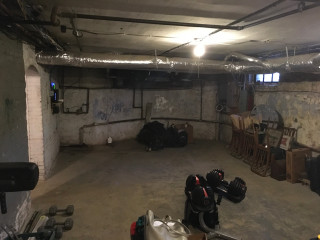
In This Episode We Cover:

  • The keys to negotiating and structuring a seller financing deal
  • How to find and analyze cash-flowing real estate deals in 2026
  • The huge opportunity cost of waiting for mortgage rates to drop
  • How to pick a real estate market that aligns with your investing goals
  • Whether you should move to invest in real estate (or stay put!)
  • And So Much More!

Links from the Show

Interested in learning more about today’s sponsors or becoming a BiggerPockets partner yourself? Email [email protected].


Source link


Fannie Mae just supersized a landlord’s potential income by expanding financing for accessory dwelling units (ADUs).

In doing so, the government-sponsored mortgage underwriter has made it easier for everyday investors to add rentable units, boost cash flow, and tap into the land around properties they already own, thereby driving appreciation.

By expanding the ways ADUs can be financed and loosening rehab lending guidelines through its HomeStyle, HomeReady, and Construction-to-Permanent renovation programs, Fannie Mae has opened the door for homeowners to become landlords and for small investors to turbo-boost revenue from their existing single-family and small multifamily buildings.

What’s Changed?

In its Selling Guide Announcement SEL-2025-10, Fannie Mae announced an expansion of ADU eligibility to increase housing supply and make it easier to update housing stock, stating the update was intended to “meet the growing demand for flexible and affordable housing solutions.”

Specifically, Fannie Mae will purchase loans for two-to-three unit homes that include an ADU. In total, each property is now allowed to contain four units, so a single-family unit can contain three additional ADUs, as long as it adheres to zoning laws.

Additionally, ADUs are permitted on single-wide manufactured homes, removing a previous restriction requiring multisection units. This addresses rural and lower-density areas where manufactured homes are more prevalent.

Possible configurations for investors looking to add ADUs to their portfolios are:

  • A duplex + one ADU
  • A duplex + two ADUs
  • A triplex + one ADU
  • A single-family + three ADUs

Energy and Resiliency Improvements Can Be Financed Too

With the rise in extreme weather-related incidents, financing energy and climate-related resiliency improvements, such as storm and fire-resistant measures, could be a big deal for investors in vulnerable states looking to safeguard their ADUs without incurring the cost of a full energy report.

When used as rentals, these improvements could be a big draw for potential guests and tenants. The addition of ARM loans means that owners can update and adapt existing homes without being saddled with pricier 30-year mortgages.

Appraisals and Income

In the near future, appraisals could present a problem, as these configurations are so new to the market that appraisers might have a tough time pulling comps to meet Fannie Mae guidelines for HELOC financing or sales.

With regard to income, a portion of ADU rent can also be used to qualify, as the rent from a small multifamily helps an owner-occupant looking to house hack qualify for a loan. With one unit as the primary residence—when purchasing or doing a cash-out refi—only one ADU’s rent can be used (even if more exist), and its revenue is capped at 30% of your total qualifying income.

So, for argument’s sake, say you were using your ADU as a short-term rental, and Leonardo DiCaprio decided to stay there, paying you $10,000 a night. 

First, great for you! Second, you couldn’t use all his rental income for your refi. However, the money it contributes to your total qualifying income could raise your purchasing power. This is not necessarily a bad thing, as it protects against over-leveraging and the temptation to inflate rental income.

Here’s an example, according to Innovative Mortgage Brokers:

  • Your base qualifying income is $6,000 a month.
  • Market rent for the ADU is $1,200; lenders usually count 75% ($900) for qualifying purposes.
  • While $900 is 30% of $3,000, we’re adding it to $6,000. The cap says ADU income used can’t exceed 30% of your total. With $900, your total becomes $6,900, and the $900 used is within that 30% cap.

Throwing an FHA Loan Into the Mix

FHA lending guidelines are baked into the new Fannie Mae ADU rules, allowing for lower down payments and credit scores than with conventional loans. “We’re going to allow both existing rental income for ADUs and prospective rental income to be included in the underwriting process,” said Julia Gordon, HUD’s Assistant Secretary for housing and federal housing commissioner, noting that the change is designed to help borrowers finance properties with ADUs or add them during renovations, according to The Mortgage Reports.

Renovation Lending Becomes More Investor-Friendly

The ADU update includes major improvements to HomeStyle Renovation loans. Here are the main changes:

  • Up to 50% of renovation costs can be disbursed at closing (no outside borrowing or leaning on a contractor to front the starting costs)
  • Larger renovation budgets are allowed for manufactured housing.

Putting New ADU Lending Guidelines to Use in the Real World: An Investor Playbook

“Hidden density” is the new value-add: Look for units with convertible space. This can include:

  • Oversized lots
  • Alley access
  • Detached garages
  • Basements or underused structures
  • Existing duplexes or triplexes with extra yard space

Zoning is the grim reaper: The new Fannie Mae ADU rules are good, but they’re not good enough to overcome prohibitive zoning. Before imagining your overflowing bank account, double-check that your dream property complies with applicable zoning guidelines. Confirm:

  • How many ADUs are allowed?
  • What are the size and height requirements?
  • What are the parking requirements?
  • Are detached ADUs permitted?

The latter taps into the YIMBY versus NIMBY movement, where wealthier single-family neighborhoods oppose ADUs for the same reasons they do not allow multifamily dwellings: fears of parking issues, turning communities into rental-heavy, transient areas, and lowering the quality of schools.

“If you have the 16-foot poison pill in your regs, it’s not good enough,” says Kol Peterson, a nationally recognized ADU expert and founder of AccessoryDwellings.org, in a recent podcast. “It needs to be much better … that doesn’t mean that everywhere in the country has good codes except for Portland, Seattle, and a few jurisdictions in California.”

The Cost of Building an ADU

As welcome as the new ADU-friendly guidelines from Fannie Mae are, they don’t translate to “free new rental units for everyone!” ADUs cost money. Just how much, however, varies greatly. Converting a glorified garden shed, attic, or basement is likely to cost way less than replicating an Ibiza-style lounge in your back garden.

According to home renovation site Angi, the average ADU costs $180,000, but an ADU generally costs between $60,000 to $285,000, depending on size, scope, and location. It’s possible to scrape by with a sub-$80K ADU in less-expensive markets—bearing in mind that ADU requirements mandate a kitchen, bathroom, and a separate entrance. When converting a part of your existing home, the exterior costs of weatherproofing a roof, walls, and sometimes even installing insulation can be taken out of the equation.  

Final Thoughts

Adding doors without buying new properties almost seems too good to be true for an investor, but it’s a practical way to bring in additional income for homeowners and increase an investor’s portfolio, while helping with the housing crisis. With financing on board, this could be a game changer in a high-interest rate, low-inventory environment.


Source link


IMAGO GARDENS DESIGN AND LANDSCAPINGSave Photo
This photo from inside the living area gives a sense of just how much Bejanaru added to the yard, from the layers of greenery to the floating steps, to create a space that can be enjoyed year-round.

You can also see one of the ways she gave the small space depth, with the eye going from the black patio door frames to the steel pergola to the black wood posts attached to the shed.

Bejanaru also planted four new trees, placing the two tallest nearer to the house and the two shorter ones at the back. “The plants in front draw the eye upward, then the shorter ones — visually below the other two — draw your eye to the back of the [yard], so you have several focal points,” she says.

The new trees consist of two Tasmanian tree ferns (Dicksonia antarctica, USDA zones 9 to 10; find your zone) — one on the front left and the other at the back right; a tall windmill palm (Trachycarpus fortunei, zones 7 to 11) and a pineapple guava (Acca sellowiana, zones 8 to 10) in front of the shed.

The huge olive tree was already there. “We kept it, of course, because it’s beautiful and I also love the color of the bark, which stands out,” Bejanaru says.

9 Design Tips to Enhance Views of Your Garden From Indoors


This article was originally published by a www.houzz.com . Read the Original article here. .


As housing affordability remains a critical challenge across the country, mortgage rates continue to play a central role in shaping homebuying power. Mortgage rates stayed elevated throughout 2023 and early 2024. Recent data, however, shows a modest decline in mortgage rates. Even slight declines can have a significant impact on housing affordability, pricing more households back into the market. New NAHB Priced-Out Estimates show how home price increases affect housing affordability in 2025. This post presents details regarding how interest rates affect the number of households that can afford a median priced new home.

At the beginning of 2025, with the average 30-year fixed mortgage rate at 7%, around 31.5 million households could afford a median-priced home at $459,826. This requires a household income of $147,433 by the front-end underwriting standards[1]. In contrast, if the average mortgage rates had remained at the recent peak of 7.62% in October 2023, only 28.7 million households would have qualified. This 62-basis point decline has effectively priced 2.8 million additional households into the market, expanding homeownership opportunities.

The table below shows how affordability changes with each 25 basis-point increase in interest rates, from 3.75% to 8.25% for a median-priced home at $459,826. The minimum required income with a 3.75% mortgage rate is $110,270. In contrast, a mortgage rate of 8.25%, increases the required income to $163,068, pushing millions of households out of the market.

As rates climb higher, the priced-out effect diminishes. When interest rates increase from 6.5% to 6.75%, around 1.13 million households are priced out of the market, unable to meet the higher income threshold required to afford the increased monthly payments. However, an increase from 7.75% to 8% would squeeze about 850,000 households out of the market.

This exemplifies that when interest rates are relatively low, a 25 basis-point increase has a much larger impact. It is because it affects a broader portion of households in the middle of the income distribution. For example, if the mortgage interest rate decreases from 5.25% to 5%, around 1.5 million more households will qualify the mortgage for the new homes at the median price of $459,826. This indicates lower interest rates can unlock homeownership opportunities for a substantial number of households.

[1] . The sum of monthly payment, including the principal amount, loan interest, property tax, homeowners’ property and private mortgage insurance premiums (PITI), is no more than 28 percent of monthly gross household income.


This article was originally published by a eyeonhousing.org . Read the Original article here. .


Over the past 125 years, women have played a crucial and multifaceted role in the labor force. Increasing women’s participation in the workforce is not only essential for individual and family well-being, but also contributes significantly to overall labor force participation rates and economic growth by adding more workers and enhancing overall productivity1.   

Historically, women’s labor force participation rate rose rapidly between 1948 and 2000, peaking around 60% in 1999. During the same period, men’s participation rates declined. However, since 2000, the growth in women’s labor force participation has flattened and then declined.

According to the March 2025 Employment Situation Summary reported by the Bureau of Labor Statistics (BLS), women’s labor force participation rate held steady at 57.5%, and women now represent nearly half (47%) of the total U.S. labor force.

Selected Categories

Prime-age women (ages 25-54) represent a significant and growing segment of the U.S. labor force. As of 2024, they accounted for nearly 30% of the civilian labor force, compared to 34% for prime-age men. According to the latest data from the Current Population Survey (CPS), prime-age women had a labor force participation rate of 78%, the highest among all female age groups. This rate has fully recovered from the COVID-19 pandemic, surpassing its previous peak recorded in February 2020.

As discussed in the previous blog, higher levels of educational attainment are strongly associated with higher labor force participation and lower unemployment. Women with a bachelor’s degree or higher have played a vital role in shaping the labor market. In 2024, about 70% of women with this level of educational attainment were active in the labor force, compared to only 34% of women who had not completed high school.

The CPS data also reveals notable differences in women’s labor force participation based on parental status.  Women with older children (ages 6 to 17) and no children under 6 years old had a higher labor force participation rate than those with younger children. Interestingly, women without children had a relatively lower labor force participation rate compared to those with children. Further research from the Brookings Institution and The Hamilton Project2 highlights a significant shift: women with young children (under 5 years), especially those who are highly educated, married, or foreign-born, are more likely to be in the labor force now than they were before the pandemic.

Women’s labor force participation also varies by race and ethnicity. Among women ages 16 and over, Black women had the highest participation rate at 61%, followed by Hispanic women (59%), Asian women (59%), and White women (57%).

The figure below reflects the diversity and complexity of women’s roles in the workforce.

Women in Industry

As more women enter the labor force, they are increasingly shaping a broad range of industries–from healthcare and education to leisure and hospitality, retail, technology, and construction.

In 1964, women were primarily employed in a narrower set of sectors. The top four industries employing the most women at that time were: manufacturing; trade, transportation, and utilities; local government; and education and health services3.

By 2024, however, women’s participation in the workforce has expanded significantly, both in scope and impact. According to the latest CPS data, women dominated the education and health services sector, where they hold approximately 27.6 million jobs. That means seven in every ten workers in this field are women. Moreover, women now make up more than half of the workforce in several other key industries, including other services, leisure and hospitality, and financial activities.

Despite their growing role in the workforce, they remain underrepresented in certain sectors, most notably, construction. Although women now make up a significant portion of the overall labor force, they account for just 11% of total employment in the construction industry. Of those, only 2.8% of women work in actual trade roles, while most women in the industry are employed in:

Office and administrative support

Management

Business

Financial operations

Gender Pay Gap by Occupation

While the gender pay gap in the U.S. has narrowed significantly over the past few decades, it remains a persistent issue in the labor market. According to a study4 by the Pew Research Center, women earned about 65 cents for every dollar earned by men in 1982. By 2023, that figure had risen to approximately 82 cents on the dollar—a clear sign of progress. However, the pace of change has slowed considerably in recent years.

In 2024, the CPS data shows that women working full time earned a median weekly wage of $1,043, compared to $1,261 for men. This means women earned 83 cents for every dollar earned by men—a 17% gender wage gap.

At the occupational level, women earn less than men across all major occupational groups, even ones dominated by women. The smallest gender pay gap was found in community and social services occupations. In contrast, occupations in legal, sales and related, protective services, and production display larger disparities in earnings between women and men.

The Future of Women in the Workforce

Looking ahead to 2033, the number of women in the labor force is expected to continue growing, driven primarily by the prime-age women (ages 25 to 54). BLS employment projections estimate that roughly 3.2 million prime-age women will join the workforce between 2023 and 2033. During this period, their participation rate is projected to increase slightly, reflecting continued momentum in women’s economic engagement.

Meanwhile, the U.S. labor market is experiencing a critical shortage of skilled workers, especially in fields like STEM (science, technology, engineering, and math) and skilled trades. As the NAHB Chief Economist stated, “The ultimate solution for the persistent, national labor shortage will be found…by recruiting, training and retaining skilled workers.” This applies equally to the women’s labor force.

Women’s participation is closely tied to their access to education and skills development. As more women pursue higher education and specialized training, their career opportunities expand, particularly in fields previously dominated by men. This progress can help narrow the gender pay gap over time.

However, women often shoulder disproportionate family and caregiving responsibilities, not only during their reproductive years, but throughout their lives. According to the American Time Use Survey (ATUS), on a typical weekday, prime-age working women spent about four hours on caregiving and household tasks, such as household activities, caring for and helping household members, and purchasing goods and services. This is nearly twice the time men spent on the same activities. Many women face a tough decision between career advancement and family caregiving responsibilities, often leading to reduced work hours or even complete withdrawal from the labor force.

To support and increase women’s labor force participation, it may be beneficial to consider a range of policies and workplace reforms. For example, promoting flexible work arrangements can help women better balance professional and personal responsibilities. Narrowing the gender pay gap would also play a critical role in ensuring fair compensation and financial security. Furthermore, expanding access to affordable and high-quality childcare could remove a major barrier for many working mothers. In addition, continued investment in education and training programs would enable women to advance in their careers and contribute to broader, long-term economic growth.

To conclude, empowering women to succeed in the workforce not only improves individual and family well-being, but also strengthens the entire economy.

Note:


This article was originally published by a eyeonhousing.org . Read the Original article here. .


2026 is finally here! And if you can still read this sentence without seeing double, you’ve made it!

But this year, things are going to be a little… different. We usually talk about the best places or strategies for buying rentals, but we’re going on a bit of a detour to start the year by discussing our real estate resolutions, all of which will actively help us retire early. Want to retire with rentals, too? This is the episode for you, and we’re sharing the strategies we’re using in 2026 to get there.

Kathy Fettke shares a new way she’s optimizing her real estate portfolio, with the goal to increase cash flow by 10% on her current portfolio (not buying more rentals!). Henry takes an opposite approach to most investors, opting not to scale his portfolio and instead doing something much safer. Dave details his “End Game”—the ultimate real estate portfolio for early retirement.

Dave:
Happy New Year, everyone. Welcome to the BiggerPockets Podcast. I’m Dave Meyer, head of real estate investing at BiggerPockets. I hope you all had a great holiday and are excited as I am to grow your portfolios this year. Today, we’re kicking off the year with New Year’s resolutions. And for that, I’m joined by my on- the-market co-host, Kathy Fettke and Henry Washington. We’re going to share our goals for the year, the strategies we’re planning to achieve those goals and the risks we’re avoiding in a changing market. A heads up that this show will also be published on the On the Market podcast feed over this New Year’s break, and make sure to tune in next week for my annual state of real estate investing show and a huge announcement for the BiggerPockets podcast you’re not going to want to miss. With that, let’s jump in. Kathy, Henry, how are you?
Happy New Year. Happy New Year to you.

Henry:
Happy New Year.

Dave:
I am not going to lie and pretend that we’re recording this in the new year. It’s not really the New Year, but proactively to everyone. We’re recording this in December, but happy New Year to all of you. Kathy, you have some great holiday plans. Tell everyone what you’re up to. You’re always somewhere fun.

Kathy:
Well, yes, I’m in Paris recording this from a cave.

Dave:
You literally look like you’re in a medieval wide seller right

Kathy:
Now. I’m pretty sure I am. I’m in the oldest part of Paris, but I am here for the Christmas markets and mainly because my daughter is getting married in France. So I had to come see the venue with her. Had

Dave:
To.

Kathy:
And then it’s also-

Dave:
You had to.

Kathy:
I had to, and it’s the last year of the northern lights being really intense. So we’re going to take a little trip up to the North Pole, to the North of Norway.

Dave:
Oh, that’s so great. Wow. What a fun trip. Henry, what were you up to in the holidays?

Henry:
Food.

Dave:
Enough set,

Henry:
Really. Absolutely. I mean, I have little kids, so I do get to enjoy the joy of Christmas still, so that’s fun, but mostly I’m eating my way through the holidays.

Dave:
Yeah. Good for you. All right. Well, let’s jump into today’s episode because I really want to just start looking forward. Last year was a interesting … I wouldn’t call it a great year. I was going to say it’s a great year. I would not have called 2025 a great year. That would’ve been a straight up lie. I am feeling optimistic going into 2026 and just about real estate in general. So let’s talk about this in terms of what our New Year’s resolutions are. We’ll start with real estate, but if you want to throw a non-real estate one in, I would love to hear them. But Kathy, what’s your real estate New Year’s resolution?

Kathy:
Well, I have a few, but one is to really dive into AI because
Rich actually bought a really expensive program and he’s finished it and I have not. I’m not even close. But I know it’s so powerful. I mean, one of the things that Rich did is he uploaded everything. Our bank statements, the cash flow, our system knows everything about us. And when we upload it, we could know which properties are performing well, which are not. I mean, we should be knowing that anyway, but I feel like sometimes it’s easy to get lazy or you’ve just owned properties for a while and haven’t really taken a look. Is this still a good performer? So using AI to optimize our portfolio is my goal for real estate.

Dave:
I like that a lot. I like this as a goal. It’s not like, oh, I have to buy this property by this date. This is more like a growth mindset kind of goal. How do you just evolve as an investor generally so that you can make better decisions going forward? Is that program, is that real estate specific?

Kathy:
No, no, it was just a bunch of business owners. But I mean, it’s like he’s got a business consultant now. All of our business financials are in there and we had every employee detail what they do, not in a dog kind of way, but I guess kind of like what do you do all day? And so AI knows each employee and knows how to optimize for them. It’s really been phenomenal.

Speaker 4:
Wow.

Kathy:
And we had one of the best months ever for our company last month. I don’t know if it has to do with that or not, but that’s strange, right? At a time when real estate has been so slow, sales have been slow, we had a really good

Dave:
Month. That’s awesome. So it sounds like you’re using AI not just to identify properties or deals, but work on and in your business as well.

Kathy:
Yeah. I mean, how many times do you really know what your insurance covers?

Dave:
Literally never.

Kathy:
So with, I’ll say Claude, for example, we can upload our entire insurance thing. There’s a word for it.

Henry:
Your insurance binder? Yeah.

Kathy:
Yeah, that thing, the binder. To just really know the details of your insurance policy and even ask it, “Hey, is this covering me for everything I need for this investment property in this particular state?” It’s really phenomenal with what’s available to us and it’s only going to get better, so why not be on the cutting edge of it?

Dave:
I love it. Henry, are you using AI regularly?

Henry:
The short answer is yes, but I’d be lying to you if I told you I was using it on a much deeper level than just the surface level asking for help with certain items. Now, I did try to build something similar to what Kathy was talking about about two months ago where I was uploading transaction data and information from my property manager because I wanted to see if AI could give me a sense of how well certain properties are performing. And I thought if I could upload the actual bank statements and marry that against the data from your property manager who’s actually going out to the properties, doing the actual repairs. And then I wanted to marry that against what I’m spending with contractors on certain properties to get just a bird’s eye view of my portfolio. And it was very challenging in ChatGPT. And so I’m wondering if I should try Claude or Gemini or one of those.

Kathy:
Claude is so good for business.

Dave:
Oh, really? I got to check that out because Henry and I were just in Seattle and people were raving about Gemini.

Kathy:
Yeah.

Dave:
I feel like it’s a horse race right now. One releases a new one and it gets a little bit better and then the other one gets a little bit better, but there’s not a clear winner. I just have to tell you guys, I got a little bit of a behind the scenes look at a big real estate company’s new AI tool. It’s not BiggerPockets, but there’s another one that’s going to release one soon. I got to do the beta. It is so freaking cool. It’s unbelievable how good the analysis and information about properties and markets. For a data analyst, this thing is so cool. I am super excited to start using these kinds of tools in my own analysis. But I have to ask you guys, maybe I’m just a complete control freak, but I use this for research, but I double check everything

Kathy:
That

Dave:
I do still, right? Okay,

Kathy:
Good. Because it still makes lots of errors. It’s not there yet, but it will be. It will be. So learning the things that we’re learning. And bottom line, the goal for me for doing all this is I want to see if I can … Wait, let me say that in a more powerful way. I’m going to increase cashflow by 10% by optimizing our portfolio, whether that means taking some older properties that aren’t really performing and 1031 exchanging them into better ones or just looking at things like we bought a lot 10 years ago because we were living at a house where someone was going to build this mega box property that block our view. And so we bought the lot and they wouldn’t do it and now we don’t live there anymore and we just kind of haven’t done anything with it. We tried to sell it.
Nobody wanted just a lot. So that’s one thing. It’s like, how do I optimize this piece of land that’s just been sitting there and we’re paying taxes on? And so I’ve been working with a manufactured housing company and we’re going to put manufactured housing on that lot. And so when I’m doing a whole new thing and it’s actually going to cash flow in CaliforniaCalifornia.
Yeah. And if my daughter ever decides she wants to move down the street from us, there’ll be a house there for her. Intent. But yeah, it’s kind of just stuff like that. Just kind of looking at what we have, the theme is more isn’t always better. Look at what you have and make it better.

Dave:
That’s great. Well, I think this is an awesome New Year’s resolution. I really like this idea of getting better at AI because I will admit, I am simultaneously excited by AI and very, very scared of it and terribly tired of it. And so sometimes I just choose to ignore it because I’ll see these deep fake videos online and I’m like, “AI is evil.” But then you talk about all these things that AI is amazing for. I just need to figure out the right way to use it for my business that makes sense and not be overwhelmed by the societal implications that might be coming with AI at the same time.

Kathy:
For sure. I mean, an example is just, I’ve been working a lot with Claude, that’s what I use and asking for LA County, what do I need to know about manufactured housing? Tell me this step-by-step process. And it’s not 100%, it’s not easy, but it helps it feel not as daunting.

Dave:
All right. Well, I love this. This is a great New Year’s resolution. Thanks for bringing this one, Kathy. We got to take a quick break, but we’ll be back with Henry’s New Year’s resolution right after this. Welcome back. I’m here with Kathy and Henry sharing our goals, New Year’s resolutions for 2026. We heard Kathy’s, which I love about getting better at using AI. Henry, what is your New Year’s resolution even though you don’t like them?

Henry:
No, I don’t like them. And I always feel awkward when people ask questions like this because of the kind of investor I am. I just do old, boring real estate, Dave. I buy distressed properties, I fix them up and then I rent them out or I sell them. And I think when people ask about resolutions, they expect to hear some super ambitious, creative thing that you’re doing. Like a big pivot,

Dave:
Like you’re making some change. Yeah. Yeah.

Henry:
And my goals are very similar each year because I just want to continue to do what works and what’s worked for generations, which is another iteration of the same thing. But now that I’ve placed that caveat, essentially I think of investing in three buckets where you’re either growing, you’re stabilizing or you’re protecting.
And we as investors operate in typically two of those buckets at a time, heavily weighted more so on one than the other. And so as I started in 2017, I’ve been a lot more focused on growth. So my goals each year were always around how many more assets do I need to acquire? How many more projects do I need to flip to give me the funding to acquire those assets? But now I’m in a place where I’m more focused on stabilization and protection. And to me, protection is paying off. And so my goals for 2026 or my resolution, if you want to call it that, is more focused around stabilization, optimization similar to Kathy, and paying off debt. So I have a stretch goal of paying off two properties in 2026. And I know two doesn’t sound like a lot, but we’re talking about completely clearing the debt on two assets, which I think is a big deal.
So I want to pay off two of my assets and there’s about four assets that I need to stabilize because I’m bleeding money in them right now.
Some of them my own fault, some of them, no fault of my own. One in particular, I bought a duplex, not in a flood zone, and we had a crazy flash flood and it tore through both units of the duplex. And then on top of that, a big mistake happened with one of the remediation companies where they did some work unauthorized to the tune of $40,000. So I have about a $40,000 bill that we’re fighting because they weren’t supposed to do the work. And I have about a $50,000 renovation I’m going to have to fund out of pocket. So these are big ticket items. They don’t just come very easy. So that property right now is a duplex that I pay monthly all the expenses on, but has no income. So stabilization is a big deal for me in 2026. I also have some multifamily assets I bought in 2023.
Again, no fault of my own. The city has come in and is requiring me to do some work that we didn’t plan on doing that where you can’t really fight. So there’s a lot that happens in a real estate portfolio that I think requires you to take a step back and evaluate. So 2026, stabilizing the assets that are bleeding money and paying off two properties. And so those lead me to my other goals, which is I need money to do those things. So that guides me to how many projects I need to take on throughout the year to generate the income I need to solve those problems, live my life. Make sense?

Dave:
It does make sense. I love the way of thinking backwards. A lot of people would be like, how many flips can I do, maximize, and then take that money and be like, what am I going to do with it? But I really like thinking about it like, what do I need to do? And then sort of backing into the minimum amount of work that you can do. That doesn’t mean you might not take on more deals if you find opportunity, but just having a good sense like, okay, I need to do two a quarter or one a year. I need to do that, make sure I’m hustling on that and then I’ll take everything else that comes from there.

Henry:
Yep. I average probably around like $45,000 net profit on a flip and I would estimate that I need to do about 15 projects to be able to pay off the properties that I’m looking to pay off and to be able to have the income necessary to continue to live and be able to stabilize the four assets I need to stabilize. So that’s my goals.

Dave:
I love it. I guess I understand maybe why you don’t love a New Year’s resolution because this sounds like it’s a multi-year project too. It’s not like this is something you do in 2026. This is a piece of a larger goal that you have been working for and will probably need to keep working towards beyond 2026.

Henry:
Yeah. My larger goal, ideally, this is … Now they say your goals are supposed to be big and scary, right? And in corporate world, they called them stretch goals. The big, scary stretch goal is to have a third of my portfolio paid off 10 years from now. I

Dave:
Like that.

Henry:
That’s a lot. It’s a lot of money. Yeah. Yeah. But I feel like if you don’t set a big scare … Shoot for the moon land on the stars, right? If I end up with half of that paid off, that’s still going to put me in an extremely strong financial position in 10 years. So the larger goal is that. And then what I do each year is tying into that. And then I have to adjust each year because yeah, I have a goal of two this year, but what if I only get one? So then I need to take what happens in 2026 in terms of the economic outlook and make new goals. Maybe 10 might be too far out. Maybe I need to change it. So I think I’m not afraid to reevaluate my goals based on what’s happening, but I try to make it all tie together.

Kathy:
I love that. It sounds like you’re also looking at the protection side of it because as you start paying off properties, oh, there’s such relief knowing that if anything goes wrong and you just can’t predict, you can’t predict things like 2020 coming along that turned out not to be bad for real estate at all. Ended up being a pretty good time for real estate bought, could have gone the other direction. And when you’ve got paid off properties, boy, all you have to do is sell a couple and it’ll help pay for the other ones that you’ve maybe over leveraged. And I know that you have way over leverage to get to where you are now and that has worked. But at some point you’re like, okay, it’s time to turn the ship and pay some of this off. That’s great.

Dave:
It’s interesting to hear both of you are focusing on optimization instead of growth. Is that a reflection of the market or just where you are in your personal investing journey?

Kathy:
That’s a good question. It was just the first thing that came to mind because it’s what I’ve been doing and excited about. Just taking a look at some of these properties that bought 10 or 15 years ago, I really haven’t paid any attention to them. For example, one, it just vacated and I talked to the property manager and she goes, “If you update this by about $20,000, you’ll get about 100,000 extra in equity.” I hadn’t even thought

Speaker 4:
About it. Easy.

Kathy:
So that’s exciting. And if I do that, then we can sell that or keep it, take the money out. And so it’s almost like an after the fact bur,

Speaker 4:
10

Kathy:
Years later down the road, bur.

Dave:
It’s a slow burn. A slow bur. It just doesn’t matter. Just keep optimizing things over the long run. This is the way to do it. It’s absolutely right. I love that.

Henry:
For me, Dave, it is more a function of where I am as an investor because I’m a deal junkie and I love the process of finding deals. I love buying a great deal and I love operating assets in great parts of the community. It all is so fun for me, but at some point I have to get to a place where I am protecting the assets I have so that I have paid off assets to pass on to my children. The overarching goal for my real estate business is for my children to be able to be the people they’re called to be and not the people they have to be for money. So if they need or want to do something that isn’t going to pay them a ton of money, at least I have these assets that will be paid off that can provide income for them.
And so to get there, I have to pay off properties. And so I have to draw a line in the sand somewhere and start paying down these assets. And so that’s why I have the 10-year goal trying to get some of these paid off so that I have those to pass. Now, when I get to that point, Dave, I may just start doing more deals again, but I will always have- You will. You will.
And I’ll probably still do deals that are like home run deals along the way. I’m not saying I’ll never buy another rental property between now and 10 years from now. I’m just saying I’m not in aggressive growth mode. So optimization is more important to me right now than growth was. And growth was more important to me when I first got started. It’s just a shift in where I am as an investor.

Dave:
All right. Well, these are great resolutions. Thank you. I really think these are, obviously they’re not just resolutions, but just goals and good perspective on where you both are in your investing journey. We are going to take a quick break, but we’ll come back with my New Year’s resolution right after this. The Cashflow Roadshow is back. Me, Henry, and other BiggerPockets personalities are coming to the Texas area from January 13th to 16th. We’re going to be in Dallas, we’re going to be in Austin, we’re going to Houston, and we have a whole slate of events. We’re definitely going to have meetups. We’re doing our first ever live podcast recording of the BiggerPockets Podcast, and we’re also doing our first ever one-day workshop where Henry and I and other experts are going to be giving you hands-on advice on your personalized strategy. So if you want to join us, which I hope you will, go to biggerpockets.com/texas.
You can get all the information and tickets there.
Welcome back. I am here with Henry and Kathy talking about our New Year’s resolution. Kathy shared that she’s looking to optimize her portfolio and learn more about AI. Henry is going to be trying to pay down some of his debt and stabilize some of his assets. My New Year’s resolution for 2026, and I’m with you on this, Henry, this is something I’ve been thinking about for at least six months and is going to take me 10 years. But my plan right now and the thing that I’m focusing on is enacting what I’m calling my end game.
Hopefully not going anywhere, but I’ve been investing for 15 years now and I feel like I’ve had these two different eras of my own investing. My first 10 years, I bought rental properties, I self-managed them, all of them locally in Denver. Those were the first 10 years. The last five years, then I moved abroad. I was living in Europe. I sold some rentals. I got pretty into passive investing. I got into lending. I do syndications. I still own rental properties, but I’ve kind of had this second era. And now I want to move. I’m back in the United States. I want to move into my third act as a real estate investor. And I call it my end game because I want to spend the next 10 to 15 years putting myself into retirement. I am in a fortunate position where I do feel like I have enough capital to do it, but I need to rearrange my portfolio into an optimized way so that 10, 15 years from now, I’m going to have a portfolio that is just rock solid.
It’s only assets that I really like. Ideally, they’re paid off or have very low debt on my overall portfolio. And I actually think it’s a good time to start acquiring rental properties right now. And so I’m seeing opportunities trade out of some of my more passive options or lending and start acquiring the assets that I want to own ideally for the rest of my life.That’s kind of what I’m starting to think about. And I’m even considering, Henry and I were just together in Seattle. We were talking about this, thinking about putting things on 15-year notes, for example, instead of going to the 30-year fix that I’ve always really used and just start thinking, I’m 38 years old. At 53, I probably still won’t retire, but I want the portfolio that I can retire off of and that I wouldn’t need to touch if I didn’t want to for the rest of my life to be in place.
That’s not going to happen in 2026. This is going to take me probably at least five years to reposition things, do some different projects, learn a little bit, but that’s my goal. That’s the thing I’m really working on.

Speaker 4:
Love it.

Henry:
Yeah, no, I think that that’s just smart financial planning. It’s similar to what I’m thinking about because I enjoy what I do now. I like chasing deals. I like flipping houses. It’s still fun and exciting. And is there annoying parts of it? Sure, but I enjoy it. But will I still enjoy it in 10 years? Will I just be tired of the chase? I’ve talked to a lot of seasoned investors in their 50s, 60s, and 70s, and the one theme across all of them is at some point they got tired of chasing deals. They got tired of churning houses and flipping houses. And so if I can get myself to a point where I don’t ever have to flip another house if I don’t want to, but I can still choose to, that’s ideal. And it sounds like that’s what you’re trying to get to.
How do I get to the point where if I just want to sit down and do nothing, I can. I’m taken care of, my family’s taken care of, my legacy’s taken care of, but if I want to go do some cockamamie crazy deal, I can also go do that. Definitely.
Getting yourself to retirement doesn’t mean you have to retire.

Dave:
First of all, I got tired of flipping houses before I even got started. So good for you. I did one. That’s all I needed. I’m at two right now and I’m tired. And I didn’t even do the GC. You

Henry:
Didn’t do the

Dave:
Hard part. I didn’t even do the hard part. I’m tired of it. No, I signed last night though and getting this thing done. So that’s great. No, that’s exactly right. For me, it’s not even the flipping. I’m always tinkering. I’m just like an optimizer. I’m always moving money from here to there. And I got to stop doing that too. I will do some of it. I will keep some of my money for fun because for me, that’s fun. Like you were talking about, Henry, you like looking at deals. For me, I like investing in passive deals. I like underwriting deals and figuring them out and looking for different opportunities, but I need to put the rock solid thing back in place because I had a lot of great rentals. I don’t regret selling any of them, but I have not rebuilt my active portfolio in the way I want to yet.
And so that’s really what I’m going to be focusing on. And like I said, there’s better and better deals. It’s not even that prices have gone down that much. It’s just the asset quality is so much better, in my opinion. And you’re seeing high quality properties come on the market. I think multifamily is looking more and more attractive right now. And so that’s the plan for 2026. My other resolution, just so you know, as always, is to go on as many vacations as humanly possible.
How do I travel all the time?

Henry:
Can we go on record, Dave, and set a stretch resolution? You and I?

Dave:
Uh-oh.

Henry:
Can we set a resolution that within five years we land an Anthony Bourdain style TV show where we travel around, eat food

Dave:
And

Henry:
Talk about real estate?

Dave:
This is our dream in life. Yes. We need a new vision board, you and I. All right. Well, this was a lot of fun. Thank you guys. I would love to hear your New Year’s resolutions, right? We want to hear them. Share them with us in the comments. We want to hear what your New Year’s resolutions are real estate-wise, fun-wise, lifestyle-wise, because at the end of the day in real estate, we’re doing this usually not because we just want to own or acquire assets for something, because it frees up something else in our lives, spending more times with our friends, family, traveling, eating disgusting amounts of food. This is why we’re actually here. So tell us what your resolutions are. Kathy, happy New Year. Thanks for being here.

Kathy:
Thank you. You too.

Dave:
Henry, happy new year. Excited for another year doing on the market with you both. And James, of course, when he decides to grace us with his present.

Kathy:
Yes. Absolutely. Thank

Dave:
You. Thanks everyone. We’ll see you next time.


Help us reach new listeners on iTunes by leaving us a rating and review! It takes just 30 seconds and instructions can be found here. Thanks! We really appreciate it!

Interested in learning more about today’s sponsors or becoming a BiggerPockets partner yourself? Email [email protected].


Source link

Pin It