Real estate investors and their accountants have turned tax avoidance into a fine art, with a sophisticated panoply of techniques designed to keep Uncle Sam’s cloying hands at bay. However, in a plot twist, presented in the form of another of President Donald Trump’s freewheeling, shoot-from-the-hip ideas to increase affordability, Uncle Sam might be changing roles—from pillager to provider—by eliminating capital gains tax on the sale of single-family houses.
For small investors sitting on a pile of equity in their personal residence, a potential tax-free windfall could be deployed for investments.
Why a Higher Capital Gains Exclusion Matters
The hits keep on coming because, for once, amending the capital gains tax law has received bipartisan support.
Following a massive increase in house prices since the COVID-19 pandemic, as of last March, homeowners have a mighty $34.7 trillion in home equity, according to Realtor.com. Current federal law allows homeowners to be forgiven capital gains taxes on $250,000 in profit from the sale of a single-family home if they file separately, and $500,000 if they are married and file their taxes jointly, so long as they have lived in the property for two of the previous five years. However, this law, with those numbers, was set as part of the Taxpayer Relief Act of 1997 and has never been adjusted for inflation, even as home prices have soared.
The discrepancy has left many homeowners house-rich but cash-poor, especially retirees who have lived in their homes for a long time. As their equity has increased, their fear has been that selling would expose them to a large capital gains tax bill.
This is especially true in affluent or rapidly appreciating areas. A 2025 analysis by the National Association of Realtors found that 29 million homeowners—about 34% of all owner-occupied households—now risk surpassing the $250,000 gain threshold as individuals, while around 8 million, or 10% of homeowners, could exceed the $500,000 cap as married couples filing jointly.
Trump surprised many people when he was questioned in the Oval Office on July 22, 2025, by saying that ending all capital gains taxes on home sales was in the cards, instead of just increasing the limits, telling reporters, “We’re thinking about that,” when questioned. “If the Fed would lower the [interest] rates, we wouldn’t even have to do that,” the president added. “But we are thinking about no tax on capital gains on houses.”
Trump’s comments came two weeks after former Trump acolyte Rep. Marjorie Taylor Greene, R-Ga., introduced the No Tax on Home Sales Act to eliminate capital gains taxes on primary home sales.
New Proposals in Washington in 2026
The argument for revising capital gains limits picked up steam toward the end of 2025, and over the last few weeks, Realtor.com reported that, during a National Association of Realtors (NAR) advocacy week in Washington, D.C., government officials said revisions to the capital gains limits were underway.
“Based on our best information and insight, there would be a significant increase in the number of homes that would be put up for sale [if the capital gains tax were reformed], but it would vary quite a bit between local markets,” Evan Liddiard, NAR’s director of federal taxation, said, citing studies commissioned by the group.
“Roughly a third of all homes that could be on the market could be subjected to that tax, and it’s locking people in,” Shannon McGahn, NAR’s chief advocacy officer, said at the event. “It’s great to see that there’s bipartisan support.”
Frank Cassidy, commissioner of the Federal Housing Administration (FHA), added that changing the law, a decision that needs to be made by Congress, could bring far-reaching changes to the housing market.
“The more transactions we can have going on in the private sector, and the more we can incentivize the supply side, is what will really have long-term effects,” said Cassidy. The FHA oversees the Department of Housing and Urban Development’s $2 trillion in mortgage insurance programs.
Realistic Exclusion Limits
Rather than ending capital gains taxes on personal residences entirely—as Trump touted in the summer—which seems unrealistic, Rep. Jimmy Panetta, a California Democrat on the House Ways and Means Committee, suggested, way back in September 2022, that the limits simply be doubled as part of his More Homes on the Market Act—$500,000 for single sellers of personal homes, and $1 million for married, filing jointly sellers. The bill has stalled twice since its introduction, but has recently gained traction, with 94 cosponsors—58 Democrats and 36 Republicans.
“This isn’t just a coastal issue anymore,” Panetta said of housing inventory strain. “This isn’t just a blue state or blue congressional district issue. This is a red issue. It’s a center-of-America issue, and I think that’s why we’re getting more and more momentum.”
A Seniors-Only Exclusion
Despite the increased number of homes on the market it could engender, changing the capital gains limits could still be a big revenue hit. That’s why Arthur Gailes, a research fellow at the American Enterprise Institute, estimated that 4 million to 9 million seniors could benefit from capital gain adjustments.
“It’s not an overwhelming thing that’s going to solve grand problems, but it would break up a logjam in the market, and that could be helpful,” Jim Parrott, a nonresident fellow at the Urban Institute, told Realtor.com. “And it’s targeted enough, it wouldn’t be that expensive.”
Final Thoughts: How Real Estate Investors Could Benefit From Changes to Capital Gains Exclusion Limits
When $1 million of tax-free money arrives on your balance sheet, you have options. Should Panetta’s bill pass, that is the potential amount of money some single-family homeowners could be sitting on in areas that have appreciated substantially since they first purchased their homes.
Here are a few real estate investment strategies equity-rich homeowners could employ.
Sell, downsize, and recycle the money to buy rentals
This is perhaps one of the most obvious strategies. Assuming the homeowner has the appetite to be a landlord, using the tax-free proceeds from the sale of a personal home to downsize or rent and redeploying the money for a down payment on cash-flowing rentals could be a great way to build an equity-rich portfolio.
Sell and use the proceeds to move into a fixer-upper personal residence. Rinse and repeat.
If landlording isn’t your cup of tea but you don’t mind living around construction, this is a safe way to build tax-free equity. Essentially, it means moving into a flip for two years while you renovate and then put it back on the market to realize the capital tax exclusion. It’s a good strategy if you don’t mind moving often and are handy, so you can do some of the work yourself and save on construction costs.
Combine downsizing with upgrading your existing portfolio through ADUs and renovations.
If you’re happy with your existing portfolio and don’t want to add more houses but want to maximize what you have, using the surplus cash to add ADUs, convert basements and attics, and perform overall upgrades could help you generate more income without buying more units.
Use tax-free cash to pay off mortgages on rentals.
Selling and downsizing and paying off the mortgages on your existing rentals could usher in retirement sooner than you thought possible.
Turn today’s primary home into tomorrow’s rental, and sell strategically.
As long as you have lived in your rental for two years, you can rent it for a further three years (or any combination that allows two of the five years for owner-occupancy) and sell strategically. This allows you to gain rental income and realize appreciation while downsizing.
Sell and move into a small multifamily with an FHA mortgage.
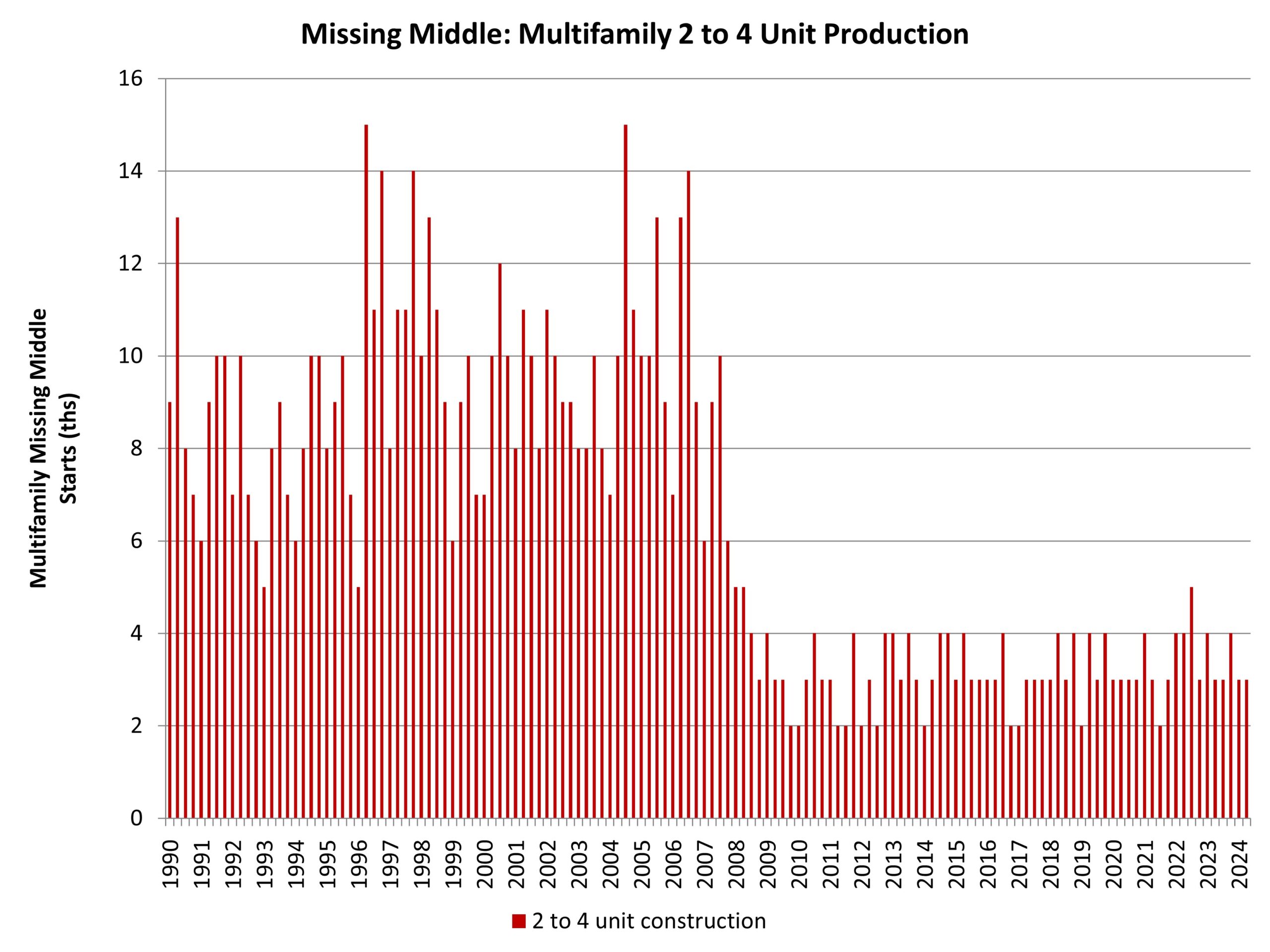
Selling your primary single-family residence and buying a two-to-four-family home with an FHA mortgage allows you to take advantage of FHA’s low down payment programs and live mortgage-free in a small multifamily, as your tenants’ rents will cover your mortgage, while possibly still having some cash on the side for repairs or emergencies.